
Find the right gas fireplace for your West Lake Hills home.
With a short, mild winter season and winter lows averaging 42°F, West Lake Hills doesn't need a furnace substitute—it needs a gas fireplace that looks good and switches on for the handful of genuinely cold nights each year.
Every Project Starts From One of These Five Situations
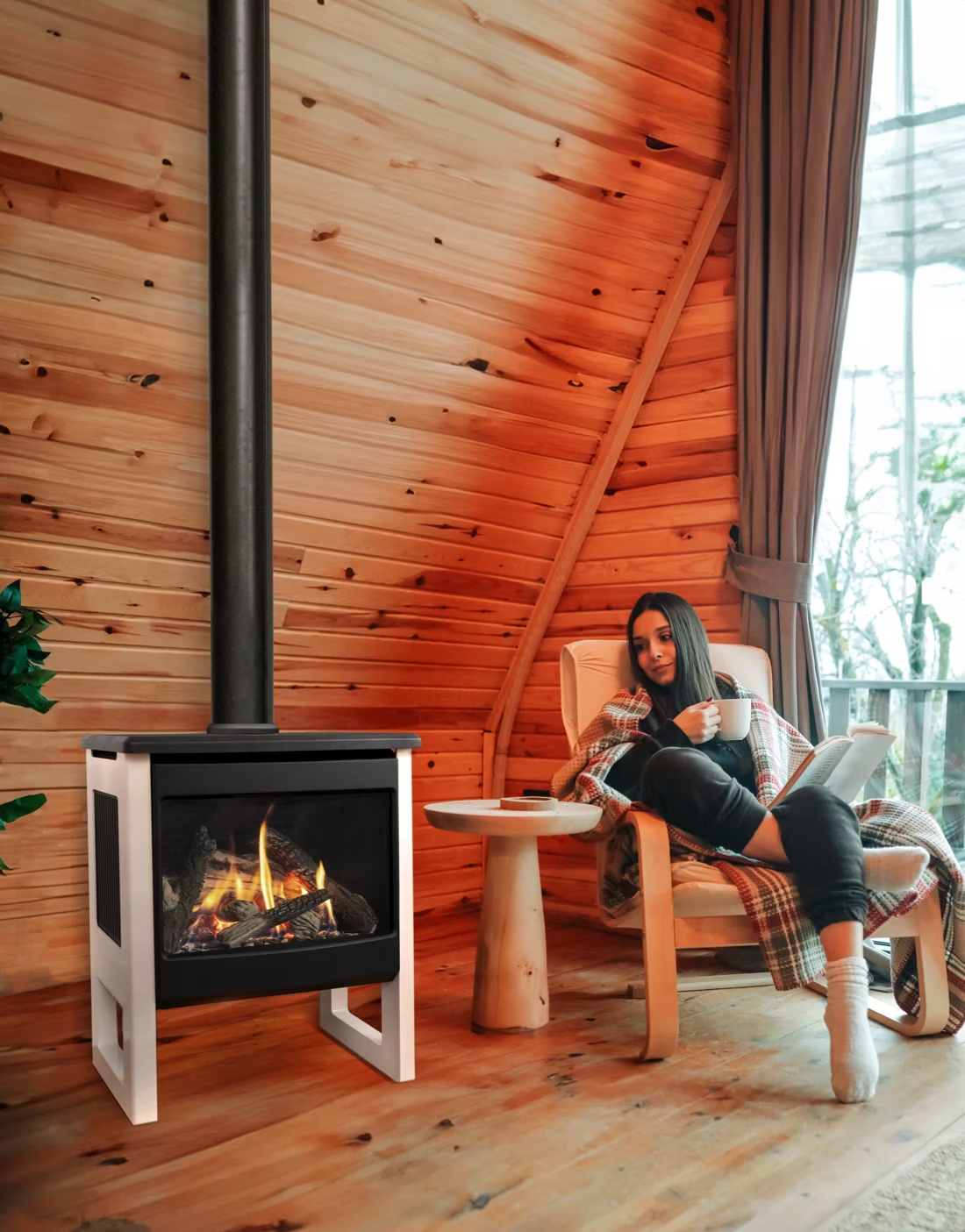
A hearth built for ambiance first, heat second.
West Lake Hills sits in climate zone 2A on the west bank of the Colorado River, just outside Austin, where winter is short and mild—the average low is 42°F and the heating season barely registers next to a place like Fargo or Bismarck. Nobody here is buying a fireplace to survive January. They're buying one because a hillside home overlooking the Hill Country deserves a real focal point, and because a direct-vent gas unit delivers that look instantly, with none of the ash, smoke, or storage hassle that comes with wood.
Most homes in West Lake Hills run on propane rather than piped natural gas, since municipal gas lines are limited this far into the hills—your installer will confirm what's already run to your house and size a tank or line accordingly. Electric service comes from Bluebonnet Electric Cooperative or Pedernales Electric Cooperative depending on which side of the city you're on, and residential rates in the 11–12 cent range make electric fireplaces a reasonable secondary option for a den, office, or guest suite where a gas line isn't practical.
Three steps. No salesperson until you're ready.
Tell us about your project
Your zip code, your situation, and the fuel you're leaning toward—or let the answers point you to one.
See what's actually available
The brands dealers within 100 miles genuinely carry—real options, never a catalog mirage.
Get your dealer & Project Guide
A trusted local dealer, plus the free Project Guide & Parts List that names every component of the job.
Frequently Asked Questions
How much does a gas fireplace installation cost in West Lake Hills?
A typical gas fireplace installation in West Lake Hills runs between $4,500 and $11,000, with the wide range coming down to venting and gas supply. A direct-vent insert going into an existing masonry fireplace with propane or gas already nearby sits toward the lower end. A new built-in gas fireplace for a remodel—especially one requiring a new propane tank set and buried gas line across a sloped lot—lands toward the higher end. Given how many homes here are on hillside lots with limited access, get a local retailer out for an in-home walk-through before assuming a number.
Should I run natural gas or use propane for my fireplace?
Most West Lake Hills homes end up on propane, since city gas mains don't reach many of the hillside streets off Bee Cave Road and Rollingwood-adjacent areas. If you already have a propane tank for a range or water heater, tying in a fireplace is usually simple. If you're starting from scratch, a local propane supplier will set a tank (buried or above-ground) and your hearth installer coordinates the line run from there. Either fuel—natural gas where it's available, propane where it isn't—burns cleanly and performs identically in the fireplace itself; the decision really comes down to what's already at your address.
Can I convert my existing wood-burning fireplace to gas?
Yes, and it's a common upgrade for the older ranch and hill-country homes scattered through West Lake Hills. A gas insert or log set installed into your existing masonry firebox uses your current chimney as the vent path, typically for $4,500 to $9,000 depending on the insert and whether new gas or propane line work is needed. Since air quality isn't a local concern the way it is in some parts of the state, there's no permitting hurdle related to emissions—the main variable is simply getting fuel to the fireplace.
Will a gas fireplace still work if the power goes out?
Most will, which matters given that Central Texas ice storms have knocked out power across Travis County more than once in recent winters. Units with IPI (intermittent pilot ignition) run on a small battery backup that kicks in the moment power drops, so the fireplace lights and operates normally off batteries. Valor units go a step further—their pilot assembly generates its own electricity via thermocouple, so there's no battery to remember at all. For a home that might lose power during a rare winter freeze, ask your local dealer about the ignition system before you commit to a model.
Is a wood-burning fireplace still an option here?
Wood fireplaces are uncommon in new installations around West Lake Hills—with mild winters and no need for serious heat output, most homeowners skip the ash, storage, and upkeep of cordwood in favor of gas. That said, oak, pecan, and mesquite are all available locally if someone specifically wants a traditional wood-burning setup for an outdoor living space or a legacy fireplace, and a handful of homes keep an existing wood fireplace as-is for occasional use. For nearly everyone else, gas delivers the same visual warmth without the maintenance.
What's the difference between a gas insert, gas fireplace, and gas log set?
A gas log set is the simplest option—realistic ceramic logs installed into an existing wood-burning fireplace, usually vent-free or vented through the existing chimney, and the lowest-cost way to get instant gas flame. A gas insert is a sealed, more efficient unit that also drops into an existing masonry firebox but uses direct-vent technology for better performance and code compliance. A gas fireplace is a fully built-in unit for new construction or a remodel where there's no existing fireplace at all. For most West Lake Hills homes with an existing hearth they want to modernize, an insert or log set covers it; new builds and additions usually call for a built-in unit.
Do I need a permit for a gas fireplace in West Lake Hills?
Yes—the City of West Lake Hills requires a building permit for new gas fireplace installations, and any new gas line work needs to be done by a licensed gas-fitter, typically pulling a separate mechanical permit. Most established local hearth retailers handle this paperwork as part of the installation, which is one of the real advantages of using a certified installer instead of a handyman: they coordinate the permit, the line work, and the final inspection as one job.
How often does a gas fireplace need servicing?
An annual inspection is the standard recommendation, even for a fireplace that only runs a few weeks a year here. A technician checks the burner, pilot assembly, venting, and gas connections, and cleans the glass—usually a $150 to $250 visit. Because West Lake Hills fireplaces tend to get lighter seasonal use than a fireplace in a place with a real winter, some homeowners stretch this to every other year, but if the unit is your propane system's only appliance, annual service is worth keeping on schedule for safety's sake.
Gas vs. electric—which makes more sense for my home?
Gas delivers real flame, real heat output, and the classic look most West Lake Hills homeowners are after for a great room or primary living space—worth the gas line or propane tank investment for a focal-point fireplace. Electric fireplaces skip the venting and fuel-line question entirely, plug into a standard outlet, and run on Bluebonnet or Pedernales electric service at a straightforward per-kWh cost, which makes them a practical fit for a bedroom, office, or secondary space where running gas isn't worth the trouble. Given the mild climate here, plenty of homes end up with one gas fireplace as the centerpiece and an electric unit or two elsewhere.
Is my gas fireplace wasting gas?
If it was installed more than 15 years ago, probably. Older gas fireplaces keep a standing pilot light burning all the time, and that little flame can cost a couple hundred dollars a year. Newer models use pilot-on-demand ignition—the pilot lights only when you use the fireplace and goes out when you turn it off.
Can I put a TV above my fireplace?
Yes—with an asterisk. Fireplaces are hot and TVs don't like heat. Either put a mantel between them to deflect rising warmth, or choose a fireplace with heat-management technology that creates a cool zone on the wall above—the wall stays around 125 degrees, barely warm, while the room still gets full heat. If you like clean lines and don't want a mantel, heat management is the answer.
Can a fireplace actually lower my heating bill?
Yes—by creating a comfort zone. A furnace heats every square foot of the house just to warm the one room you're in; a gas fireplace on low burns roughly a sixth of the gas a typical furnace does. Set the furnace around 55–60 degrees as a baseline, then heat the rooms your family actually uses. Families who heat this way commonly save $20–$60 a month.
Can I install a fireplace myself?
If you're putting a fire in your house on purpose, it's best to work with an expert. Unless you're genuinely experienced in framing, gas line, vent pipe, and the national code on clearances to combustibles, have a professional do it—and ideally the same company that sells you the fireplace, so warranty, service, and liability all live under one roof.
Nearby Dealers
Hearth shops serving West Lake Hills and the surrounding area. Every listing shows whether it is a WhyFire partner, a dealer we have verified as authorized for the brands we recommend, or a local business carrying hearth products. No manufacturer pays for placement. How we verify dealers →
EarthCore Industries
Backyard & Patio Store - Austin
Tri-Supply - Austin
Jules Design Bar
Webco Distributing Company, Inc.
Crafted Flames
Gas Logs Express & Bbq
Parrish & Company Inc - Round Rock
Georgetown Energy
Quality Fire
Get your West Lake Hills gas fireplace project planned right.
Tell us about your home and we'll match you with a trusted local dealer and send over a free Project Guide & Parts List—the exact fireplace, vent kit, and parts your project needs, with no big-box guesswork.
Find Your Fireplace →