
Instant Heat, Real Ambiance—Even in the Hill Country.
Bee Cave winters rarely demand a furnace, but a gas fireplace still earns its place in a Hill Country great room—and keeps you warm if the grid ever fails again. Find the right unit and connect with a trusted local dealer.
Every Project Starts From One of These Five Situations
Built for comfort, not survival heating.
At 927 feet in the Texas Hill Country west of Austin, Bee Cave sees a winter low average of just 39°F and only about 1,811 heating degree days a year—a fraction of what a place like Duluth, MN logs in a single hard month. Oak, pecan, and mesquite are the woods people around here know best, but they're mostly stacked next to a smoker for brisket, not burned for warmth. With mild winters and periodic burn restrictions during Hill Country drought, wood-burning fireplaces have largely given way to gas as the default choice in new Bee Cave construction, from Falconhead to the custom builds off RR 620.
Gas service here is mixed. Some established pockets closer to the utility corridor run on natural gas, but many Bee Cave subdivisions—especially newer Hill Country developments built on acreage outside the tightest utility grid—rely on propane, either from an existing tank or a fresh install sized to the fireplace's BTU output. Either way, a direct-vent gas fireplace delivers instant, controllable heat for the handful of genuinely cold nights each winter, plus a backup heat source worth having: Travis County residents remember Winter Storm Uri in February 2021, when both Bluebonnet Electric Cooperative and Pedernales Electric Cooperative territory saw days of rolling outages in freezing temperatures.
Three steps. No salesperson until you're ready.
Tell us about your project
Your zip code, your situation, and the fuel you're leaning toward—or let the answers point you to one.
See what's actually available
The brands dealers within 100 miles genuinely carry—real options, never a catalog mirage.
Get your dealer & Project Guide
A trusted local dealer, plus the free Project Guide & Parts List that names every component of the job.
Frequently Asked Questions
How much does a gas fireplace installation cost in Bee Cave?
Expect roughly $3,500 to $9,000 for a direct-vent gas fireplace or insert installed in an existing Bee Cave home, depending on the unit and how much venting and gas line work is involved. Homes without an existing gas line—common in the newer Hill Country subdivisions west of Austin—often need a propane tank set (above-ground or buried), which typically adds $1,500 to $3,000 on top of the fireplace and installation labor. Homes already on natural gas or with an existing propane tank land toward the lower end. A local dealer will give you a firm number after seeing your fireplace opening and gas access in person.
Can I convert my existing wood-burning fireplace to gas?
Yes, and it's a common project in Bee Cave—many homes here were built with a traditional masonry wood-burning fireplace that rarely, if ever, gets used given the mild climate and periodic burn bans during dry Hill Country summers and falls. A gas log set or full gas insert typically runs $3,000 to $6,500 installed, using your existing chimney with a liner for venting. It's an easy upgrade from a fireplace that mostly collects dust between the occasional 30-degree January night.
Should I plan for natural gas or propane in Bee Cave?
It depends on your street. Bee Cave sits at the edge of the Austin metro's natural gas footprint, and some closer-in neighborhoods have access to a gas main, while many properties on Hill Country acreage—particularly newer developments off RR 620 and Highway 71—run entirely on propane. If you're not sure which you have, check your water heater or range; if either is gas-fired, you likely already know your setup. A local hearth dealer can confirm what's available at your address and size a propane tank correctly if one's needed.
Will my gas fireplace still work if the power goes out?
Most direct-vent gas fireplaces with intermittent pilot ignition (IPI) run on battery backup and will light and operate normally during an outage—you just need to keep fresh batteries in the unit. Valor fireplaces take a different approach: their pilot generates its own electricity through the thermocouple, so there's no battery to remember at all. After the multi-day outages parts of Travis County saw during Winter Storm Uri, this is a question worth asking your dealer directly, especially if your home relies on Bluebonnet or Pedernales Electric Cooperative service in a more rural pocket of the co-op territory.
What's the difference between a gas fireplace, insert, and stove?
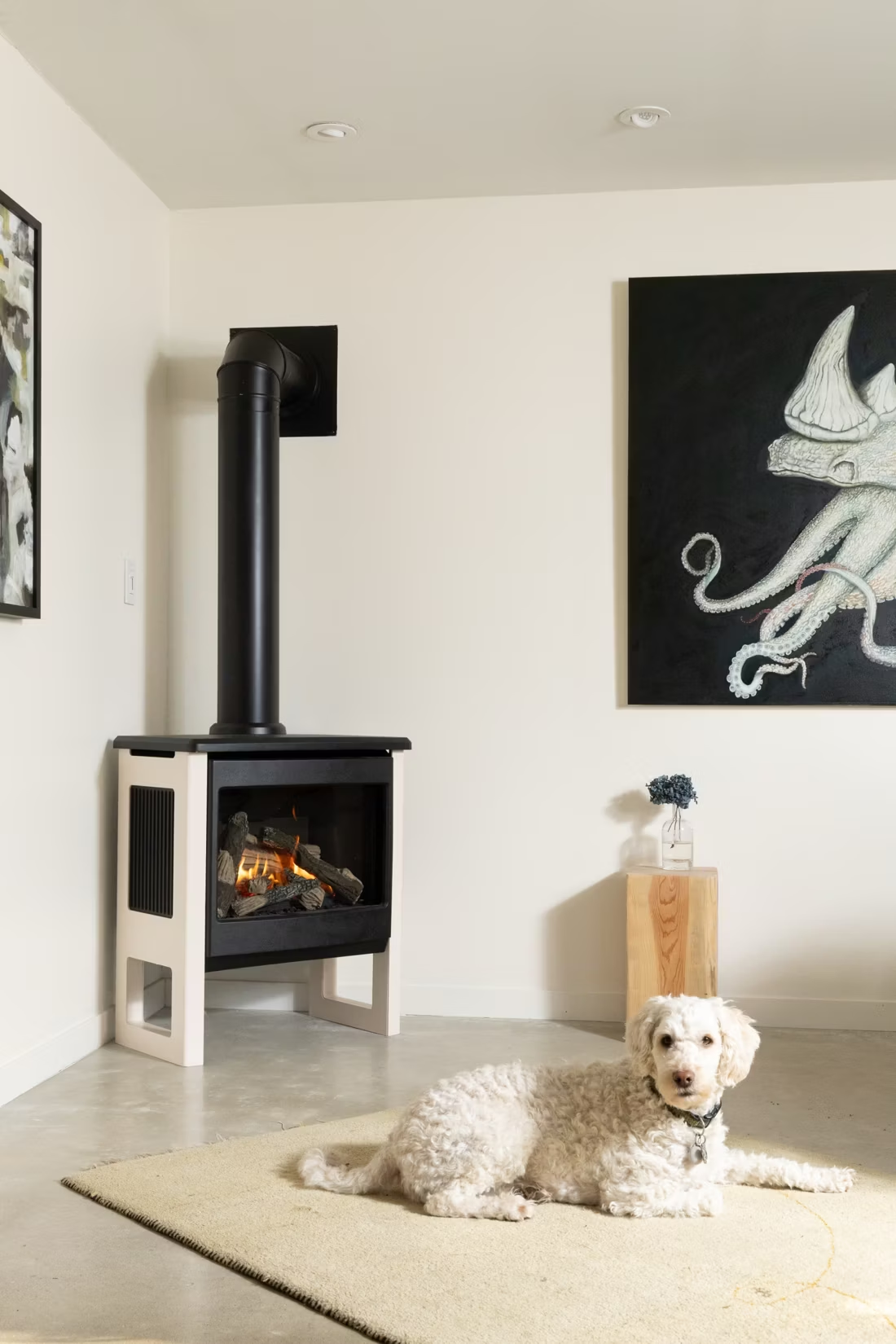
A gas fireplace is a fully built-in unit, typically specified during new construction or a remodel—a natural fit for the great rooms common in newer Bee Cave homes. A gas insert drops into an existing masonry wood-burning fireplace and uses the chimney as its vent path, which is the more common project in older Bee Cave and Lakeway-adjacent homes. A gas stove is a freestanding unit, less common here but sometimes chosen for a casita, guest house, or covered patio space. Your existing opening, or lack of one, usually determines which makes sense.
Do I need a permit to install a gas fireplace in Bee Cave?
Yes. Homes within Bee Cave city limits need a building permit and gas line permit through the City of Bee Cave's Development Services Department, and the gas connection itself has to be run by a licensed gas-fitter. Properties in the unincorporated parts of Travis County just outside city limits go through Travis County's permitting process instead. A certified local hearth dealer typically pulls these permits as part of the installation, so you're not coordinating the fireplace installer, the gas line, and the inspection separately.
Are vent-free gas fireplaces allowed in Texas?
Yes, Texas permits vent-free (unvented) gas fireplaces, and they do show up in Bee Cave, particularly as supplemental units in a study or bonus room. That said, direct-vent units—which draw combustion air from outside and exhaust it back outside through a sealed pipe—are still the more common and more broadly recommended choice, since they don't introduce moisture or combustion byproducts into the living space. If a vent-free unit is on your list because of a room without existing venting access, ask your dealer about the required room size and oxygen depletion sensor rules before you commit.
How often does a gas fireplace need to be serviced?
Plan on an annual inspection, ideally in early fall before the handful of genuinely cold nights Bee Cave gets each winter. A technician checks the burner, pilot assembly, gas connections, and venting, and cleans the glass and interior—a quick visit compared to wood chimney sweeping, but still important, especially for propane systems where a technician should also verify tank pressure and line integrity. Most Hill Country service providers charge in the $150 to $250 range for this visit.
Gas fireplace or electric fireplace—which fits a Bee Cave home better?
Gas delivers real heat output and genuine flame, and it can run during a power outage with the right ignition system—worth something after the Uri outages many Bluebonnet and Pedernales co-op members remember. Electric fireplaces cost far less to install (often under $1,200, sometimes just a plug-in unit), don't require any gas line or propane tank, and run cheaply given the area's residential electric rates of roughly 11.4 to 12.2 cents per kWh. For a primary living space or a home that already needs a backup heat plan, gas usually wins. For a secondary room, a rental, or a quick ambiance upgrade with no gas access, electric is often the simpler call.
Is my gas fireplace wasting gas?
If it was installed more than 15 years ago, probably. Older gas fireplaces keep a standing pilot light burning all the time, and that little flame can cost a couple hundred dollars a year. Newer models use pilot-on-demand ignition—the pilot lights only when you use the fireplace and goes out when you turn it off.
Why is my open fireplace making my house colder?
Open fireplaces suck—literally. As the fire burns, it consumes air your furnace already paid to heat and pulls it out through the chimney, so the house is actually colder after the fire goes out than before you lit it. An insert fixes this: it seals the chimney, puts fixed glass across the front, and turns that hole in your house into a real heat source.
What is an in-home preview and do I need one?
It's a visit where a hearth professional measures your space, confirms the model you picked actually works in your home, and walks the specs—framing, gas line, venting, finish work—before anything is ordered. Some details you just can't know until you see the house. Never make a down payment without one; it's the single most-skipped step that burns buyers.
Does a fireplace add value to my home?
On average, a fireplace adds back to the home about the same amount you spent installing it. Add the monthly savings from heating the rooms you actually use instead of the whole house—often hundreds of dollars a year—and the value case is strong before you even count what a fire does for how your family uses the room.
Nearby Dealers
Hearth shops serving Bee Cave and the surrounding area. Every listing shows whether it is a WhyFire partner, a dealer we have verified as authorized for the brands we recommend, or a local business carrying hearth products. No manufacturer pays for placement. How we verify dealers →
Jules Design Bar
Backyard & Patio Store - Austin
EarthCore Industries
Crafted Flames
Quality Fire
Tri-Supply - Austin
Gas Logs Express & Bbq
Webco Distributing Company, Inc.
Parrish & Company Inc - Round Rock
Get matched for your gas fireplace in Bee Cave.
Tell us about your home and whether you're on natural gas or propane, and we'll match you with a trusted local Bee Cave dealer plus a free Project Guide & Parts List—the exact parts, vent kit, and installer recommendation for your project.
Find Your Fireplace →