
Comfort you control, even when the grid can't.
Manor winters are mild most years, but Central Texas cold snaps and ERCOT outages have a way of finding you. Find the right gas fireplace and get matched with a trusted local dealer.
Every Project Starts From One of These Five Situations
Built for Central Texas cold snaps, not Duluth winters.
Manor sits in climate zone 2A at just 558 feet elevation, with an average winter low around 39°F and only about 1,751 heating degree days a year—a fraction of what a place like Bismarck, ND sees. Most days, a gas fireplace here is about ambiance and evening comfort more than survival heat. But Travis County has learned the hard way, especially since Winter Storm Uri, that a sudden hard freeze paired with an ERCOT grid failure can turn a mild-winter town into an emergency in a matter of hours.
Manor doesn't have a municipal natural gas utility running mains through most of the area—homes here are served by Bluebonnet Electric Cooperative and Pedernales Electric Cooperative, not a gas company. That means the large majority of gas fireplace installs in and around Manor run on propane, with a tank set on the property, rather than piped natural gas. The upside: a properly configured gas fireplace with a millivolt or battery-backed ignition system will still light and heat a room when the power is out, which is exactly the scenario Central Texas homeowners have started planning around.
Three steps. No salesperson until you're ready.
Tell us about your project
Your zip code, your situation, and the fuel you're leaning toward—or let the answers point you to one.
See what's actually available
The brands dealers within 100 miles genuinely carry—real options, never a catalog mirage.
Get your dealer & Project Guide
A trusted local dealer, plus the free Project Guide & Parts List that names every component of the job.
Frequently Asked Questions
How much does a gas fireplace installation cost in Manor?
Most gas fireplace and insert installations in Manor run between $3,800 and $9,500. A direct-vent propane insert into an existing masonry fireplace, using a propane tank you already have, sits toward the lower end. A new built-in gas fireplace for a remodel or new construction—with framing, venting, and a fresh propane line run from a newly installed tank—lands toward the higher end. Because most of Manor isn't on a natural gas main, budget for propane tank and line work as part of the estimate rather than assuming a simple gas-appliance hookup.
Is natural gas available in Manor, or do I need propane?
Most of Manor and the surrounding unincorporated parts of Travis County are not served by a natural gas utility—the area is served by Bluebonnet Electric Cooperative and Pedernales Electric Cooperative for power, not a gas company for fuel. In practice, that means the overwhelming majority of gas fireplace installations in the Manor area run on propane, either from an existing tank or a new above-ground or buried tank set by a local propane supplier. If you're near the edge of Austin's service territory it's worth confirming with a local installer, but plan on propane as the default.
Will my gas fireplace still work if the power goes out?
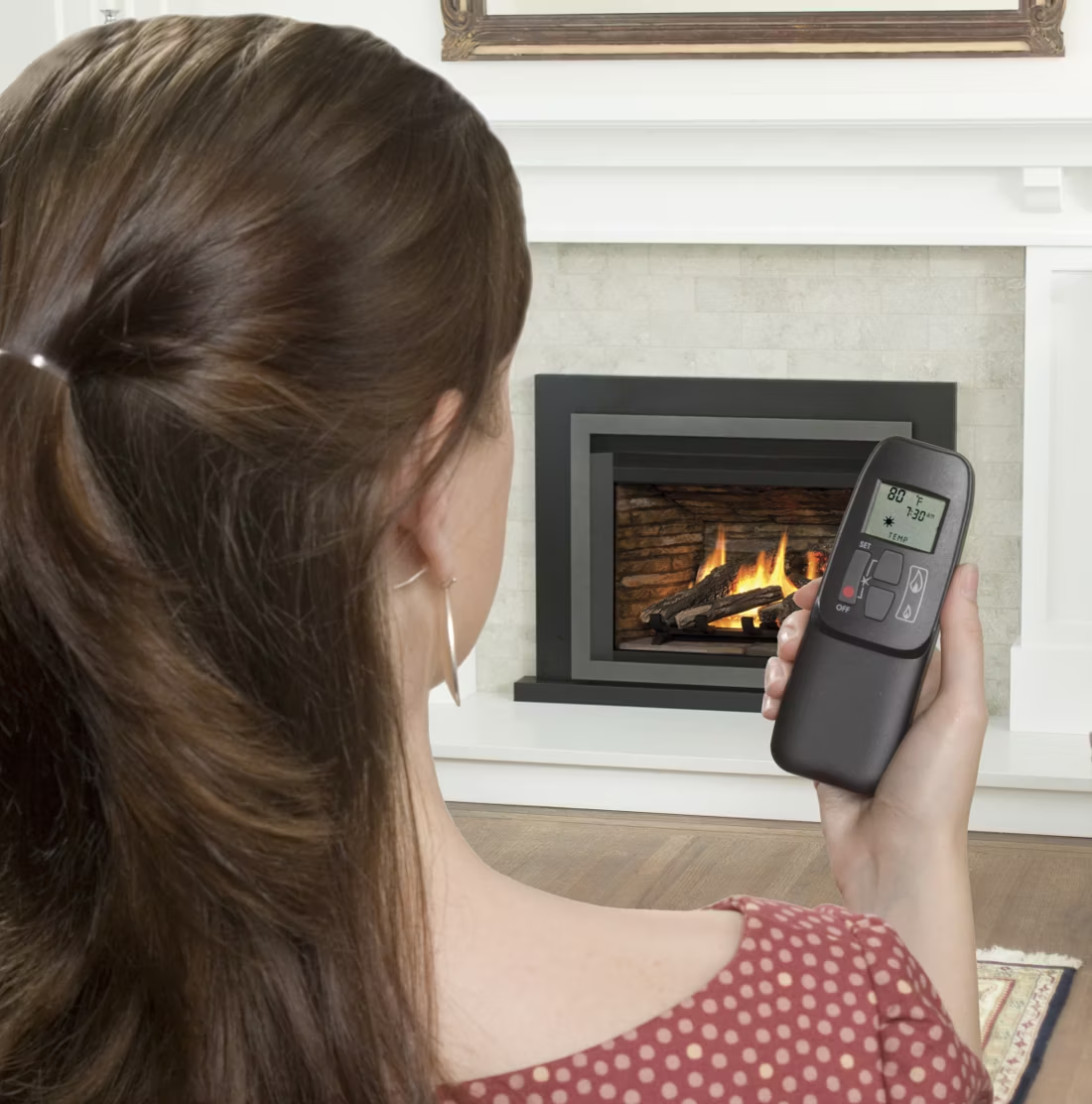
It depends on the ignition system, and this matters more in Travis County than it does in most places because of ERCOT's track record during hard freezes. Units with a standing pilot or millivolt ignition system will light and run with zero electricity—no batteries, no grid power needed. Units with IPI (intermittent pilot ignition) typically include a battery backup that keeps them running when power drops, but you have to keep fresh batteries in the unit year-round. If backup heat during an outage is a priority for your Manor home, tell your local dealer that up front—it changes which models make sense.
What's the difference between a gas fireplace, gas insert, and gas stove?
A gas fireplace is a fully built-in unit installed into a framed wall opening—the right call for new construction or a remodel. A gas insert slides into an existing masonry fireplace and uses the chimney chase (lined and sealed) to vent, converting an old wood-burning firebox into an efficient, code-compliant heat source. A gas stove is a freestanding cabinet unit, similar in shape to a wood stove, that can sit against a wall with the right clearances. Manor has a good mix of newer subdivisions and older homes with existing masonry fireplaces, so which option fits depends mostly on whether you already have a fireplace opening to work with.
Do I need a permit to install a gas fireplace in Manor?
Yes. If your property is within Manor city limits, permitting runs through the City of Manor Building Permits Department; if you're in the unincorporated parts of Travis County near Manor, it falls under Travis County Development Services instead. Both require a mechanical/gas permit and inspection for a new gas appliance and line, and propane tank placement has its own setback rules from the structure and property line. Reputable local hearth dealers handle this paperwork as part of the install, which is one of the bigger reasons to avoid a big-box DIY kit for a gas appliance.
Vented vs. vent-free gas fireplaces—what's allowed in Texas?
Both are legal in Texas, but they're not interchangeable. Vented (direct-vent) fireplaces draw combustion air from outside and exhaust it back outside through sealed pipe—they produce real heat output and are the standard recommendation for a primary heat source. Vent-free units burn fuel directly into the room air and release some water vapor and combustion byproducts indoors, so they carry strict room-size and ventilation requirements and generally aren't a good fit as a whole-room heater. For Manor homes, especially ones leaning on the fireplace as backup heat during an outage, a vented propane unit is almost always the better long-term choice.
Do I need a big fireplace for a mild climate like Manor's?
Usually not. With only about 1,751 heating degree days a year and average winter lows in the high 30s, most Manor homes are better served by a mid-size gas fireplace or insert chosen for looks, ambiance, and occasional backup heat rather than a large unit sized to carry a whole house through a hard winter. Oversizing in a mild climate like this just means you'll run the unit on low most of the time. A local dealer can size the BTU output to your room rather than to a worst-case cold snap.
How often does a gas fireplace need to be serviced?
Plan on an annual inspection, ideally in early fall before the first cold front rolls through Central Texas. A certified technician checks the burner, pilot assembly, venting, gas connections (propane fittings especially, since a slow leak at a tank connection is a real safety issue), and cleans the glass and interior. This runs roughly $150 to $250 in the Manor/Austin metro area and is far less involved than a wood-chimney sweep, but skipping it is still the most common cause of avoidable service calls.
Gas vs. electric fireplace—which makes more sense for a Manor home?
Gas (propane, in Manor's case) gives you real flame, higher heat output, and—with the right ignition system—the ability to run during a power outage, which matters given ERCOT's recent history. Electric fireplaces plug into a standard outlet, need no venting or gas line, and cost far less to install, but they depend entirely on grid power and Bluebonnet or Pedernales electric service staying up. At roughly $0.114 to $0.122 per kWh through the local co-ops, electric units are cheap to run day-to-day. For a mild climate like Manor's where the fireplace is mostly about ambiance, either can work well; if backup heat during a freeze is the priority, gas has the clear edge.
What's the difference between an insert and a zero-clearance fireplace?
An insert is a fireplace that slides into a pre-existing wood-burning fireplace—if you don't have one, there's nothing to insert it into. A zero-clearance fireplace is built into a framed wall, which makes it the answer for remodels and new construction. Simple test: existing masonry fireplace means insert; blank or framed wall means zero-clearance.
Can I put a TV above my fireplace?
Yes—with an asterisk. Fireplaces are hot and TVs don't like heat. Either put a mantel between them to deflect rising warmth, or choose a fireplace with heat-management technology that creates a cool zone on the wall above—the wall stays around 125 degrees, barely warm, while the room still gets full heat. If you like clean lines and don't want a mantel, heat management is the answer.
Can a fireplace actually lower my heating bill?
Yes—by creating a comfort zone. A furnace heats every square foot of the house just to warm the one room you're in; a gas fireplace on low burns roughly a sixth of the gas a typical furnace does. Set the furnace around 55–60 degrees as a baseline, then heat the rooms your family actually uses. Families who heat this way commonly save $20–$60 a month.
What is an in-home preview and do I need one?
It's a visit where a hearth professional measures your space, confirms the model you picked actually works in your home, and walks the specs—framing, gas line, venting, finish work—before anything is ordered. Some details you just can't know until you see the house. Never make a down payment without one; it's the single most-skipped step that burns buyers.
Nearby Dealers
Hearth shops serving Manor and the surrounding area. Every listing shows whether it is a WhyFire partner, a dealer we have verified as authorized for the brands we recommend, or a local business carrying hearth products. No manufacturer pays for placement. How we verify dealers →
Webco Distributing Company, Inc.
Parrish & Company Inc - Round Rock
Tri-Supply - Austin
Top Hat Chimney Sweeps
EarthCore Industries
Georgetown Energy
Area – Georgetown, Tx
Crafted Flames
Gas Logs Express & Bbq
Backyard & Patio Store - Austin
Jules Design Bar
Quality Fire
Find your gas fireplace in Manor.
Tell us about your home and we'll send a free Project Guide & Parts List for your Manor gas fireplace project—sized right, with the vent kit specified, and matched to a trusted local dealer who can pull the permit and install it correctly.
Find Your Fireplace →