
Keep Your Family Warm and Safe—No Matter What
With only 942 heating degree days and winters that rarely dip below the mid-40s, wood heat isn't the default here. But if you want one—for backup power outages, ambiance, or a den that pairs with your smoker—we'll match you with a local dealer who can do it right.
Every Project Starts From One of These Five Situations
Mild Gulf Coast winters mean wood heat is the exception, not the rule.
San Patricio County sits in climate zone 2A along the Coastal Bend, between Corpus Christi Bay and the ranchland around Sinton, Mathis, Odem, and Taft. With an average winter low of 47°F and just 942 heating degree days a year—a small fraction of what a place like Bismarck, ND or Duluth, MN sees in a single month—most homes here are built and equipped for cooling, not heating. Central AC with a heat strip or heat pump handles the handful of genuinely cold nights each winter, and that's typically all a household needs.
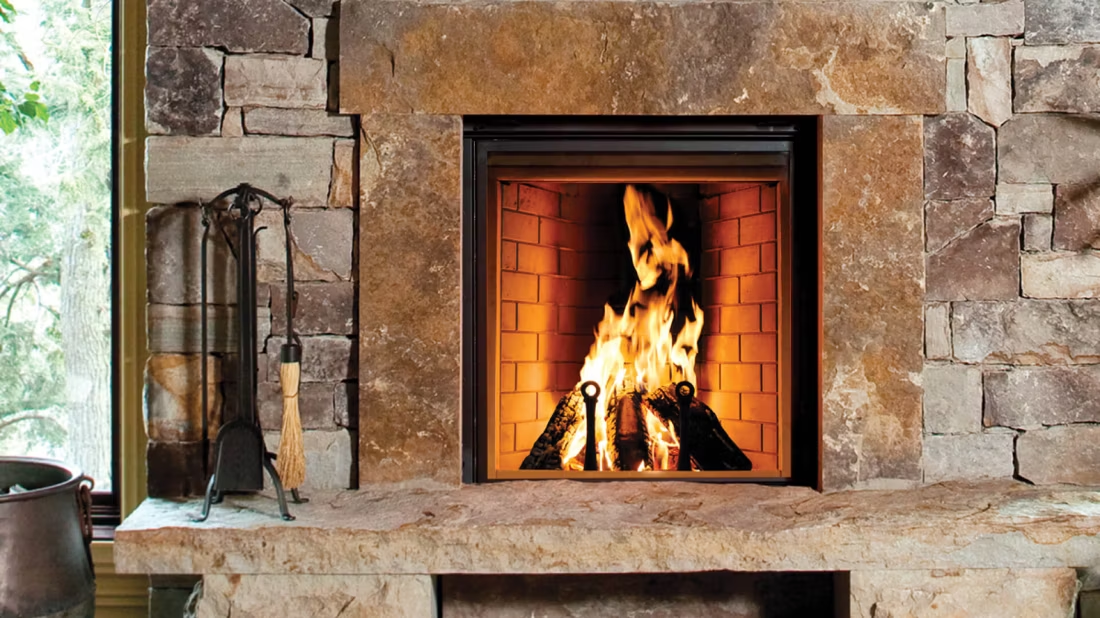
That said, wood heat hasn't disappeared entirely. Winter Storm Uri in February 2021 knocked out power across South Texas for days, and some rural and ranch households in the county have since added a wood stove or fireplace as a hedge against the next grid failure. Others want one purely for the atmosphere of a real fire in a den or living room a few nights a year. And the region's wood culture runs deep in a different direction: oak, pecan, and mesquite—the same species available locally for a stove—are staples of South Texas barbecue and smoking, so plenty of San Patricio County homeowners already have a relationship with these woods even if they've never burned one indoors. If you fall into any of these categories, a properly sized, correctly vented unit from a trusted local dealer still makes sense—it's just not the default install it would be further north.
Three steps. No salesperson until you're ready.
Tell us about your project
Your zip code, your situation, and the fuel you're leaning toward—or let the answers point you to one.
See what's actually available
The brands dealers within 100 miles genuinely carry—real options, never a catalog mirage.
Get your dealer & Project Guide
A trusted local dealer, plus the free Project Guide & Parts List that names every component of the job.
Frequently Asked Questions
How much does a wood stove or fireplace installation cost in San Patricio County?
Because wood heat is uncommon here, pricing isn't as standardized as it is in colder markets, but a straightforward wood stove or zero-clearance wood fireplace install typically runs in the $3,500–$8,000 range depending on the unit, whether a masonry chimney already exists, and how much new Class A pipe or through-roof venting is needed. New construction without an existing chimney tends to land at the higher end. Given how few installers in the county specialize in wood-burning appliances, expect a smaller pool of qualified dealers than you'd find for gas or electric—get a firm in-home quote before committing.
Does wood heat actually make sense in San Patricio County?
For most households, no—not as primary heat. With winter lows averaging 47°F and under 1,000 heating degree days a year, a wood stove would sit unused most of the winter. Where it does make sense: as backup heat for grid outages like Winter Storm Uri, as a secondary heat source on a ranch property with an outbuilding or bunkhouse, or simply for the ambiance of a real fire on the handful of genuinely cold nights the Coastal Bend gets each year. If your goal is reliable everyday heat, a gas fireplace or your existing heat pump will serve you better.
What size wood stove do I need for a home in San Patricio County?
Given the mild climate, most local installs are undersized on purpose—homeowners want a small to mid-size stove (rated for 1,000–1,500 sq ft) for supplemental warmth in one room, not a whole-home heating solution. Oversizing is a common mistake here specifically because the stove will rarely run long or hot enough to reach efficient combustion temperatures, which can lead to more creosote buildup than in a colder climate where the stove runs hard all winter. A local dealer can size correctly for occasional, not constant, use.
Do I need a permit to install a wood stove in San Patricio County?
Requirements vary by jurisdiction—Sinton, Portland, Mathis, Ingleside, and Odem each handle building permits separately from unincorporated San Patricio County, so check with your local city building department or the county's office before installing. Because wood-burning installs are infrequent here, not every local contractor is equally familiar with the current clearance and venting code, so ask specifically about experience with wood appliances, not just gas or electric fireplaces, when you get quotes.
Wood vs. gas—which makes more sense for my home in San Patricio County?
For nearly all San Patricio County homes, gas is the more practical choice. Natural gas and propane fireplaces light instantly, don't require firewood storage in a humid Gulf Coast climate where wood can mold or attract pests, and handle the occasional cold night without any of the upkeep a wood stove demands for a fuel you'll rarely use. Wood only pulls ahead if you specifically want fire during a power outage (a wood stove needs no electricity to run) or you want the experience of a real fire regardless of heating need. Several households end up with both: gas for daily convenience, wood as storm-season insurance.
What type of wood-burning unit works best for occasional or backup use?
A small freestanding wood stove or a wood insert into an existing masonry fireplace tends to work better here than a large open masonry fireplace, since a stove holds and radiates heat efficiently even when it's only lit a handful of times a year. If the goal is strictly power-outage backup, look for a simple non-catalytic stove without electronic components—nothing to fail when the grid does. If ambiance is the priority and backup heat isn't a concern, a smaller zero-clearance wood fireplace gives you the visual of a real fire without the sizing demands of a full heating appliance.
Where can I get firewood in San Patricio County?
Oak, pecan, and mesquite are the three species most commonly available locally, and all three are dual-purpose—they're the same woods used across South Texas for smoking brisket and other barbecue, so ranch suppliers and firewood vendors in the area often sell to both stove owners and pitmasters. Because year-round demand for stove-grade seasoned firewood is low here, availability can be less consistent than in colder regions—plan to buy and season wood ahead of hurricane or cold-front season rather than waiting until you need it.
Would an electric fireplace make more sense than wood for my home?
For pure ambiance with no venting, chimney, or firewood storage, an electric fireplace is often the simpler answer in a climate this mild—installation typically runs a few hundred to a little over a thousand dollars, there's no combustion byproduct to worry about in a humid coastal climate, and it can be plugged in almost anywhere. The tradeoff is that electric fireplaces won't function during a power outage, which is exactly the scenario that drives some San Patricio County homeowners toward wood in the first place. If backup heat during grid failures matters to you, wood or a battery-backed gas unit are the better fit.
Is a wood stove worth installing just in case of another storm like Uri?
It's a reasonable hedge, and it's the main reason a growing number of San Patricio County homeowners have looked into wood heat since February 2021. A wood stove needs no electricity and no gas line, so it will run when the grid and gas utilities are both down—a real advantage during a multi-day freeze event. That said, it's a significant investment for an event that may happen once every several years, so weigh it against simpler backup options like a portable generator or battery system if fire itself isn't something you want in the house. If you do go this route, a correctly sized, code-compliant install matters even more, since the stove may sit unused for long stretches between emergencies.
Why is my open fireplace making my house colder?
Open fireplaces suck—literally. As the fire burns, it consumes air your furnace already paid to heat and pulls it out through the chimney, so the house is actually colder after the fire goes out than before you lit it. An insert fixes this: it seals the chimney, puts fixed glass across the front, and turns that hole in your house into a real heat source.
What does it take to replace an existing fireplace?
Fireplaces are like icebergs—bigger behind the wall than in front of it. Replacement means removing the surrounding tile or stone (the finish material laps onto the fireplace face), pulling the old unit, setting the new one in the same enclosure, and re-finishing the wall. A hearth professional can determine what's behind your wall without demolition during an in-home preview.
How much should I budget for a fireplace?
For an average home—covering the fireplace, the vent pipe, and basic installation—a budget between $3,900 and $5,500 gives you a lot of options across wood, gas, and pellet. By the time you add finish work, gas line, and electrical, the average complete installation lands between $5,000 and $12,000 all-in. In a remodel or new build, a good rule is to put about 2.5% of the total project cost toward the fireplace.
What is an in-home preview and do I need one?
It's a visit where a hearth professional measures your space, confirms the model you picked actually works in your home, and walks the specs—framing, gas line, venting, finish work—before anything is ordered. Some details you just can't know until you see the house. Never make a down payment without one; it's the single most-skipped step that burns buyers.
Stove and Fireplace Dealers in San Patricio County
Listings include WhyFire partner dealers, dealers we have verified as authorized for the brands we recommend, and established local businesses that carry hearth products. Every listing shows which one it is. The ones marked Preferred run on WhyFire's software, so they can show you real pricing and book your appointment right here. No manufacturer pays for placement. How we verify dealers →
Martini Brick
C.c. Chimney
Kitchen & Bath Showplace
The Design Haus Of Victoria
Victoria Builder Supply Co Inc.
Find your wood fireplace fit in San Patricio County.
Tell us a bit about your home and how you'd actually use a wood-burning fireplace or stove—backup heat, ambiance, or both—and we'll match you with a trusted local dealer and a free Project Guide & Parts List built around your specific project.
Find Your Fireplace →