
Pellet heat for San Patricio County's rare cold snaps.
With such a short, mild heating season along the Coastal Bend, most San Patricio County homes never need a pellet stove—but if you're one of the few who do, from Sinton to Portland to Ingleside, we'll connect you with a dealer who can size and install it right.
Every Project Starts From One of These Five Situations
Pellet heat is the exception here, not the rule.
San Patricio County sits on the Texas Coastal Bend, wrapped around Nueces Bay and Corpus Christi Bay, in climate zone 2A. Winters here average a low of 47°F, and the county has a very short, mild heating season overall—a fraction of what a place like Duluth, Minnesota racks up in a single hard month. Towns like Sinton, Portland, Mathis, Ingleside, and Taft see genuinely cold mornings only a handful of times a winter, and most of those pass in a day or two. Oak, pecan, and mesquite grow throughout the county, but locally they're known more for the smoker than the hearth—this isn't wood-heat or pellet-heat country the way the upper Midwest or the mountain West is.
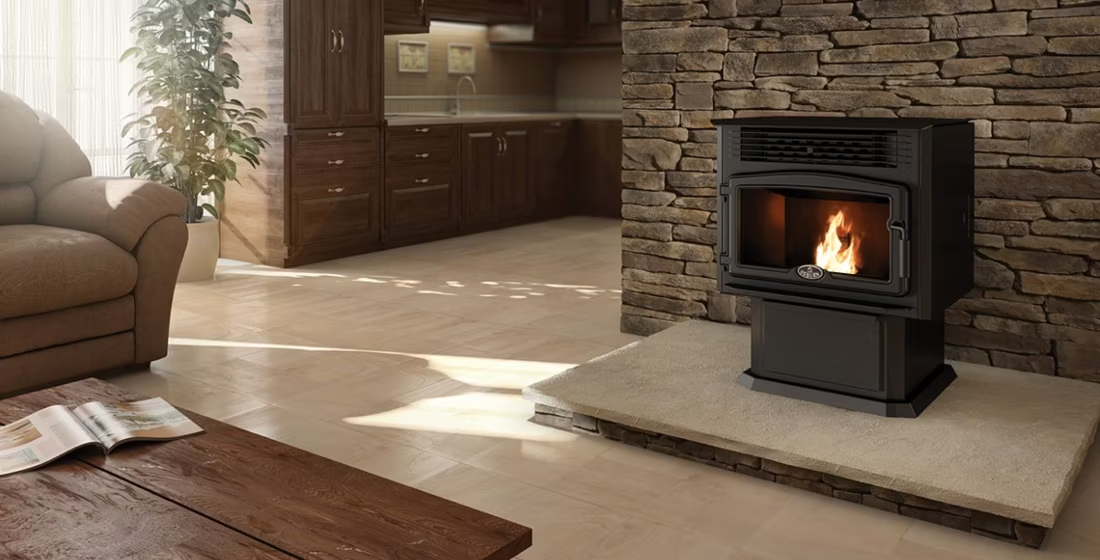
That's why we rate pellet fuel relevance here as not applicable rather than pretend otherwise. A hopper-fed pellet stove is built to run for hours on end burning through a bag of Forest Energy or Lignetics pellets—appliances designed for climates that need steady heat for months, not for a county that measures its cold season in days. There's also a practical wrinkle worth knowing before you commit: pellet stoves need electricity to run the auger and combustion blower, and San Patricio County's coldest stretches often arrive bundled with the same tropical systems and grid strain that knock out power—Winter Storm Uri in February 2021 is the local reference point everyone remembers. A stove that goes dark exactly when the grid does isn't much of a backup plan. For homeowners who still want a pellet unit—for ambiance, a hunting camp, or a detached workshop—it can be done, but gas and electric fireplaces, both rated standard for this climate, are the more practical fit for the vast majority of Coastal Bend homes.
Three steps. No salesperson until you're ready.
Tell us about your project
Your zip code, your situation, and the fuel you're leaning toward—or let the answers point you to one.
See what's actually available
The brands dealers within 100 miles genuinely carry—real options, never a catalog mirage.
Get your dealer & Project Guide
A trusted local dealer, plus the free Project Guide & Parts List that names every component of the job.
Frequently Asked Questions
Are pellet stoves practical for a San Patricio County home?
For most homes, no—not as a primary or even reliable supplemental heat source. San Patricio County has a very short, mild heating season overall and winter lows around 47°F, so the actual number of days a pellet stove would earn its keep is small. That's a very different calculus than a cold-climate market, where a pellet stove can run most of the winter. Here, it's more of a specialty or ambiance purchase than a heating solution.
Why is pellet fuel rated 'not applicable' for this area?
We rate fuels by how well they actually match local conditions, not by whether a stove can technically be installed. San Patricio County's climate zone (2A) and low heating demand mean a pellet stove would sit unused for most of the year, and its main practical selling point—automated, thermostatically controlled heat—has little to do here. Gas and electric fireplaces are rated standard instead because they match how Coastal Bend homeowners actually use supplemental heat: occasional, short bursts on the coldest nights rather than months of steady burning.
What happens to a pellet stove during a hurricane or a hard freeze like Winter Storm Uri?
It stops working. Pellet stoves rely on an electric auger to feed fuel and a blower to move combustion air, so when the power goes out, the stove goes out with it—no matter how full the hopper is. That's a real consideration in San Patricio County, where the coldest events tend to arrive with the same grid stress that caused widespread outages during the February 2021 freeze. If backup heat during an outage is the goal, a battery-backed gas fireplace or a properly vented propane heater is a more reliable choice for this area than a pellet stove.
Can I still get a pellet stove installed if I want one for a camp house or workshop?
Yes. A pellet stove isn't wrong for San Patricio County, it's just uncommon—plenty of homeowners install one for the ambiance of a real flame, a detached workshop, or a hunting camp near Mathis or out toward the Lake Corpus Christi area where the electric grid is more localized. A dealer serving the Coastal Bend can still spec and install a unit properly, including the pellet venting and hopper placement. It's worth being upfront with the dealer that this is a niche install so they can set realistic expectations on parts lead time.
Where can I actually buy pellet fuel near San Patricio County?
Don't expect to find bags of Forest Energy or Lignetics pellets stacked at every hardware store the way you would in Wisconsin or Minnesota. Because demand is so low along the Coastal Bend, pellet fuel is typically special-ordered through a hearth dealer or picked up seasonally from farm-and-feed retailers in the Corpus Christi metro area. If you go the pellet-stove route, ask your dealer about a standing order or a supplier who restocks regularly rather than counting on walk-in availability.
If pellet stoves aren't a great fit, what should San Patricio County homeowners consider instead?
Gas and electric fireplaces are both rated standard for this climate and cover the actual use case most homeowners here have: occasional supplemental warmth on the handful of genuinely cold nights each winter, plus year-round ambiance. A direct-vent gas fireplace or insert gives instant heat with no fuel storage, and many models keep working on battery backup during a power outage—a real advantage during hurricane season. Electric fireplaces cost even less to install and run purely on your existing wiring, no venting required.
Do I need a permit to install a pellet stove in San Patricio County?
Most jurisdictions in Texas require a building permit for any new fuel-burning appliance, including pellet stoves, and San Patricio County is no exception. Because installs are rare here, don't assume the permitting process is well worn—a hearth dealer who has actually pulled a pellet permit locally before will save you time versus a general contractor guessing at the requirements. Confirm with your city or county building office (Sinton, Portland, and other incorporated towns each handle permits separately from unincorporated county areas) before work begins.
What does a pellet stove installation cost in San Patricio County?
Because pellet installs are uncommon here, there isn't a well-established local price benchmark the way there is for gas or electric work. Nationally, a pellet stove install—unit, venting, and labor—typically runs somewhere in the $2,500 to $5,000 range depending on the model and whether new venting is needed; expect a Coastal Bend dealer to quote on the higher side of that if parts have to be shipped in for a niche request. Get a firm, itemized quote before committing, since this isn't a job where a dealer can just pull a standard price off a shelf.
Pellet vs. gas—which makes more sense for a Coastal Bend home?
For San Patricio County, gas wins for most households. A gas fireplace or insert gives instant, thermostat-controlled heat, requires no fuel storage or bag hauling, and—with the right ignition system—can keep running on battery backup when a tropical system or winter freeze takes down the grid. Pellet heat only makes sense here if you specifically want the look and feel of a real wood-pellet flame and you're not counting on it as backup heat during an outage. Given the county's mild 47°F average winter low and short, mild heating season, either fuel is really about ambiance and occasional comfort rather than necessity—but gas holds up better when the power does go out.
What's the difference between an insert and a zero-clearance fireplace?
An insert is a fireplace that slides into a pre-existing wood-burning fireplace—if you don't have one, there's nothing to insert it into. A zero-clearance fireplace is built into a framed wall, which makes it the answer for remodels and new construction. Simple test: existing masonry fireplace means insert; blank or framed wall means zero-clearance.
Why is a fireplace insert so efficient?
An insert does two things: it seals the chimney completely, so you stop losing air you already paid to heat, and it radiates warmth into the room through the firebox and glass. Most add a heat-exchange fan that pulls cool room air underneath, wraps it around the hot firebox, and pushes it back out warm. Your home is more efficient before you've even lit the first fire.
What is an in-home preview and do I need one?
It's a visit where a hearth professional measures your space, confirms the model you picked actually works in your home, and walks the specs—framing, gas line, venting, finish work—before anything is ordered. Some details you just can't know until you see the house. Never make a down payment without one; it's the single most-skipped step that burns buyers.
Can a fireplace actually lower my heating bill?
Yes—by creating a comfort zone. A furnace heats every square foot of the house just to warm the one room you're in; a gas fireplace on low burns roughly a sixth of the gas a typical furnace does. Set the furnace around 55–60 degrees as a baseline, then heat the rooms your family actually uses. Families who heat this way commonly save $20–$60 a month.
Stove and Fireplace Dealers in San Patricio County
Listings include WhyFire partner dealers, dealers we have verified as authorized for the brands we recommend, and established local businesses that carry hearth products. Every listing shows which one it is. The ones marked Preferred run on WhyFire's software, so they can show you real pricing and book your appointment right here. No manufacturer pays for placement. How we verify dealers →
Martini Brick
C.c. Chimney
Kitchen & Bath Showplace
The Design Haus Of Victoria
Victoria Builder Supply Co Inc.
Pellet Brands Stocked Around San Patricio County
Manufacturers will point you to the nearest stocking dealer.
Get matched for a pellet project in San Patricio County.
It's a niche request here, but not an impossible one. Tell us about your home and we'll match you with a Coastal Bend dealer who can install a pellet stove correctly—and send you a free Project Guide & Parts List with the exact parts, including the vent kit, for your project.
Find Your Fireplace →