
Electric heat that fits the Coastal Bend's mild winters.
From Sinton to Portland to Mathis, San Patricio County rarely sees a hard freeze—which makes a clean, low-maintenance electric fireplace an easy fit. Find the right unit and get matched with a trusted local dealer.
Every Project Starts From One of These Five Situations
A county that barely heats—and that's the point.
San Patricio County sits in climate zone 2A along the Coastal Bend, just inland from Corpus Christi Bay, with an average winter low of 47°F and only about 942 heating degree days a year—a fraction of what a place like Minneapolis or Bismarck logs in a single hard month. Homes in Sinton, Portland, Mathis, Taft, Odem, and Aransas Pass simply don't need a furnace-grade wood or pellet setup, which is why wood and pellet stoves are essentially absent here even though oak, pecan, and mesquite are common local wood species (mostly destined for the smoker, not the hearth). Electric fireplaces fill a different role: ambiance and the occasional cool front, not survival heat.
Most of the county gets electric service through San Patricio Electric Cooperative, with AEP Texas serving parts of the area near Portland and Ingleside—reliable grid power for a plug-in insert or a hardwired wall unit. The bigger local factor is the Gulf: salt air and humidity off Corpus Christi Bay are hard on any venting system that runs through an exterior wall or roof. An electric fireplace has no chimney, no flue, and nothing exposed to corrode outdoors, which is a real advantage for coastal homes in Aransas Pass or Ingleside compared to a vented gas or wood unit. A local dealer can size the right unit for your room and confirm whether a dedicated circuit is worth adding for a built-in.
Three steps. No salesperson until you're ready.
Tell us about your project
Your zip code, your situation, and the fuel you're leaning toward—or let the answers point you to one.
See what's actually available
The brands dealers within 100 miles genuinely carry—real options, never a catalog mirage.
Get your dealer & Project Guide
A trusted local dealer, plus the free Project Guide & Parts List that names every component of the job.
Frequently Asked Questions
How much does an electric fireplace cost to install in San Patricio County?
A plug-in electric insert or a freestanding electric stove that runs off a standard 120V outlet typically costs $300 to $900 installed, since there's no venting and often no electrical work beyond plugging it in. A built-in wall unit or a linear electric fireplace set into cabinetry runs higher—usually $1,500 to $4,000—because it often needs a dedicated circuit run by a licensed electrician and some framing or trim work. Coastal homes in Aransas Pass or Ingleside sometimes add a modest surcharge for humidity-rated electrical components, but the core cost driver is almost always the circuit work, not the climate.
What size electric fireplace do I need for my home?
Because San Patricio County only logs around 942 heating degree days a year, sizing here is about room coverage and visual scale, not whole-home BTU output the way it would be in a cold-climate market. Most electric units are rated to comfortably supplement heat in 400 to 1,500 square feet, which covers a living room or primary bedroom in a typical Sinton or Portland home without any trouble. There's rarely a reason to size up for heat output in this climate—the bigger decision is usually flame-screen width and mantel style to match the room.
Do I need a permit to install an electric fireplace in San Patricio County?
A simple plug-in electric insert or freestanding unit generally doesn't require a permit since it's treated like any other appliance plugged into an existing outlet. If you're adding a built-in wall unit that requires a new dedicated circuit, that electrical work typically needs a permit through the applicable city building department (Sinton, Portland, Mathis, or Taft each handle their own) or through San Patricio County for unincorporated areas. Most local electricians and hearth dealers pull this permit as part of the installation, so it's rarely something homeowners have to manage themselves.
Will my electric fireplace work during a power outage?
No—an electric fireplace only runs while the grid is up, which is worth knowing given the county's exposure to Gulf hurricane season. If a tropical system knocks out power in Sinton or along the coast near Aransas Pass, the fireplace goes dark along with everything else. This is the main tradeoff against a gas unit with battery-backup ignition. For most San Patricio County homeowners, that's an acceptable tradeoff since the fireplace is being used for ambiance and occasional warmth rather than emergency heat—but if backup heat during outages matters to you, it's worth discussing a gas option with a local dealer as well.
Electric vs. gas fireplace—which makes more sense in San Patricio County?
Gas fireplaces are a standard, well-supported option in the county and deliver real, on-demand heat output, which matters if you want a unit that can actually offset a furnace on a rare cold front. Electric fireplaces trade heat output for simplicity—no gas line, no combustion, no venting, and none of the salt-air corrosion concerns that come with exterior vent terminations near the bay. Given how mild San Patricio County's winters run, most homeowners choose electric for secondary rooms, bedrooms, or homes without existing gas service, and reserve gas for a primary living space where they want a stronger visual flame and real heat. A local dealer can walk through both given your home's layout.
What's the best electric fireplace for a coastal Texas home?
Look for units built with moisture-resistant components and sealed electronics—brands like Dimplex, Napoleon, and Touchstone all make models suited to humid coastal environments, which matters more here than raw wattage. Because the Coastal Bend rarely demands serious supplemental heat, many San Patricio County homeowners prioritize flame realism and mantel style over heater strength, choosing a lower-wattage model for ambiance and reserving the heat function for the occasional 40-degree night. A local dealer can also confirm which models hold up best given your home's proximity to the bay in Portland, Ingleside, or Aransas Pass.
How much maintenance does an electric fireplace need?
Very little. There's no chimney to sweep, no ash to clean, and no annual gas inspection required. Maintenance is mostly dusting the unit, occasionally replacing an LED flame bulb (most last years), and keeping the vents on the heater unit clear of dust. In San Patricio County's humid coastal air, it's worth an occasional visual check of any exposed wiring or the power cord for wear, especially in units near windows or exterior walls—but this is a five-minute check, not a professional service call.
Does the coastal humidity around San Patricio County affect electric fireplaces?
Less than you'd think, and less than it affects wood or gas units. Because there's no chimney or flue running through an exterior wall or roof, there's nothing for the salt air off Corpus Christi Bay to corrode the way it can with metal venting on homes in Aransas Pass or Ingleside. The main humidity consideration is electrical, not structural—ensuring outlets and any dedicated circuit are properly grounded and, for coastal-adjacent homes, occasionally checking connections for corrosion. This is one of the reasons electric fireplaces have gained traction along the county's coastal edge.
Why don't more San Patricio County homes use wood or pellet stoves?
With an average winter low of 47°F and under 1,000 heating degree days a year, the county simply doesn't have the sustained cold that makes wood or pellet heat practical. Oak, pecan, and mesquite are all abundant locally, but they're overwhelmingly used for grilling and smoking rather than home heating—you won't find much of a firewood-for-heat market here the way you would in a place like Duluth or Burlington. A handful of rural homeowners still keep a wood-burning fireplace for ambiance or as a backup during an occasional hard freeze, but it's the exception, not the norm, and it's part of why electric and gas dominate the county's hearth market.
Can I put a TV above my fireplace?
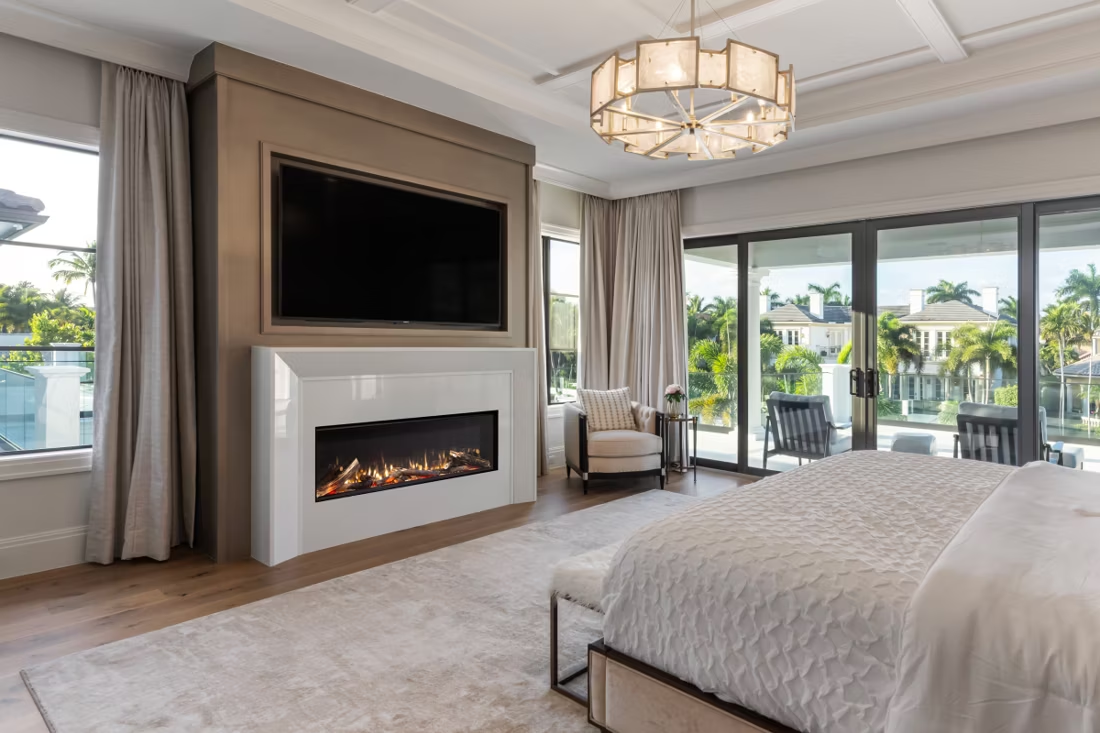
Yes—with an asterisk. Fireplaces are hot and TVs don't like heat. Either put a mantel between them to deflect rising warmth, or choose a fireplace with heat-management technology that creates a cool zone on the wall above—the wall stays around 125 degrees, barely warm, while the room still gets full heat. If you like clean lines and don't want a mantel, heat management is the answer.
Do electric fireplaces actually produce heat?
Yes—most put out around 4,800–5,000 BTUs from a standard outlet, which comfortably warms a bedroom, office, or den as a comfort-zone heater. What they won't do is carry a whole house the way wood, gas, or pellet can. Think of electric as ambiance-first with honest supplemental heat: flames on with no heat in July, flames plus warmth in January.
Can a fireplace actually lower my heating bill?
Yes—by creating a comfort zone. A furnace heats every square foot of the house just to warm the one room you're in; a gas fireplace on low burns roughly a sixth of the gas a typical furnace does. Set the furnace around 55–60 degrees as a baseline, then heat the rooms your family actually uses. Families who heat this way commonly save $20–$60 a month.
Does a fireplace add value to my home?
On average, a fireplace adds back to the home about the same amount you spent installing it. Add the monthly savings from heating the rooms you actually use instead of the whole house—often hundreds of dollars a year—and the value case is strong before you even count what a fire does for how your family uses the room.
Stove and Fireplace Dealers in San Patricio County
Listings include WhyFire partner dealers, dealers we have verified as authorized for the brands we recommend, and established local businesses that carry hearth products. Every listing shows which one it is. The ones marked Preferred run on WhyFire's software, so they can show you real pricing and book your appointment right here. No manufacturer pays for placement. How we verify dealers →
Martini Brick
C.c. Chimney
Kitchen & Bath Showplace
The Design Haus Of Victoria
Victoria Builder Supply Co Inc.
Find your electric fireplace in San Patricio County.
Tell us a bit about your home and we'll match you with the right electric fireplace or insert, plus a free Project Guide & Parts List—the exact parts and your recommended local San Patricio County dealer, no guesswork required.
Find Your Fireplace →