
Reliable Heat for West Texas Panhandle Winters.
Clean, on-demand heat for Bailey County homes and ranches—whether you're on propane or city gas. Get matched with a local dealer who knows what actually works out here.
Every Project Starts From One of These Five Situations
Clean heat for wide-open, wind-swept country.
Muleshoe sits on the South Plains of the Texas Panhandle at nearly 3,800 feet, where winter lows average around 20 degrees and a steady north wind can make that feel a lot colder. With roughly 4,263 heating degree days a year, the cold season here isn't as brutal as Bismarck, North Dakota, but it's real, and it settles in for months at a time across the flat, exposed farm and ranch country around Bailey County.
Muleshoe is a small town, and natural gas main service is limited outside the city core—many homes, especially on outlying farms and ranches, run on propane instead. Either way, a gas fireplace or insert delivers instant heat without hauling wood, and it holds up well against the wind-driven cold snaps that periodically roll off the Llano Estacado. For homes served by Southwestern Public Service, Bailey County Electric Cooperative, or Lamb County Electric Cooperative, a gas unit with battery-backed ignition also means heat that doesn't disappear when a winter storm knocks the co-op line down.
Three steps. No salesperson until you're ready.
Tell us about your project
Your zip code, your situation, and the fuel you're leaning toward—or let the answers point you to one.
See what's actually available
The brands dealers within 100 miles genuinely carry—real options, never a catalog mirage.
Get your dealer & Project Guide
A trusted local dealer, plus the free Project Guide & Parts List that names every component of the job.
Frequently Asked Questions
How much does a gas fireplace installation cost in Muleshoe?
For a town this size, most gas fireplace and insert installations in Muleshoe run in the $3,500 to $9,000 range, depending on the unit and whether a propane line or tank needs to be set. A direct-vent insert going into an existing masonry fireplace with fuel already available on-site sits toward the lower end. New construction, a fresh propane tank installation, or a longer gas line run from the tank to the house pushes the project toward the higher end. A local dealer will walk your property before quoting a firm number, since tank placement and line length vary a lot from one Bailey County lot to the next.
Can I get natural gas service in Muleshoe, or do I need propane?
It depends on where you're located. Homes closer to the center of Muleshoe may have access to natural gas main service, but a meaningful share of homes and most outlying farms and ranches in Bailey County run on propane, delivered and stored in an above-ground tank. If you're not already sure which you have, check for an existing propane tank on the property or ask a local dealer to confirm what's feasible at your address—most gas fireplace models can be configured for either fuel with the right orifice and regulator.
Can I convert my existing wood or masonry fireplace to gas?
Yes. Many older homes around Muleshoe were built with a wood-burning masonry fireplace, and converting it to a direct-vent gas insert is one of the more common upgrades local dealers handle. The existing chimney is lined and used as the vent path, so you keep the look of your current fireplace while gaining instant on-off heat and losing the ash and creosote upkeep. Cost typically runs toward the lower half of the $3,500 to $9,000 range if propane or gas is already available at the house.
Will my gas fireplace work during a power outage?
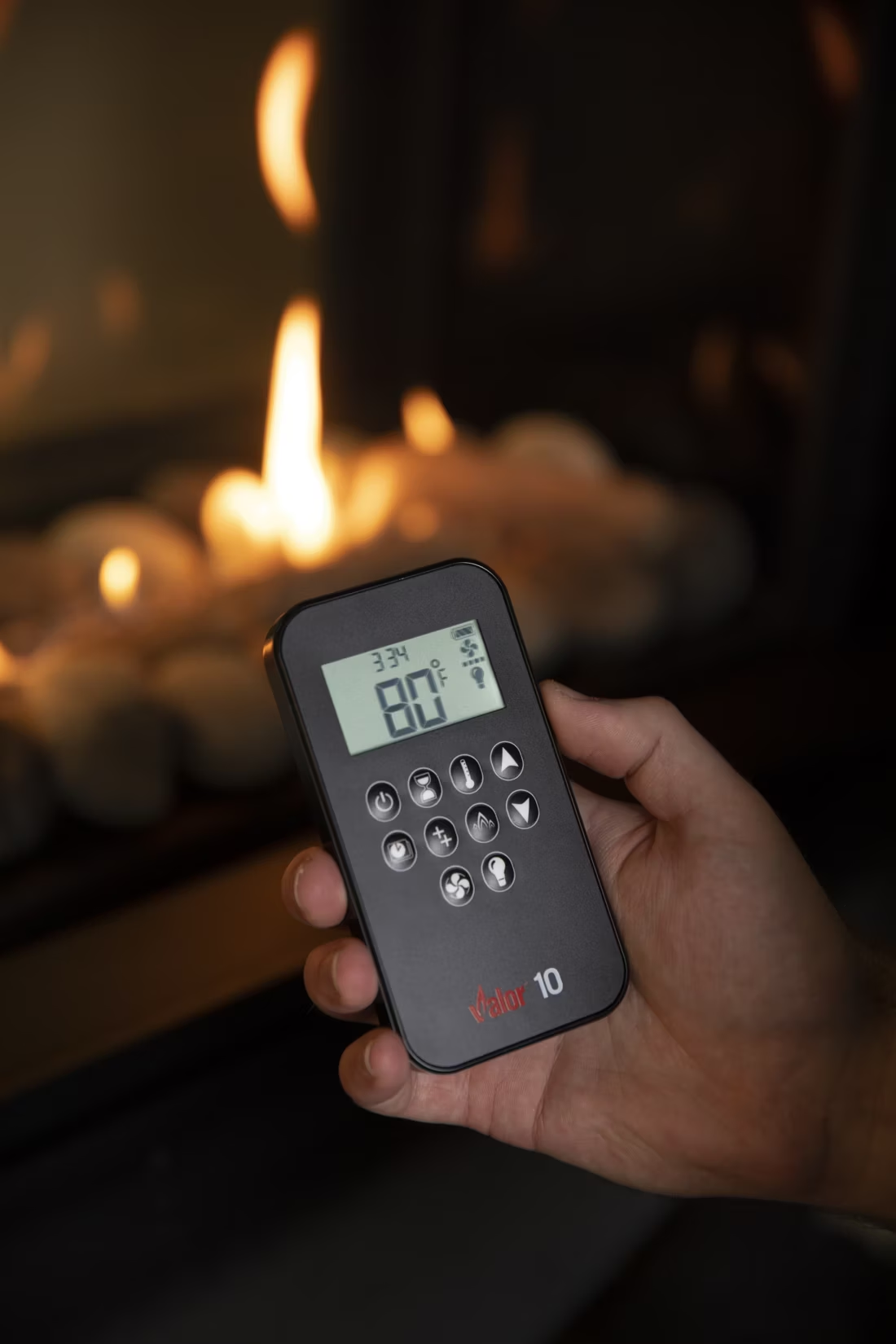
Most will, with the right ignition system. Units with a standing pilot or IPI (intermittent pilot ignition) and battery backup will light and run on batteries even when the grid is down—worth having given that ice storms and high wind events occasionally knock out lines for Bailey County Electric Cooperative and Lamb County Electric Cooperative members for hours at a stretch. Some manufacturers, including Valor, go a step further and generate their own power through the pilot's thermocouple, so there's no battery to remember or replace. Ask your local dealer specifically about the ignition system on any unit you're considering.
What's the difference between a gas fireplace, gas insert, and gas stove?
A gas fireplace is a built-in unit framed into a wall, typically chosen for new construction or a remodel. A gas insert slides into an existing masonry firebox and uses the existing chimney as its vent path—the right call for most older Muleshoe homes that already have a fireplace opening. A gas stove is a freestanding cast-iron or steel unit that sits out on the floor like a wood stove but runs on gas or propane, which works well in a smaller ranch-style home without an existing fireplace. A local dealer can tell you which fits your floor plan after a quick look at the space.
Do I need a permit to install a gas fireplace in Muleshoe?
Yes—a building permit through the City of Muleshoe (or Bailey County, if you're outside city limits) is standard for a new gas fireplace or insert, and any new gas line or propane tank work should be handled by a licensed installer. Most hearth dealers who serve this area include the permit and inspection coordination as part of the installation, which is one of the practical reasons to go with a dealer instead of a handyman install—propane and gas line work isn't something to DIY.
What's the difference between vented and vent-free gas fireplaces?
Vented (direct-vent) units draw combustion air from outside and exhaust it back outside through a sealed pipe—they're the safest option and the one most dealers in this part of Texas will steer you toward. Vent-free units burn fuel directly into the room without external venting; they're legal in Texas but come with strict room-sizing rules and require an oxygen depletion sensor. Given how tightly newer Muleshoe homes are built for energy efficiency, a direct-vent unit is usually the better call for indoor air quality, even though a vent-free log set can make sense as a low-cost supplemental heater in an older, draftier room.
How often should my gas fireplace be serviced?
Plan on an annual inspection, ideally before the first cold snap hits in late fall. A technician checks the burner, pilot assembly, gas connections, and venting, and cleans the glass and interior—a quick visit that typically runs $150 to $250. Propane systems in particular benefit from a yearly check since tank and regulator issues can affect flame quality in ways homeowners don't always notice until the unit starts acting up.
Gas vs. wood—which is right for my Muleshoe home?
Wood is still a practical option here—oak, pecan, and mesquite are all common locally, mesquite especially since it grows wild across Bailey County range land and burns hot with a distinct flavor that's popular for cooking as well as heating. Wood also keeps working with no gas or electric supply at all. Gas wins on convenience: instant heat at the flip of a switch, no hauling or stacking, and a cleaner look with no ash. For a primary living space where you want heat now without tending a fire, gas is usually the better fit; for a shop, barn, or backup heat source on a working ranch, a wood stove still has a place.
Why is my open fireplace making my house colder?
Open fireplaces suck—literally. As the fire burns, it consumes air your furnace already paid to heat and pulls it out through the chimney, so the house is actually colder after the fire goes out than before you lit it. An insert fixes this: it seals the chimney, puts fixed glass across the front, and turns that hole in your house into a real heat source.
What do I measure to size a fireplace insert?
Four numbers tell you what fits: the front width, the front height, the back width, and the overall depth of your existing fireplace opening. Grab a tape measure, jot those down, and snap a photo of the wall—those two things do more to move your project forward than anything else you can do today.
What is an in-home preview and do I need one?
It's a visit where a hearth professional measures your space, confirms the model you picked actually works in your home, and walks the specs—framing, gas line, venting, finish work—before anything is ordered. Some details you just can't know until you see the house. Never make a down payment without one; it's the single most-skipped step that burns buyers.
Can a fireplace actually lower my heating bill?
Yes—by creating a comfort zone. A furnace heats every square foot of the house just to warm the one room you're in; a gas fireplace on low burns roughly a sixth of the gas a typical furnace does. Set the furnace around 55–60 degrees as a baseline, then heat the rooms your family actually uses. Families who heat this way commonly save $20–$60 a month.
Nearby Dealers
Hearth shops serving Muleshoe and the surrounding area. Every listing shows whether it is a WhyFire partner, a dealer we have verified as authorized for the brands we recommend, or a local business carrying hearth products. No manufacturer pays for placement. How we verify dealers →
Ford Insulation And Fireplaces
Caprock Brick
Boyd's Equipment
A & A Chimeny Sweep w/Texas Fp
Panhandle Outdoor Living & Fireplaces
West Texas Brick
Coastal Insulation
Reid's Appliance Services
Find your gas fireplace in Muleshoe.
Tell us about your home and fuel setup, and we'll match you with a trusted local dealer and send over a free Project Guide & Parts List for your gas fireplace project—sized, vented, and ready to install.
Find Your Fireplace →