
Instant, Reliable Heat for Bailey County's High Plains Winters.
Clean, on-demand heat for Muleshoe and the farms and ranches spread across Bailey County's stretch of the Llano Estacado. Find the right gas fireplace, insert, or stove, and get matched with a trusted local dealer.
Every Project Starts From One of These Five Situations
Clean heat that keeps up with the Panhandle wind.
Bailey County sits on the flat, wind-scoured Llano Estacado at the edge of the Texas Panhandle, just miles from the New Mexico line. With a winter heating load a little over half what you'd see in Fargo, ND, and average winter lows around 20°F, it doesn't approach the deep-freeze totals you'd see in Fargo, ND, but Panhandle cold fronts—locals call them blue northers—can drop temperatures fast and keep them there for days, made worse by wind with almost nothing to block it across the open plains. At the Muleshoe National Wildlife Refuge, thousands of sandhill cranes winter over each year, a sign of just how much this stretch of the state cools down.
Bailey County's population of just over 5,500 is spread thin across Muleshoe and the surrounding farm and dairy communities, and heating fuel access varies with that geography. In-town Muleshoe properties are more likely to have natural gas service available, while the ranches, dairies, and farmsteads that make up most of the county's footprint typically run on propane delivered by tank. Either way, a properly sized and installed gas fireplace, insert, or stove gives you instant heat at the flip of a switch—no wood to split or haul across those long, flat driveways, and no waiting for a pilot to warm up on a night when the wind is howling out of the north.
Three steps. No salesperson until you're ready.
Tell us about your project
Your zip code, your situation, and the fuel you're leaning toward—or let the answers point you to one.
See what's actually available
The brands dealers within 100 miles genuinely carry—real options, never a catalog mirage.
Get your dealer & Project Guide
A trusted local dealer, plus the free Project Guide & Parts List that names every component of the job.
Frequently Asked Questions
How much does a gas fireplace installation cost in Bailey County?
Costs vary based on the unit, whether you're on natural gas or propane, and how much venting or gas line work is involved. A direct-vent gas insert going into an existing masonry fireplace with gas already run to the house tends to sit on the lower end of the typical market range; a new built-in gas fireplace for a remodel or new construction, especially one requiring a fresh propane tank set and line run out to a rural homestead, sits higher. Because so much of Bailey County is served by propane rather than natural gas, ask your local dealer to include tank placement and line distance in the estimate—that's often the biggest cost variable out here, more than the fireplace itself.
Can I convert my existing wood fireplace to gas?
Yes, and it's a common upgrade for older Muleshoe homes built with a traditional masonry fireplace. A gas insert typically slides into the existing firebox and vents through a stainless liner run up the original chimney, which keeps the mantel and hearth look you already have while swapping out ash and creosote for instant, controllable heat. If your home runs on propane rather than natural gas, your installer will size the insert's orifice and regulator accordingly—most models on the market are available in either configuration, so fuel type shouldn't limit your options.
Do I need natural gas, or can I run a fireplace on propane?
Either works, and in Bailey County propane is the more common answer once you're outside Muleshoe city limits. If your home already has a propane tank for cooking, water heating, or a furnace, adding a fireplace on the same system is usually straightforward. In-town Muleshoe properties with natural gas service can go that route instead. Most gas fireplaces, inserts, and stoves sold by local dealers are convertible between the two fuels, so the decision comes down to what's already running to your house rather than which fireplace you like.
Will my gas fireplace still work if the power goes out?
Most modern gas fireplaces are built to run without house power. Units with intermittent pilot ignition (IPI) include a battery backup—usually a handful of AA batteries tucked inside the unit—that takes over automatically when the electricity drops, so the fireplace still lights on demand. Valor fireplaces go a step further: their pilot assembly generates its own electricity through the thermocouple, so there are no batteries to check or replace, ever. Given how exposed Bailey County is to high winds that can knock out rural power lines during winter storms, that kind of self-powered backup heat is worth asking about when you're comparing units with a local dealer.
What's the difference between a gas fireplace, gas insert, and gas stove?
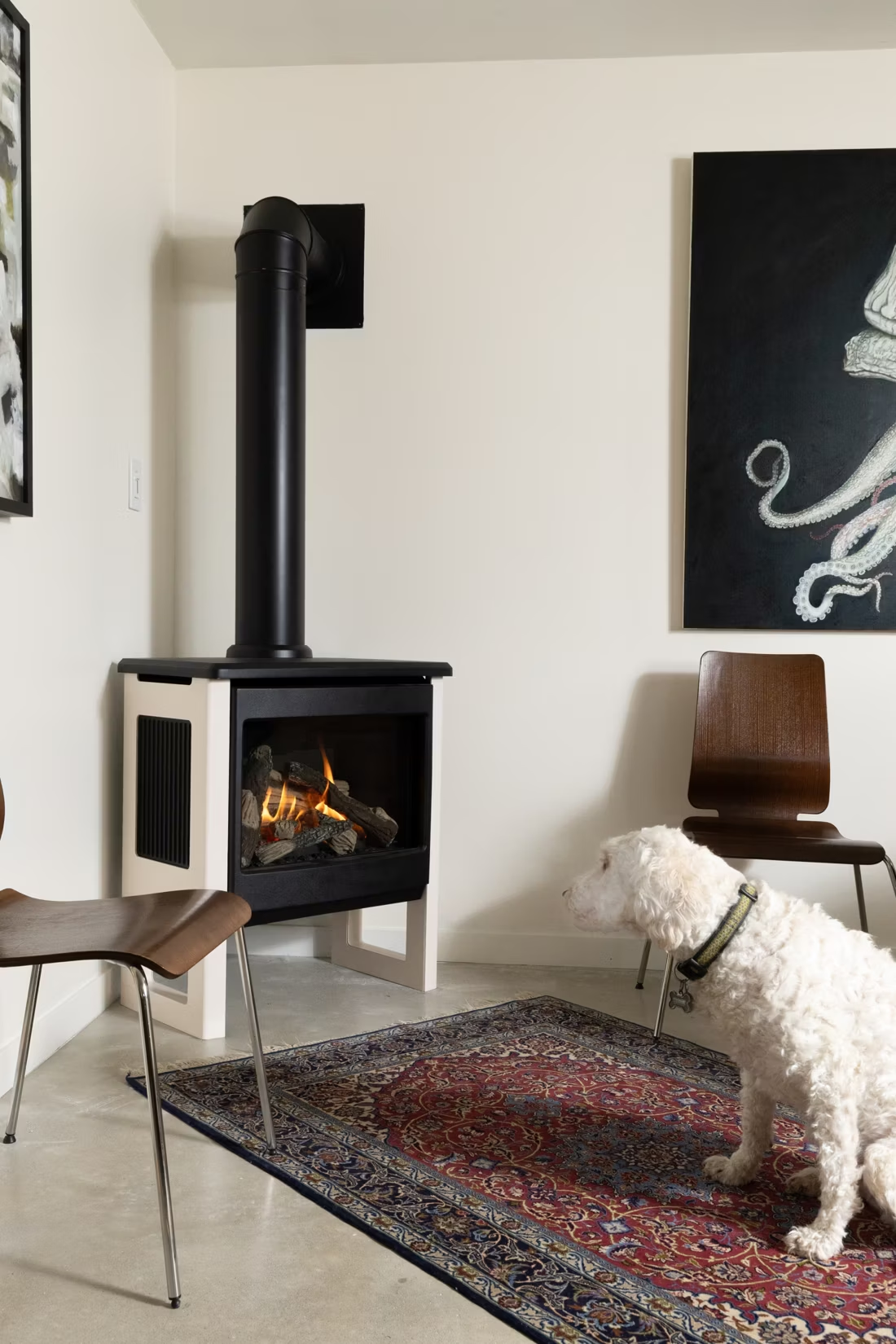
A gas fireplace is a fully built-in unit, framed into a wall—the right call for new construction or a major remodel. A gas insert drops into an existing masonry fireplace opening and uses the existing chimney as its vent path, which makes it the natural choice for older Muleshoe and county homes that already have a wood-burning firebox. A gas stove is a freestanding, floor-standing unit that can go almost anywhere with the right clearances and venting, which makes it a good option for a shop, sunroom, or a home without an existing fireplace at all.
Do I need a permit to install a gas fireplace in Bailey County?
Most new gas fireplace or insert installations require a building permit and a gas line inspection through the county building permit office in Muleshoe, and any propane tank set or line run typically needs sign-off from your propane supplier as well. Local hearth dealers who handle installs in the county generally coordinate the permitting and inspection steps as part of the job, which matters here because gas line work legally requires a licensed gas-fitter rather than a general handyman.
What's the difference between vented and vent-free gas fireplaces?
Vented (direct-vent) units draw combustion air from outside and exhaust it back outside through a sealed pipe, which keeps combustion byproducts out of the living space entirely. Vent-free units burn without any outside venting and release some water vapor and trace combustion gases into the room, so they come with strict rules on room size and ventilation. Vent-free fireplaces are legal in Texas, but for a county like Bailey—where many homes are older, tightly sealed against the wind, and don't have central air exchange systems—a direct-vent unit is generally the safer, more comfortable choice, and it's what most local dealers install by default.
How often should a gas fireplace be serviced?
Plan on an annual inspection, ideally before the first cold front rolls through in the fall. A technician will check the burner, pilot assembly, venting, and gas connections, and clean the glass and interior surfaces—dust and grit tend to accumulate faster out here given how much windblown dust the High Plains kick up. This is a much lighter service than a wood chimney sweep, but it's the difference between a fireplace that lights reliably on the coldest night of the year and one that doesn't.
Gas vs. wood—which makes more sense for a Bailey County home?
Wood is still a practical option here—oak, pecan, and mesquite are the common local species, mesquite especially along the draws and old farm windbreaks—and a wood stove keeps burning through a power outage, which matters when Panhandle wind knocks out rural lines. Gas trades that self-sufficiency for convenience: instant heat with no hauling or ash cleanup, and a more consistent, controllable flame for daily use in a main living area. Pellet stoves, running on bagged fuel from brands like Forest Energy or Lignetics, split the difference on convenience but need electricity to run the auger and blower. Plenty of Bailey County homes end up with gas for everyday comfort and a wood or pellet option as backup—a local dealer can help you weigh what fits your specific house.
Why is my open fireplace making my house colder?
Open fireplaces suck—literally. As the fire burns, it consumes air your furnace already paid to heat and pulls it out through the chimney, so the house is actually colder after the fire goes out than before you lit it. An insert fixes this: it seals the chimney, puts fixed glass across the front, and turns that hole in your house into a real heat source.
Is my gas fireplace wasting gas?
If it was installed more than 15 years ago, probably. Older gas fireplaces keep a standing pilot light burning all the time, and that little flame can cost a couple hundred dollars a year. Newer models use pilot-on-demand ignition—the pilot lights only when you use the fireplace and goes out when you turn it off.
Does a fireplace add value to my home?
On average, a fireplace adds back to the home about the same amount you spent installing it. Add the monthly savings from heating the rooms you actually use instead of the whole house—often hundreds of dollars a year—and the value case is strong before you even count what a fire does for how your family uses the room.
How much should I budget for a fireplace?
For an average home—covering the fireplace, the vent pipe, and basic installation—a budget between $3,900 and $5,500 gives you a lot of options across wood, gas, and pellet. By the time you add finish work, gas line, and electrical, the average complete installation lands between $5,000 and $12,000 all-in. In a remodel or new build, a good rule is to put about 2.5% of the total project cost toward the fireplace.
Stove and Fireplace Dealers in Bailey County
Listings include WhyFire partner dealers, dealers we have verified as authorized for the brands we recommend, and established local businesses that carry hearth products. Every listing shows which one it is. The ones marked Preferred run on WhyFire's software, so they can show you real pricing and book your appointment right here. No manufacturer pays for placement. How we verify dealers →
Ford Insulation And Fireplaces
Caprock Brick
Boyd's Equipment
A & A Chimeny Sweep w/Texas Fp
Panhandle Outdoor Living & Fireplaces
West Texas Brick
Coastal Insulation
Reid's Appliance Services
Find your gas fireplace in Bailey County.
Tell us a bit about your home and we'll match you with the right gas fireplace, insert, or stove, and hand you a free Project Guide & Parts List with the exact parts—including the vent kit—and a recommended local dealer to get it installed right.
Find Your Fireplace →