
Find the right hearth for Bailey County's plains winters.
Wood, gas, pellet, and electric fireplace resources for Muleshoe and the rural communities across Bailey County. Find the right unit for your home and connect with a trusted local hearth retailer.
Every Project Starts From One of These Five Situations
Flat, windswept, and colder than most Texans expect.
Bailey County sits on the South Plains along the New Mexico border, with wide-open cropland and elevation near 3,800 feet—high enough that winter nights regularly drop into the teens and low 20s. The heating season here runs longer and harder than most of Texas, closer to what you'd expect a few hundred miles north than to Houston or San Antonio. Wind is the other factor locals know well: a stiff plains wind can make a 20-degree night feel much colder, and it puts real demand on chimney draft and door seals alike. Oak, pecan, and mesquite are the wood species most commonly burned here, with mesquite prized locally for its long, hot coal bed.
What you'll find on this hub: hearth retailers, service technicians, and fuel suppliers serving Muleshoe and the smaller communities scattered across the county. Bailey County has no listed air quality restrictions on wood burning, which gives homeowners more flexibility than in many Western counties—but permitting, venting, and correct sizing still matter for a safe, efficient install. Pick your fuel below to see local dealers, installation costs, and the resources that match your project, whether you're heating a farmhouse on the plains or a home in town.
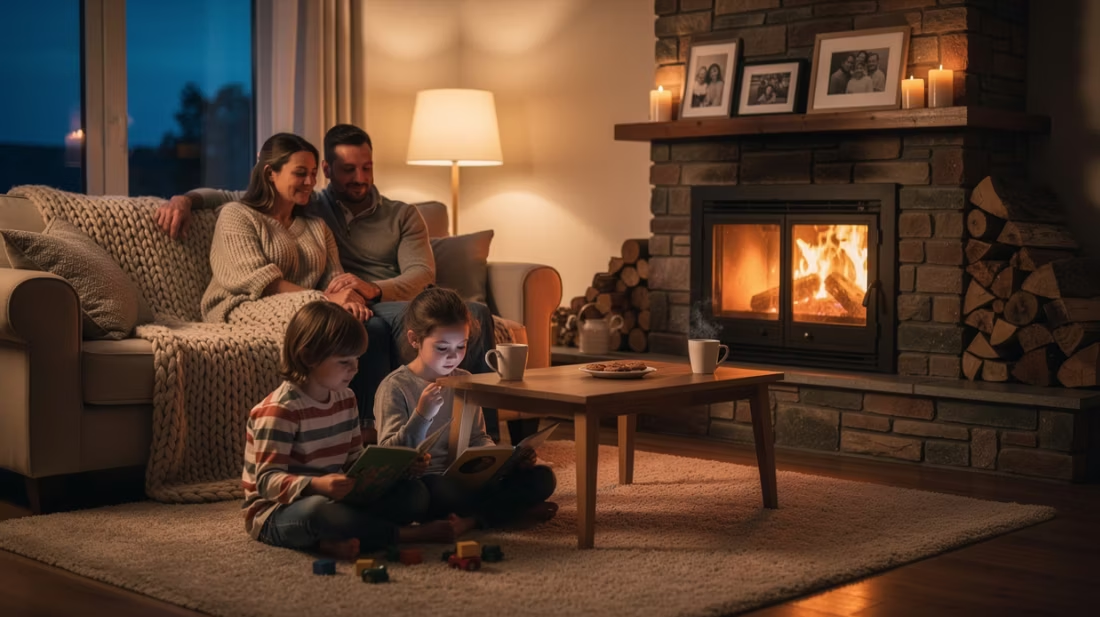
Four fuels. One honest answer for Bailey County.
Three steps. No salesperson until you're ready.
Tell us about your project
Your zip code, your situation, and the fuel you're leaning toward—or let the answers point you to one.
See what's actually available
The brands dealers within 100 miles genuinely carry—real options, never a catalog mirage.
Get your dealer & Project Guide
A trusted local dealer, plus the free Project Guide & Parts List that names every component of the job.
Frequently Asked Questions
Which fuel works best in Bailey County?
It depends on your home and how you use it. Wood is a strong traditional choice here—mesquite and oak are both locally abundant and burn long and hot, which matters on the 20-degree nights that come with plains winds. Gas is the convenience choice for homes in Muleshoe with utility access or rural homes running propane—no wood-splitting, no hauling, heat at the flip of a switch. Pellet is a middle option, though regional supply runs through brands like Forest Energy and Lignetics rather than a large local mill network, so planning ahead on fuel deliveries matters more here than in wood-pellet-heavy regions. Electric works well as supplemental heat—a bedroom or sunroom unit—but with a long, demanding heating season, it's rarely the sole heat source in a Bailey County farmhouse. Many homes here pair a wood or gas primary with electric in secondary rooms.
Do I need a permit to install a fireplace in Bailey County?
Most new wood stove, insert, gas fireplace, and pellet stove installations require a building permit, and gas work also requires a licensed gas-fitter for the line connection. In Muleshoe, permits are typically handled through the city; for homes outside city limits, requirements are lighter under county jurisdiction but a permit is still often needed for anything involving new venting or gas lines. Electric fireplaces usually skip the permit process unless you're hardwiring a built-in unit into a new circuit. Local retailers who install regularly in the county typically handle the paperwork as part of the job, so it's worth asking upfront rather than pulling permits yourself.
Are there air quality restrictions on wood burning in Bailey County?
No—Bailey County has no listed air quality non-attainment issues or burn-curtailment programs, unlike many Western counties dealing with winter inversions. That gives homeowners here more day-to-day flexibility to burn wood without checking advisory levels first. That said, an EPA-certified stove is still the better long-term choice for efficiency and lower particulate output, and it's worth checking with your insurer, since some policies still ask about stove certification regardless of local air quality rules.
Can one local hearth retailer handle all four fuel types?
In a county with Bailey's population, it's common for a single hearth retailer near Muleshoe to carry two or three fuel types rather than a large multi-brand showroom for all four. Wood and gas are typically well represented locally, given both are the primary heat sources for most homes. Pellet stoves are less commonly stocked on showroom floors here, in part because pellet supply runs through regional brands like Forest Energy and Lignetics rather than a nearby mill—dealers who carry pellet units usually special-order or coordinate fuel delivery in advance. If you're comparing fuels side by side, ask a retailer directly which lines they stock versus special-order, since that varies more county to county in smaller markets like this one.
How does service work for the rural farms and ranches around Bailey County?
Most service techs covering Bailey County are based in or near Muleshoe and drive out to farms and ranches spread across the flat, wide-open county roads. Because distances between homes can run several miles even within the county, expect a modest travel fee for calls well outside town, and expect to schedule ahead—especially before the first hard cold front hits in late fall. Wind matters here too: chimney draft and cap condition should be checked as part of annual service, since sustained plains wind can affect drafting differently than it would in a sheltered suburban lot. Scheduling wood chimney sweeps and gas inspections in late summer or early fall, before the rush, is the easiest way to avoid a mid-winter wait.
What's the typical cost range for fireplace installation across all fuel types in Bailey County?
Costs vary by fuel and by how much venting or gas line work is involved. Wood stove or insert installation: roughly $4,000–$8,500 for typical installs, more if new chimney construction is needed. Gas fireplace, insert, or stove: roughly $4,000–$10,000 depending on whether gas line work is required—lower if existing service is already in place. Pellet stove or insert: roughly $4,200–$7,000, with fuel delivery planning as an added consideration given regional pellet sourcing. Electric fireplace: $200–$3,000 for the unit itself, plus $400–$1,200 in labor for anything beyond a plug-and-play install. See the county + fuel pages above for cost detail tied to specific local retailer pricing.
Does a fireplace add value to my home?
On average, a fireplace adds back to the home about the same amount you spent installing it. Add the monthly savings from heating the rooms you actually use instead of the whole house—often hundreds of dollars a year—and the value case is strong before you even count what a fire does for how your family uses the room.
Wood, gas, pellet, or electric—how do I choose?
Match the fuel to your life, not the other way around. Wood: lowest fuel cost and total power-outage independence, but you're hauling and stacking. Gas: press a button, set a thermostat, no maintenance to speak of. Pellet: wood economics with automatic feeding, in exchange for weekly cleaning and a need for electricity. Electric: plugs in anywhere with honest supplemental heat. Nobody regrets the fuel that fits how they actually live.
What is an in-home preview and do I need one?
It's a visit where a hearth professional measures your space, confirms the model you picked actually works in your home, and walks the specs—framing, gas line, venting, finish work—before anything is ordered. Some details you just can't know until you see the house. Never make a down payment without one; it's the single most-skipped step that burns buyers.
How much should I budget for a fireplace?
For an average home—covering the fireplace, the vent pipe, and basic installation—a budget between $3,900 and $5,500 gives you a lot of options across wood, gas, and pellet. By the time you add finish work, gas line, and electrical, the average complete installation lands between $5,000 and $12,000 all-in. In a remodel or new build, a good rule is to put about 2.5% of the total project cost toward the fireplace.
Stove and Fireplace Dealers in Bailey County
Listings include WhyFire partner dealers, dealers we have verified as authorized for the brands we recommend, and established local businesses that carry hearth products. Every listing shows which one it is. The ones marked Preferred run on WhyFire's software, so they can show you real pricing and book your appointment right here. No manufacturer pays for placement. How we verify dealers →
Ford Insulation And Fireplaces
Caprock Brick
Boyd's Equipment
A & A Chimeny Sweep w/Texas Fp
Panhandle Outdoor Living & Fireplaces
West Texas Brick
Coastal Insulation
Reid's Appliance Services
Find your fireplace in Bailey County.
Pick your fuel below and I'll match you with a trusted local dealer, plus a free Project Guide & Parts List—the exact parts, vent kit included, and the dealer I'd recommend for your home.
Find Your Fireplace →