
Instant heat for Bailey County's coldest nights.
No chimney, no gas line, no venting - just plug in and go. Find the right electric fireplace or insert for your Muleshoe home, and connect with a trusted local dealer.
Every Project Starts From One of These Five Situations
Zone heat that plugs in, no chimney required.
Muleshoe sits on the flat High Plains of the Texas Panhandle at nearly 3,800 feet, where winter lows average around 20°F and a steady prairie wind makes it feel colder than the thermometer says. With about 4,263 heating degree days a year, Bailey County gets a real winter - not Panhandle-blizzard territory like Amarillo can see, but enough cold snaps that supplemental heat matters in most homes from November through February.
Electric service here is split between three providers - Southwestern Public Service Company inside city limits, and Bailey County Electric Cooperative and Lamb County Electric Cooperative covering the surrounding farm and ranch country. Rates differ meaningfully between them, which matters when you're deciding whether an electric fireplace makes sense as your go-to zone heater or just an ambiance piece. For homes already running propane or electric central heat, a plug-in electric fireplace or insert adds instant, no-mess warmth to a living room or bedroom without touching the chimney, gas line, or HVAC system.
Three steps. No salesperson until you're ready.
Tell us about your project
Your zip code, your situation, and the fuel you're leaning toward—or let the answers point you to one.
See what's actually available
The brands dealers within 100 miles genuinely carry—real options, never a catalog mirage.
Get your dealer & Project Guide
A trusted local dealer, plus the free Project Guide & Parts List that names every component of the job.
Frequently Asked Questions
How much does an electric fireplace installation cost in Muleshoe?
Costs vary a lot by unit type. A freestanding, plug-in electric fireplace runs $200-$600 with no installation beyond finding an outlet. An electric insert that slides into an existing masonry fireplace opening typically runs $800-$2,000 installed. A built-in wall unit, framed in like a flat-screen TV, usually lands between $1,500 and $3,500 once framing and any dedicated circuit work are included. Because there's no venting, gas line, or chimney work involved, electric installs in Muleshoe are consistently the least expensive of any fireplace fuel option.
Which electric utility serves my home, and does it change what a fireplace costs to run?
Muleshoe and Bailey County are covered by three separate electric providers depending on exactly where you live - Southwestern Public Service Company inside city limits, Bailey County Electric Cooperative Association, and Lamb County Electric Cooperative in the surrounding rural areas. Rates differ enough to matter: SPS customers pay roughly 13.4 cents per kWh, while Bailey County Electric Coop members pay closer to 8.8 cents and Lamb County Electric Coop members around 9.5 cents. Running a typical 1,500-watt electric fireplace for four hours costs somewhere between $0.35 and $0.53 a night depending on which of the three utilities bills your address, so it's worth checking your provider before comparing operating costs.
Do I need a permit to install an electric fireplace in Muleshoe?
Usually not. Plug-in electric fireplaces and most inserts don't require a building permit since there's no venting, gas line, or structural change involved - you're essentially installing a large space heater. If your installation calls for a new dedicated circuit or panel work, the electrician doing that job may need to pull an electrical permit through the City of Muleshoe or Bailey County if you're outside city limits, but that paperwork is typically handled as part of the installation rather than something you manage yourself.
Will an electric fireplace actually heat my home during a Panhandle cold snap?
Most electric fireplaces are built as zone heaters, not whole-house furnaces. A standard 1,500-watt unit comfortably heats a single room of roughly 400-600 square feet, but it won't replace your home's primary heat source when Bailey County temperatures drop into the teens overnight, which happens most winters. For homes already on propane or electric central heat, the practical use case is heating the room you're actually in - a living room or bedroom - so you can turn down the thermostat elsewhere and save on the bigger heating system.
What happens if the power goes out - will my electric fireplace still work?
No. Electric fireplaces need power for both the heater and any flame-effect lighting, so they go dark along with everything else in an outage. Rural co-op lines serving outlying Bailey County properties can see extended outages during ice events, which is a real consideration on the High Plains. If backup heat during an outage matters, a wood stove burning local oak, pecan, or mesquite is worth pairing with an electric unit - plenty of Muleshoe homes run electric for everyday convenience and keep a wood option in reserve for when the grid goes down.
Can I convert my existing wood-burning fireplace to electric?
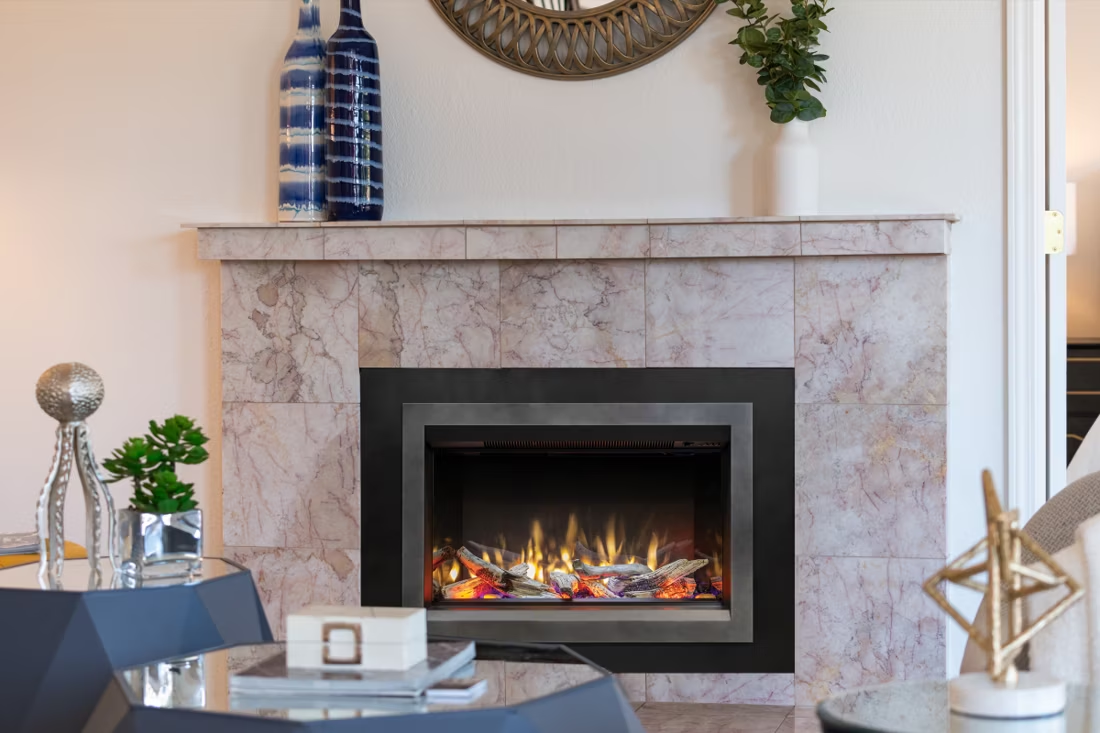
Yes, and it's one of the simplest fireplace conversions available. An electric insert slides into most existing masonry fireplace openings without any venting, chimney liner, or gas line work - you keep your existing mantel and surround and just swap what's doing the heating. It's a common option for older Muleshoe homes with a fireplace that hasn't seen a real wood fire in years but still anchors the room.
How much electricity does a fireplace use, and will it spike my bill?
Most electric fireplaces run on a standard 120-volt outlet and draw about 1,500 watts on the heat setting, roughly 750 watts on low, and just a few watts if you run the flame effect with the heater off. Running one for a few hours most winter evenings typically adds $15-$25 a month to an electric bill, depending on whether you're billed by Southwestern Public Service, Bailey County Electric Coop, or Lamb County Electric Coop. That's noticeably cheaper than running a propane space heater or heating an entire room off the central system.
What's the difference between an electric fireplace, insert, and mantel package?
An electric insert is built to slide into an existing fireplace opening and typically reuses your current mantel and surround. A built-in electric fireplace is designed to be framed directly into a wall - no existing fireplace needed - which is common in newer Muleshoe homes that were never built with a masonry hearth. A mantel package pairs a freestanding or recessed electric unit with a matching surround, giving you the full look of a fireplace with zero construction. All three plug into a standard outlet or a dedicated circuit for larger models.
Electric vs. wood - which makes more sense for a Muleshoe home?
Wood gives you real backup heat during an outage and puts local oak, pecan, and mesquite to use, along with the look and feel of a live fire. Electric gives you push-button convenience, no chimney or venting to maintain, no ash or creosote, and - depending on which of the three area utilities serves your address - fairly cheap operating costs, especially for co-op members paying under 10 cents per kWh. For most Muleshoe homes already running propane or electric central heat, an electric fireplace works well as a zone-heating and ambiance upgrade, while a wood stove remains the better call for anyone who wants heat security when the grid goes down.
Can I put a TV above my fireplace?
Yes—with an asterisk. Fireplaces are hot and TVs don't like heat. Either put a mantel between them to deflect rising warmth, or choose a fireplace with heat-management technology that creates a cool zone on the wall above—the wall stays around 125 degrees, barely warm, while the room still gets full heat. If you like clean lines and don't want a mantel, heat management is the answer.
Does an electric fireplace need a vent or chimney?
No—that's its superpower. An electric fireplace needs a wall and an outlet, period. No vent pipe, no gas line, no clearances to design around, which is why it works in bedrooms, offices, apartments, and walls where venting a gas or wood unit would be impractical or impossible. Installation is typically the simplest and least expensive of any fireplace type.
Does a fireplace add value to my home?
On average, a fireplace adds back to the home about the same amount you spent installing it. Add the monthly savings from heating the rooms you actually use instead of the whole house—often hundreds of dollars a year—and the value case is strong before you even count what a fire does for how your family uses the room.
Can I install a fireplace myself?
If you're putting a fire in your house on purpose, it's best to work with an expert. Unless you're genuinely experienced in framing, gas line, vent pipe, and the national code on clearances to combustibles, have a professional do it—and ideally the same company that sells you the fireplace, so warranty, service, and liability all live under one roof.
Nearby Dealers
Hearth shops serving Muleshoe and the surrounding area. Every listing shows whether it is a WhyFire partner, a dealer we have verified as authorized for the brands we recommend, or a local business carrying hearth products. No manufacturer pays for placement. How we verify dealers →
Ford Insulation And Fireplaces
Caprock Brick
Boyd's Equipment
A & A Chimeny Sweep w/Texas Fp
Panhandle Outdoor Living & Fireplaces
West Texas Brick
Coastal Insulation
Reid's Appliance Services
Electric Service in Muleshoe
An electric fireplace's heater draws about 1,500 watts—pennies per hour at local rates.
Southwestern Public Service Co
Bailey County Elec Coop Assn
Lamb County Electric Coop, Inc
Find your electric fireplace in Muleshoe.
Tell us a bit about your home and we'll match you with the right electric fireplace or insert, and connect you with a trusted local dealer who can handle the install.
Find Your Fireplace →