
Instant heat, no venting, no chimney—Bailey County style.
From Muleshoe to the farm roads outside Enochs and Needmore, electric fireplaces give Bailey County homes clean zone heat without a flue, a gas line, or a cord of mesquite to split. Find the right unit and get matched with a trusted local dealer.
Every Project Starts From One of These Five Situations
Simple heat for wide-open, all-electric country.
Bailey County sits on the Llano Estacado at roughly 3,800 feet, a dryland cotton, dairy, and cattle county of about 5,500 people anchored by Muleshoe. Winters here aren't brutal by South Plains standards—the average winter low runs around 20°F and the county sees a heating season well short of what a place like Fargo, ND experiences—but a Panhandle blue norther can still drop temperatures 30 degrees in an afternoon and knock out power lines strung across open cotton fields. Local wood species like oak, pecan, and mesquite have a long history here in cookstoves and the occasional wood-burning insert, but plenty of homeowners—especially in newer manufactured homes and remodeled farmhouses without existing masonry chimneys—reach for electric instead.
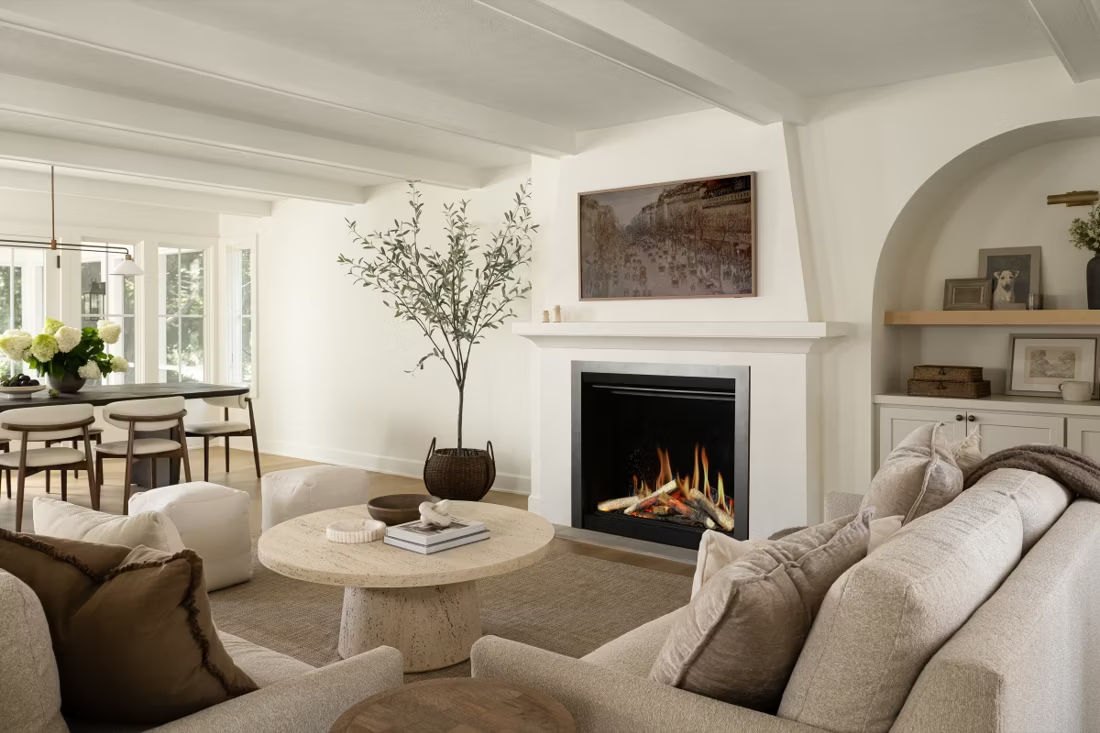
An electric fireplace needs no chimney, no gas line, and no combustion air, which matters in a county where many homes are on rural electric cooperative service and don't have natural gas piped to the property at all. A plug-in freestanding unit or electric insert can go into nearly any room the same day it arrives, drawing power off a standard 120V outlet or, for larger built-ins, a dedicated circuit run by an electrician. That makes electric a practical choice for zone heating a home office, a converted sunroom, or a bedroom in an older farmhouse where the ductwork barely reaches—supplementing whatever the primary heat source is, rather than replacing it entirely.
Three steps. No salesperson until you're ready.
Tell us about your project
Your zip code, your situation, and the fuel you're leaning toward—or let the answers point you to one.
See what's actually available
The brands dealers within 100 miles genuinely carry—real options, never a catalog mirage.
Get your dealer & Project Guide
A trusted local dealer, plus the free Project Guide & Parts List that names every component of the job.
Frequently Asked Questions
How much does an electric fireplace installation cost in Bailey County?
A basic plug-in electric fireplace or insert runs $300 to $1,200 installed, since most units need nothing more than an existing outlet and a mantel or surround. A hardwired built-in wall unit, which requires a licensed electrician to run a dedicated circuit, typically lands between $1,200 and $2,500 depending on wall framing and whether the electrician has to route wire through an exterior wall on an older farmhouse. Because there's no venting or chimney work involved, electric installs in Bailey County are consistently the least expensive fireplace option compared to wood, gas, or propane.
Do I need a permit to install an electric fireplace in Bailey County?
A freestanding plug-in electric fireplace that uses an existing outlet generally doesn't require a permit—it's treated like any other appliance. A hardwired built-in unit that needs new electrical wiring does require an electrical permit, since it involves a licensed electrician tying into your home's panel. For unincorporated parts of the county, that permit typically goes through the Bailey County Building Department; homes inside Muleshoe city limits go through the city. Most electricians who install these units handle the permit paperwork as part of the job.
Will an electric fireplace keep my house warm during a blue norther, or if the power goes out?
An electric fireplace is honest, dependable zone heat for a single room—most units put out around 5,000 to 9,000 BTUs, enough to take the chill off a bedroom or living area but not enough to heat a whole farmhouse when a blue norther drops temperatures into the single digits. And because it runs entirely on electricity, it goes dark the moment the power does, which is a real consideration on rural South Plains Electric Cooperative lines that can go down in an ice event or high wind. If backup heat during an outage matters to you, pair an electric fireplace with a wood stove or propane heater rather than relying on electric as your only cold-weather plan.
What's the difference between a plug-in electric fireplace and a hardwired built-in?
A plug-in unit is freestanding or a simple insert that runs off a standard wall outlet—no electrician required, and you can move it if you relocate. A hardwired built-in is recessed into a wall or cabinetry and wired directly to a dedicated circuit, which gives you a cleaner, flush look but requires an electrician and, in most cases, a permit. For renters and for older Bailey County farmhouses where you don't want to open up walls, a plug-in insert is usually the more practical choice. For a new build or a full remodel, a hardwired built-in gives a more finished, fireplace-like appearance.
Are electric fireplaces a good fit for manufactured and modular homes in Bailey County?
Yes—electric is often the best-suited fuel for manufactured and modular homes, which make up a meaningful share of housing stock in a rural county like Bailey. These homes typically can't accommodate a masonry chimney or the clearances a wood stove needs, and running a new gas line can be impractical depending on lot layout. A plug-in electric fireplace or a slim electric insert adds supplemental heat and ambiance without any structural changes, and it satisfies most manufactured-home fire codes that restrict open-flame appliances.
Does an electric fireplace need any venting or clearance from combustibles?
No venting is required at all—electric fireplaces don't produce combustion byproducts, so there's no flue, no chimney, and no makeup air to plan for. Clearance requirements are minimal compared to wood or gas units; most manufacturers only require a few inches of side clearance and standard mantel clearance above the unit, listed in the installation manual. That's part of why electric is a popular retrofit for garages, workshops, and outbuildings on Bailey County properties where running gas or building a chimney isn't realistic.
How much does it cost to run an electric fireplace on South Plains Electric Cooperative power?
Most electric fireplaces draw around 1,500 watts on the heat setting, which works out to roughly 10 to 20 cents an hour depending on your cooperative's current rate. Running one for a few hours a night as supplemental heat typically adds $10 to $25 a month to an electric bill during winter—considerably less than heating an equivalent space with a whole-home HVAC system. Most units also let you run the flame effect without the heater, which uses only a few watts, so you can keep the visual year-round without any real heating cost.
How often does an electric fireplace need maintenance?
Electric fireplaces need very little upkeep—no chimney sweep, no annual gas inspection, and no ash to clean out. Periodically dusting the interior, checking that the fan and blower are running clean, and occasionally replacing an LED light module (if the unit uses one) covers most of what's needed. Manufacturer warranties on the heating element and electronics typically run three to five years, and a local dealer can usually source replacement parts if something does need service.
Electric vs. wood or propane—which makes sense for my Bailey County home?
Wood, with local oak, pecan, or mesquite, remains a heritage choice in this part of the Panhandle and it's the one option that still works when the power's out during a bad ice storm. Propane, common on rural properties without natural gas service, gives you instant, higher-BTU heat that can also run without grid power on some models. Electric is the simplest and least expensive to install, adds zero maintenance and zero emissions concerns, and is well suited to a supplemental room or a manufactured home—but it depends entirely on the grid and won't carry a whole house through a hard freeze on its own. Many Bailey County homeowners use electric for daily convenience in a living room or office and keep wood or propane on hand as the real cold-weather backup.
Can I put a TV above my fireplace?
Yes—with an asterisk. Fireplaces are hot and TVs don't like heat. Either put a mantel between them to deflect rising warmth, or choose a fireplace with heat-management technology that creates a cool zone on the wall above—the wall stays around 125 degrees, barely warm, while the room still gets full heat. If you like clean lines and don't want a mantel, heat management is the answer.
Do electric fireplaces actually produce heat?
Yes—most put out around 4,800–5,000 BTUs from a standard outlet, which comfortably warms a bedroom, office, or den as a comfort-zone heater. What they won't do is carry a whole house the way wood, gas, or pellet can. Think of electric as ambiance-first with honest supplemental heat: flames on with no heat in July, flames plus warmth in January.
Can I install a fireplace myself?
If you're putting a fire in your house on purpose, it's best to work with an expert. Unless you're genuinely experienced in framing, gas line, vent pipe, and the national code on clearances to combustibles, have a professional do it—and ideally the same company that sells you the fireplace, so warranty, service, and liability all live under one roof.
How much should I budget for a fireplace?
For an average home—covering the fireplace, the vent pipe, and basic installation—a budget between $3,900 and $5,500 gives you a lot of options across wood, gas, and pellet. By the time you add finish work, gas line, and electrical, the average complete installation lands between $5,000 and $12,000 all-in. In a remodel or new build, a good rule is to put about 2.5% of the total project cost toward the fireplace.
Stove and Fireplace Dealers in Bailey County
Listings include WhyFire partner dealers, dealers we have verified as authorized for the brands we recommend, and established local businesses that carry hearth products. Every listing shows which one it is. The ones marked Preferred run on WhyFire's software, so they can show you real pricing and book your appointment right here. No manufacturer pays for placement. How we verify dealers →
Ford Insulation And Fireplaces
Caprock Brick
Boyd's Equipment
A & A Chimeny Sweep w/Texas Fp
Panhandle Outdoor Living & Fireplaces
West Texas Brick
Coastal Insulation
Reid's Appliance Services
Find your electric fireplace in Bailey County.
Tell us a bit about your home and we'll match you with the right electric fireplace or insert, plus a free Project Guide & Parts List and a trusted local dealer to install it.
Find Your Fireplace →