
Clean, low-maintenance pellet heat for Lipscomb County's cold snaps.
From Lipscomb and Booker to Follett and Higgins, ranch homes and weekend cabins across the county are trading wood-hauling for hopper-loading. Find the right pellet stove or insert and get matched with a trusted local dealer.
Every Project Starts From One of These Five Situations
Convenience heat for a wide-open county.
Lipscomb County sits in the far northeastern Texas Panhandle—about 2,545 people spread thin across ranch land and small towns like Lipscomb, Booker, Follett, and Higgins. Climate zone 4B here means winters that are real but not brutal: average lows around 24°F, roughly 3,957 heating degree days a season, and periodic blue northers that can drop temperatures fast overnight. It's nowhere near what a place like Bismarck ND or Fargo ND deals with, but it's cold enough, often enough, that a lot of county households want more than a thermostat click for heat.
Oak, pecan, and mesquite grow across the county's ranch acreage, and plenty of homes still burn cordwood the traditional way. Pellet stoves have found a real foothold here anyway, mostly because of what they don't require: no splitting, no stacking, no daily tending. That matters for absentee ranch owners, hunting cabins used a few weekends a season, and full-time residents who want steady, automated heat without the wood-hauling routine. There's no non-attainment or burn-ban pressure in Lipscomb County—this is a convenience choice, not a compliance one. Because dedicated hearth shops are scarce out here, most residents end up driving to Perryton or Amarillo for service, which is exactly the gap a trusted local match is meant to close.
Three steps. No salesperson until you're ready.
Tell us about your project
Your zip code, your situation, and the fuel you're leaning toward—or let the answers point you to one.
See what's actually available
The brands dealers within 100 miles genuinely carry—real options, never a catalog mirage.
Get your dealer & Project Guide
A trusted local dealer, plus the free Project Guide & Parts List that names every component of the job.
Frequently Asked Questions
How much does a pellet stove installation cost in Lipscomb County?
Pricing depends heavily on the unit, whether it vents through an existing masonry chimney or uses a simpler through-wall PL vent kit, and any hearth pad work required for clearance. Because there are few dedicated hearth dealers based in the county itself, quotes can also reflect travel time from installers based out of Perryton or Amarillo. Rather than guess at a number that doesn't account for your specific home, the Project Guide & Parts List you get after being matched with a local dealer includes a full parts list and a real quote for your setup.
What size pellet stove do I need for a Lipscomb County home?
With average winter lows around 24°F and roughly 3,957 heating degree days a year, Lipscomb County doesn't demand the oversized units you'd see in the northern Plains—most homes do fine with a small to medium hopper-fed stove rated for the room or zone it's heating. Older farmhouses with high ceilings, drafty windows, or a lot of exposed square footage may need to size up a step, especially if the stove is meant to carry the load during a hard blue norther rather than just supplement a central system. A local dealer will walk the space before recommending a size—that's part of what the free planning packet is built around.
Where can I buy pellets in Lipscomb County?
Forest Energy and Lignetics are the two brands most commonly available in this part of the Panhandle, typically stocked through farm-supply and co-op stores in nearby towns like Perryton rather than a dedicated pellet retailer in the county itself. Given the distances involved, most rural households order by the pallet—usually 50 forty-pound bags—rather than picking up single bags as needed, and store them in a dry barn, garage, or outbuilding away from moisture. Your matched dealer can point you to the closest reliable supply source once your stove is installed.
Will my pellet stove work if the power goes out?
Not without backup power. Pellet stoves rely on an electric auger and blower to feed fuel and move heat, so a grid outage stops the stove even with a full hopper. That's a real consideration in Lipscomb County, where ERCOT-related outages and ice-related line damage during hard cold snaps aren't rare. Many ranch households here already run a generator for well pumps and livestock equipment—sizing that generator (or a smaller battery backup/UPS unit) to also carry the pellet stove's auger and blower load is a common workaround. Homes that want heat guaranteed through any outage often keep a wood stove as a backup, since oak and mesquite are already on hand locally.
Do I need a permit to install a pellet stove in Lipscomb County?
Lipscomb County doesn't maintain a dedicated building permit office for hearth appliance installations the way a larger county might. Most installers work directly to the manufacturer's listed clearances and NFPA 211 venting requirements, and if your property falls within an incorporated town—Lipscomb, Booker, Follett, or Higgins—it's worth a quick check with that town's office before work starts. A certified installer matched through Find My Fireplace will know what, if anything, applies to your specific address.
What's the best pellet stove for Lipscomb County's climate?
Because the county's cold is real but not extreme—average lows in the mid-20s rather than sustained sub-zero stretches—a mid-size, non-catalytic-style pellet stove from a mainstream maker like Harman, Lopi, or England's Stove Works generally covers most homes without over-buying capacity. The bigger variable locally isn't BTU output as much as reliability during a blue norther, so ask about auger and igniter reliability and hopper capacity—a larger hopper means fewer refills during a multi-day cold stretch when driving into town for pellets isn't convenient.
How often does a pellet stove need cleaning and maintenance?
Plan on emptying the burn pot and ash pan every few days during regular use, a deeper interior cleaning monthly, and a full annual service that includes the exhaust vent and combustion blower before each burning season starts. Ranch and farm settings in Lipscomb County tend to run dustier than average because of wind-driven soil and agricultural activity, which can mean more frequent filter and intake checks than a stove would need in town. Skipping this is the most common reason pellet stoves underperform or trip error codes mid-winter.
Pellet stove vs. wood stove—which makes more sense on a Lipscomb County ranch?
Wood is essentially free heat for a lot of county residents, since oak, pecan, and mesquite are already growing on the property, and a wood stove keeps working even when the power's out. A pellet stove trades that self-sufficiency for convenience—load the hopper, set it, and walk away, with less ash, no splitting or stacking, and a cleaner burn overall. The tradeoff is the electric dependency, which matters more here given occasional grid strain during hard cold snaps. It's common for county households to run both: pellet for daily, low-effort heat in the main living space, and a wood stove or fireplace as backup when the grid can't be counted on.
What's the difference between a pellet stove and a pellet insert?
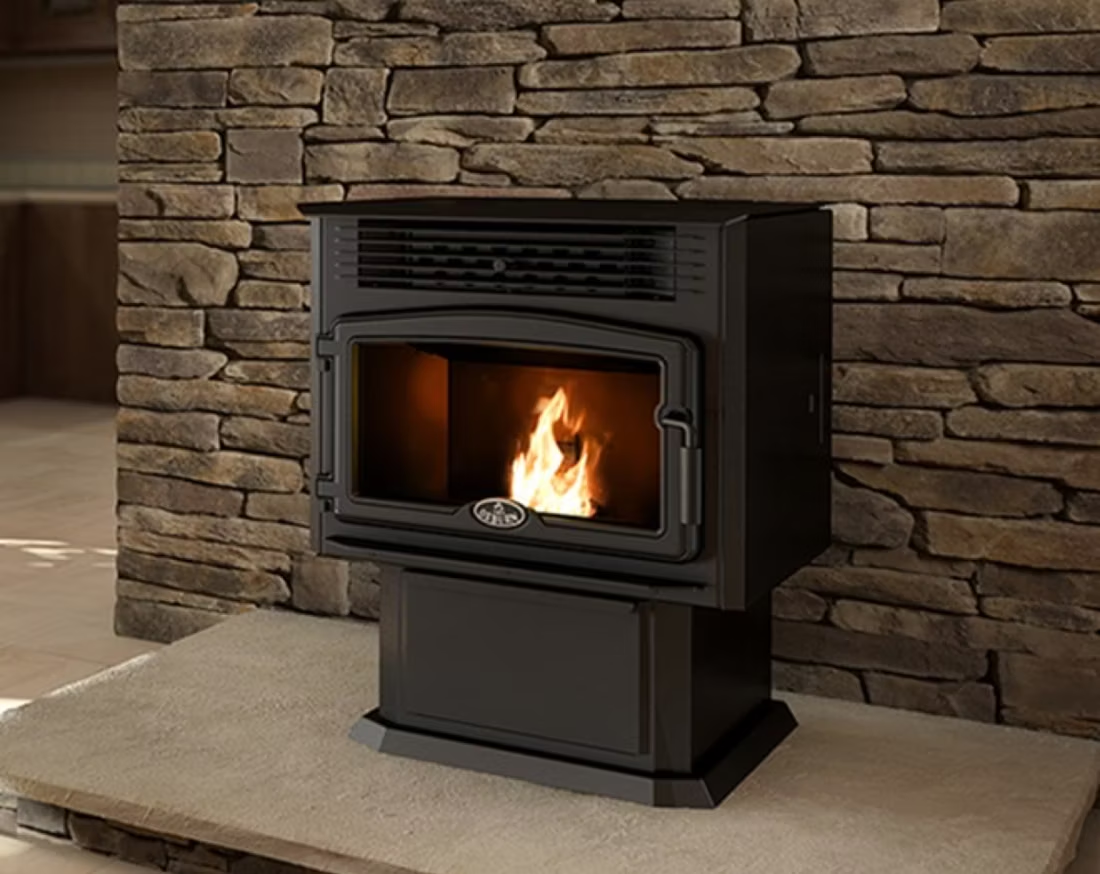
A pellet stove is a freestanding unit that sits on its own hearth pad and vents through an exterior wall or roof—it can go almost anywhere with the right clearances, which makes it a good fit for newer or metal-building-style ranch homes without an existing fireplace. A pellet insert is built to slide into an existing masonry fireplace opening, which is common in Lipscomb County's older farmhouses that already have a wood-burning fireplace. The insert reuses the existing chimney with a vent liner and converts an inefficient open hearth into a controlled, thermostat-driven heat source. Which one fits depends entirely on what's already built into your home—a local dealer will know quickly which route makes sense.
Why is a fireplace insert so efficient?
An insert does two things: it seals the chimney completely, so you stop losing air you already paid to heat, and it radiates warmth into the room through the firebox and glass. Most add a heat-exchange fan that pulls cool room air underneath, wraps it around the hot firebox, and pushes it back out warm. Your home is more efficient before you've even lit the first fire.
How often does a pellet stove need cleaning?
A clean pellet stove is a happy pellet stove. Plan on cleaning the burn pot about once a week when you're burning regularly—ash and clinkers gum up the air holes just like a pellet barbecue. Most pellet stove problems trace back to skipped cleaning that nobody explained up front. Some designs make it easy with a trapdoor burn pot: pull a lever and the gunk drops into the ash pan.
Can a fireplace actually lower my heating bill?
Yes—by creating a comfort zone. A furnace heats every square foot of the house just to warm the one room you're in; a gas fireplace on low burns roughly a sixth of the gas a typical furnace does. Set the furnace around 55–60 degrees as a baseline, then heat the rooms your family actually uses. Families who heat this way commonly save $20–$60 a month.
How much should I budget for a fireplace?
For an average home—covering the fireplace, the vent pipe, and basic installation—a budget between $3,900 and $5,500 gives you a lot of options across wood, gas, and pellet. By the time you add finish work, gas line, and electrical, the average complete installation lands between $5,000 and $12,000 all-in. In a remodel or new build, a good rule is to put about 2.5% of the total project cost toward the fireplace.
Stove and Fireplace Dealers in Lipscomb County
Listings include WhyFire partner dealers, dealers we have verified as authorized for the brands we recommend, and established local businesses that carry hearth products. Every listing shows which one it is. The ones marked Preferred run on WhyFire's software, so they can show you real pricing and book your appointment right here. No manufacturer pays for placement. How we verify dealers →
Pellet Brands Stocked Around Lipscomb County
Manufacturers will point you to the nearest stocking dealer.
Find your pellet stove in Lipscomb County.
Tell us about your home—ranch house, farmhouse, cabin, whatever it is—and we'll match you with a trusted local dealer and send over a free Project Guide & Parts List: the exact parts, including the vent kit, for your pellet project in Lipscomb County.
Find Your Fireplace →