
Add real warmth to your Lipscomb County home—without a single vent pipe.
From Lipscomb to Booker, Follett, and Higgins, electric fireplaces bring zone heat and a real hearth look to Texas Panhandle homes—no chimney, no gas line, no propane tank to fill. Find the right unit and connect with a trusted local dealer.
Every Project Starts From One of These Five Situations
Simple heat for a county built on distance.
Lipscomb County sits in the far northeast corner of the Texas Panhandle, high plains ranch country where roughly 2,500 people are spread across a handful of small towns—Lipscomb, Booker, Follett, Higgins—and the working ranches between them. Winters here run moderate by Panhandle standards: average lows near 24°F and a moderate heating season, enough cold to matter but well short of the deep, months-long freeze farther north. Central heat carries most homes through the season, but a lot of local homeowners still add a fireplace—for the look of a hearth, for a warm room without running the whole furnace, or for extra heat in a sunroom, bonus room, or manufactured home where a flue was never in the plans.
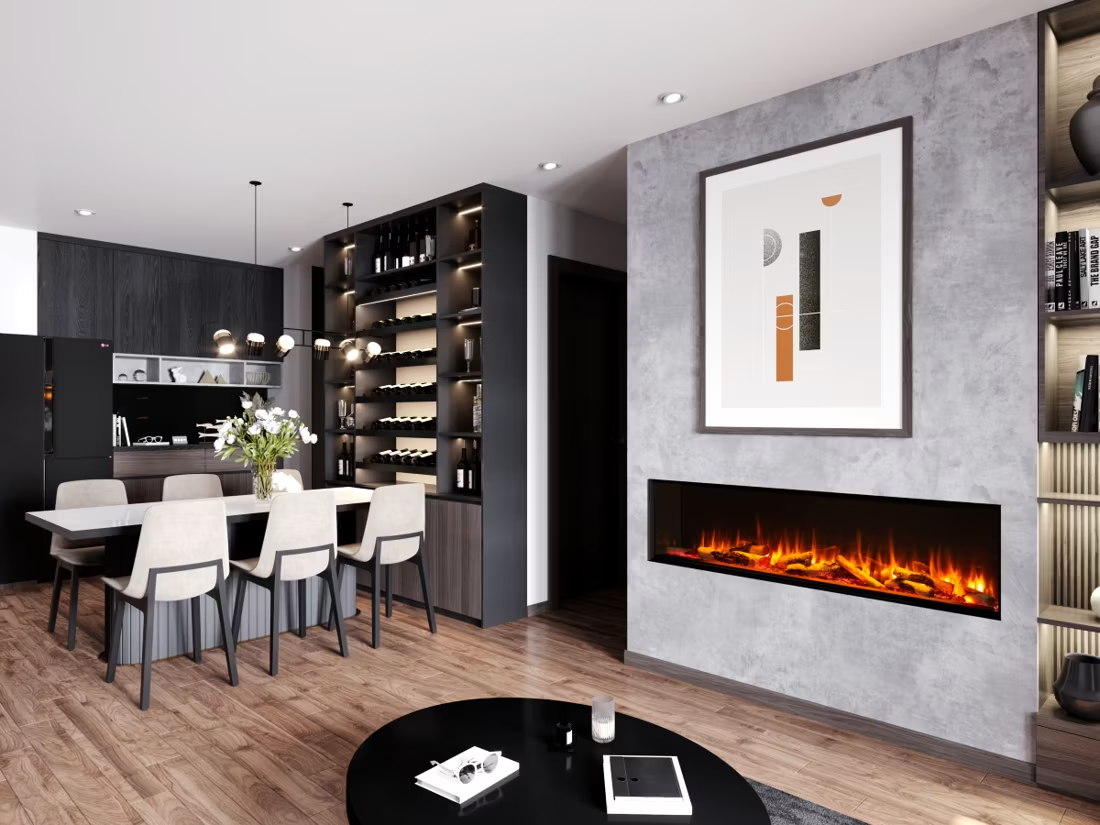
That's where electric earns its place. There's no chimney to build, no gas line to run, and no wood to split from the county's oak, pecan, or mesquite stands—just an outlet, or a dedicated circuit for a larger built-in unit, and a spot on the wall or inside an existing firebox. For the double-wides and older farmhouses scattered across Lipscomb County's rural roads, that simplicity matters: an electric insert can go into a masonry fireplace that no longer draws well, or a wall-mount unit can heat a room that was never built with venting in mind at all. It's real, thermostat-controlled heat without the code complexity of a wood or gas install, and it runs fine on the rural electric cooperative lines that serve most of the county.
Three steps. No salesperson until you're ready.
Tell us about your project
Your zip code, your situation, and the fuel you're leaning toward—or let the answers point you to one.
See what's actually available
The brands dealers within 100 miles genuinely carry—real options, never a catalog mirage.
Get your dealer & Project Guide
A trusted local dealer, plus the free Project Guide & Parts List that names every component of the job.
Frequently Asked Questions
How much does an electric fireplace installation cost in Lipscomb County?
Electric fireplaces are the least expensive hearth upgrade available. Plug-in units and freestanding stoves typically run $300 to $1,500 for the appliance itself, with no real installation cost beyond setting it in place. Built-in wall units or mantel packages that need a dedicated 240V circuit usually add $200 to $600 for an electrician's time. Because much of Lipscomb County runs on rural cooperative electric lines rather than dense in-town grid infrastructure, it's worth confirming with your electrician whether your panel can handle a larger unit before you buy—a local dealer can tell you which models need a new circuit and which don't.
What size electric fireplace do I need for my home?
Most electric fireplaces are rated to comfortably heat 400 to 1,000 square feet as supplemental heat—enough for a single living room, den, or bonus room, but not a whole ranch-style floor plan on a cold Panhandle night. For open-concept homes common on Lipscomb County properties, a single unit will warm the immediate seating area well but won't replace central heat across the whole house. If you're heating a detached shop, bunkhouse, or older farmhouse room with poor insulation, size up and consider a unit with a higher wattage heater rather than relying on the flame effect alone—the visual and the heat output are sold separately on most models.
Can an electric fireplace go into my existing wood-burning fireplace opening?
Yes, and it's a common upgrade for older farmhouses in Lipscomb County with a masonry fireplace that's fallen out of use. An electric insert slides into the existing firebox opening, plugs into a nearby outlet or a new outlet run behind the surround, and requires no chimney, no liner, and no damper work. It's a straightforward way to get a working hearth back without the maintenance of wood or the gas line work a propane conversion would require. Just measure your opening carefully—insert sizes vary, and a local dealer can confirm fit before you order.
Will an electric fireplace actually heat my room, or is it just for looks?
Most electric fireplaces include a real heater—typically a 1,500-watt element producing around 4,600 to 5,000 BTU—separate from the flame visual, which can usually run with the heat off for ambiance alone. That's enough to noticeably warm a single room, which is realistic for Lipscomb County's moderate winters (average lows around 24°F). It won't replace central heat during a hard Panhandle cold snap or an ice event, but for day-to-day use in a den, bedroom, or sunroom, it's genuine supplemental warmth, not just a glowing screen.
Do I need a permit to install an electric fireplace in Lipscomb County?
Plug-in electric fireplaces generally don't require a permit since they use a standard household outlet. If your installation calls for a new dedicated circuit or a panel upgrade—common for larger built-in units—that electrical work should be done by a licensed electrician, and depending on the specific project and location within the county, an electrical permit may apply. Lipscomb County doesn't have the layered permitting process of a large city, but it's still worth a quick call to confirm requirements for your specific address before any wiring changes are made.
What's the difference between an electric fireplace, insert, and mantel package?
A standalone electric fireplace or stove is a self-contained unit you place against a wall or in a corner—no cutting into anything required. An electric insert is built to slide into an existing masonry or zero-clearance firebox, replacing the look of a dead fireplace with a working heater and flame effect. A mantel package combines a wall-mounted or built-in electric unit with a surrounding mantel and shelf, giving you a finished fireplace look in a room that never had one—a popular option for newer homes and additions around Lipscomb County where there's no existing firebox to work with.
How much does it cost to run an electric fireplace?
A typical 1,500-watt electric fireplace running on high costs roughly 15 to 25 cents an hour depending on your rural electric cooperative's rate—noticeably cheaper per hour than heating a whole house with the furnace, which is exactly why most owners use it for zone heating rather than as a primary heat source. Running the flame effect alone, without the heater engaged, draws only a few watts and costs next to nothing. For Lipscomb County homes where a family room or den gets the most use, running the fireplace there instead of pushing the central thermostat up a few degrees for the whole house can meaningfully lower a winter electric bill.
Electric vs. propane—which is right for my Lipscomb County home?
Propane offers higher heat output and can serve as an emergency heat source if you're set up with a tank, which matters in a county where cooperative power lines can go down during ice events. Electric fireplaces are simpler and cheaper to install, require no tank refills or delivery scheduling, and produce zero combustion byproducts indoors—but they depend entirely on the grid, so they won't help during an outage. For a primary heat source on an outlying ranch, propane still has the edge for reliability. For a supplemental fireplace in a living room or den where convenience and easy installation matter more than backup capability, electric is usually the simpler, less expensive choice.
Electric vs. wood—which is right for my Lipscomb County home?
Wood heat runs deep in Panhandle ranch country, and oak, pecan, and mesquite are all common locally for anyone cutting or buying cordwood—plus a wood stove keeps working when the power's out, which matters during winter ice events. Electric fireplaces can't provide backup heat during an outage since they need the grid to run, but they require no chimney, no ash cleanup, no wood storage, and no annual sweep—just an outlet and a wall. For homes where the fireplace is about ambiance and easy supplemental warmth in a specific room, electric is the low-maintenance choice. For a rural property that wants a genuine backup heat source when the lines go down, wood remains worth the extra work.
Does an electric fireplace need a vent or chimney?
No—that's its superpower. An electric fireplace needs a wall and an outlet, period. No vent pipe, no gas line, no clearances to design around, which is why it works in bedrooms, offices, apartments, and walls where venting a gas or wood unit would be impractical or impossible. Installation is typically the simplest and least expensive of any fireplace type.
Can I put a TV above my fireplace?
Yes—with an asterisk. Fireplaces are hot and TVs don't like heat. Either put a mantel between them to deflect rising warmth, or choose a fireplace with heat-management technology that creates a cool zone on the wall above—the wall stays around 125 degrees, barely warm, while the room still gets full heat. If you like clean lines and don't want a mantel, heat management is the answer.
Does a fireplace add value to my home?
On average, a fireplace adds back to the home about the same amount you spent installing it. Add the monthly savings from heating the rooms you actually use instead of the whole house—often hundreds of dollars a year—and the value case is strong before you even count what a fire does for how your family uses the room.
Can a fireplace actually lower my heating bill?
Yes—by creating a comfort zone. A furnace heats every square foot of the house just to warm the one room you're in; a gas fireplace on low burns roughly a sixth of the gas a typical furnace does. Set the furnace around 55–60 degrees as a baseline, then heat the rooms your family actually uses. Families who heat this way commonly save $20–$60 a month.
Stove and Fireplace Dealers in Lipscomb County
Listings include WhyFire partner dealers, dealers we have verified as authorized for the brands we recommend, and established local businesses that carry hearth products. Every listing shows which one it is. The ones marked Preferred run on WhyFire's software, so they can show you real pricing and book your appointment right here. No manufacturer pays for placement. How we verify dealers →
Find your electric fireplace in Lipscomb County.
Tell us a bit about your home and we'll put together a free Project Guide & Parts List—the right electric fireplace or insert for your space, the exact parts you'll need, and a trusted local dealer to install it correctly.
Find Your Fireplace →