
Pellet Stoves Are a Niche Fit in Hurst's Mild Winters.
With winter lows averaging 36°F and only a mild, short heating season each year, most Hurst homes never need a hopper-fed heater. If you still want one, we'll connect you with a dealer who can tell you straight whether it makes sense.
Every Project Starts From One of These Five Situations
Hurst winters rarely call for a hopper-fed stove.
Hurst sits in climate zone 3A at 565 feet elevation, with an average winter low of 36°F and a mild, short heating season—a fraction of what a place like Duluth, MN racks up in a single hard month. Homes here are built around central gas or electric HVAC, not supplemental biomass heat, and most local hearth dealers stock direct-vent gas units far more heavily than pellet appliances. That's not a knock on pellet stoves—it's just that the climate math rarely justifies one as a primary or even meaningful secondary heat source.
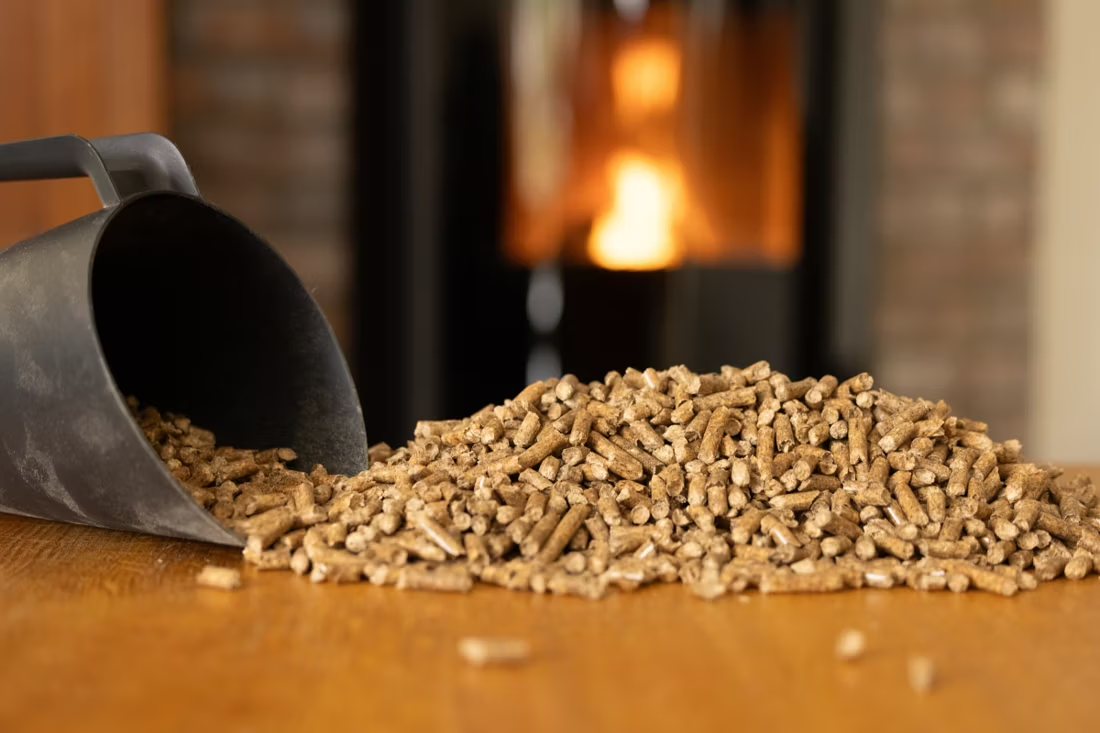
There's also a practical wrinkle: pellet stoves need electricity to run the auger and combustion blower. During Winter Storm Uri in February 2021, when ERCOT-managed outages left Tarrant County homes without power for days in freezing temperatures, a pellet stove would have gone cold at the exact moment it was needed most. A handful of Hurst homeowners still install pellet units—for ambiance, for a low-mess secondary heat source, or for a lake or cabin property elsewhere—and regional brands like Forest Energy and Lignetics are available through DFW-area dealers if that's your situation. But for most Hurst homes, gas or electric options make more sense given the local climate and grid realities.
Three steps. No salesperson until you're ready.
Tell us about your project
Your zip code, your situation, and the fuel you're leaning toward—or let the answers point you to one.
See what's actually available
The brands dealers within 100 miles genuinely carry—real options, never a catalog mirage.
Get your dealer & Project Guide
A trusted local dealer, plus the free Project Guide & Parts List that names every component of the job.
Frequently Asked Questions
Are pellet stoves common in Hurst, TX?
Not really, and it's worth saying plainly: with winter lows averaging 36°F and only a mild, short heating season each year, Hurst just doesn't have the sustained cold that makes a pellet stove worth the investment for most households. Local hearth dealers in the DFW metro carry pellet units, but they're a small slice of what they sell compared to gas fireplaces and inserts. If you're drawn to pellet heat for the ambiance, low ash, or hands-off operation, it's still available—just know you're choosing a niche appliance in this climate, not the local default.
What does a pellet stove installation cost in Hurst?
Because pellet stoves are installed infrequently in Tarrant County, there isn't a well-established local price range the way there is for gas fireplace conversions here. Nationally, a pellet stove or insert installation typically runs $3,500 to $7,000 depending on the unit, venting path, and any hearth pad or wall modifications needed. If you move forward, get a firm in-home quote from a dealer who actually stocks pellet units regularly—that matters more here than in a market where every hearth shop installs them weekly.
Why is wood heat also considered not-applicable in Hurst?
Same underlying reason as pellet: the climate doesn't demand it. Oak, pecan, and mesquite are the wood species people know best around Hurst—but almost entirely for smoking brisket and ribs, not for heating a home. There's no meaningful public cutting-permit infrastructure nearby the way there is in forested Western states, and with winter lows rarely dropping much below freezing, a wood-burning appliance would sit unused most of the year. A handful of rural properties outside the city limits still burn wood, but inside Hurst it's largely off the table.
What would it cost to run a pellet stove on Hurst's electric rates?
Hurst is served by Oncor Electric Delivery, along with United Electric Cooperative and Denton County Electric Cooperative in some surrounding areas, with residential rates generally running $0.13 to $0.1377 per kWh. A pellet stove's auger motor and combustion blower typically draw 100–400 watts continuously, which adds up to a modest but real monthly cost on top of the pellets themselves—usually a few dollars a day of run time. It's a minor factor compared to fuel cost, but worth knowing since a pellet stove, unlike a wood stove, can't run at all without power.
What do most Hurst homeowners install instead of a pellet stove?
Gas. Natural gas and propane fireplaces and inserts are the standard hearth upgrade in Hurst, matching the mild-winter, gas-and-electric-HVAC reality of North Texas homes. A direct-vent gas insert gives instant, adjustable heat without hopper loading, ash cleanup, or reliance on pellet delivery—and gas units with battery-backup ignition can even operate through a power outage, which pellet stoves cannot. If you're comparing options for a Hurst home, it's worth looking at our gas fireplace page alongside this one.
Are oak, pecan, and mesquite pellets available locally?
Bagged hardwood pellets from brands like Forest Energy and Lignetics are sold through hearth and farm-supply retailers across the broader Dallas-Fort Worth area, so sourcing fuel isn't the obstacle—availability of the stoves themselves and dealers who install and service them regularly is the bigger constraint in Hurst specifically. If you do install a pellet unit, expect to plan ahead on where you'll buy pellets rather than assuming every local hardware store stocks them the way they might in a colder market.
Who actually buys a pellet stove in Hurst?
In our experience, it's usually one of three homeowners: someone who wants the visual and ambiance of a real flame without the smoke and creosote of a wood-burning unit, someone with a second property—a Hill Country cabin or an out-of-state lake house—where pellet heat makes more climate sense, or someone specifically avoiding gas lines or propane tanks for personal reasons. It's a smaller and more deliberate buyer than in a place with real winters, which is exactly why matching with a dealer who won't oversell you on a mismatched appliance matters.
Would a pellet stove have helped during a storm like Uri?
Not on its own. Winter Storm Uri in February 2021 knocked out power to huge swaths of the Oncor service territory for days at a time, and a pellet stove's auger and blower need electricity to function—no power means no heat, regardless of how many bags of pellets you have on hand. A battery-backup gas fireplace or a generator-paired setup fares much better in that scenario. If emergency backup heat during grid failures is your real motivation, it's worth discussing gas and battery-backup ignition options with a local dealer before defaulting to pellet.
Pellet vs. gas—which actually makes sense for a Hurst home?
For nearly every Hurst homeowner, gas wins on the fundamentals: it's the regional standard, it's what local dealers stock and service reliably, it can be configured to run during power outages, and it matches a climate where you need heat on relatively few nights a year. Pellet stoves offer a more traditional flame look and don't require a gas line, but they need reliable power, a dedicated pellet supply, and more hands-on maintenance—trade-offs that make more sense in genuinely cold climates than in North Texas. If ambiance is your main goal, ask a local dealer about vented gas units with realistic-looking log sets before committing to pellet.
Why is a fireplace insert so efficient?
An insert does two things: it seals the chimney completely, so you stop losing air you already paid to heat, and it radiates warmth into the room through the firebox and glass. Most add a heat-exchange fan that pulls cool room air underneath, wraps it around the hot firebox, and pushes it back out warm. Your home is more efficient before you've even lit the first fire.
What's the difference between an insert and a zero-clearance fireplace?
An insert is a fireplace that slides into a pre-existing wood-burning fireplace—if you don't have one, there's nothing to insert it into. A zero-clearance fireplace is built into a framed wall, which makes it the answer for remodels and new construction. Simple test: existing masonry fireplace means insert; blank or framed wall means zero-clearance.
What is an in-home preview and do I need one?
It's a visit where a hearth professional measures your space, confirms the model you picked actually works in your home, and walks the specs—framing, gas line, venting, finish work—before anything is ordered. Some details you just can't know until you see the house. Never make a down payment without one; it's the single most-skipped step that burns buyers.
Does a fireplace add value to my home?
On average, a fireplace adds back to the home about the same amount you spent installing it. Add the monthly savings from heating the rooms you actually use instead of the whole house—often hundreds of dollars a year—and the value case is strong before you even count what a fire does for how your family uses the room.
Nearby Dealers
Hearth shops serving Hurst and the surrounding area.
Pellet Brands Stocked Around Hurst
Manufacturers will point you to the nearest stocking dealer.
Find what actually works for your Hurst home.
Tell us about your home and goals, and we'll connect you with a trusted local dealer—whether that means a pellet stove or, more likely in Hurst's climate, a better-suited gas option—plus a free Project Guide & Parts List with the exact parts, venting, and dealer recommendation for your project.
Find Your Fireplace →