
Reliable Heat When the Grid Can't Keep Up.
Hurst winters are short and mild, but ERCOT outages aren't. Find the right gas fireplace or insert, and connect with a trusted local dealer.
Every Project Starts From One of These Five Situations
Mild winters, but the grid isn't always reliable.
Hurst sits in Tarrant County at 565 feet elevation in the Dallas-Fort Worth metroplex, where winters are short and mild—average lows hover around 36°F and the city logs just 2,414 heating degree days a year, a fraction of what a place like Fargo ND or Duluth MN sees in a single month. Most days, a fireplace in Hurst is about ambiance and a focal point for the living room, not survival heat.
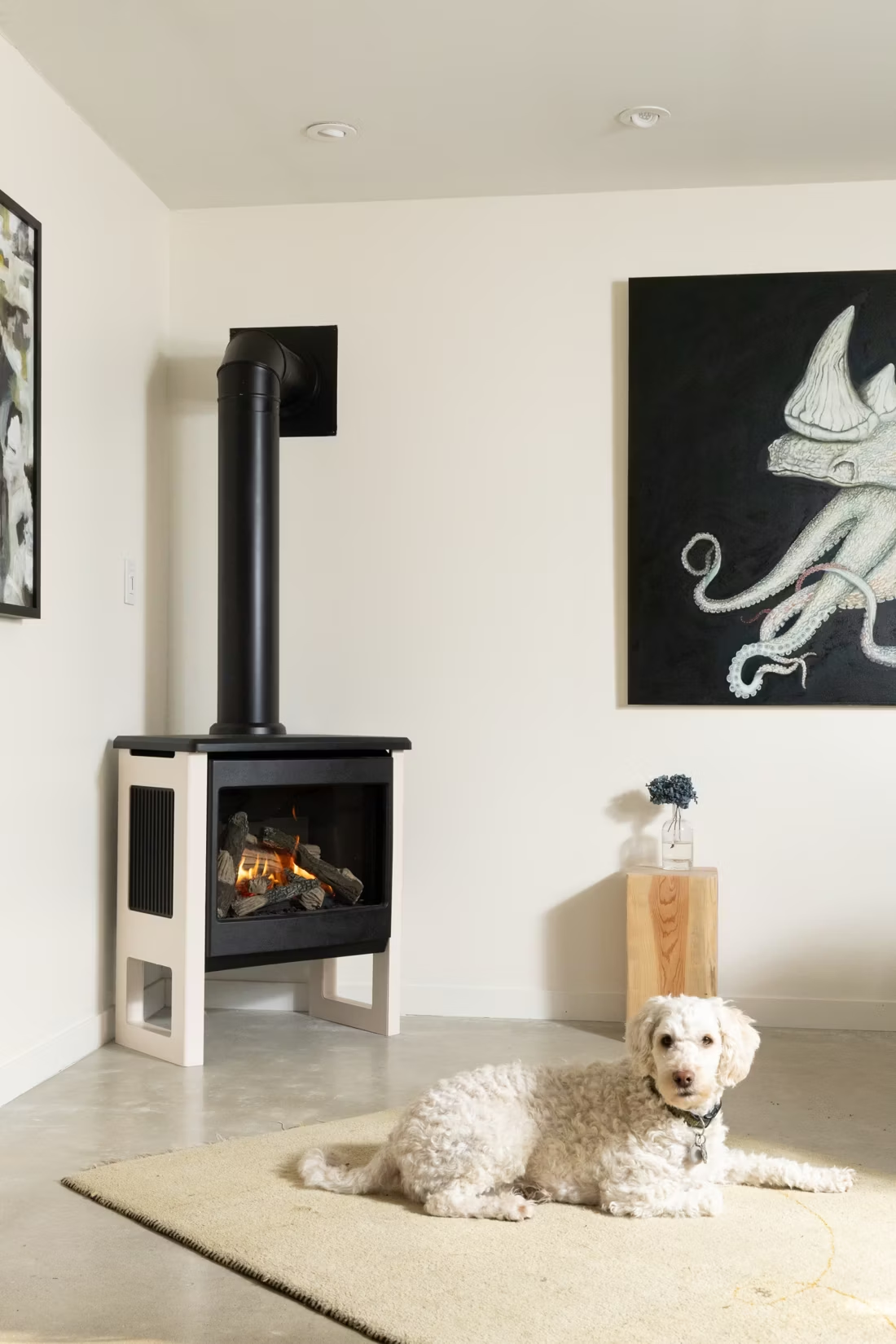
But Texans learned in February 2021 that a mild climate doesn't guarantee reliable power. Winter Storm Uri knocked out ERCOT-managed electricity to millions of North Texas homes for days during a rare hard freeze, and many all-electric households had no backup heat at all. A properly vented gas fireplace or insert—especially one with a standing pilot or battery-backed IPI ignition system that doesn't depend on grid power—keeps a room livable through exactly that kind of outage, while giving Hurst homes a clean, low-maintenance fire the rest of the year.
Three steps. No salesperson until you're ready.
Tell us about your project
Your zip code, your situation, and the fuel you're leaning toward—or let the answers point you to one.
See what's actually available
The brands dealers within 100 miles genuinely carry—real options, never a catalog mirage.
Get your dealer & Project Guide
A trusted local dealer, plus the free Project Guide & Parts List that names every component of the job.
Frequently Asked Questions
How much does a gas fireplace installation cost in Hurst?
In the Hurst area, a direct-vent gas fireplace or insert installation typically runs $3,500 to $9,000, depending on the unit, whether an existing masonry fireplace is being converted, and how much gas line work is needed. Homes already served by Atmos Energy—the natural gas utility for most of Tarrant County—with a line already run near the fireplace sit toward the lower end. New gas line runs, mantel or surround work, or venting through brick veneer on a two-story home push costs toward the higher end. A local hearth dealer will give you a firm number after walking the space.
Can I convert my existing wood-burning fireplace to gas?
Yes, and it's one of the most common requests we hear from Hurst homeowners. Many houses in this part of Tarrant County were built in the 1960s through 1980s with open masonry fireplaces originally meant for oak, pecan, or mesquite cordwood—species that are more associated with backyard smokers and firepits here than winter heating. Converting to a gas log set or a sealed gas insert typically runs $2,500 to $7,500, uses the existing chimney or a new direct-vent liner, and eliminates the ash, creosote, and chimney maintenance that come with an open wood fireplace that rarely sees serious winter use in this climate.
Do I need natural gas, or can I use propane?
Most of Hurst is served by Atmos Energy's natural gas lines, so if your home already has gas service for a water heater, range, or furnace, adding a fireplace is usually a straightforward tap into the existing system. Propane is rarely used inside city limits here—it shows up mainly in a handful of rural pockets of Tarrant County without gas mains. Nearly every gas fireplace or insert sold locally can be configured for either fuel, but natural gas is the default for the vast majority of Hurst installations.
Will my gas fireplace still work if the power goes out?
It can, depending on the ignition system. Winter Storm Uri in February 2021 knocked out ERCOT-managed power to large parts of North Texas for days during a hard freeze, and homes with electric-only heat had nothing to fall back on. A gas fireplace with a standing pilot or IPI (intermittent pilot ignition) system with battery backup will still light and run without grid power. Valor fireplaces take it a step further—their pilot assembly generates its own electricity through the thermocouple, so there are no batteries to check or replace. For Hurst homeowners who remember Uri, that's a real feature worth asking your local dealer about.
What's the difference between a gas fireplace, insert, and log set?
A gas log set drops into your existing open masonry fireplace and burns through the existing chimney flue—the least expensive option, but the least efficient since most of the heat still goes up the chimney. A gas insert seals into that same opening as a self-contained, glass-fronted unit that dramatically improves heat output and efficiency. A full gas fireplace is a built-in unit for new construction or a remodel where no existing fireplace exists. For the many older brick ranch homes around Hurst with an existing but rarely-used masonry fireplace, an insert is usually the best upgrade.
Do I need a permit to install a gas fireplace in Hurst?
Yes. The City of Hurst Building Inspections Division requires a permit for gas line work and for any new fireplace or insert installation, and the gas connection itself has to be run by a licensed gas fitter under Texas Department of Licensing and Regulation rules. Reputable local hearth dealers handle the permitting and inspection scheduling as part of the installation, so you're not coordinating separate trades yourself.
Should I get a vented or vent-free gas fireplace?
Vented (direct-vent) units draw combustion air from outside and exhaust it back outside through sealed venting—they're the safer, more universally code-compliant choice and the most common installation in Hurst. Vent-free gas fireplaces are legal in Texas and popular for supplemental use in rooms without existing venting, but the City of Hurst's adopted building code limits where they can go—they're generally not permitted in bedrooms and require minimum room volumes and oxygen depletion sensors. Given how mild winters here are, most Hurst homeowners install direct-vent units for real heat and flexibility, using gas mainly for ambiance rather than as a primary heat source.
How often does a gas fireplace need to be serviced?
An annual inspection is recommended for any gas-burning appliance, even one used only occasionally through Hurst's short heating season. A technician checks the burner, pilot assembly, venting, and gas connections, and cleans the glass and interior. Local HVAC and hearth service companies in the DFW area typically charge $150 to $250 for this visit—cheap insurance for a unit that might only run a few weeks a year but still needs to work correctly when a cold snap or grid outage hits.
Gas vs. wood vs. electric—what actually makes sense in Hurst?
Wood-burning fireplaces are uncommon as a real heat source here—with only 2,414 heating degree days a year and average winter lows around 36°F, there's little practical need for a primary wood heater, and Tarrant County isn't near the kind of public forest land where cutting permits and self-cut firewood make sense. Local oak, pecan, and mesquite are far more likely to end up in a smoker than a wood stove. Electric fireplaces and inserts are a low-cost, no-venting option for ambiance, but they go dark exactly when the ERCOT grid is under stress, which is often when Hurst homeowners want backup heat most. Gas splits the difference: it delivers real, on-demand heat, works during a power outage with the right ignition system, and fits the occasional-but-real cold snaps this part of Texas gets.
Why is my open fireplace making my house colder?
Open fireplaces suck—literally. As the fire burns, it consumes air your furnace already paid to heat and pulls it out through the chimney, so the house is actually colder after the fire goes out than before you lit it. An insert fixes this: it seals the chimney, puts fixed glass across the front, and turns that hole in your house into a real heat source.
What do I measure to size a fireplace insert?
Four numbers tell you what fits: the front width, the front height, the back width, and the overall depth of your existing fireplace opening. Grab a tape measure, jot those down, and snap a photo of the wall—those two things do more to move your project forward than anything else you can do today.
What is an in-home preview and do I need one?
It's a visit where a hearth professional measures your space, confirms the model you picked actually works in your home, and walks the specs—framing, gas line, venting, finish work—before anything is ordered. Some details you just can't know until you see the house. Never make a down payment without one; it's the single most-skipped step that burns buyers.
Can I install a fireplace myself?
If you're putting a fire in your house on purpose, it's best to work with an expert. Unless you're genuinely experienced in framing, gas line, vent pipe, and the national code on clearances to combustibles, have a professional do it—and ideally the same company that sells you the fireplace, so warranty, service, and liability all live under one roof.
Nearby Dealers
Hearth shops serving Hurst and the surrounding area.
Find your gas fireplace in Hurst.
Tell us a bit about your home and we'll match you with a trusted local Hurst-area dealer, plus a free Project Guide & Parts List covering the right unit, venting, and gas line work for your project.
Find Your Fireplace →