
Fireplace Warmth for the DFW Metro—Comfort, Not Survival.
Fireplace resources for every city in Tarrant County—from Fort Worth and Arlington to Southlake, Grapevine, and Mansfield. With average winter lows around 37°F, most homes here want ambiance and backup heat, not a survival appliance. Find the right unit and connect with a trusted local hearth retailer.
Every Project Starts From One of These Five Situations
Gas and electric comfort heating across Tarrant County, Texas.
Tarrant County is home to over 2 million people across Fort Worth, Arlington, and more than 35 other incorporated cities—one of the largest and most densely populated counties in Texas. The climate here is mild: Zone 3A, an average winter low near 37°F, and a short, light heating season each year. For comparison, a cold-climate city like Fargo, ND deals with a winter heating load roughly five times heavier—Tarrant County sees roughly a fifth of that heating load. That changes what a fireplace is for here. Gas fireplaces and gas log sets are the standard choice for real, on-demand heat and instant ambiance, typically run on Atmos Energy service. Electric fireplaces are just as common—especially in newer builds, apartments, and remodels where a wall-mount or built-in unit adds a focal point without any venting at all.
Wood-burning and pellet appliances are largely off the table as primary heat sources in Tarrant County—the mild winters don't generate the sustained heating load either appliance is designed for. That said, plenty of older homes in Fort Worth's historic neighborhoods and elsewhere still have original masonry wood-burning fireboxes, and some homeowners burn local oak, pecan, or mesquite in them occasionally for atmosphere rather than warmth. What you'll find on this hub: hearth retailers, service technicians, and fuel suppliers covering the whole county. Pick your fuel below for local dealers, installation costs, and unit recommendations specific to your city.
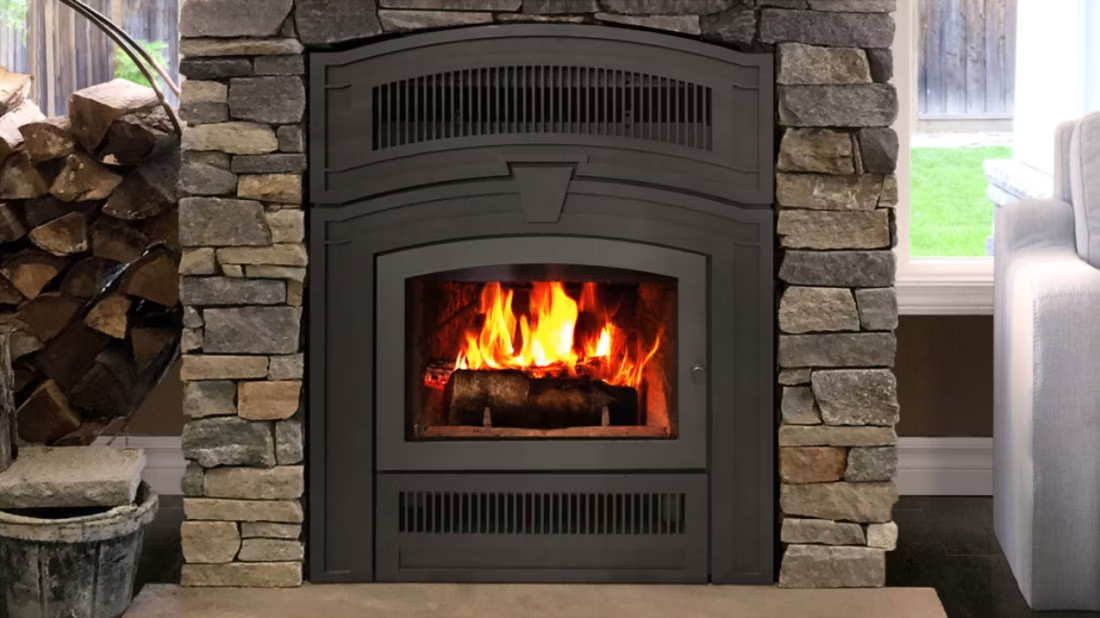
Four fuels. One honest answer for Tarrant County.
Three steps. No salesperson until you're ready.
Tell us about your project
Your zip code, your situation, and the fuel you're leaning toward—or let the answers point you to one.
See what's actually available
The brands dealers within 100 miles genuinely carry—real options, never a catalog mirage.
Get your dealer & Project Guide
A trusted local dealer, plus the free Project Guide & Parts List that names every component of the job.
Frequently Asked Questions
Which fuel works best for a fireplace in Tarrant County?
Gas is the most common choice across Tarrant County—a gas fireplace, insert, or log set gives you instant flame and real supplemental heat on the handful of nights each winter that dip near freezing, and most homes already have Atmos Energy service in place. Electric fireplaces are just as popular, especially in condos, apartments, and remodels in Arlington and Fort Worth where residents want a fireplace look without venting work. Wood-burning fireplaces exist mostly as legacy masonry fireboxes in older homes—some owners burn local oak, pecan, or mesquite occasionally, but new wood stove installations are rare here given the mild climate. Pellet stoves are essentially nonexistent; the appliance is built for sustained cold-climate heating loads this region doesn't generate, even though regional pellet suppliers like Forest Energy and Lignetics do serve the area for the occasional user.
Do I need a permit to install a fireplace in Tarrant County?
Yes, in almost every case—but which office issues it depends on where you live. Tarrant County has more than 35 incorporated cities, and each one (Fort Worth, Arlington, Grapevine, Southlake, Mansfield, and the rest) runs its own building permit process rather than going through a single county department. Gas fireplace and gas log installs generally require a mechanical or gas permit and licensed gas-fitter for the line connection. Electric fireplace installs usually don't need a permit for plug-in units, but built-in electric fireplaces that involve hardwiring or a new circuit typically need an electrical permit. Most local hearth retailers handle the permit paperwork with the correct city as part of the installation.
Are there air quality or burning restrictions in Tarrant County?
There are no wood-smoke-specific restrictions tied to indoor fireplace use in Tarrant County, and no local ordinances limiting gas or electric fireplace operation. The county does occasionally issue outdoor burn bans during drought conditions, but those apply to open burning and recreational fires outside, not to permitted indoor gas or electric fireplaces. If you do run an older masonry wood firebox occasionally, standard chimney maintenance still matters for safety even without a formal air-quality program in place.
Can one local hearth retailer handle both gas and electric fireplaces?
Most hearth retailers serving Tarrant County carry both gas and electric lines, since those are the two fuels that actually fit the local climate. A dealer who stocks gas log sets, gas inserts, and direct-vent gas fireplaces will typically also carry a range of electric wall-mount and built-in units for rooms where venting isn't practical or wanted. A small number of dealers still stock decorative wood-burning inserts for owners with existing masonry fireboxes, but that's a secondary line for most shops here, not the focus.
How does service and installation work across a county with so many cities?
Because Tarrant County is made up of Fort Worth, Arlington, and dozens of smaller cities packed close together, most retailers and technicians cover a wide service radius without much added travel cost—unlike more rural counties where a service call might mean an hour's drive. A dealer based in Fort Worth can typically reach Arlington, Grapevine, Southlake, or Mansfield the same day. The main variable is which city's permit office you're dealing with, not distance—your installer will pull the permit from your specific city rather than a single county office.
What's the typical cost range for a fireplace installation in Tarrant County?
Gas fireplace, insert, or log set: roughly $3,500–$9,000 depending on whether you're adding new gas line and venting or converting an existing masonry firebox to gas logs, which runs toward the lower end. Electric fireplace: $200–$3,000 for the unit itself, plus $400–$1,200 in labor for anything beyond a simple plug-in wall-mount, such as a built-in with a new electrical circuit. Wood-burning insert or repair work on an existing masonry firebox: $3,000–$7,000, though this is an uncommon request in the county. Pellet stove installation is rare enough that most local retailers don't carry it as a standard line item—expect to ask directly if this is what you want.
Wood, gas, pellet, or electric—how do I choose?
Match the fuel to your life, not the other way around. Wood: lowest fuel cost and total power-outage independence, but you're hauling and stacking. Gas: press a button, set a thermostat, no maintenance to speak of. Pellet: wood economics with automatic feeding, in exchange for weekly cleaning and a need for electricity. Electric: plugs in anywhere with honest supplemental heat. Nobody regrets the fuel that fits how they actually live.
What is an in-home preview and do I need one?
It's a visit where a hearth professional measures your space, confirms the model you picked actually works in your home, and walks the specs—framing, gas line, venting, finish work—before anything is ordered. Some details you just can't know until you see the house. Never make a down payment without one; it's the single most-skipped step that burns buyers.
Does a fireplace add value to my home?
On average, a fireplace adds back to the home about the same amount you spent installing it. Add the monthly savings from heating the rooms you actually use instead of the whole house—often hundreds of dollars a year—and the value case is strong before you even count what a fire does for how your family uses the room.
Can I install a fireplace myself?
If you're putting a fire in your house on purpose, it's best to work with an expert. Unless you're genuinely experienced in framing, gas line, vent pipe, and the national code on clearances to combustibles, have a professional do it—and ideally the same company that sells you the fireplace, so warranty, service, and liability all live under one roof.
Stove and Fireplace Dealers in Tarrant County
Listings include WhyFire partner dealers, dealers we have verified as authorized for the brands we recommend, and established local businesses that carry hearth products. Every listing shows which one it is. The ones marked Preferred run on WhyFire's software, so they can show you real pricing and book your appointment right here. No manufacturer pays for placement. How we verify dealers →
Brothers Supply Co.
Texas Building Supply
Rodak's Coffee And Bbq Grills
Fireside Innovations
Alliance Materials, Inc.
Acme Brick Tile & Stone
Bbq Outfitters
David's Stove Shop Inc
EarthCore Industries
Cosentino – Dallas
Find your fireplace in Tarrant County.
Get matched with a trusted local dealer and receive a free Project Guide & Parts List—a plan for your fireplace project in Tarrant County with the exact parts, including the vent kit, and your recommended local installer.
Find Your Fireplace →