
Keep Your Family Warm and Safe—No Matter What
Guadalupe County's winters are short and mild, so wood stoves aren't the default heat source they'd be in Duluth or Fargo. But for rural acreage, ambiance, or backup heat during a hard freeze, a properly sized unit still makes sense for some homes here.
Every Project Starts From One of These Five Situations
Mild winters, rare demand—but real reasons to consider one anyway.
Guadalupe County sits in climate zone 2A with an average winter low around 41°F and just 1,366 heating degree days a year—a fraction of what a cold-climate town like Bismarck or Duluth racks up in a single month. Between Seguin, Schertz, Cibolo, and the unincorporated stretches of the county, most homes are built and heated around Texas summers, not Texas winters. Central HVAC handles the handful of genuinely cold nights, and wood stoves are simply not part of the standard heating conversation the way they are in the upper Midwest or the mountain West.
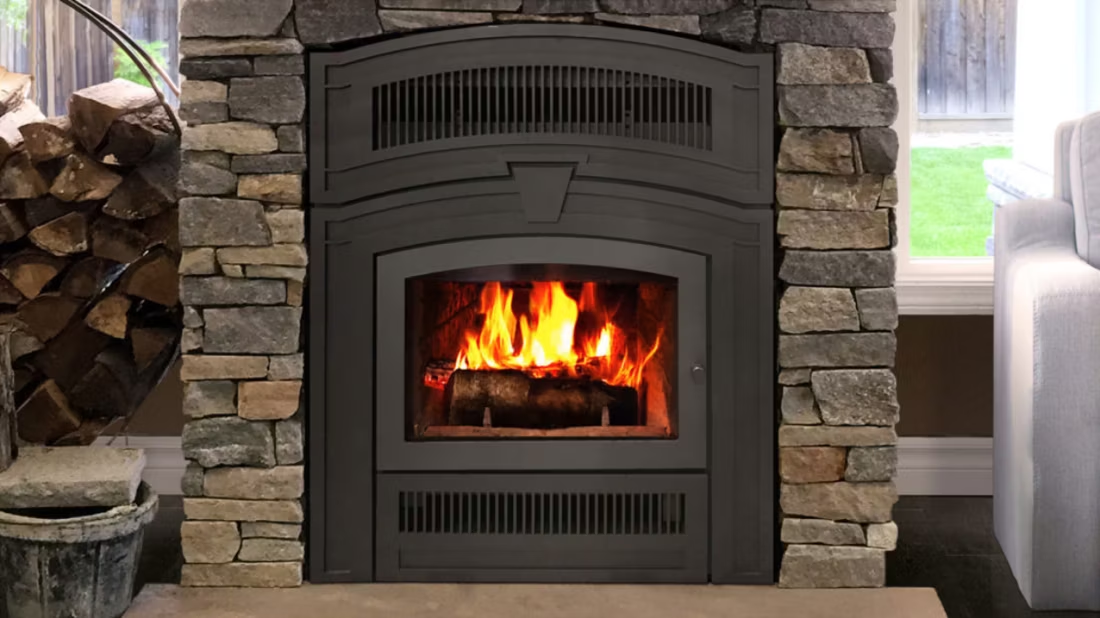
That said, this is oak, pecan, and mesquite country—wood that Guadalupe County residents already know intimately, mostly from the smoker rather than the hearth. A small number of homeowners still install a wood stove or fireplace insert: rural properties without a gas line, older homes in downtown Seguin with an existing masonry chimney, or families who want a real fire for the occasional hard freeze—including the kind of multi-day cold snap the region saw in February 2021, when the grid strained and a wood-burning backup suddenly looked a lot more appealing. If that's you, a local dealer can size something appropriately modest rather than sell you a stove built for a Montana winter you'll never see.
Three steps. No salesperson until you're ready.
Tell us about your project
Your zip code, your situation, and the fuel you're leaning toward—or let the answers point you to one.
See what's actually available
The brands dealers within 100 miles genuinely carry—real options, never a catalog mirage.
Get your dealer & Project Guide
A trusted local dealer, plus the free Project Guide & Parts List that names every component of the job.
Frequently Asked Questions
How much does a wood stove installation cost in Guadalupe County?
Because wood stove requests are infrequent in this part of Texas, most dealers serving the San Antonio–New Braunfels corridor quote based on an in-home visit rather than a published price sheet. As a general range, expect somewhere between $3,000 and $7,500 for a small-to-medium EPA-certified stove or insert, depending on whether you have an existing chimney to work with or need new Class A pipe run through a wall or roof. Homes without any existing masonry fireplace—common in newer Guadalupe County subdivisions—will land toward the higher end once framing and venting are factored in.
What size wood stove do I actually need here?
Smaller than you'd guess. With only about 1,366 heating degree days a year and an average winter low near 41°F, most Guadalupe County homes only need a small stove—the kind sized for a single room, a cabin, or occasional use rather than a whole-house heating load. Skip anything marketed for 20+ hour overnight burns in sub-zero conditions; that's built for a Bozeman or Caribou winter, not a Seguin one. A local dealer can walk your space and recommend something sized for supplemental heat and ambiance rather than survival heat.
Where can I find someone who actually installs wood stoves near me?
Dedicated wood stove installers are thinner on the ground in Guadalupe County than in colder parts of the country, simply because demand is lower. Most homeowners end up working with a hearth dealer based in the broader San Antonio or New Braunfels market that covers Seguin, Schertz, and Cibolo as part of a wider service area. Ask specifically whether the installer has experience with wood-burning units versus gas—many regional dealers lean heavily gas and electric given local demand, so it's worth confirming before you book.
Should I get a wood stove or a wood-burning insert?
If you have an existing masonry fireplace—which is more common in Guadalupe County's older homes, particularly around historic Seguin—an insert is usually the simpler path, since it uses the chimney you already have and improves on what's likely an inefficient open hearth. If you're starting from scratch, a freestanding stove with new Class A venting gives more flexibility on placement but costs more to install from zero. Either way, given how mild the climate is here, most homeowners are choosing based on look and existing infrastructure rather than raw heating need.
Do I need a permit to install a wood stove in Guadalupe County?
Yes—a building permit is required for a new wood-burning installation, whether you're inside Seguin, Schertz, Cibolo city limits or in unincorporated Guadalupe County, though the office you file with depends on your address. Most hearth dealers handle this paperwork as part of the install. Unlike wood-heavy regions out West, there's no public forest cutting permit system to worry about here—firewood in this county comes from private land, tree services, and regional suppliers rather than national forest units.
What's the best wood stove for a climate this mild?
Skip the big catalytic long-burn stoves designed for extreme cold—they're overbuilt for Guadalupe County and harder to run efficiently on the handful of truly cold nights you'll actually get. A smaller EPA-certified non-catalytic stove from a mainstream brand is a better match: easier to light for occasional use, less prone to smoldering when you're not running it hard every day. Local dealers can point you toward a model sized for supplemental or ambiance use rather than one built for a Minneapolis winter.
How often should my chimney be inspected if I only burn a few nights a year?
Annually, regardless of how lightly you use it—and arguably it matters more with light, irregular use. A stove that's only fired up occasionally, and not run hard enough to keep the flue consistently hot, can actually build creosote faster relative to burn time than a stove used daily all winter. The CSIA recommends a yearly inspection before burning season for exactly this reason. For Guadalupe County homeowners who might only light a fire a dozen nights a year, don't skip the sweep just because usage feels minor.
Where does firewood come from in Guadalupe County if there's no national forest nearby?
Guadalupe County doesn't have public forest land or a Forest Service cutting permit system the way wood-heavy Western counties do—firewood here comes from private land clearing, tree services, and regional suppliers. Fortunately, this is oak, pecan, and mesquite country, the same species prized for barbecue smoking, so seasoned hardwood is not hard to find. Many of the same suppliers who sell smoking wood to local pitmasters also sell split, seasoned firewood by the cord or partial cord for home heating use.
Wood, gas, or electric—what actually makes sense for a Guadalupe County home?
For most homes here, gas or electric is the more practical everyday choice—gas delivers instant, consistent heat that matches how little this climate demands, and electric units are simple to install with no venting or chimney to maintain. Wood is really the choice for a specific kind of homeowner: someone on rural acreage without a gas line, someone who wants a genuine backup heat source for the rare multi-day freeze, or someone who just wants a real fire in an existing fireplace. If that's not you, gas or electric will almost certainly serve the county's mild winters better.
What's the difference between an insert and a zero-clearance fireplace?
An insert is a fireplace that slides into a pre-existing wood-burning fireplace—if you don't have one, there's nothing to insert it into. A zero-clearance fireplace is built into a framed wall, which makes it the answer for remodels and new construction. Simple test: existing masonry fireplace means insert; blank or framed wall means zero-clearance.
Why won't my new wood stove get going like my old one?
New wood stoves are 70%+ efficient, so far less heat goes up the flue—which also means less draft to get a fire established. The rule: build a genuinely hot fire for about 45 minutes before you choke it down. Skip that and you get smoke in the room, creosote in the chimney, and a fire that never takes off. Most performance complaints trace straight back to this.
How much should I budget for a fireplace?
For an average home—covering the fireplace, the vent pipe, and basic installation—a budget between $3,900 and $5,500 gives you a lot of options across wood, gas, and pellet. By the time you add finish work, gas line, and electrical, the average complete installation lands between $5,000 and $12,000 all-in. In a remodel or new build, a good rule is to put about 2.5% of the total project cost toward the fireplace.
Can I install a fireplace myself?
If you're putting a fire in your house on purpose, it's best to work with an expert. Unless you're genuinely experienced in framing, gas line, vent pipe, and the national code on clearances to combustibles, have a professional do it—and ideally the same company that sells you the fireplace, so warranty, service, and liability all live under one roof.
Stove and Fireplace Dealers in Guadalupe County
Listings include WhyFire partner dealers, dealers we have verified as authorized for the brands we recommend, and established local businesses that carry hearth products. Every listing shows which one it is. The ones marked Preferred run on WhyFire's software, so they can show you real pricing and book your appointment right here. No manufacturer pays for placement. How we verify dealers →
Parrish & Company Inc - San Antonio
Find your wood stove in Guadalupe County.
Tell us about your home and how you'd actually use it, and we'll match you with a local dealer who can size a wood stove appropriately for Guadalupe County's mild winters—plus a free Project Guide & Parts List with the exact parts, including the vent kit, for your project.Because wood heat is genuinely uncommon here, matching with the right dealer matters even more.
Find Your Fireplace →