
Real ambiance for Guadalupe County's mild Texas winters.
With winter lows averaging 41°F and just 1,366 heating degree days a year, Guadalupe County homes rarely need a furnace-grade fire—they need the right electric unit for ambiance and the occasional cold snap. Find the right fit and connect with a trusted local installer.
Every Project Starts From One of These Five Situations
The right amount of heat for a climate that barely needs it.
Guadalupe County sits in IECC Climate Zone 2A—hot and humid, with winter lows that average 41°F and only about 1,366 heating degree days a year. Compare that to a place like Duluth, MN, which racks up close to 10,000 HDD, and it's clear why heating isn't the daily concern here that it is up north. From Seguin, the county seat, out through the fast-growing I-35 corridor communities of Schertz and Cibolo, and into smaller towns like Marion and McQueeney, most homes are built and heated around Texas summers, not Texas winters.
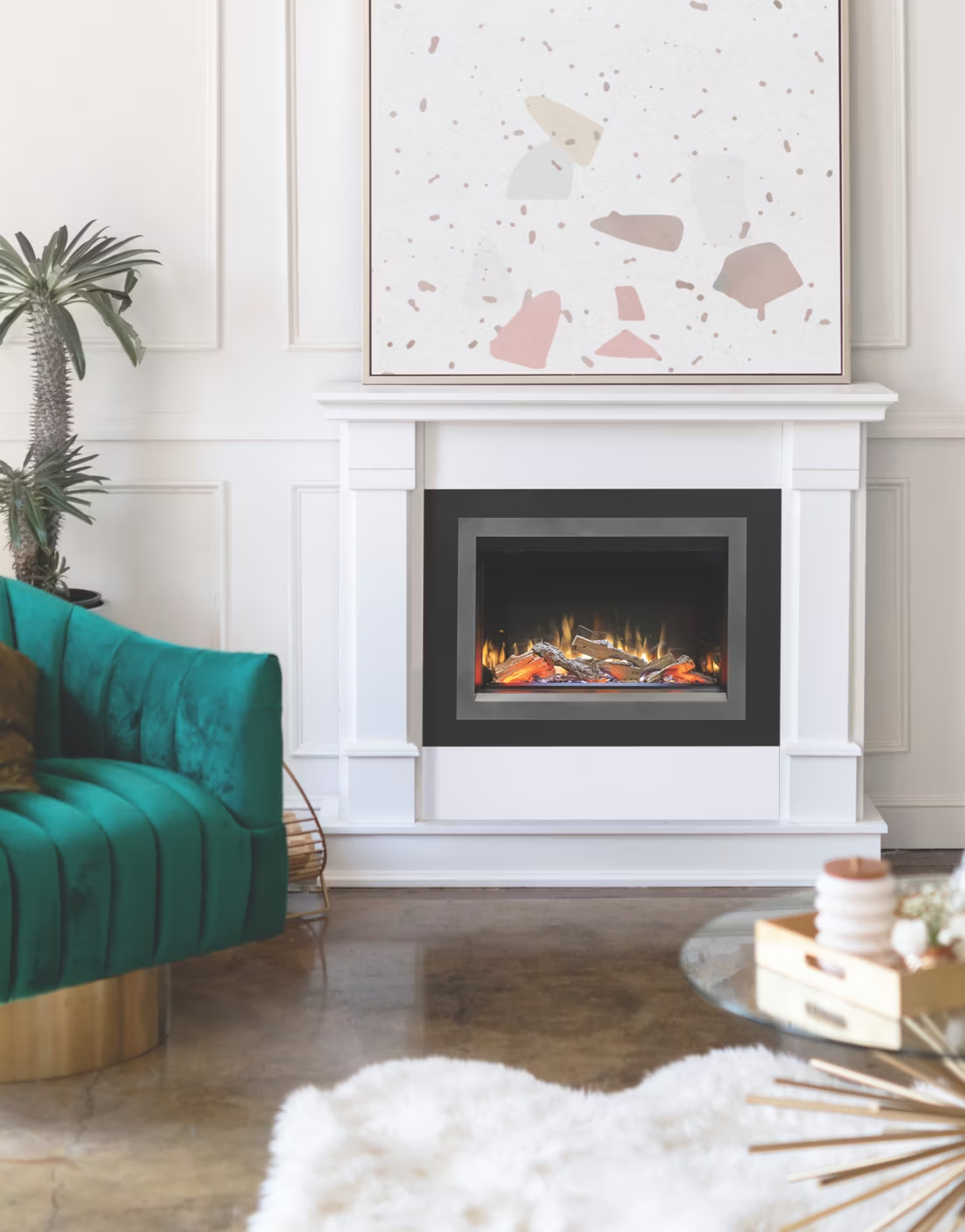
That's exactly why electric fireplaces fit so well here. There's no chimney, no gas line, and no venting to plan around—just a 120V or 240V circuit, which makes electric units an easy retrofit into an old masonry fireplace in a historic Seguin home or a clean install into a new-construction great room in Schertz or Cibolo. Power in most of the county runs through Guadalupe Valley Electric Cooperative (GVEC), headquartered right in the area, and running an electric fireplace a few evenings a week barely moves the needle on a co-op bill. For homeowners who want the glow and the occasional supplemental warmth without committing to real combustion, electric is usually the simplest, least invasive answer.
Three steps. No salesperson until you're ready.
Tell us about your project
Your zip code, your situation, and the fuel you're leaning toward—or let the answers point you to one.
See what's actually available
The brands dealers within 100 miles genuinely carry—real options, never a catalog mirage.
Get your dealer & Project Guide
A trusted local dealer, plus the free Project Guide & Parts List that names every component of the job.
Frequently Asked Questions
How much does an electric fireplace installation cost in Guadalupe County?
Plug-in electric fireplaces and mantel packages—the kind that just need a standard outlet—typically run $400 to $1,200 installed, since there's no venting or gas line to run. Built-in linear units or inserts wired into a dedicated 120V or 240V circuit generally cost $1,200 to $2,500, depending on the unit size and whether an electrician needs to add a new circuit. Because there's no chimney work, no Class A pipe, and no gas permit involved, electric installs in Guadalupe County almost always land well below what a comparable gas or wood project would cost.
Should I get an electric fireplace or a gas fireplace in Guadalupe County?
Gas is a solid, standard option here too—natural gas is available through parts of the county via local utilities, and propane fills in elsewhere. If you want a real flame and more heat output for the rare hard freeze, gas is worth considering. But for most Guadalupe County homes, where winter lows average 41°F, electric wins on simplicity: no gas line, no venting, no combustion byproducts, and a unit that can go almost anywhere in the house, including interior walls where running gas or a flue isn't practical.
Will an electric fireplace actually heat my home, or is it just for looks?
Most electric fireplaces put out around 4,500 to 5,000 BTU on the heat setting—enough to comfortably warm a single room during a Guadalupe County cold snap, but not designed to replace your central HVAC system. Given the county averages only about 1,366 heating degree days a year, that's rarely a problem: an electric unit supplements the coldest 30-to-40-degree nights while providing year-round ambiance the rest of the time, which is exactly what most local homeowners are looking for.
Do I need a permit to install an electric fireplace in Guadalupe County?
A simple plug-in unit generally doesn't require a permit—you're just using an existing outlet. If you're installing a built-in unit that needs a new dedicated circuit, an electrical permit through your city's building department (Seguin, Schertz, or Cibolo, depending on where you're located) is typically required, and a licensed electrician handles that as part of the job. Either way, it's a far lighter permitting lift than a gas line or chimney installation, which is part of why electric is such a popular retrofit choice locally.
What type of electric fireplace fits my home best?
For older homes in Seguin with an existing masonry fireplace, an electric insert slides into that opening and instantly modernizes it without touching the chimney. For newer construction in the growing Schertz and Cibolo neighborhoods, a wall-mounted linear unit or a built-in framed into a great room wall is the more common choice—no fireplace required to start from. Freestanding electric stoves work well for smaller rooms, home offices, or rentals where you want heat and ambiance without any construction at all.
Will my electric fireplace still work if the power goes out?
No—like any electric appliance, it needs grid power (or a generator) to run. Texas homeowners remember Winter Storm Uri in February 2021, when ERCOT grid strain left parts of the state without power during a rare hard freeze. Events like that are genuinely uncommon in Guadalupe County's usual 41°F-average winters, but if backup heat during an outage matters to you, a vented gas unit with battery-backup ignition is worth a look alongside your electric choice rather than instead of it.
How much does it cost to run an electric fireplace in Guadalupe County?
Most units draw around 1,500 watts on the heat setting. At typical Guadalupe Valley Electric Cooperative (GVEC) residential rates, running one for a few hours on a cool evening usually adds only a small amount to a monthly bill—a fraction of what a comparable gas or propane appliance would cost per hour of use. That low running cost is one more reason electric fits so naturally into a climate where real heating demand is the exception, not the rule.
Do people install wood stoves in Guadalupe County?
Rarely, and for good reason. Oak, pecan, and mesquite grow throughout the county, but locally they're prized for the smoker and the barbecue pit, not the hearth—with winter lows averaging 41°F and only about 1,366 heating degree days a year, a wood stove would sit unused most of the winter. A small number of larger rural properties install one for occasional ambiance or as a backup heat source, but for the vast majority of Guadalupe County homes, wood heating just isn't a practical fit the way it is in colder parts of the country.
Why go through a local dealer instead of buying an electric fireplace off the shelf?
Big-box units are built to a generic spec, and a lot of homeowners end up with a unit that's undersized for the wall, wired incorrectly, or mounted without the clearances the manufacturer requires. A trusted local installer sizes the unit to your room, confirms whether you need a dedicated circuit, and handles the electrical permit if one's required—no guesswork. That's the value of getting matched with a real local dealer rather than ordering blind.
Can I put a TV above my fireplace?
Yes—with an asterisk. Fireplaces are hot and TVs don't like heat. Either put a mantel between them to deflect rising warmth, or choose a fireplace with heat-management technology that creates a cool zone on the wall above—the wall stays around 125 degrees, barely warm, while the room still gets full heat. If you like clean lines and don't want a mantel, heat management is the answer.
Do electric fireplaces actually produce heat?
Yes—most put out around 4,800–5,000 BTUs from a standard outlet, which comfortably warms a bedroom, office, or den as a comfort-zone heater. What they won't do is carry a whole house the way wood, gas, or pellet can. Think of electric as ambiance-first with honest supplemental heat: flames on with no heat in July, flames plus warmth in January.
How much should I budget for a fireplace?
For an average home—covering the fireplace, the vent pipe, and basic installation—a budget between $3,900 and $5,500 gives you a lot of options across wood, gas, and pellet. By the time you add finish work, gas line, and electrical, the average complete installation lands between $5,000 and $12,000 all-in. In a remodel or new build, a good rule is to put about 2.5% of the total project cost toward the fireplace.
Does a fireplace add value to my home?
On average, a fireplace adds back to the home about the same amount you spent installing it. Add the monthly savings from heating the rooms you actually use instead of the whole house—often hundreds of dollars a year—and the value case is strong before you even count what a fire does for how your family uses the room.
Stove and Fireplace Dealers in Guadalupe County
Listings include WhyFire partner dealers, dealers we have verified as authorized for the brands we recommend, and established local businesses that carry hearth products. Every listing shows which one it is. The ones marked Preferred run on WhyFire's software, so they can show you real pricing and book your appointment right here. No manufacturer pays for placement. How we verify dealers →
Parrish & Company Inc - San Antonio
Find your electric fireplace in Guadalupe County.
Tell us a bit about your home and we'll put together a free Project Guide & Parts List—the right electric fireplace or insert for your space, the exact parts you'll need, and a match with a trusted local dealer in Guadalupe County.
Find Your Fireplace →