
Keep Your Family Warm and Safe—No Matter What
With winter lows averaging 41°F, Cibolo doesn't need wood heat to survive the season—but for backup power outages, Hill Country ambiance, and the occasional hard freeze, some homeowners still want one done right.
Every Project Starts From One of These Five Situations
Wood heat is the exception here, not the rule.
Cibolo sits in climate zone 2A with a very short, mild heating season and an average winter low of 41°F—a fraction of what a place like Duluth, MN or Bozeman, MT racks up in a single cold month. Central heat pumps and gas furnaces handle the overwhelming majority of Guadalupe County's heating needs, and most new construction in Cibolo's growing subdivisions is built around efficient HVAC, not wood-burning appliances. For most homes here, a wood stove or insert simply isn't a load-bearing part of staying warm.
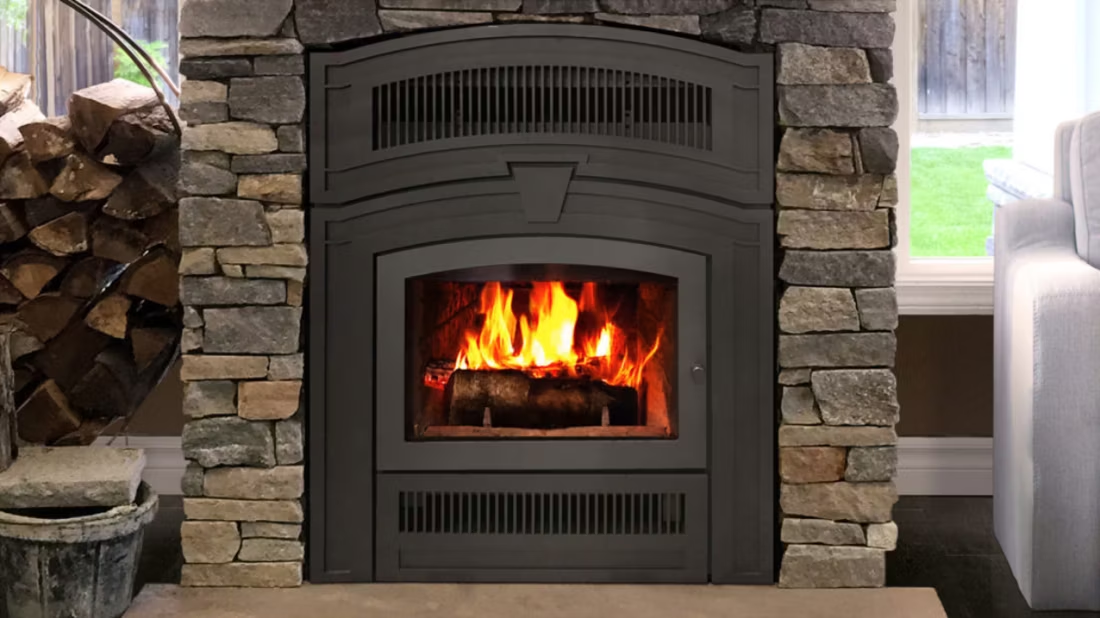
That said, wood heat isn't nonexistent here. Some Cibolo homeowners want a masonry fireplace or freestanding stove for the ambiance of a real fire on the handful of nights each winter that dip into the 20s and 30s. Others remember February 2021, when ERCOT grid failures during Winter Storm Uri left Guadalupe County homes without power—and without heat—for days, and they want a wood-burning backup that works with no electricity at all. And with oak, pecan, and mesquite readily available across the Texas Hill Country (the same hardwoods locals already burn in backyard smokers), fuel supply isn't the obstacle. If you're one of the homeowners who wants wood heat despite the mild climate, the right move is working with a dealer who's honest about sizing a stove for occasional use rather than pushing a unit built for a much colder market.
Three steps. No salesperson until you're ready.
Tell us about your project
Your zip code, your situation, and the fuel you're leaning toward—or let the answers point you to one.
See what's actually available
The brands dealers within 100 miles genuinely carry—real options, never a catalog mirage.
Get your dealer & Project Guide
A trusted local dealer, plus the free Project Guide & Parts List that names every component of the job.
Frequently Asked Questions
Does a wood stove actually make sense in a climate as mild as Cibolo's?
For most homes, no—not as a primary heat source. With only a very short, mild heating season and winter lows that average 41°F, a wood stove will spend most of the year unused. Where it does make sense is as supplemental or emergency heat: a small-to-medium freestanding stove or fireplace insert that gets lit a dozen or so nights a winter and can carry a home through a power outage. If your goal is whole-home heating efficiency, a heat pump or gas furnace will serve you far better in Cibolo's climate. If your goal is ambiance plus a genuine backup heat source, a right-sized wood stove is a reasonable, if niche, choice.
How much does a wood stove or fireplace installation cost in Cibolo?
Because demand for wood heat is low here, local hearth dealers don't stock the high-output catalytic stoves you'd see in a colder market, and pricing tends to run toward mid-range freestanding units and factory-built wood fireplaces. Expect roughly $3,500 to $7,000 for a straightforward freestanding stove install with new Class A chimney venting through a roof, and more if you're adding a full masonry surround or venting through brick veneer common in newer Cibolo subdivisions. A wood-burning insert into an existing masonry fireplace, if your home has one, is usually the lower-cost path since the chimney already exists.
My Cibolo home already has a masonry fireplace—can I just use that instead of buying a stove?
You can, but an open masonry fireplace is inefficient and loses most of its heat straight up the flue—not a big issue in a mild climate where you're burning a fire a handful of nights a year for atmosphere. If you want real heat output during a February cold snap or a grid outage, a wood-burning insert converts that same fireplace into a sealed, efficient heat source using the chimney you already have. It's a smaller project than a full stove install since there's no new venting to run, and it's the option most local dealers recommend for Cibolo homes that already have a builder-installed fireplace.
Do I need a permit to install a wood stove in Cibolo?
Yes. New wood-burning appliance installations require a building permit through the City of Cibolo Building Services Department if your property is inside city limits, or Guadalupe County Development Services if you're outside them. The permit process checks clearances to combustibles, hearth pad sizing, and chimney height above the roofline. Because so few installers in the San Antonio metro area handle wood-burning work regularly, it's worth confirming your installer has pulled wood stove permits before—not every general hearth contractor has.
Is a wood stove a good backup heat option after events like Winter Storm Uri?
It's one of the only heat sources that keeps working when the grid doesn't. AEP Texas Central, Guadalupe Valley Electric Cooperative, and Bluebonnet Electric Cooperative all serve parts of Cibolo, and February 2021's ERCOT failures showed how long an outage can stretch in Central Texas. A wood stove or fireplace insert needs no electricity to produce heat, unlike a gas furnace (which needs power for the blower and ignition) or an electric fireplace. If backup resilience is your main reason for wanting wood heat in a mild climate like this, size the stove for a single room you'd actually camp out in during an extended outage, not for the whole house.
What kind of firewood is available locally in Cibolo?
Oak, pecan, and mesquite are the three hardwoods you'll find most easily around Guadalupe County and the broader Hill Country—the same species local pitmasters use for backyard smokers, so supply is steady even though demand for home heating is small. Seasoned oak and pecan burn hot and clean for a stove; mesquite burns hotter and faster and is better suited to shorter evening fires than an all-night burn. Most firewood in the area is sold by local tree services and ranch suppliers rather than dedicated firewood yards, so pricing varies more than in wood-heat-heavy regions.
Are there burn bans or air quality restrictions on wood stoves in Cibolo?
Guadalupe County has no designated air quality non-attainment status and no winter wood-smoke advisories like you'd see in a high-desert basin such as Klamath Falls, OR. Occasional county-wide outdoor burn bans are issued during drought conditions, but those apply to open burning, not EPA-certified wood stoves or inserts operating indoors. Any new stove you install will still need to meet current EPA emissions standards, which every reputable local dealer sells as standard.
Should I get a wood stove or just install a gas fireplace instead?
For most Cibolo homeowners, gas is the more practical choice—natural gas and propane service are widely available, gas fireplaces turn on instantly with no wood handling or ash cleanup, and they pair naturally with the central HVAC systems that already do most of the heavy lifting here. Wood only pulls ahead if you specifically want a heat source that works with zero electricity during an outage, or you want the ambiance of a real, crackling fire rather than a gas flame. Some homeowners split the difference: gas in the main living space for everyday use, a small wood stove in a den or garage workshop for backup and atmosphere.
What about a pellet stove instead of wood—is that more common in Cibolo?
Not really, and for the same reason wood is uncommon here: pellet stoves are built for climates with real heating loads, and Cibolo's very short, mild heating season doesn't generate that demand. Pellet stoves also need electricity to run the auger and blower, so they lose the one advantage a wood stove has in this market—working through a grid outage. Regional pellet brands like Forest Energy and Lignetics do reach Central Texas retailers, but you'll find far fewer local dealers stocking pellet units here than in colder parts of the country. If backup heat during an outage is part of your reasoning, wood is the more logical fit; if it's purely about convenience and clean-burning ambiance, gas will usually beat pellet in this climate too.
Why is a fireplace insert so efficient?
An insert does two things: it seals the chimney completely, so you stop losing air you already paid to heat, and it radiates warmth into the room through the firebox and glass. Most add a heat-exchange fan that pulls cool room air underneath, wraps it around the hot firebox, and pushes it back out warm. Your home is more efficient before you've even lit the first fire.
Why is my open fireplace making my house colder?
Open fireplaces suck—literally. As the fire burns, it consumes air your furnace already paid to heat and pulls it out through the chimney, so the house is actually colder after the fire goes out than before you lit it. An insert fixes this: it seals the chimney, puts fixed glass across the front, and turns that hole in your house into a real heat source.
Does a fireplace add value to my home?
On average, a fireplace adds back to the home about the same amount you spent installing it. Add the monthly savings from heating the rooms you actually use instead of the whole house—often hundreds of dollars a year—and the value case is strong before you even count what a fire does for how your family uses the room.
Can I install a fireplace myself?
If you're putting a fire in your house on purpose, it's best to work with an expert. Unless you're genuinely experienced in framing, gas line, vent pipe, and the national code on clearances to combustibles, have a professional do it—and ideally the same company that sells you the fireplace, so warranty, service, and liability all live under one roof.
Nearby Dealers
Hearth shops serving Cibolo and the surrounding area.
Find your wood fireplace in Cibolo.
Tell us about your home and how you plan to use a wood stove or insert—ambiance, backup heat, or both—and we'll match you with a trusted local dealer and a free Project Guide & Parts List sized for Cibolo's climate.
Find Your Fireplace →