
Pellet heat is the exception, not the rule, in Dimmit County.
With average winter lows around 37°F and one of the mildest heating climates in Texas, most Dimmit County homes—from Carrizo Springs to the ranch country beyond—never need a pellet stove. For the ones that do, we'll help you figure out if it's worth it and connect you with a real local dealer.
Every Project Starts From One of These Five Situations
A climate built for onions, not overnight burns.
Dimmit County sits in Texas's Winter Garden region, an area better known for onion, spinach, and cantaloupe production than for cold weather. The county's climate zone (2B) and average winter low near 37°F translate to just 1,414 heating degree days a year—compare that to a place like Duluth, MN, which racks up more than 10,000 HDD in a typical winter, and the gap explains why pellet stoves never became part of the local building tradition. Homes here are built to shed heat, not hold it.
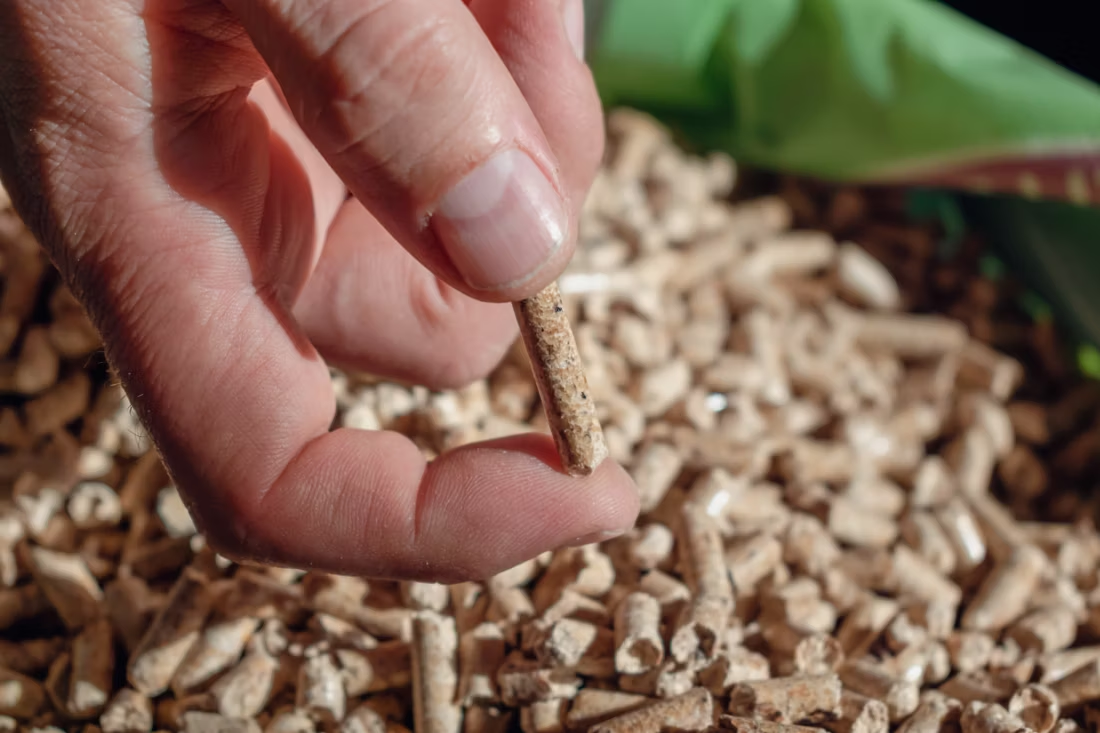
You'll still find pellet products at feed stores and hardware suppliers around Carrizo Springs—Forest Energy and Lignetics both show up regionally—but that supply is mostly aimed at smokers and grills rather than home heating. Local pitmasters go through plenty of oak, pecan, and mesquite pellets for brisket, not for keeping a living room warm. Where Dimmit County homeowners do want backup or supplemental heat, gas and electric are the standard, code-friendly options here. Pellet heat still has a narrow, legitimate niche—hunting camps, detached workshops, off-grid ranch houses, or homeowners who remember the February 2021 grid failure and want a fuel source that doesn't depend on ERCOT staying up. If that's you, we can still get you matched with someone who installs them correctly.
Three steps. No salesperson until you're ready.
Tell us about your project
Your zip code, your situation, and the fuel you're leaning toward—or let the answers point you to one.
See what's actually available
The brands dealers within 100 miles genuinely carry—real options, never a catalog mirage.
Get your dealer & Project Guide
A trusted local dealer, plus the free Project Guide & Parts List that names every component of the job.
Frequently Asked Questions
Is a pellet stove actually worth installing in Dimmit County?
For most homes in Dimmit County, no—not as a primary heat source. At 1,414 heating degree days and an average winter low of 37°F, you're looking at maybe a handful of nights a year cold enough to justify running one, and pellet stoves need electricity to feed the auger and blower, so they don't even function as backup heat during an outage. Where it does make sense: hunting camps, barns, detached workshops, or ranch outbuildings without central HVAC that occasionally need supplemental warmth during a winter storm. If that describes your situation, a small freestanding pellet unit can work, but for a primary residence in Carrizo Springs or the surrounding county, gas or electric heat is almost always the more sensible call.
Are there dealers near Dimmit County who actually install pellet stoves?
They exist, but they're thin on the ground. Because pellet heating isn't part of the local building tradition, most hearth dealers who cover Dimmit County are based in Uvalde, Laredo, or San Antonio and will make the drive for the right job. They're used to installing gas logs and propane heaters as their bread and butter, with pellet units as an occasional special-order item for a ranch house or camp. If you go this route, confirm the dealer stocks true heating-grade hardwood pellets—not just the BBQ pellets sold locally—since that affects both burn quality and appliance warranty.
Are the pellets sold locally in Dimmit County the same ones used for heating?
Usually not. Forest Energy and Lignetics both have product moving through this region, but around Carrizo Springs that supply is almost entirely oak, pecan, and mesquite pellets sold for smokers and grills—the same woods locals prize for brisket and cabrito, not for a heating appliance. Heating-grade wood pellets are milled to a different moisture and ash-content standard and are typically sold in bulk pallets rather than the small bags you'd find at a feed store. If you install a pellet stove here, plan to source heating pellets through your dealer or have them shipped in, rather than assuming what's on the shelf locally will work.
Does it actually get cold enough in Dimmit County to need backup heat?
Most winters, not really—the average low sits around 37°F, and hard freezes are the exception rather than the rule. But Texas has shown twice in recent memory (the February 2021 winter storm being the clearest example) that the state grid can fail during the rare arctic outbreak that does reach South Texas, and Dimmit County is not immune to those events. That's the realistic use case for pellet or wood backup heat here: not the typical winter, but the outlier week when temperatures crash and the power goes with it. For that scenario, some homeowners still prefer a pellet unit with a battery backup or a manual-feed wood stove over a fuel source tied entirely to the grid.
What does a pellet stove installation cost if I decide to go this route?
Nationally, a freestanding pellet stove installation typically runs $3,000 to $6,000 depending on the unit, venting requirements, and any hearth pad work. In Dimmit County specifically, expect the estimate to run toward the higher end once you factor in a dealer's travel time from Uvalde or San Antonio, since there's no dense local network of installers to shop between. Get more than one quote, and ask upfront whether the price includes the vent kit and any electrical work for the hopper and blower.
If pellet isn't a great fit, what should I install instead?
For most Dimmit County homes, gas and electric are the better-suited options given the mild climate and existing infrastructure. Propane is widely available throughout the county for homes without natural gas service, and a propane fireplace or heater gives you instant, reliable heat without depending on pellets shipped in from out of the region. Electric fireplaces and heat pumps are also a strong fit here—installation costs are lower, there's no fuel delivery to manage, and the appliance is sized for supplemental comfort rather than surviving a hard winter, which matches how most homes in this climate actually use secondary heat.
Do I need a permit to install a pellet stove in Dimmit County?
Check with the Dimmit County building department or, if you're inside city limits, the City of Carrizo Springs, before any installation—most jurisdictions in Texas require a building permit for a new solid-fuel or pellet-burning appliance, along with inspection of the venting. Because pellet installs are uncommon here, don't assume your dealer has a standing relationship with the local permitting office the way they might in a colder-climate county; confirm who's pulling the permit before work starts.
Pellet stove vs. propane heater—which makes more sense for a Dimmit County property?
Propane wins for most Dimmit County applications. It's already the standard fuel across the county for homes without natural gas, suppliers are established, and a propane heater or fireplace gives you instant on-demand heat without a fuel hopper to refill or auger to maintain. Pellet stoves have an edge in one specific scenario: if you want a heat source that doesn't rely on a propane delivery truck reaching a remote property, and you're willing to store bagged pellets on-site. For most ranch houses and in-town homes, though, propane's simplicity and dealer availability make it the more practical choice.
If I do want a pellet stove for a camp or outbuilding, what should I look for?
Look for a small-to-midsize freestanding pellet stove rated for intermittent, seasonal use rather than a large unit sized for daily heating—you don't need a stove built to run 24/7 all winter. Prioritize models with a reliable battery-backup option for the ignition and blower, since the whole point of having one out at a hunting camp or barn is heat that still works if the grid hiccups during a cold front. Confirm your dealer can source heating-grade pellets for you regularly, since the bags at the local feed store are built for smokers, not stoves.
How often does a pellet stove need cleaning?
A clean pellet stove is a happy pellet stove. Plan on cleaning the burn pot about once a week when you're burning regularly—ash and clinkers gum up the air holes just like a pellet barbecue. Most pellet stove problems trace back to skipped cleaning that nobody explained up front. Some designs make it easy with a trapdoor burn pot: pull a lever and the gunk drops into the ash pan.
What's the difference between an insert and a zero-clearance fireplace?
An insert is a fireplace that slides into a pre-existing wood-burning fireplace—if you don't have one, there's nothing to insert it into. A zero-clearance fireplace is built into a framed wall, which makes it the answer for remodels and new construction. Simple test: existing masonry fireplace means insert; blank or framed wall means zero-clearance.
Can a fireplace actually lower my heating bill?
Yes—by creating a comfort zone. A furnace heats every square foot of the house just to warm the one room you're in; a gas fireplace on low burns roughly a sixth of the gas a typical furnace does. Set the furnace around 55–60 degrees as a baseline, then heat the rooms your family actually uses. Families who heat this way commonly save $20–$60 a month.
What is an in-home preview and do I need one?
It's a visit where a hearth professional measures your space, confirms the model you picked actually works in your home, and walks the specs—framing, gas line, venting, finish work—before anything is ordered. Some details you just can't know until you see the house. Never make a down payment without one; it's the single most-skipped step that burns buyers.
Pellet Brands Stocked Around Dimmit County
Manufacturers will point you to the nearest stocking dealer.
Find your pellet setup in Dimmit County.
Tell us about your property and how you'd actually use pellet heat—camp, outbuilding, or backup for the rare hard freeze—and we'll put together a free Project Guide & Parts List with the exact vent kit and parts, plus a match to a trusted local dealer who can install it right.
Find Your Fireplace →