
Fireplaces built for Dimmit County's short heating season.
With winter lows averaging around 37°F and one of the lightest winter heating loads around, Dimmit County's roughly 7,262 residents rarely need a full-time heat source—which is why gas and electric fireplaces, not wood or pellet units, are the practical choice here. Find a vetted local dealer serving Carrizo Springs, Asherton, and Big Wells.
Every Project Starts From One of These Five Situations
Short winters, long summers—heating in Dimmit County, Texas.
Dimmit County sits in South Texas brush country, oak and mesquite rangeland grazed by cattle and worked by the Eagle Ford Shale's oil and gas crews, with Carrizo Springs as the county seat. Climate Zone 2B means hot, dry summers and short, mild winters—the average winter low is around 37°F, and the county has a light winter heating load, needing far less heat over the year than colder regions. For comparison, a place like Fargo, North Dakota has a winter heating load more than six times as heavy over the same period. That gap is the whole story of how this county heats its homes.
This hub focuses on gas and electric fireplaces because that's what actually gets installed here. Oak, pecan, and mesquite grow all over Dimmit County and are prized fuels—but almost entirely for the smoker and the grill, not the fireplace. Pellet stoves are essentially absent for the same reason: there's rarely enough sustained cold to justify the fuel-handling. Pick your fuel below to find local dealers, install costs, and recommended units serving Carrizo Springs, Asherton, Big Wells, and the ranch country between them.
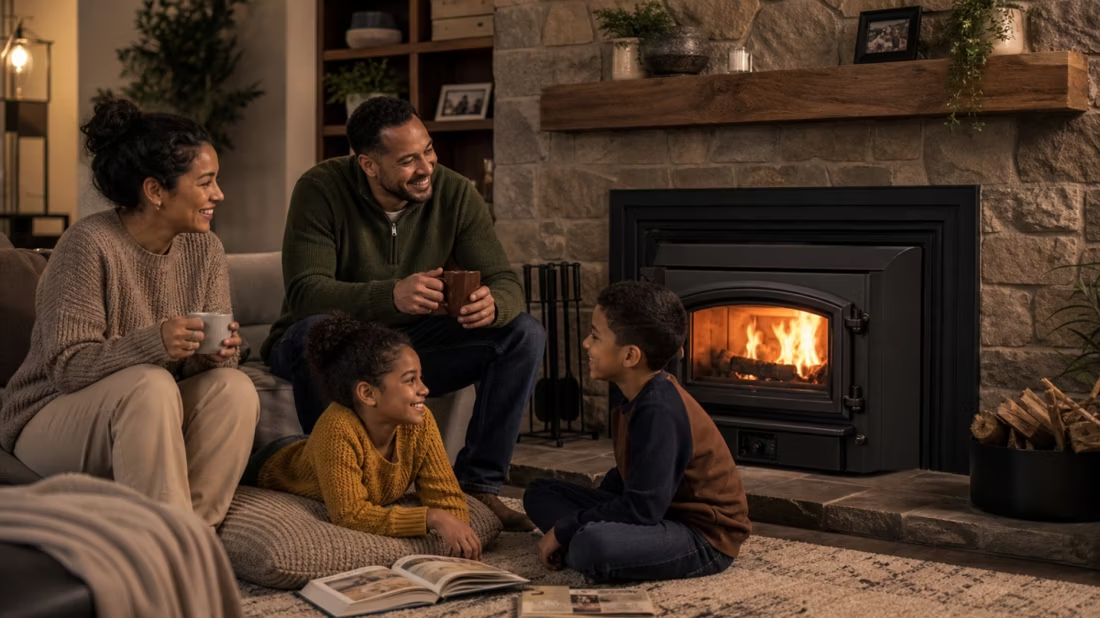
Four fuels. One honest answer for Dimmit County.
Three steps. No salesperson until you're ready.
Tell us about your project
Your zip code, your situation, and the fuel you're leaning toward—or let the answers point you to one.
See what's actually available
The brands dealers within 100 miles genuinely carry—real options, never a catalog mirage.
Get your dealer & Project Guide
A trusted local dealer, plus the free Project Guide & Parts List that names every component of the job.
Frequently Asked Questions
Which fuel makes sense for a fireplace in Dimmit County?
Given how mild winters are here—Dimmit County has a light winter heating load, far lower than a place like Fargo, North Dakota, where the heating load runs more than six times as heavy—wood and pellet heating aren't what most homeowners reach for. Gas is the practical choice: propane-fired fireplaces and inserts deliver instant heat on the occasional cold front without the ongoing fuel-handling of wood or pellets, and they work well in both ranch houses and town homes. Electric fireplaces are a solid secondary option, especially for supplemental warmth in a bedroom or den, or for homeowners who want the look of a fire with zero venting. Traditional wood fireplaces still exist here, mostly for ambiance in older homes, but they're not built around a real heating load the way they are farther north.
Do I need a permit to install a fireplace in Dimmit County?
Generally yes, for anything beyond a plug-in electric unit. Gas fireplace and insert installations typically require a building permit plus a licensed propane or gas-fitter for the fuel line connection, whether you're in Carrizo Springs, Asherton, Big Wells, or unincorporated county land. Inside city limits, permitting runs through each town's own office; outside those limits, it runs through the Dimmit County building department. Electric fireplaces usually skip permitting unless you're hardwiring a built-in unit into a new circuit. Most local retailers handle this paperwork as part of the installation quote.
Is wood-burning heat common in Dimmit County?
Not really, and that's a matter of climate rather than wood supply. Oak, pecan, and mesquite all grow locally and are prized fuels—almost exclusively for grilling and smoking, not home heating. With winter lows averaging around 37°F and a heating season that barely stretches past a handful of cold fronts each year, there's rarely enough sustained cold to justify a wood stove or insert as a primary heat source. A small number of older ranch homes still keep a traditional wood-burning fireplace for occasional use, but it's the exception here, not the rule—most homeowners are better served by gas or electric.
Are there local fireplace dealers based in Dimmit County itself?
With a county population around 7,262 spread across Carrizo Springs, Asherton, and Big Wells, Dimmit County doesn't support a large standalone hearth retail market the way bigger metro counties do. Most gas and electric fireplace dealers serving the area are based in nearby regional hubs—Uvalde, Eagle Pass, or Laredo—and travel in for consultations, installs, and service calls. That's normal for a county this size and doesn't mean less selection, just scheduling a visit instead of walking into a local showroom.
How does fireplace service work in a small, spread-out county like this?
Expect technicians to travel. Most gas fireplace service and related electrical work in Dimmit County is handled by crews based out of Uvalde, Eagle Pass, or Laredo, covering ranch properties and small towns across a wide, sparsely populated area. Trip fees for rural calls are common, and scheduling ahead rather than waiting for a failure mid-winter gets you a better shot at a convenient appointment. Given how short the heating season is here, most annual propane fireplace inspections happen in early fall, before the first real cold front comes through.
What's the typical cost range for a gas or electric fireplace installation in Dimmit County?
Gas fireplace or insert: roughly $4,000–$9,000 installed, with propane line work and venting typically pushing costs toward the higher end for homes without existing gas service. Electric fireplace: $200–$2,500 for the unit itself, plus $300–$1,000 in labor for anything beyond plug-and-play, such as a built-in unit requiring a new circuit. Because piped natural gas is limited across most of rural Dimmit County, propane tank setup or line extension is often the biggest variable in a gas fireplace quote—worth discussing directly with your local retailer before you settle on a model.
What is an in-home preview and do I need one?
It's a visit where a hearth professional measures your space, confirms the model you picked actually works in your home, and walks the specs—framing, gas line, venting, finish work—before anything is ordered. Some details you just can't know until you see the house. Never make a down payment without one; it's the single most-skipped step that burns buyers.
Can I install a fireplace myself?
If you're putting a fire in your house on purpose, it's best to work with an expert. Unless you're genuinely experienced in framing, gas line, vent pipe, and the national code on clearances to combustibles, have a professional do it—and ideally the same company that sells you the fireplace, so warranty, service, and liability all live under one roof.
How much should I budget for a fireplace?
For an average home—covering the fireplace, the vent pipe, and basic installation—a budget between $3,900 and $5,500 gives you a lot of options across wood, gas, and pellet. By the time you add finish work, gas line, and electrical, the average complete installation lands between $5,000 and $12,000 all-in. In a remodel or new build, a good rule is to put about 2.5% of the total project cost toward the fireplace.
Does a fireplace add value to my home?
On average, a fireplace adds back to the home about the same amount you spent installing it. Add the monthly savings from heating the rooms you actually use instead of the whole house—often hundreds of dollars a year—and the value case is strong before you even count what a fire does for how your family uses the room.
Find your fireplace in Dimmit County.
Tell us about your home and we'll match you with a trusted local dealer serving Carrizo Springs, Asherton, or Big Wells—plus a free Project Guide & Parts List laying out the exact parts, vent kit, and recommended installer for your project.
Find Your Fireplace →