
Gas fireplace ambiance for Dimmit County's mild winters.
From Carrizo Springs to Asherton, Big Wells, and the ranches in between, a gas fireplace adds real warmth on the county's cool-front evenings—without asking your home to fight a winter that mostly stays mild. Find the right unit and get matched with a trusted local dealer.
Every Project Starts From One of These Five Situations
Warmth on demand, not a whole-house necessity.
Dimmit County sits in South Texas brush country, climate zone 2B, with an average winter low around 37°F and just 1,414 heating degree days a year. For comparison, a place like Fargo, ND logs closer to 9,000 heating degree days a season—Dimmit County's winter demand is a small fraction of that. Most years bring a handful of genuinely cold nights, usually tied to a strong norther blowing through the brush country, with the rest of the season sitting comfortably in the 50s and 60s. That's the honest backdrop for any fireplace decision here: heat is a nice-to-have on cool evenings, not a survival system.
That framing shapes what actually gets installed. Natural gas service is limited mostly to in-town lines around Carrizo Springs; outside city limits—across the ranches, hunting leases, and towns like Asherton, Big Wells, and Catarina—propane is the standard fuel, typically from a leased or owned tank set by a regional supplier. Despite Dimmit County sitting in the heart of Eagle Ford Shale gas country, that production doesn't translate into piped residential gas for most rural homeowners. A direct-vent propane fireplace or insert gives ranch houses and hunting lodges real, instant heat for cold mornings during dove and deer season, plus the ambiance factor that a lot of Dimmit County homeowners are actually after—a fire in the great room without hauling or curing wood.
Three steps. No salesperson until you're ready.
Tell us about your project
Your zip code, your situation, and the fuel you're leaning toward—or let the answers point you to one.
See what's actually available
The brands dealers within 100 miles genuinely carry—real options, never a catalog mirage.
Get your dealer & Project Guide
A trusted local dealer, plus the free Project Guide & Parts List that names every component of the job.
Frequently Asked Questions
How much does a gas fireplace installation cost in Dimmit County?
A direct-vent propane fireplace or insert typically runs $3,500 to $9,000 in Dimmit County, depending on the unit, the venting path, and whether a new propane tank set is needed. Homes and ranch properties already leasing a propane tank for a water heater or range tend to land on the lower end, since the gas line just needs to be extended to the new fireplace location. New tank installations, longer line runs across acreage, or a full built-in fireplace for new construction push toward the higher end. Because so much of the county is rural, expect your installer to factor in some travel time for jobs out toward Asherton, Big Wells, or Catarina.
Do I need natural gas, or does propane work for a gas fireplace in Dimmit County?
Propane is the standard fuel for the vast majority of Dimmit County. Natural gas lines reach some in-town properties around Carrizo Springs, but service drops off quickly once you're outside city limits—which is most of the county's housing stock, including ranch homes and hunting lodges. Ironically, sitting in the middle of Eagle Ford Shale gas production doesn't mean piped gas to your door; that gas is largely gathered and shipped out, not distributed to rural homes. A regional propane supplier can set a tank and run a line for your fireplace, and most gas fireplace models can be configured for either fuel—your installer sets the correct orifice for whichever you have.
Do I need a permit to install a gas fireplace in Dimmit County?
Yes, in most cases. If you're inside Carrizo Springs city limits, the city handles building and gas permits; outside city limits, permitting runs through Dimmit County. Either way, the gas line work itself needs to be done by a licensed gas fitter, which is one of the main reasons to go with an established hearth dealer rather than a handyman install—they coordinate the gas connection, venting, and any required inspection as one job instead of leaving you to manage separate trades.
Will my gas fireplace work during a power outage?
Most direct-vent gas fireplaces with intermittent pilot ignition (IPI) include a battery backup that keeps them running when the grid goes down—useful during the occasional ice event or storm that knocks out rural power lines in Dimmit County. Valor fireplaces take a different approach: their pilot generates its own electricity through a thermocouple, so the unit lights and runs with no batteries at all, ever. For ranch properties or outlying homes where a downed line can mean a longer wait for power to come back, that self-powering design is worth asking your local dealer about.
What's the difference between a gas fireplace, gas insert, and gas stove?
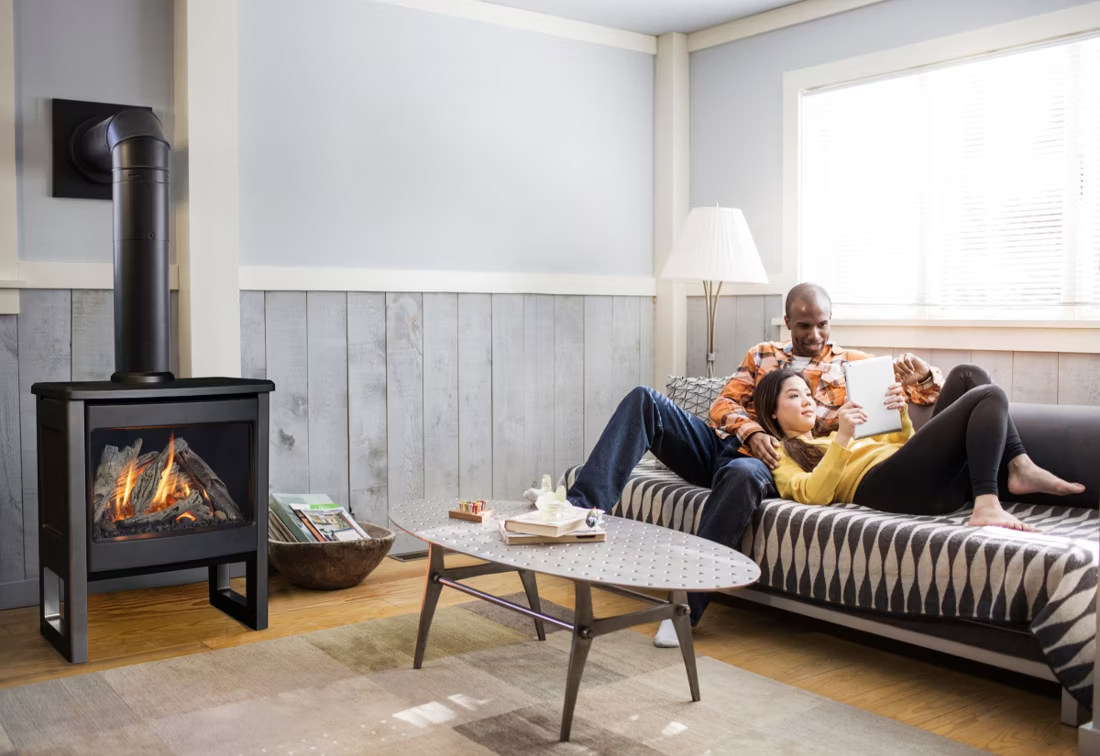
A gas fireplace is a fully built-in unit framed into a wall—common in new construction and remodels around Carrizo Springs. A gas insert drops into an existing masonry fireplace and uses the existing chimney as its vent path, which is a common upgrade for older ranch homes with a fireplace that never gets much use. A gas stove is a freestanding cabinet-style unit that sits on the floor, which some hunting lodges and cabins prefer for a more rustic look without the framing work of a built-in. For most Dimmit County homeowners with an existing fireplace, an insert is the simplest and most cost-effective path.
Should I get a vented or vent-free gas fireplace?
Vented (direct-vent) units draw combustion air from outside and exhaust gases back outside through a sealed pipe—they're the safer, more universally recommended choice and deliver real heat output. Vent-free units burn directly into the room and are legal in Texas, but they release some water vapor and combustion byproducts indoors and come with strict room-sizing requirements. In Dimmit County's dusty, windy brush country, a sealed direct-vent system also holds up better against blowing dust finding its way into open venting. Most local dealers will steer first-time buyers toward direct-vent unless there's a specific reason—like no existing chimney and no easy exterior wall access—to consider vent-free.
How often should my gas fireplace be serviced?
Plan on an annual inspection, ideally before the fall cool-front season sets in. A technician checks the burner, pilot assembly, venting, and gas connections, and cleans the glass and firebox. This matters even in a mild climate like Dimmit County's, because units that only run occasionally through a short winter can still develop pilot or ignition issues from sitting unused for months at a time between hunting season visits or cool nights.
Why don't more homes in Dimmit County have wood-burning fireplaces?
Oak, pecan, and mesquite grow throughout Dimmit County and get used constantly—for barbecue pits, smokers, and fence posts—but rarely as a primary heat source. With only 1,414 heating degree days and an average winter low around 37°F, there simply isn't enough sustained cold to justify a cordwood heating system the way there is in a place like Duluth, MN or Bozeman, MT. Wood-burning fireplaces do exist here and there for atmosphere at a ranch house or lodge, but gas is the far more practical choice for the county's actual heating need: occasional, on-demand warmth without stockpiling or curing firewood.
Gas vs. electric fireplace—which makes more sense for my home?
Electric fireplaces need no venting or gas line at all—just a standard outlet—which makes them the simplest and cheapest option, typically $400 to $1,200 installed, and a reasonable fit for a mild climate like Dimmit County's where supplemental ambiance matters more than heating capacity. Gas fireplaces cost more to install but produce real, noticeable heat during the county's cold-front nights and give you the look and sound of an actual flame. For a main living area or a hunting lodge great room where you want genuine warmth on a 30-degree morning, gas is usually the better fit; for a bedroom, office, or secondary space where you just want the glow, electric is hard to beat on cost and simplicity.
What's the difference between an insert and a zero-clearance fireplace?
An insert is a fireplace that slides into a pre-existing wood-burning fireplace—if you don't have one, there's nothing to insert it into. A zero-clearance fireplace is built into a framed wall, which makes it the answer for remodels and new construction. Simple test: existing masonry fireplace means insert; blank or framed wall means zero-clearance.
Can I put a TV above my fireplace?
Yes—with an asterisk. Fireplaces are hot and TVs don't like heat. Either put a mantel between them to deflect rising warmth, or choose a fireplace with heat-management technology that creates a cool zone on the wall above—the wall stays around 125 degrees, barely warm, while the room still gets full heat. If you like clean lines and don't want a mantel, heat management is the answer.
Can a fireplace actually lower my heating bill?
Yes—by creating a comfort zone. A furnace heats every square foot of the house just to warm the one room you're in; a gas fireplace on low burns roughly a sixth of the gas a typical furnace does. Set the furnace around 55–60 degrees as a baseline, then heat the rooms your family actually uses. Families who heat this way commonly save $20–$60 a month.
What is an in-home preview and do I need one?
It's a visit where a hearth professional measures your space, confirms the model you picked actually works in your home, and walks the specs—framing, gas line, venting, finish work—before anything is ordered. Some details you just can't know until you see the house. Never make a down payment without one; it's the single most-skipped step that burns buyers.
Find your gas fireplace in Dimmit County.
Tell us a bit about your home or ranch property and we'll match you with a trusted local dealer and send over a free Project Guide & Parts List—a plan for your Dimmit County gas fireplace project, including the exact parts and vent kit you'll need.
Find Your Fireplace →