
Pellet Stoves Are Rare in Copperas Cove—For Good Climate Reasons.
With just a short, mild heating season and winter lows averaging 36°F, most Copperas Cove homes never need a dedicated heat appliance. If you still want one—for storm backup or the look of a real hopper-fed fire—we'll connect you with a dealer who can source it correctly.
Every Project Starts From One of These Five Situations
Central Texas winters rarely justify a pellet stove—but some homes still want one.
Copperas Cove sits in climate zone 2A with an average winter low of just 36°F and only a short, mild heating season a year—a fraction of what a place like Fargo, ND or Duluth, MN racks up in a single hard winter. Central heat and heat pumps handle the region's short, mild cold snaps without much strain, which is exactly why pellet stoves never became part of the local building culture the way they have in colder, snow-belt states. Firewood species common around Coryell County—oak, pecan, mesquite—get burned plenty around here, just mostly in smokers and outdoor pits rather than indoor heating appliances.
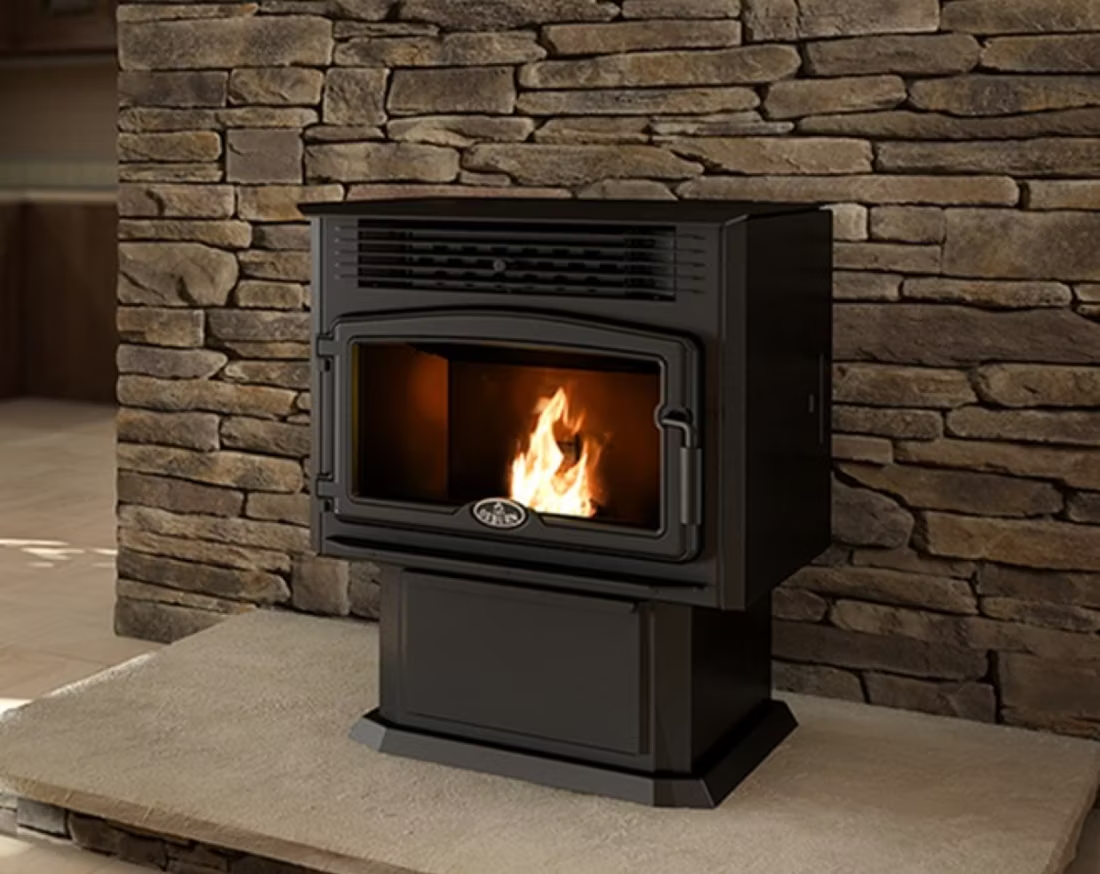
That said, pellet stoves aren't unheard of in Copperas Cove. A small number of homeowners near Fort Cavazos and in outlying Coryell County install one specifically for the kind of extended grid outages Central Texas saw during Winter Storm Uri in 2021, or simply because they like the look and low-maintenance feel of a hopper-fed fire more than a gas insert. Regional pellet brands like Forest Energy and Lignetics distribute bagged pellets through farm and ranch stores in this part of Texas—mostly for grilling and smoking—so heating-grade fuel sometimes has to be special-ordered through a hearth dealer rather than picked up off a shelf. For most homes here, gas and electric fireplaces remain the standard, practical choice; pellet is the niche option for a specific need or preference.
Three steps. No salesperson until you're ready.
Tell us about your project
Your zip code, your situation, and the fuel you're leaning toward—or let the answers point you to one.
See what's actually available
The brands dealers within 100 miles genuinely carry—real options, never a catalog mirage.
Get your dealer & Project Guide
A trusted local dealer, plus the free Project Guide & Parts List that names every component of the job.
Frequently Asked Questions
Are pellet stoves actually installed in Copperas Cove?
Occasionally, but they're genuinely uncommon. With winter lows averaging 36°F and only a short, mild heating season a year, the vast majority of homes in Copperas Cove and Coryell County rely on a central heat pump or gas furnace and never add supplemental heat. The homeowners who do install a pellet stove here are usually motivated by something specific—wanting a heat source that keeps running during multi-day grid outages, or preferring the look of a real fire over a gas log set. It's a deliberate choice rather than a regional default, which is different from how pellet stoves function in colder climates where they're a primary heating strategy.
Will a pellet stove keep my house warm during a Texas grid outage?
Not automatically, and this trips people up. Unlike a wood stove, a pellet stove needs electricity to run the auger that feeds fuel and the blower that pushes heat into the room—cut the power and a standard unit shuts down even with a full hopper. If backup heat during events like Winter Storm Uri is your main reason for considering one, you'll want to pair it with a battery backup unit or small generator sized for the stove's draw. A local dealer can spec this out properly; it's a detail worth getting right before you commit to the appliance.
What size pellet stove makes sense for a Copperas Cove home?
Because heating demand here is light compared to colder states, most Copperas Cove installs are smaller units sized for zone heating—a single living area or den—rather than the larger, high-output stoves sold in places like Burlington, VT or Bozeman, MT to carry a whole house through a hard winter. A stove rated for 500 to 1,200 square feet covers most local use cases. Oversizing is a real risk here: a stove built for sustained sub-zero heating will run far hotter than a mild Central Texas evening calls for.
Where can I buy pellets in Copperas Cove or Coryell County?
Forest Energy and Lignetics both distribute bagged pellets through farm and ranch supply retailers in this part of Central Texas, but most of what's on the shelf is grilling and smoking pellets rather than heating-grade fuel. If you install a pellet stove, ask your dealer about sourcing hardwood heating pellets specifically—some will set up a standing order or point you to a supplier who stocks them seasonally, since year-round demand in Coryell County is lower than in pellet-heavy northern markets.
Do I need a permit to install a pellet stove in Copperas Cove?
Yes—a building permit is required through the City of Copperas Cove Building Inspections Department, or through Coryell County if you're outside city limits. The good news is pellet stove venting is simpler than a masonry wood chimney: most units vent through a small-diameter PL pipe run horizontally through an exterior wall, which keeps the inspection and install process quicker. Your dealer should pull the permit as part of the installation.
Pellet stove vs. electric fireplace—which fits Copperas Cove better?
For most homes here, an electric fireplace is the more practical fit. It needs no venting, no fuel storage, and no permit for a plug-in unit, which matches a climate where supplemental heat is rarely a serious necessity. A pellet stove makes more sense specifically if you want meaningful heat output for backup purposes—just remember it still depends on grid power to run unless you add battery backup. If ambiance is the main goal rather than heat output, electric is simpler and cheaper to install in the $400–$1,200 range typical for the appliance alone.
What does a pellet stove installation cost in Copperas Cove?
Because pellet stoves are uncommon in this market, fewer local dealers stock them regularly, so pricing varies more here than in colder states with high install volume. Nationally, a bagged-pellet stove installation—unit, hearth pad, and PL venting through an exterior wall—typically runs $3,000 to $6,000. Get a firm, written quote from a trusted local dealer rather than a rough estimate, since availability and freight on the appliance itself can move the number more than labor does.
If pellet isn't a great fit, what should I actually consider in Copperas Cove?
Gas and electric are the standard choices for this climate, and for good reason. A direct-vent gas fireplace or insert gives instant heat with no fuel storage, which suits Copperas Cove's short, mild winters. Electric fireplaces are even simpler—no venting required—and run on power from Texas-New Mexico Power Co, Heart of Texas Electric Cooperative, or Hamilton County Electric Cooperative depending on your address, with residential rates in the 12.6 to 13.7 cents per kWh range locally. Most homeowners here are better served by one of those two options unless they have a specific reason to want a pellet appliance.
Is there a local dealer near Copperas Cove who installs pellet stoves?
Given how niche pellet heat is in Coryell County, dedicated pellet inventory is more often found through hearth dealers serving the broader Killeen–Temple–Waco area rather than a shop in Copperas Cove itself. That's exactly the kind of gap Find My Fireplace exists to close—we match you with a trusted regional dealer who genuinely carries and installs pellet appliances, rather than leaving you to guess which big-box listing is actually stocked and serviceable near Fort Cavazos.
What's the difference between an insert and a zero-clearance fireplace?
An insert is a fireplace that slides into a pre-existing wood-burning fireplace—if you don't have one, there's nothing to insert it into. A zero-clearance fireplace is built into a framed wall, which makes it the answer for remodels and new construction. Simple test: existing masonry fireplace means insert; blank or framed wall means zero-clearance.
Why is a fireplace insert so efficient?
An insert does two things: it seals the chimney completely, so you stop losing air you already paid to heat, and it radiates warmth into the room through the firebox and glass. Most add a heat-exchange fan that pulls cool room air underneath, wraps it around the hot firebox, and pushes it back out warm. Your home is more efficient before you've even lit the first fire.
Does a fireplace add value to my home?
On average, a fireplace adds back to the home about the same amount you spent installing it. Add the monthly savings from heating the rooms you actually use instead of the whole house—often hundreds of dollars a year—and the value case is strong before you even count what a fire does for how your family uses the room.
Can I install a fireplace myself?
If you're putting a fire in your house on purpose, it's best to work with an expert. Unless you're genuinely experienced in framing, gas line, vent pipe, and the national code on clearances to combustibles, have a professional do it—and ideally the same company that sells you the fireplace, so warranty, service, and liability all live under one roof.
Pellet Brands Stocked Around Copperas Cove
Manufacturers will point you to the nearest stocking dealer.
Find your pellet stove option in Copperas Cove.
Tell us about your home and your reason for wanting pellet heat, and we'll send a free Project Guide & Parts List—the exact parts, venting, and a matched local dealer for your Copperas Cove project.
Find Your Fireplace →