
Efficient Heat for Central Texas Winters.
From Gatesville to Copperas Cove to the ranches surrounding Fort Cavazos, pellet stoves give Coryell County homes clean, thermostat-controlled heat without a full cord of firewood to manage. Find the right unit and connect with a trusted local dealer.
Every Project Starts From One of These Five Situations
Consistent warmth without a woodpile.
Coryell County sits in the rolling ranchland of Central Texas, anchored by Gatesville as the county seat and sharing Fort Cavazos with neighboring Bell County. Climate zone 2A here means hot, humid summers and mild winters—average lows around 36°F and a light winter heating load overall, a fraction of what a place like Duluth, MN sees in a single hard month. Real cold snaps are short, usually a handful of nights each winter, so most homes don't need—or want—a full-time wood-burning setup sized for weeks of sub-freezing weather.
That's exactly where pellet stoves fit in. They deliver consistent, thermostat-set heat for the living room or den without the cutting, splitting, and stacking that oak, pecan, and mesquite firewood demands on area ranches—even though all three are plentiful locally. Regional pellet brands like Forest Energy and Lignetics are commonly stocked at feed stores and hearth retailers serving the county, making fuel easy to keep on hand. One honest caveat worth knowing up front: pellet stoves run on electricity to feed the auger and blower, so after events like Winter Storm Uri, some Coryell County homeowners pair a pellet stove with a battery backup or small generator rather than relying on it as their sole emergency heat source.
Three steps. No salesperson until you're ready.
Tell us about your project
Your zip code, your situation, and the fuel you're leaning toward—or let the answers point you to one.
See what's actually available
The brands dealers within 100 miles genuinely carry—real options, never a catalog mirage.
Get your dealer & Project Guide
A trusted local dealer, plus the free Project Guide & Parts List that names every component of the job.
Frequently Asked Questions
How much does a pellet stove installation cost in Coryell County?
A typical pellet stove installation in Coryell County runs roughly $3,000 to $6,000, depending on the unit, whether you're venting through an exterior wall or an existing chimney, and whether any electrical work is needed for the outlet the stove requires. Installing a pellet insert into an existing masonry fireplace tends to fall on the lower end of that range since the chimney chase is already in place. Homes without an existing fireplace or chimney—common in newer subdivisions around Copperas Cove and Fort Cavazos housing—may need simple wall venting, which local installers can typically complete in a day.
What size pellet stove do I need for my home?
Given Coryell County's mild winters and light overall winter heating load, most homeowners here aren't trying to heat an entire house with a pellet stove—they're looking for reliable zone heat for a living room, den, or converted garage during the coldest stretches of January and February. Small to mid-size pellet stoves (rated for 1,000 to 1,500 square feet) cover the vast majority of local homes comfortably. Larger stoves make sense mainly for ranch houses with open floor plans or homes without central heat as a backup, but a local retailer can size the right unit after seeing your space.
Where can I find certified pellet stove installers near me?
Look for installers with NFI (National Fireplace Institute) pellet-specialist certification, which covers the venting and clearance requirements specific to pellet appliances. Hearth retailers based in and around Gatesville typically cover the whole county, including Copperas Cove and the Fort Cavazos area, though homes further out toward Oglesby or Jonesboro may see a small travel charge added to the install quote. Because pellet stoves need a dedicated electrical outlet and specific venting, it's worth avoiding a general handyman install—proper setup affects both efficiency and warranty coverage.
What's the difference between a pellet stove and a pellet insert?
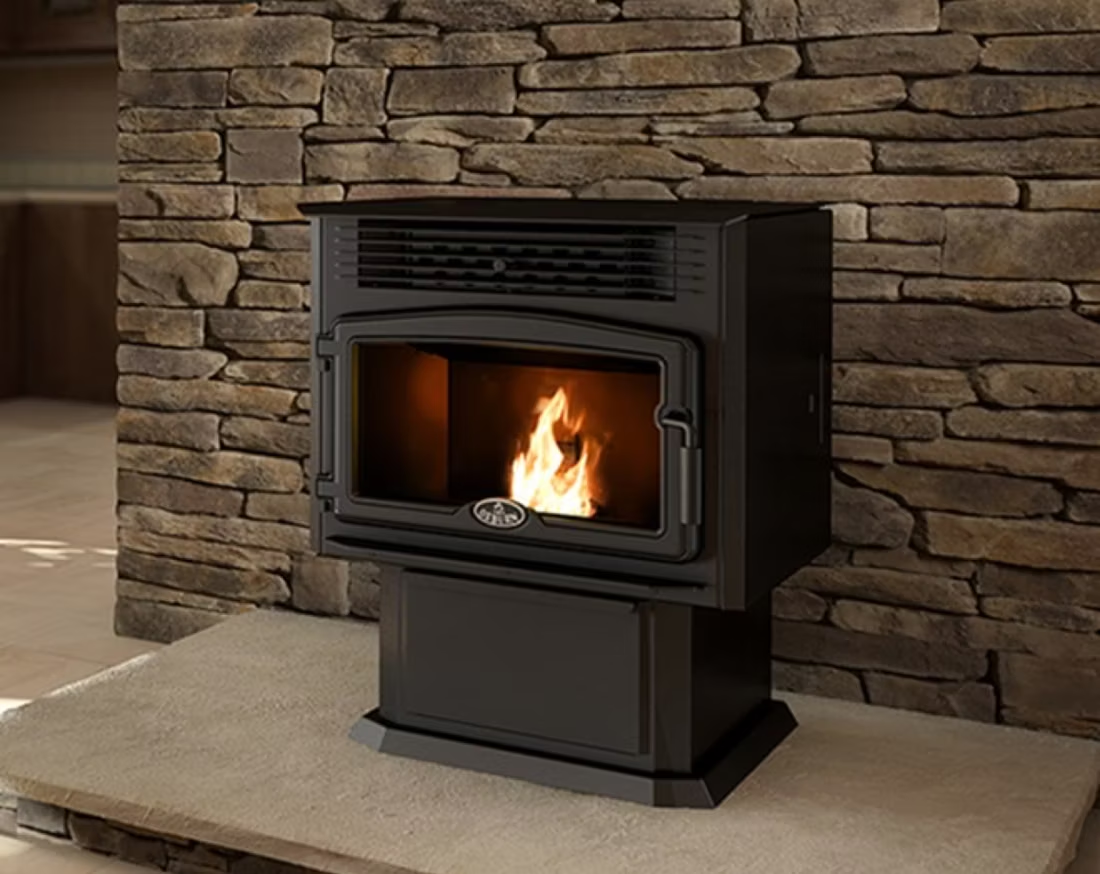
A pellet stove is a freestanding unit that sits on its own base and vents through an exterior wall or existing chimney—it can go almost anywhere in the house with the right clearances. A pellet insert is built to slide into an existing masonry fireplace opening, turning an old wood-burning fireplace into an efficient, thermostat-controlled heat source using the chimney you already have. For Coryell County homes with an existing fireplace that mostly sits unused outside of a few cold nights, an insert is often the more practical upgrade. Homes without an existing fireplace usually go with a freestanding stove instead.
Do I need a permit to install a pellet stove in Coryell County?
In most cases, yes—a building permit is required for a new pellet stove installation, whether you're in unincorporated Coryell County or inside city limits in Gatesville or Copperas Cove, since each jurisdiction handles its own permitting for solid-fuel appliances. Most local hearth retailers handle the permit application as part of the installation, so it's worth confirming that's included in your quote before work begins. Because pellet stoves burn cleanly and Coryell County has no air quality non-attainment concerns, there are no seasonal burn restrictions to plan around like homeowners face in some Western states.
What's the best pellet stove for Coryell County's climate?
Since Coryell County winters are mild compared to colder-climate states, you don't need a stove built for round-the-clock 20-hour burns the way a home in Bismarck, ND might. Mid-size pellet stoves from mainstream manufacturers handle the occasional hard freeze and everyday supplemental heating just fine, and pellets from regional suppliers like Forest Energy and Lignetics are widely available at area retailers, so fuel sourcing isn't a concern. Look for a model with a reliable auger feed and a hopper large enough to run overnight without a refill—a local dealer can match features to how you actually plan to use the stove, whether that's daily supplemental heat or occasional backup.
How often should my pellet stove be cleaned and serviced?
Pellet stoves need lighter maintenance than wood stoves, but they're not maintenance-free. Plan on cleaning the burn pot and ash pan every few days during regular use, a deeper cleaning of the exhaust vent and hopper monthly, and a full professional inspection once a year—typically in early fall before the first cold snap hits. Given how few heavy-use months Coryell County actually sees, an annual service visit is usually enough to keep the auger, igniter, and blower motor running reliably through the season.
Where can I buy pellet fuel in Coryell County?
Regional brands like Forest Energy and Lignetics are the most commonly stocked options at hearth retailers, feed stores, and ranch supply outlets serving Gatesville, Copperas Cove, and surrounding communities. Pellets are sold by the 40-pound bag or by the ton, and buying a season's supply in fall—before demand picks up during the first cold snap—is the easiest way to make sure you're not scrambling to find bags during a January freeze. Some retailers offer delivery for larger orders, which is worth asking about if you're stocking up for a full winter.
Pellet stove vs. wood stove—which is right for me?
Wood stoves burn oak, pecan, or mesquite—all locally abundant on Coryell County ranchland—and keep working without electricity, which matters given how Central Texas has faced multi-day power outages during major winter storms. Pellet stoves are more convenient day to day: load the hopper, set the thermostat, and let the auger do the work, with less ash and a cleaner burn. The tradeoff is that pellet stoves require electricity to run the auger and blower, so they can't serve as true off-grid emergency heat unless paired with a battery backup or generator. For most Coryell County homes using a stove for supplemental heat and convenience, pellet is the easier day-to-day choice; for ranch properties prioritizing storm-proof backup heat, wood still has the edge.
How often does a pellet stove need cleaning?
A clean pellet stove is a happy pellet stove. Plan on cleaning the burn pot about once a week when you're burning regularly—ash and clinkers gum up the air holes just like a pellet barbecue. Most pellet stove problems trace back to skipped cleaning that nobody explained up front. Some designs make it easy with a trapdoor burn pot: pull a lever and the gunk drops into the ash pan.
Can a pellet stove heat a whole house?
It genuinely can. I burned a pellet stove as my only heat source for years after a furnace died, and it kept the entire house warm. Pellets feed automatically from a hopper, so you get wood-heat economics with thermostat-style control. Two honest caveats: it needs weekly cleaning during the season, and most models need electricity to run—ask about battery backup if outages are a concern.
How much should I budget for a fireplace?
For an average home—covering the fireplace, the vent pipe, and basic installation—a budget between $3,900 and $5,500 gives you a lot of options across wood, gas, and pellet. By the time you add finish work, gas line, and electrical, the average complete installation lands between $5,000 and $12,000 all-in. In a remodel or new build, a good rule is to put about 2.5% of the total project cost toward the fireplace.
What is an in-home preview and do I need one?
It's a visit where a hearth professional measures your space, confirms the model you picked actually works in your home, and walks the specs—framing, gas line, venting, finish work—before anything is ordered. Some details you just can't know until you see the house. Never make a down payment without one; it's the single most-skipped step that burns buyers.
Stove and Fireplace Dealers in Coryell County
Listings include WhyFire partner dealers, dealers we have verified as authorized for the brands we recommend, and established local businesses that carry hearth products. Every listing shows which one it is. The ones marked Preferred run on WhyFire's software, so they can show you real pricing and book your appointment right here. No manufacturer pays for placement. How we verify dealers →
C&G Products
Tri-Supply - Temple
Tri-Co Propane
Backyard And Patio Store - Waco
Pellet Brands Stocked Around Coryell County
Manufacturers will point you to the nearest stocking dealer.
Find your pellet stove in Coryell County.
Tell us a bit about your home and we'll put together a free Project Guide & Parts List—the right pellet stove or insert, the vent kit it needs, and a trusted local dealer to install it.
Find Your Fireplace →