
Keep Your Family Warm and Safe—No Matter What
With winter lows averaging 36°F and a fairly light overall heating load for the year, wood isn't the default heat source here—but for the right home, it still has a place. We'll help you figure out if it's yours.
Every Project Starts From One of These Five Situations
Central Texas winters rarely call for wood heat.
Copperas Cove sits in climate zone 2A at about 1,125 feet elevation, with an average winter low around 36°F and a fairly light overall heating load per year. Compare that to a place like Bismarck, ND, which racks up a heating load more than four times as heavy, or Duluth, MN, well beyond that—and it's clear why wood stoves aren't a mainstream heating appliance in Coryell County the way they are in colder parts of the country. Most homes here get through winter fine on a heat pump or gas furnace, and a handful of genuinely cold nights a year doesn't justify the cordwood storage, chimney maintenance, and daily tending a wood-burning system asks for.
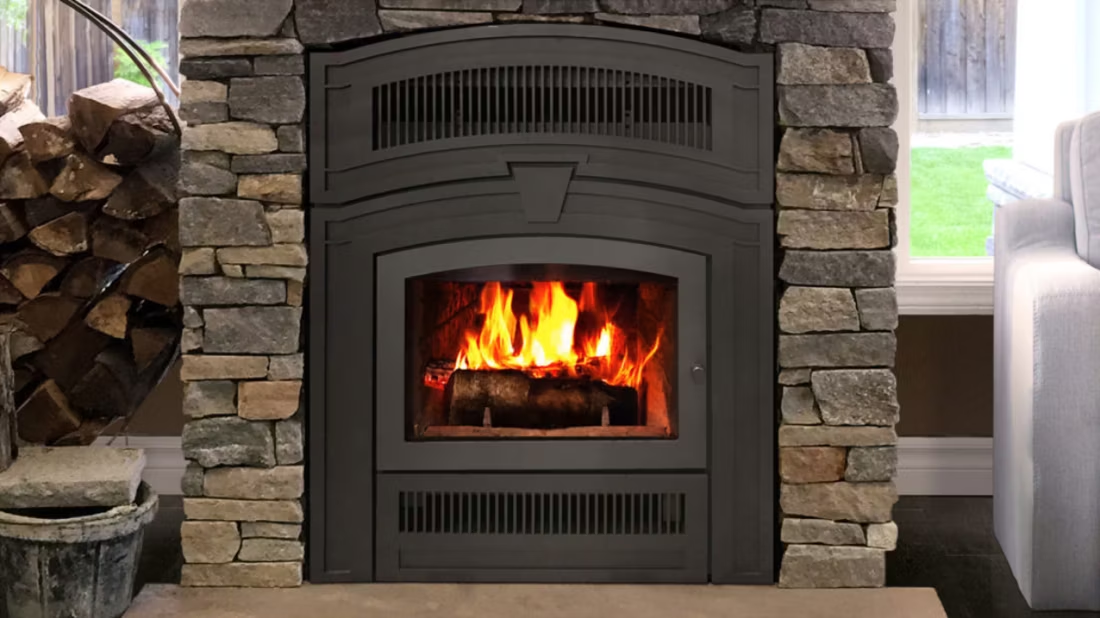
That said, wood hasn't disappeared from the Cove. Plenty of older homes near downtown and around Fort Cavazos still have a working masonry fireplace, and some homeowners on larger rural lots toward Lampasas or Gatesville keep a wood stove going for ambiance, occasional cold snaps, or as backup heat when ice storms knock out power. Central Texas oak, pecan, and mesquite are all abundant and burn well once seasoned—mesquite in particular is more often reached for at the smoker than the fireplace, but it works fine indoors too. If wood heat still appeals to you, a local dealer can tell you honestly whether it makes sense for your specific home, or whether gas or electric will serve you better.
Three steps. No salesperson until you're ready.
Tell us about your project
Your zip code, your situation, and the fuel you're leaning toward—or let the answers point you to one.
See what's actually available
The brands dealers within 100 miles genuinely carry—real options, never a catalog mirage.
Get your dealer & Project Guide
A trusted local dealer, plus the free Project Guide & Parts List that names every component of the job.
Frequently Asked Questions
Does wood heat even make sense in Copperas Cove's climate?
For most homes, not as a primary heat source. With an average winter low of 36°F and a fairly light overall heating load year, Copperas Cove winters are mild compared to almost anywhere wood stoves are considered standard equipment—nothing like Fargo, ND or Burlington, VT, where a stove might run daily from October through April. Here, a wood stove or fireplace is more often a supplemental or occasional-use feature: something for the handful of genuinely cold nights, for ambiance, or for backup heat during an ice storm power outage. If you're weighing wood against gas or electric for everyday comfort, gas and electric are the more practical everyday choice in this climate.
What does a wood stove or fireplace installation cost around Copperas Cove?
Because wood-burning systems are a niche request here, pricing varies more than in colder markets with dense installer networks. As a general Central Texas benchmark, expect somewhere in the $3,000–$6,500 range for a freestanding wood stove with new venting, and less—often $2,500–$5,000—if you're installing a wood-burning insert into an existing masonry fireplace, since the chimney is already in place. Get a firm number from a local dealer after they've looked at your home; venting a stove through an exterior wall versus a full Class A chimney run changes the number quickly.
Can I still get a wood-burning fireplace installed here, or is it gas and electric only?
You can still get wood installed—it's just a smaller slice of the market than gas or electric in Copperas Cove, so fewer local dealers stock wood-burning units on the showroom floor and you may need to special-order. Older homes in and around the Cove, including many near Fort Cavazos and downtown, already have a masonry fireplace that can take a wood-burning insert without much structural work. New-construction homes without an existing chimney are the harder case, since running a full Class A chimney adds real cost for a fuel that won't be used often in this climate.
Are there burn restrictions in Coryell County I should know about?
Coryell County, like much of Central Texas, periodically issues outdoor burn bans during summer drought conditions—these target debris and brush burning rather than permitted indoor wood-burning appliances, so a properly installed wood stove or fireplace insert isn't affected. Still, it's worth checking current county burn-ban status before doing any outdoor wood processing or storage prep, and worth asking your installer whether Copperas Cove's building permit office has any additional requirements for new wood-burning installations.
What firewood is actually available locally, and how do I store it?
Oak, pecan, and mesquite are the three species you'll find most easily around Copperas Cove and Coryell County. Oak is the workhorse—dense, long-burning, and widely sold by local suppliers. Pecan burns hot and clean and is common on properties with old orchard trees coming down. Mesquite is popular with Texas smokers and grillers, and while it burns fine in a stove, it pops more than oak, so a glass door or screen matters. Because summers here are long and dry, seasoned wood stores well outdoors under a simple cover—just keep it up off the ground and away from the house to avoid termites.
Does homeowners insurance treat a wood stove differently in Texas?
Most insurers will ask about a wood-burning appliance during underwriting or renewal, and some require proof of a code-compliant installation—including proper clearances and a WETT- or CSIA-type inspection—before they'll cover it without a rate increase. Because wood stoves are less common in Central Texas than in colder states, don't assume your agent has seen one on a policy before; call ahead and ask what documentation they'll want. A licensed installer can usually provide the paperwork you need.
Wood vs. gas vs. electric—what actually makes sense for a Copperas Cove home?
For year-round comfort in this climate, gas and electric fireplaces make more practical sense than wood—both light instantly, need no fuel storage, and don't ask you to tend a fire on a 40°F evening that only lasts a few weeks a year. Electric is the simplest retrofit and works with any of the local utilities serving the area, including Texas-New Mexico Power and Heart of Texas Electric Cooperative. Wood earns its place when you specifically want the smell and feel of a real fire, have an existing masonry fireplace to work with, or want a heat source that still works when the power's out—a real consideration during Texas ice storms.
I have an old fireplace that's never been used—can it take a wood insert?
Often, yes. Many homes built decades ago in and around Copperas Cove have a masonry fireplace that was framed and built but rarely fired up. Before installing an insert, a chimney sweep needs to inspect the flue for cracks, obstructions, or animal nests—not unusual in a chimney that's sat unused for years. If the flue checks out, a properly sized liner and insert can turn that decorative fireplace into a real heat source in a day or two of work.
Who actually installs a wood stove for occasional or backup use in this climate?
The best fit tends to be homeowners on larger lots toward Gatesville, Lampasas, or the rural edges of Coryell County who already keep firewood on hand, want a backup heat source for ice-storm power outages, or simply like having a real fire a few nights each winter. It's a smaller, more deliberate purchase here than in a place with real winters—which is exactly why talking to a dealer who's upfront about fit matters more than in a market where every house has one.
Why won't my new wood stove get going like my old one?
New wood stoves are 70%+ efficient, so far less heat goes up the flue—which also means less draft to get a fire established. The rule: build a genuinely hot fire for about 45 minutes before you choke it down. Skip that and you get smoke in the room, creosote in the chimney, and a fire that never takes off. Most performance complaints trace straight back to this.
What's the difference between an insert and a zero-clearance fireplace?
An insert is a fireplace that slides into a pre-existing wood-burning fireplace—if you don't have one, there's nothing to insert it into. A zero-clearance fireplace is built into a framed wall, which makes it the answer for remodels and new construction. Simple test: existing masonry fireplace means insert; blank or framed wall means zero-clearance.
Can I install a fireplace myself?
If you're putting a fire in your house on purpose, it's best to work with an expert. Unless you're genuinely experienced in framing, gas line, vent pipe, and the national code on clearances to combustibles, have a professional do it—and ideally the same company that sells you the fireplace, so warranty, service, and liability all live under one roof.
How much should I budget for a fireplace?
For an average home—covering the fireplace, the vent pipe, and basic installation—a budget between $3,900 and $5,500 gives you a lot of options across wood, gas, and pellet. By the time you add finish work, gas line, and electrical, the average complete installation lands between $5,000 and $12,000 all-in. In a remodel or new build, a good rule is to put about 2.5% of the total project cost toward the fireplace.
Find your wood fireplace fit in Copperas Cove.
Tell us about your home and how you'd actually use a wood-burning stove or insert, and we'll match you with a trusted local dealer and send over a free Project Guide & Parts List—an honest plan, including the vent kit, so you know exactly what a wood installation involves before you commit.
Find Your Fireplace →