
Keep Your Family Warm and Safe—No Matter What
With winter lows averaging 34°F, Coppell homes rarely need wood heat to get through the season—but a real wood-burning fireplace or stove still has fans here, from ice-storm backup to weekend fires with oak and pecan.
Every Project Starts From One of These Five Situations
Mild DFW winters make wood a lifestyle choice, not a heating strategy.
Coppell sits at 513 feet in the Dallas-Fort Worth Metroplex, in climate zone 3A, with an average winter low of 34°F and just 2,437 heating degree days a year. That's a fraction of what a place like Fargo, ND racks up (over 9,000 HDD), where wood stoves genuinely carry a home through winter. In Coppell, most nights never justify a fire for warmth at all, and the handful of hard freezes each year rarely last more than a day or two.
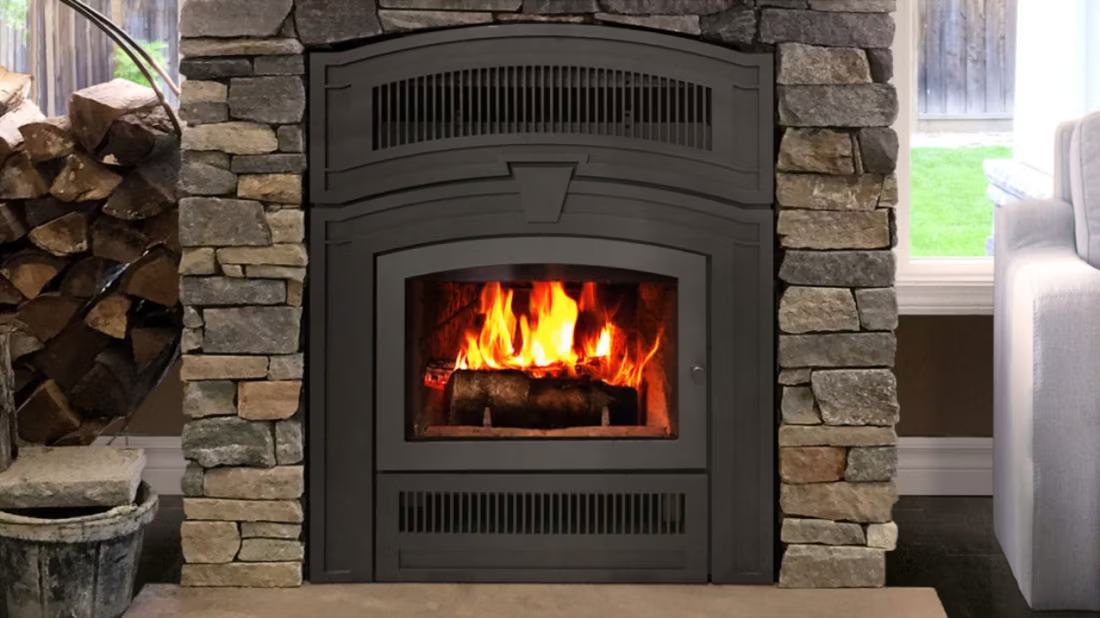
That said, wood hasn't disappeared from Coppell homes. Plenty of the city's builder-grade houses from the 1980s through 2000s came with masonry or factory-built wood fireboxes, and a smaller number of homeowners still use them—for the smell of oak and pecan smoke, for the backup heat source during events like the February 2021 grid failure, or simply because a real fire beats a gas log for atmosphere. There's no local ordinance restricting wood-burning appliances here, and no winter air quality advisories tied to wood smoke, so the choice really comes down to what you want out of a fireplace rather than what the climate demands.
Three steps. No salesperson until you're ready.
Tell us about your project
Your zip code, your situation, and the fuel you're leaning toward—or let the answers point you to one.
See what's actually available
The brands dealers within 100 miles genuinely carry—real options, never a catalog mirage.
Get your dealer & Project Guide
A trusted local dealer, plus the free Project Guide & Parts List that names every component of the job.
Frequently Asked Questions
Is a wood-burning fireplace even worth installing in Coppell?
For most Coppell households, no—gas logs or a gas insert make more sense given how few nights actually call for supplemental heat, and most builder homes here already have a fireplace shell designed around gas. But a meaningful number of homeowners still choose wood specifically for backup heat during ice storms and grid disruptions like the February 2021 freeze, or because they simply prefer a real fire over a gas flame. If you're weighing the two, think about how you'll actually use it: daily ambiance and emergency backup favor wood, convenience and low-maintenance favor gas.
How much does it cost to install a wood stove or insert in Coppell?
Retrofitting a wood-burning insert into an existing masonry fireplace typically runs $3,500 to $7,000 in the DFW area, depending on the insert and whether the chimney needs a new liner. A freestanding wood stove with a full Class A chimney run—since very few Coppell homes are pre-plumbed for one—usually lands higher, often $6,000 to $10,000, because it's a from-scratch install rather than a retrofit. Given how uncommon these projects are locally, expect fewer dealers to stock wood units on the showroom floor; most will special-order and schedule installation once you've chosen a model.
Can I put a wood insert into my existing builder-grade fireplace?
Maybe—it depends on what's actually behind the brick. Many Coppell tract homes were built with factory metal fireboxes (Majestic and Superior are common brands from that era) rather than true masonry, and not every prefab firebox is rated to accept a wood insert. A local installer will need to check the firebox's UL listing and chimney dimensions before recommending an insert; if the existing box isn't rated for it, the fix is usually a full fireplace and chimney replacement rather than a simple insert swap.
Do I need a permit to install a wood stove in Coppell?
Yes—any new wood-burning appliance or chimney work typically requires a building permit through the City of Coppell's building inspection process, the same as it would for a gas fireplace or major electrical work. Because wood installs are relatively rare here, it's worth confirming with your installer that they've pulled permits for this type of project before, so the inspection doesn't stall your timeline. There's no air-quality-related burn restriction in Coppell, so once it's permitted and inspected, you're free to burn.
What wood species burn best in Coppell?
Oak, pecan, and mesquite are the three species most available locally, and each behaves differently in a firebox. Oak is the workhorse—dense, slow-burning, and the closest thing to an all-purpose firewood in North Texas. Pecan burns hot and clean with a mild, sweet smoke, which is part of why it's also a favorite for grilling. Mesquite burns very hot and fast with more sparking, so it's better mixed with oak for a heating fire than burned alone, even though it's beloved for cooking.
Where can I buy firewood in Coppell?
Firewood in the Coppell area is sold by local tree services, landscaping suppliers, and seasonal roadside vendors throughout the Metroplex rather than through public land permits—there's no national forest cutting program nearby the way there is in the western U.S. Seasoned oak typically runs $250 to $350 per cord delivered, with pecan and mesquite sometimes sold separately at a premium given their popularity for smoking and grilling as well as heating.
Are there any burn bans or air quality restrictions on wood stoves in Coppell?
No—Coppell doesn't have wood-smoke air quality advisories or curtailment periods like non-attainment areas in the West Coast or Interior West sometimes do. Outdoor burning of debris is restricted in most DFW cities, but that's a separate issue from an indoor, code-compliant wood stove or fireplace insert, which faces no local operating restrictions once it's properly installed and permitted.
Should I get gas or wood for my Coppell fireplace?
Gas is the practical default for most Coppell homes—it lights instantly, needs no wood storage or ash cleanup, and pairs naturally with the gas service already common throughout the DFW Metroplex. Wood makes more sense if you specifically want a heat source that works without electricity (a real consideration after the 2021 winter grid failure), or if you simply prefer the experience of a real fire over a gas flame. Several homeowners in the area keep gas as their everyday fireplace and add a small wood stove or insert elsewhere in the house as backup heat.
How does an electric fireplace compare to wood for a Coppell home?
Electric fireplaces are a low-commitment option here—no venting, no chimney, and installation costs are a fraction of wood (often under $1,500 for a built-in unit), which is part of why they're popular in Coppell's condos and townhomes without existing chimneys. The tradeoff is that electric units depend on the grid through Oncor or TNMP, so they offer zero backup value during an outage, unlike a wood stove that keeps producing real heat regardless of power status. If backup heat during storms is part of your reasoning, wood has a real advantage; if it's purely about ambiance and easy installation, electric is hard to beat on cost and simplicity.
Why is my open fireplace making my house colder?
Open fireplaces suck—literally. As the fire burns, it consumes air your furnace already paid to heat and pulls it out through the chimney, so the house is actually colder after the fire goes out than before you lit it. An insert fixes this: it seals the chimney, puts fixed glass across the front, and turns that hole in your house into a real heat source.
What does it take to replace an existing fireplace?
Fireplaces are like icebergs—bigger behind the wall than in front of it. Replacement means removing the surrounding tile or stone (the finish material laps onto the fireplace face), pulling the old unit, setting the new one in the same enclosure, and re-finishing the wall. A hearth professional can determine what's behind your wall without demolition during an in-home preview.
Can I install a fireplace myself?
If you're putting a fire in your house on purpose, it's best to work with an expert. Unless you're genuinely experienced in framing, gas line, vent pipe, and the national code on clearances to combustibles, have a professional do it—and ideally the same company that sells you the fireplace, so warranty, service, and liability all live under one roof.
What is an in-home preview and do I need one?
It's a visit where a hearth professional measures your space, confirms the model you picked actually works in your home, and walks the specs—framing, gas line, venting, finish work—before anything is ordered. Some details you just can't know until you see the house. Never make a down payment without one; it's the single most-skipped step that burns buyers.
Nearby Dealers
Hearth shops serving Coppell and the surrounding area.
Gas Equipment Company - Carrollton
Grillers Choice
Solara Custom Doors & Lighting
Find your wood fireplace option in Coppell.
Tell us about your home and what you want from a fireplace—ambiance, backup heat, or both—and we'll connect you with a local dealer and a free Project Guide & Parts List built around your project.
Find Your Fireplace →