
Find the right fireplace for your Dallas County home.
Fireplace resources for every city in Dallas County—from Dallas and Plano to Mesquite and Grand Prairie. Fireplaces are a common architectural feature here but rarely the primary heat source; we'll help you sort out what actually fits your home and connect you with a trusted local dealer.
Every Project Starts From One of These Five Situations
Mild winters, a sprawling metro, and a gas-first hearth market.
Dallas County is home to over 7.4 million people across Dallas, Plano, Irving, Garland, Mesquite, Grand Prairie, Richardson, and dozens of other cities that make up the DFW metro. The climate here is Zone 3A—mixed-humid, with a winter low average around 38°F and only a short, mild heating season each year. Compare that to Fargo, ND, which has a long, brutal winter more than four times as demanding, and it's clear Dallas County heating needs are a different animal entirely. Oak, pecan, and mesquite are the local wood species people know well—mostly for smoking briskets and backyard cooking, occasionally for the crackle of a fire on one of the handful of genuinely cold nights each winter. Masonry wood-burning fireplaces are common in North Texas homes as a built-in feature, but they function as occasional ambiance, not primary heat.
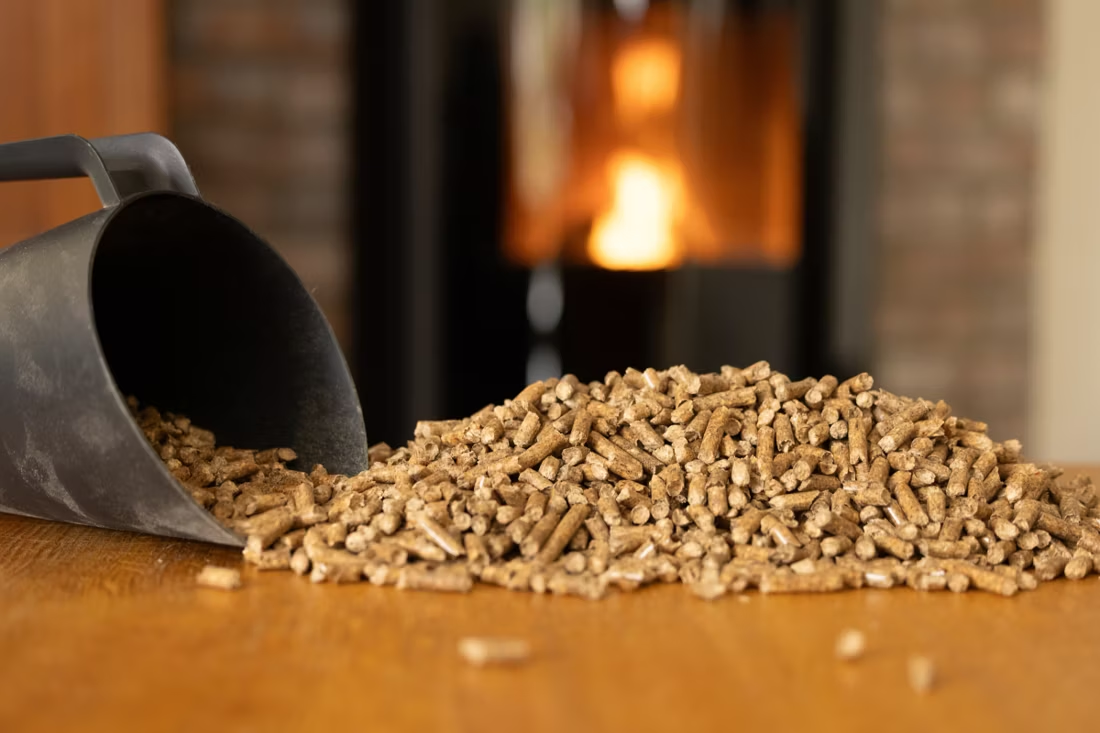
What you'll find on this hub: hearth retailers, service technicians, and fuel suppliers serving every community in the county—from downtown Dallas out to the suburbs ringing it. Gas fireplaces and inserts are the dominant choice here, backed by Atmos Energy's extensive natural gas infrastructure across the metro. Electric fireplaces are also widely used, especially in apartments, townhomes, and high-rise units where venting a gas or wood appliance isn't practical. Pellet stoves are essentially a non-market in Dallas County—the mild winters don't generate the sustained heating demand that makes pellet appliances worthwhile, though a few dealers can special-order units on request. Pick your fuel below to see local dealers, typical costs, and what's actually installable in your city.
Four fuels. One honest answer for Dallas County.
Three steps. No salesperson until you're ready.
Tell us about your project
Your zip code, your situation, and the fuel you're leaning toward—or let the answers point you to one.
See what's actually available
The brands dealers within 100 miles genuinely carry—real options, never a catalog mirage.
Get your dealer & Project Guide
A trusted local dealer, plus the free Project Guide & Parts List that names every component of the job.
Frequently Asked Questions
Which fuel works best in Dallas County?
Gas is the clear default here. With Atmos Energy's natural gas lines running through most established neighborhoods and a winter mild enough (38°F average low, a short, mild heating season) that instant on-off heat is all most homes need, gas fireplaces, inserts, and log sets dominate the local market. Electric is the second most common choice—apartments, townhomes, and high-rise condos across Dallas, Irving, and Uptown can't vent a gas or wood unit, so electric fireplaces fill that gap for ambiance and light supplemental warmth. Wood-burning fireplaces exist in plenty of older and custom homes, mostly as an architectural feature people use a handful of nights a year with oak or pecan logs rather than as a heating strategy. Pellet stoves are rare to the point of being a special-order item—the heating season here just isn't long enough to make a hopper-fed appliance worth the investment for most homeowners.
Do I need a permit to install a fireplace in Dallas County?
Usually, yes, though it depends on your city. Dallas County contains dozens of incorporated cities—Dallas, Plano, Irving, Garland, Mesquite, and others—each with its own building department issuing permits for gas line work, new gas fireplace or insert installations, and any electrical work tied to a built-in electric unit. A licensed gas-fitter typically needs to pull the gas permit and make the connection; straightforward plug-in electric fireplaces generally don't require a permit, but hardwired built-ins usually do. Retrofitting an existing masonry wood fireplace with a gas log set or insert is common and usually requires a permit as well. Most local hearth retailers handle this paperwork as part of the installation, so you're rarely filing it yourself.
Are there air quality restrictions on wood burning in Dallas County?
No formal wood-burning curtailment program exists in Dallas County the way it does in wood-heat-dependent regions like the Pacific Northwest or Rocky Mountain West. There's no winter inversion or wood-smoke nonattainment issue driving mandatory burn bans here. That said, occasional voluntary outdoor burn bans do get issued during drought or red-flag fire-weather conditions, mostly aimed at brush and yard debris rather than fireplace use. If you're installing a wood-burning appliance, current EPA emissions standards for new stoves and inserts still apply nationally, but you won't run into the kind of curtailment-day restrictions that basin or valley cities in the West deal with each winter.
Can one local hearth retailer handle both gas and electric?
Yes—most Dallas County hearth retailers carry both gas and electric fireplaces, since those are the two fuels that actually move in this market. A dealer with a showroom in Plano or Irving will typically have working gas log sets and inserts alongside a lineup of electric wall-mount and built-in units, so you can compare both in person. Fewer dealers stock wood-burning appliances as a primary product line, and pellet stoves are usually a special-order item rather than something sitting on a showroom floor. If you already have a masonry wood fireplace and want to convert it to gas logs or a gas insert, most gas-focused dealers handle that conversion regularly.
How does service work across a metro this large?
Dallas County spans dozens of cities, so most service technicians work out of a home base—often Dallas, Plano, or Irving—and cover a defined service radius rather than the entire county. If you're in Mesquite, Grand Prairie, or one of the smaller suburbs on the metro's edges, it's worth confirming a technician actually services your specific city before booking, since travel fees or scheduling windows can differ. Annual gas fireplace service—pilot check, log set cleaning, venting inspection—is generally easy to schedule year-round given the mild climate; there's no tight seasonal crunch like colder-climate markets see every October.
What's the typical cost range for fireplace installation across fuel types in Dallas County?
Gas fireplace, insert, or log set conversion: roughly $3,500–$9,000 depending on whether new gas line work is needed or you're converting an existing wood-burning fireplace to gas logs, which runs on the lower end. Electric fireplace: $200–$3,000 for the unit itself, plus $300–$1,000 in labor for anything beyond a simple plug-in wall-mount, such as a built-in or hardwired installation. Wood-burning fireplace or insert work—mostly retrofits or masonry repair on existing units—varies widely and is less standardized here since new wood installs are uncommon. Pellet stove installation is rare enough locally that pricing isn't well established; expect quotes closer to national averages if you go that route. See the county + fuel pages above for retailer-specific pricing.
Wood, gas, pellet, or electric—how do I choose?
Match the fuel to your life, not the other way around. Wood: lowest fuel cost and total power-outage independence, but you're hauling and stacking. Gas: press a button, set a thermostat, no maintenance to speak of. Pellet: wood economics with automatic feeding, in exchange for weekly cleaning and a need for electricity. Electric: plugs in anywhere with honest supplemental heat. Nobody regrets the fuel that fits how they actually live.
What is an in-home preview and do I need one?
It's a visit where a hearth professional measures your space, confirms the model you picked actually works in your home, and walks the specs—framing, gas line, venting, finish work—before anything is ordered. Some details you just can't know until you see the house. Never make a down payment without one; it's the single most-skipped step that burns buyers.
How much should I budget for a fireplace?
For an average home—covering the fireplace, the vent pipe, and basic installation—a budget between $3,900 and $5,500 gives you a lot of options across wood, gas, and pellet. By the time you add finish work, gas line, and electrical, the average complete installation lands between $5,000 and $12,000 all-in. In a remodel or new build, a good rule is to put about 2.5% of the total project cost toward the fireplace.
Can I install a fireplace myself?
If you're putting a fire in your house on purpose, it's best to work with an expert. Unless you're genuinely experienced in framing, gas line, vent pipe, and the national code on clearances to combustibles, have a professional do it—and ideally the same company that sells you the fireplace, so warranty, service, and liability all live under one roof.
Stove and Fireplace Dealers in Dallas County
Listings include WhyFire partner dealers, dealers we have verified as authorized for the brands we recommend, and established local businesses that carry hearth products. Every listing shows which one it is. The ones marked Preferred run on WhyFire's software, so they can show you real pricing and book your appointment right here. No manufacturer pays for placement. How we verify dealers →
Jacksons Home & Garden
Cosentino – Dallas
EarthCore Industries
Fuego Fireplaces
Overhead Door Co. Of Dallas
Golden Blount
Distrinctive Outdoor Environments, LLC
Pittman Supply Company
Elegant Fireside & Patio, LLC
Acme Brick Tile & Stone
Fireside Innovations
Bbq Outfitters
Flames Fireplaces & Gas Grills
Yard Art Patio & Fireplace - Allen
Find your fireplace in Dallas County.
Pick your fuel below to see local dealers, typical installation costs, and get matched with a trusted retailer who'll put together a free Project Guide & Parts List for your home.
Find Your Fireplace →