
Small-Batch Warmth for Occasional North Texas Cold.
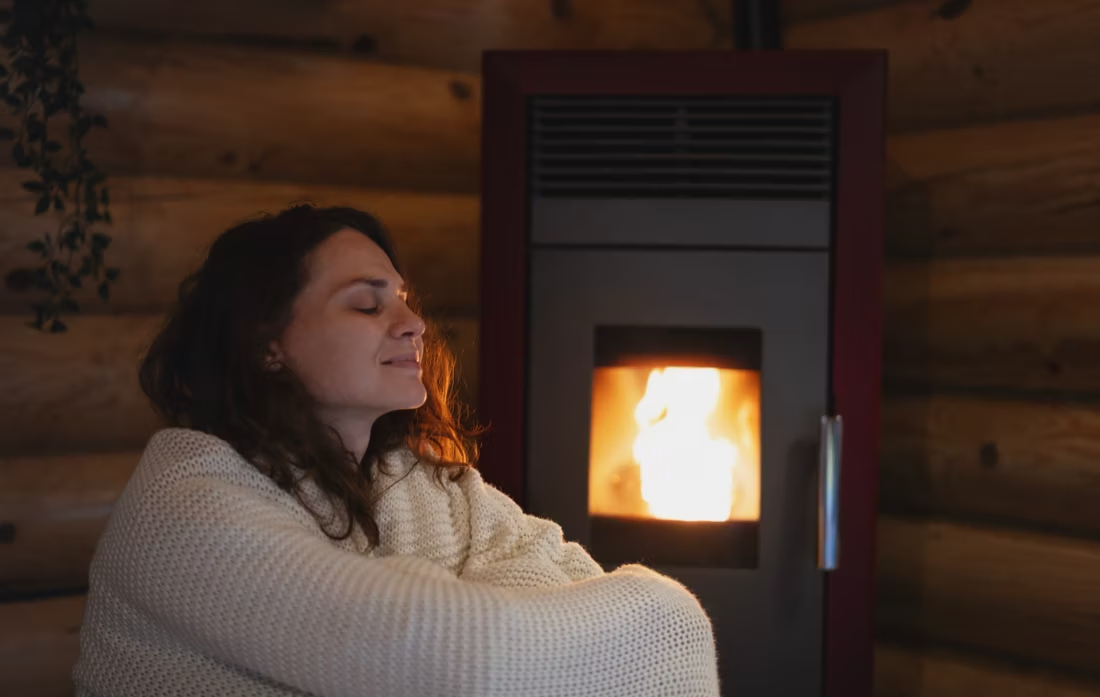
Pellet stoves aren't a standard install in Coppell's mild climate, but for sunrooms, game rooms, or the rare hard freeze, a trusted local dealer can tell you honestly whether one makes sense for your home.
Every Project Starts From One of These Five Situations
Coppell's mild winters don't ask much of a heating system.
Coppell sits in climate zone 3A at just 513 feet elevation, with an average winter low of 34°F and a short, mild heating season. Compare that to a place like Fargo, ND, where winters stretch on for months and pellet stoves are a genuine primary-heat appliance—in Coppell, most homes get through winter on central HVAC alone, whether that's an Oncor- or TNMP-served electric heat pump or a gas furnace. A dedicated wood-pellet heating appliance simply isn't something the local climate demands the way it does farther north.
That's why pellet fuel relevance for Coppell is rated not-applicable rather than standard: it's not that pellet stoves don't exist here, it's that they're a niche choice rather than a mainstream one. Regional pellet brands like Forest Energy and Lignetics do distribute into the Dallas-Fort Worth metroplex, mostly through big-box retailers and farm-supply stores, so fuel is findable if you go this route. Homeowners who do install a pellet unit in Coppell are usually after ambiance, supplemental heat for a sunroom or converted garage, or a hedge against the occasional deep freeze—not a full winter heating plan.
Three steps. No salesperson until you're ready.
Tell us about your project
Your zip code, your situation, and the fuel you're leaning toward—or let the answers point you to one.
See what's actually available
The brands dealers within 100 miles genuinely carry—real options, never a catalog mirage.
Get your dealer & Project Guide
A trusted local dealer, plus the free Project Guide & Parts List that names every component of the job.
Frequently Asked Questions
Are pellet stoves actually common in Coppell?
Not really, and it's worth saying plainly. With an average winter low around 34°F and only a short, mild heating season, Coppell doesn't have the sustained cold that makes a pellet stove the workhorse it is in places like Duluth, MN or Bozeman, MT. Most Coppell homes rely entirely on central electric or gas HVAC. Pellet stoves show up here occasionally in sunrooms, garages converted to living space, or homes where someone specifically wants the low-maintenance stove experience—but it's a specialty purchase, not a default one.
How much does a pellet stove installation cost in Coppell?
Because demand is low in this part of Dallas County, there isn't a deep bench of dedicated pellet installers the way you'd find in a colder market. Expect a typical freestanding pellet stove installation—including a through-wall vent kit, hearth pad, and basic electrical for the auger and blower—to land somewhere in the $3,000 to $6,500 range, similar to national averages. Because pellet units vent through a wall rather than requiring a full masonry chimney, the install itself is usually simpler and faster than a wood-burning project, but you may need to work with a Dallas-Fort Worth hearth dealer rather than someone based in Coppell proper.
Will a pellet stove keep working during a Texas winter power outage?
No, and this matters given North Texas's history with grid strain during hard freezes like Winter Storm Uri in February 2021. Pellet stoves depend on an electric auger to feed fuel and a blower to circulate heat—without power, the stove won't ignite or run, full stop. Some homeowners pair a pellet stove with a small battery backup or generator specifically for this reason, but if backup heat during an outage is your main goal, a wood-burning appliance or a battery-operated propane heater is a more reliable choice than pellet.
What size pellet stove makes sense for a Coppell home?
Given how mild Coppell winters run, most installations here are sized for a single room or zone rather than whole-home heating—think a small to mid-size stove (around 1,000 to 1,500 sq ft rated capacity) for a sunroom, bonus room, or open living area. Oversizing is an even bigger risk here than in colder climates, since a stove built for sustained sub-zero output will run far more efficiently than it needs to on a 40-degree Coppell evening. A local dealer can walk through your actual room dimensions and insulation before recommending a model.
Where can I find a pellet stove dealer near Coppell?
Because Coppell itself doesn't support a dedicated pellet-stove specialty shop, most homeowners end up working with a hearth dealer based elsewhere in the Dallas-Fort Worth metroplex who carries pellet units alongside their gas and electric lines. That's actually a decent setup—a full-line dealer can honestly compare a pellet stove against a gas insert or electric unit for your specific room, rather than steering you toward the one product they sell.
Do I need a permit to install a pellet stove in Coppell?
Yes—a through-wall vent penetration and any new electrical circuit for the stove typically require a permit through the City of Coppell Building Inspections Department. It's a lighter lift than a wood-stove permit that involves chimney and roof penetration work, since pellet venting runs horizontally through an exterior wall. Most dealers who install pellet stoves in the DFW area will handle the permit application as part of the job.
Where do I buy pellets in the Coppell area?
Regional brands like Forest Energy and Lignetics distribute into North Texas, and you'll typically find bagged hardwood pellets at big-box home improvement stores and farm-and-ranch supply retailers around the DFW metroplex rather than at a dedicated hearth shop in Coppell itself. Because pellet heating is a niche appliance here, stock can be seasonal—it's worth confirming availability with a store before you commit to a pellet stove over a gas or electric alternative.
Pellet vs. gas—which makes more sense in Coppell?
For most Coppell homes, gas wins. Natural gas service is broadly available across the DFW metroplex, and a direct-vent gas fireplace or insert gives you instant, thermostat-controlled heat with none of the hopper-loading, ash cleanup, or auger maintenance a pellet stove requires. Pellet still has an edge if you specifically want the sound and visual of a real flame fed by fuel rather than a gas burner, or if you're heating a detached space without a gas line. But given how mild the local climate is, most homeowners here choose gas for convenience.
Pellet vs. electric—which is right for my home?
With Oncor, TNMP, and Hilco Electric Cooperative all serving different parts of the Coppell area at a residential rate around 14.9 cents per kWh, an electric fireplace is often the simplest option for supplemental warmth or ambiance—no venting, no fuel storage, and no permit hassle for a plug-in unit. A pellet stove will produce more real heat output and a genuine flame, but it adds fuel storage, periodic ash removal, and venting requirements that many Coppell homeowners find unnecessary given how few days a year actually call for extra heat. If ambiance is the main goal, electric is usually the lower-friction choice.
How often does a pellet stove need cleaning?
A clean pellet stove is a happy pellet stove. Plan on cleaning the burn pot about once a week when you're burning regularly—ash and clinkers gum up the air holes just like a pellet barbecue. Most pellet stove problems trace back to skipped cleaning that nobody explained up front. Some designs make it easy with a trapdoor burn pot: pull a lever and the gunk drops into the ash pan.
Why is my open fireplace making my house colder?
Open fireplaces suck—literally. As the fire burns, it consumes air your furnace already paid to heat and pulls it out through the chimney, so the house is actually colder after the fire goes out than before you lit it. An insert fixes this: it seals the chimney, puts fixed glass across the front, and turns that hole in your house into a real heat source.
Can I install a fireplace myself?
If you're putting a fire in your house on purpose, it's best to work with an expert. Unless you're genuinely experienced in framing, gas line, vent pipe, and the national code on clearances to combustibles, have a professional do it—and ideally the same company that sells you the fireplace, so warranty, service, and liability all live under one roof.
Does a fireplace add value to my home?
On average, a fireplace adds back to the home about the same amount you spent installing it. Add the monthly savings from heating the rooms you actually use instead of the whole house—often hundreds of dollars a year—and the value case is strong before you even count what a fire does for how your family uses the room.
Nearby Dealers
Hearth shops serving Coppell and the surrounding area.
Gas Equipment Company - Carrollton
Grillers Choice
Solara Custom Doors & Lighting
Pellet Brands Stocked Around Coppell
Manufacturers will point you to the nearest stocking dealer.
Find your pellet stove in Coppell.
Tell us about your space and we'll be straight with you about whether a pellet stove fits—then match you with a trusted local dealer who can hand you a free Project Guide & Parts List, including the exact vent kit and parts your Coppell installation needs.
Find Your Fireplace →