
Pellet stoves are rare in Cibolo, Texas—but not off the table.
With only a light winter heating load each year and winter lows averaging 41°F, Cibolo doesn't need pellet heat the way Duluth or Fargo does. But if you want one, we'll connect you with a local dealer who can size and install it right.
Every Project Starts From One of These Five Situations
Cibolo's short winters rarely call for pellet heat.
Cibolo sits in climate zone 2A at 693 feet elevation, just northeast of San Antonio, where winters are short and mild—average lows hover around 41°F and the whole heating season adds up to just a light winter heating load overall. Compare that to a place like Bismarck, ND, which racks up a winter heating load more than six times as heavy in a single winter, and it's clear why pellet stoves—built for long, automated burns through brutal cold—aren't a fixture of Guadalupe County homes. Most Cibolo houses heat fine with a central heat pump or gas furnace and never touch a hopper.
That said, pellet appliances do show up here occasionally—for ambiance in a sunroom, supplemental warmth in an uninsulated garage or workshop, or as a hedge after events like the February 2021 grid failure during Winter Storm Uri, when many Texas homeowners started thinking harder about backup heat. It's worth knowing upfront that pellet stoves need electricity to run the auger and blower, so they don't solve the exact problem that outage created. Regional pellet brands like Forest Energy and Lignetics are available if you go this route, but expect to special-order rather than pick up bags at a local hardware store—demand here just isn't high enough to keep pellets on the shelf year-round.
Three steps. No salesperson until you're ready.
Tell us about your project
Your zip code, your situation, and the fuel you're leaning toward—or let the answers point you to one.
See what's actually available
The brands dealers within 100 miles genuinely carry—real options, never a catalog mirage.
Get your dealer & Project Guide
A trusted local dealer, plus the free Project Guide & Parts List that names every component of the job.
Frequently Asked Questions
How much does a pellet stove installation cost in Cibolo?
There isn't a well-established local price benchmark for pellet installs in Cibolo the way there is in colder markets, simply because so few get installed here. Costs still follow the same basic formula everywhere: unit price, venting work (pellet stoves vent through a smaller-diameter pipe than wood stoves, often straight out a side wall), and a dedicated electrical circuit for the auger and blower. Because installers in this area handle pellet jobs infrequently, get a firm, itemized quote from your matched local dealer through the free Project Guide & Parts List rather than relying on a national average that may not reflect what a Guadalupe County installer will actually charge.
Why aren't pellet stoves more common in Cibolo?
It comes down to heating load. With such a light winter heating load and winter lows averaging 41°F, Cibolo's heating season is brief and mild compared to a market like Fargo or Duluth, where a pellet stove's big selling points—a hopper that feeds itself for 24+ hours, thermostatic control through a hard winter—actually matter. Here, a central heat pump handles the handful of cold nights each winter without much strain, so the appliance category that solves 'keep this house warm for five months straight' just doesn't have the same job to do.
Who in Cibolo actually ends up installing a pellet stove?
The homeowners who do it usually aren't chasing whole-house heat. It's more often someone finishing a sunroom or converted garage who wants supplemental warmth without running new gas line, a workshop owner who wants heat on demand without hauling firewood, or someone who simply likes the look of a real flame with automated pellet feed instead of tending a wood fire. A smaller group started looking into backup heat options after the February 2021 grid outages during Winter Storm Uri, though pellet isn't the strongest fit for that particular concern.
Would a pellet stove help during a Texas grid outage like Winter Storm Uri?
Not on its own, and it's worth being straight about that. Pellet stoves rely on an electric auger to feed fuel and a blower to push heat into the room—cut the power, and the stove goes cold along with everything else, unless you've got a generator or battery backup running the circuit. If backup heat during outages is your main goal in Cibolo, a gas fireplace with battery-backup ignition is generally the more reliable pick since AEP Texas Central and the local electric co-ops can't guarantee grid stability during severe winter events. Pellet still works well as a convenience or ambiance appliance—just not as your outage insurance policy unless it's paired with backup power.
Where can I actually buy pellets in Cibolo?
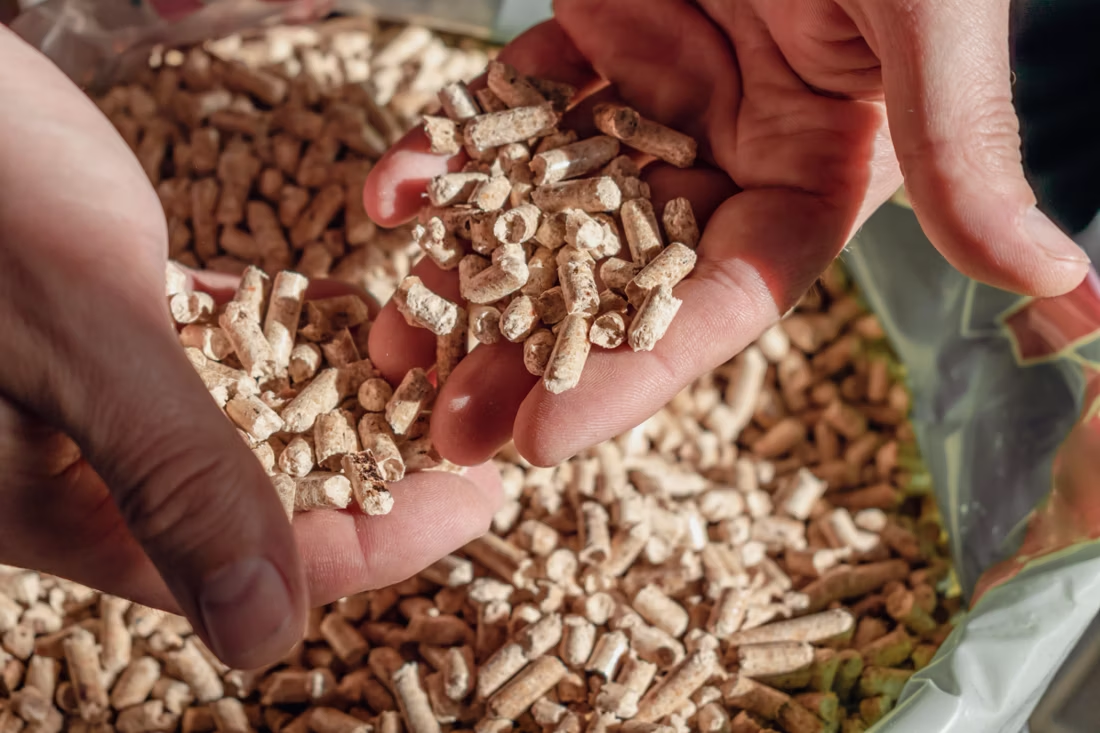
Don't expect to find pallets of pellets stacked at the local hardware store the way you would in a heating-dependent market—demand here is too low to justify it. Regional brands like Forest Energy and Lignetics are available, but most Cibolo owners order by the ton in advance, either through a San Antonio-area hearth dealer or a farm/feed supply store that special-orders seasonally. If you're planning a pellet install, ask your local dealer where they source fuel before you commit—it affects how easy the appliance is to actually run day to day.
Pellet stove or pellet insert—which fits Cibolo homes better?
A pellet insert drops into an existing masonry wood-fireplace opening; a freestanding pellet stove sits on its own hearth pad and vents through a wall or roof. In Cibolo, most homes—especially newer construction in the Cibolo Valley Ranch and surrounding subdivisions—were built with a gas log fireplace or no fireplace at all rather than a traditional wood-burning masonry firebox, so there's often nothing to retrofit. That makes a freestanding pellet stove the more realistic option for most local installs, typically placed in a sunroom, garage, or added living space rather than converted from an old wood fireplace.
Do I need a permit to install a pellet stove in Cibolo?
Almost certainly yes. Even a niche appliance like a pellet stove involves a wall or roof vent penetration and a new electrical circuit, both of which typically require sign-off from the City of Cibolo's building permit office (or Guadalupe County's, if the property sits outside city limits). Because pellet installs are uncommon here, it's worth confirming your dealer has actually pulled this specific type of permit before—not every local contractor has, simply due to low volume.
Pellet vs. gas—which makes more sense for a Cibolo home?
Gas is the standard, well-supported choice in Cibolo, and it shows: natural gas and propane infrastructure already reach most homes, local dealers install and service gas fireplaces routinely, and there's no fuel to store or haul. Pellet's real advantages—an automated hopper feed and long unattended burn times—are built for climates where you're heating for months on end, which isn't Cibolo's situation. If you want supplemental warmth with minimal fuss, a gas insert or fireplace is usually the more practical route; pellet tends to make sense only when you specifically want that hopper-fed, real-flame look for a secondary space.
Pellet vs. electric—which is the better fit for supplemental heat here?
For Cibolo's mild winters, electric is hard to beat on simplicity: no venting, no ash to empty, no hopper to load, and no special permit hassle beyond a standard outlet or circuit. At the local residential rates from AEP Texas Central, Guadalupe Valley Electric Cooperative, and Bluebonnet Electric Cooperative (roughly $0.11–$0.12 per kWh), a plug-in electric fireplace or insert costs very little to run given how few hours a year you'd actually need supplemental heat. Pellet stoves put out more real heat and a more authentic flame, but they come with fuel storage, venting, and maintenance that's hard to justify for a handful of cold nights a year—electric is usually the lower-effort choice unless you specifically want the pellet-fire experience.
Why is my open fireplace making my house colder?
Open fireplaces suck—literally. As the fire burns, it consumes air your furnace already paid to heat and pulls it out through the chimney, so the house is actually colder after the fire goes out than before you lit it. An insert fixes this: it seals the chimney, puts fixed glass across the front, and turns that hole in your house into a real heat source.
How often does a pellet stove need cleaning?
A clean pellet stove is a happy pellet stove. Plan on cleaning the burn pot about once a week when you're burning regularly—ash and clinkers gum up the air holes just like a pellet barbecue. Most pellet stove problems trace back to skipped cleaning that nobody explained up front. Some designs make it easy with a trapdoor burn pot: pull a lever and the gunk drops into the ash pan.
Does a fireplace add value to my home?
On average, a fireplace adds back to the home about the same amount you spent installing it. Add the monthly savings from heating the rooms you actually use instead of the whole house—often hundreds of dollars a year—and the value case is strong before you even count what a fire does for how your family uses the room.
What is an in-home preview and do I need one?
It's a visit where a hearth professional measures your space, confirms the model you picked actually works in your home, and walks the specs—framing, gas line, venting, finish work—before anything is ordered. Some details you just can't know until you see the house. Never make a down payment without one; it's the single most-skipped step that burns buyers.
Nearby Dealers
Hearth shops serving Cibolo and the surrounding area.
Pellet Brands Stocked Around Cibolo
Manufacturers will point you to the nearest stocking dealer.
Find your pellet stove in Cibolo.
Pellet heat is a niche fit in Cibolo's climate, but if you've got the right space for one—a sunroom, garage, or workshop—tell us about your project and we'll match you with a trusted local dealer and send over a free Project Guide & Parts List with the exact parts, vent kit, and installer recommendation for your home.
Find Your Fireplace →