
Electric warmth, built for San Antonio's mild winters.
With just a short, light heating season and winter lows averaging 40°F, Bexar County doesn't need a cordwood pile or a gas line to stay comfortable. Find the right electric fireplace or insert and connect with a trusted local dealer.
Every Project Starts From One of These Five Situations
Heat that fits Bexar County's mild climate.
Bexar County sits in climate zone 2A—hot, humid, and mild through most of the winter, with a short, light heating season and an average winter low near 40°F. Compare that to Duluth, MN, which faces a long, brutal winter most years, and it's easy to see why wood stoves and pellet appliances never took hold here the way they do in colder states. Local hardwoods like oak, pecan, and mesquite show up plenty in San Antonio's smokers and backyard grills, but as a heating strategy, wood-burning fireplaces are essentially absent from the county's housing stock—the demand for that kind of BTU output just isn't there most winters.
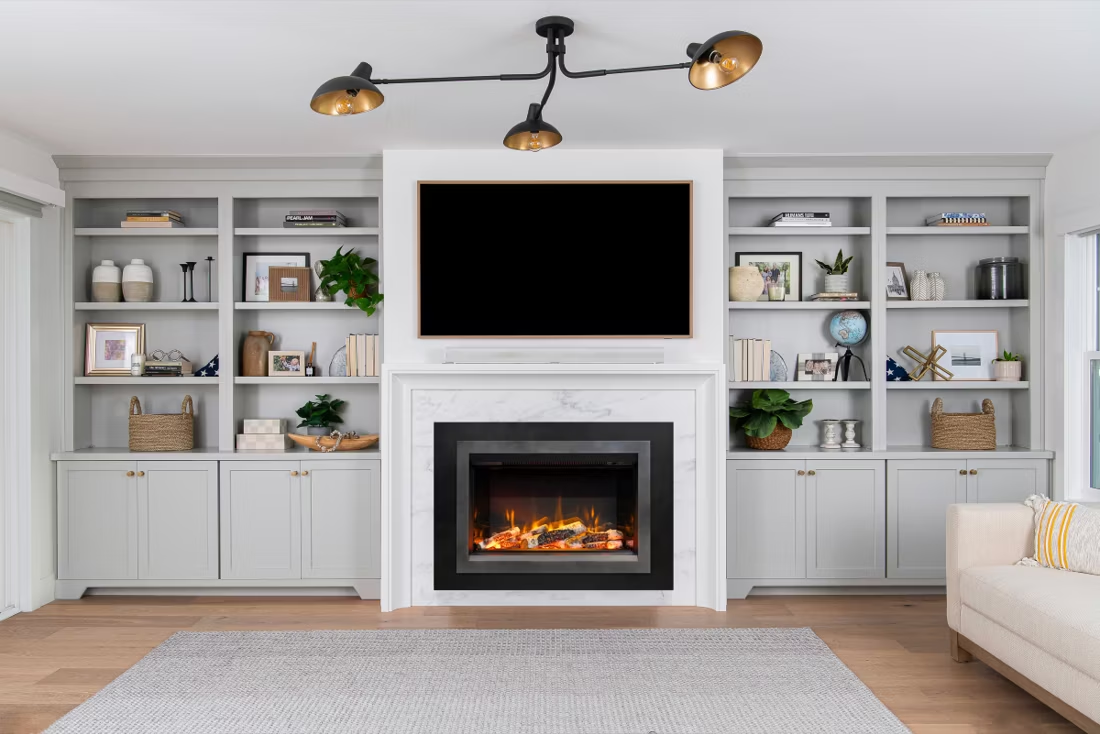
What Bexar County homeowners actually want is ambiance with the occasional real assist during a cold snap—the kind that shows up when an Arctic front pushes through, like the February 2021 freeze that caught much of San Antonio off guard. Electric fireplaces and inserts deliver that: no chimney, no gas line, no venting permit, and no combustion byproducts to worry about. CPS Energy, the municipally owned utility that supplies both electricity and natural gas across San Antonio and most of Bexar County, makes either fuel path workable—but for condos in Stone Oak, older homes in Alamo Heights with a masonry fireplace nobody uses, or new builds in Converse and Schertz, electric is often the simplest, lowest-cost way to get real fire-like ambiance and supplemental warmth.
Three steps. No salesperson until you're ready.
Tell us about your project
Your zip code, your situation, and the fuel you're leaning toward—or let the answers point you to one.
See what's actually available
The brands dealers within 100 miles genuinely carry—real options, never a catalog mirage.
Get your dealer & Project Guide
A trusted local dealer, plus the free Project Guide & Parts List that names every component of the job.
Frequently Asked Questions
How much does an electric fireplace installation cost in Bexar County?
Plug-in electric fireplaces that don't require any wiring work start around $300 to $800 installed, and cover most freestanding and small wall-mount units. Hardwired wall-mount or linear built-in units—the kind that go into a media wall or a framed niche—typically run $1,200 to $2,500 once a licensed electrician runs a dedicated 240V circuit. Converting an existing masonry fireplace to an electric insert, which is a common project in older Alamo Heights and Terrell Hills homes, usually falls in the $800 to $2,000 range depending on the insert size and whether trim kit or surround work is involved. A local dealer can give you a firm number after seeing the space.
Do I need a permit to install an electric fireplace in Bexar County?
Plug-in units that use a standard 120V outlet generally don't require a permit. Hardwired installations that need new wiring or a dedicated circuit do require an electrical permit, issued through the City of San Antonio Development Services Department if you're inside city limits, or through Bexar County's permitting office for unincorporated areas like parts of Helotes or Von Ormy. Most hearth dealers coordinate directly with a licensed electrician, so the permit and inspection get handled as part of the install rather than left on your plate.
What's the difference between a plug-in, wall-mount, and built-in electric fireplace?
Plug-in units are freestanding or mantel-style and just need a standard outlet—the easiest option for renters or anyone in an HOA-restricted community that limits exterior venting changes. Wall-mount units hang like a flat-screen TV and usually need a dedicated circuit if they're larger than about 1,500 watts. Built-in linear inserts are recessed into a wall or an existing masonry firebox and give the cleanest, most fireplace-like look—this is the route most Bexar County homeowners take when converting an old wood-burning fireplace that's never actually been used for wood.
Will my electric fireplace still work during a power outage?
No—and this is worth being direct about. Electric fireplaces need power to run the heater and flame effect, so during a CPS Energy outage they go dark along with everything else. If backup heat during outages matters to you—which does come up during severe thunderstorms or the occasional winter freeze event—a gas fireplace with a battery-backed ignition system is a better fit for that specific need. Most Bexar County households choose electric for everyday ambiance and supplemental warmth rather than emergency backup heat.
How much does it cost to run an electric fireplace with CPS Energy?
Most electric fireplaces draw around 1,500 watts on the heat setting and closer to 100 watts running the flame effect alone with the heater off. At typical CPS Energy residential rates, running the heater for a few hours a night during a cold spell adds only a few dollars a month to your bill—nowhere near what a whole-home HVAC system costs to run. That low operating cost, paired with zero maintenance and no fuel to buy or store, is a big part of why electric appeals to Bexar County homeowners who want occasional warmth without a real ongoing fuel commitment.
Is an electric fireplace enough heat for a Bexar County home?
For most of the county, yes. With an average winter low around 40°F and only a short, light heating season, homes here rarely need serious supplemental heat—a 1,500-watt electric unit can comfortably take the chill off a living room or bedroom during the coldest stretches. The exception is a hard freeze event like the one in February 2021, when temperatures across San Antonio dropped well below normal for days—in that scenario, an electric fireplace helps but shouldn't be relied on as your only heat source if the HVAC system also goes down.
Electric vs. gas fireplace—which is right for my Bexar County home?
Gas fireplaces are common and well-supported here—CPS Energy supplies natural gas throughout most of San Antonio and much of Bexar County, so gas line access usually isn't a barrier. Gas gives you higher heat output and the option of battery-backed ignition that keeps working in a power outage. Electric skips the venting and gas line work entirely, costs less to install, and is the only realistic option in a condo or apartment where venting isn't possible. For a primary living space where you want serious heat output, gas often wins. For a bedroom, den, or rental property where ambiance and simplicity matter more than raw BTUs, electric is usually the better call.
What about wood-burning fireplaces in Bexar County—are they still an option?
They exist, but they're uncommon as a functioning heat source. With Bexar County's mild climate—a short, light heating season and winter lows averaging 40°F—there's simply not enough cold to justify the maintenance a wood stove requires, and most local hardwoods like oak, pecan, and mesquite are sold more for smoking meat than for home heating. A handful of rural Bexar County properties keep an old wood-burning fireplace for occasional ambiance, but if you're starting from scratch, an electric insert gets you the same fireside look with none of the chimney upkeep, ash cleanup, or smoke.
Can an electric insert go into my existing masonry fireplace?
In most cases, yes. Electric inserts are built to slide into a standard masonry firebox opening and are one of the most popular projects local dealers see in older Bexar County neighborhoods like Alamo Heights, Terrell Hills, and Olmos Park, where many homes have a fireplace that's rarely if ever been used for an actual wood fire. The insert plugs in or gets wired to a nearby circuit, and no chimney work, liner, or venting is needed since there's no combustion happening. A dealer will confirm your firebox dimensions before recommending a specific model.
Do electric fireplaces actually produce heat?
Yes—most put out around 4,800–5,000 BTUs from a standard outlet, which comfortably warms a bedroom, office, or den as a comfort-zone heater. What they won't do is carry a whole house the way wood, gas, or pellet can. Think of electric as ambiance-first with honest supplemental heat: flames on with no heat in July, flames plus warmth in January.
Can I put a TV above my fireplace?
Yes—with an asterisk. Fireplaces are hot and TVs don't like heat. Either put a mantel between them to deflect rising warmth, or choose a fireplace with heat-management technology that creates a cool zone on the wall above—the wall stays around 125 degrees, barely warm, while the room still gets full heat. If you like clean lines and don't want a mantel, heat management is the answer.
How much should I budget for a fireplace?
For an average home—covering the fireplace, the vent pipe, and basic installation—a budget between $3,900 and $5,500 gives you a lot of options across wood, gas, and pellet. By the time you add finish work, gas line, and electrical, the average complete installation lands between $5,000 and $12,000 all-in. In a remodel or new build, a good rule is to put about 2.5% of the total project cost toward the fireplace.
What is an in-home preview and do I need one?
It's a visit where a hearth professional measures your space, confirms the model you picked actually works in your home, and walks the specs—framing, gas line, venting, finish work—before anything is ordered. Some details you just can't know until you see the house. Never make a down payment without one; it's the single most-skipped step that burns buyers.
Stove and Fireplace Dealers in Bexar County
Listings include WhyFire partner dealers, dealers we have verified as authorized for the brands we recommend, and established local businesses that carry hearth products. Every listing shows which one it is. The ones marked Preferred run on WhyFire's software, so they can show you real pricing and book your appointment right here. No manufacturer pays for placement. How we verify dealers →
Home & Patio
Area – San Antonio, Tx
Orange County Bldg Materl
Bbq Outfitters
Installed Building Products, LLC
Parrish & Company Inc - San Antonio
Pico Propane Operating
Find your electric fireplace in Bexar County.
Tell us a bit about your home and we'll put together a free Project Guide & Parts List—the right electric fireplace or insert for your space, plus a trusted local Bexar County dealer to install it.
Find Your Fireplace →