
Electric fireplaces built for Selma's mild winters.
No venting, no gas line, no chimney—just ambiance and a bit of supplemental warmth for the handful of genuinely cold nights each Bexar County winter brings.
Every Project Starts From One of These Five Situations
Selma winters rarely ask for more than a supplemental heat source.
Selma sits just northeast of San Antonio in Bexar County, at 759 feet elevation in climate zone 2A—the same hot-humid zone that covers most of the Texas Gulf Coast. Winter lows here average 41°F, and the city has a mild, short heating season, just a fraction of what a place like Duluth, Minnesota faces in a single hard winter. Central heat pumps and furnaces handle the rare real cold snap, which is exactly the kind of climate where a standalone wood or pellet stove doesn't earn its keep—there's rarely enough sustained cold to justify the chimney, the fuel storage, or the smoke, which is why both are essentially non-factors here.
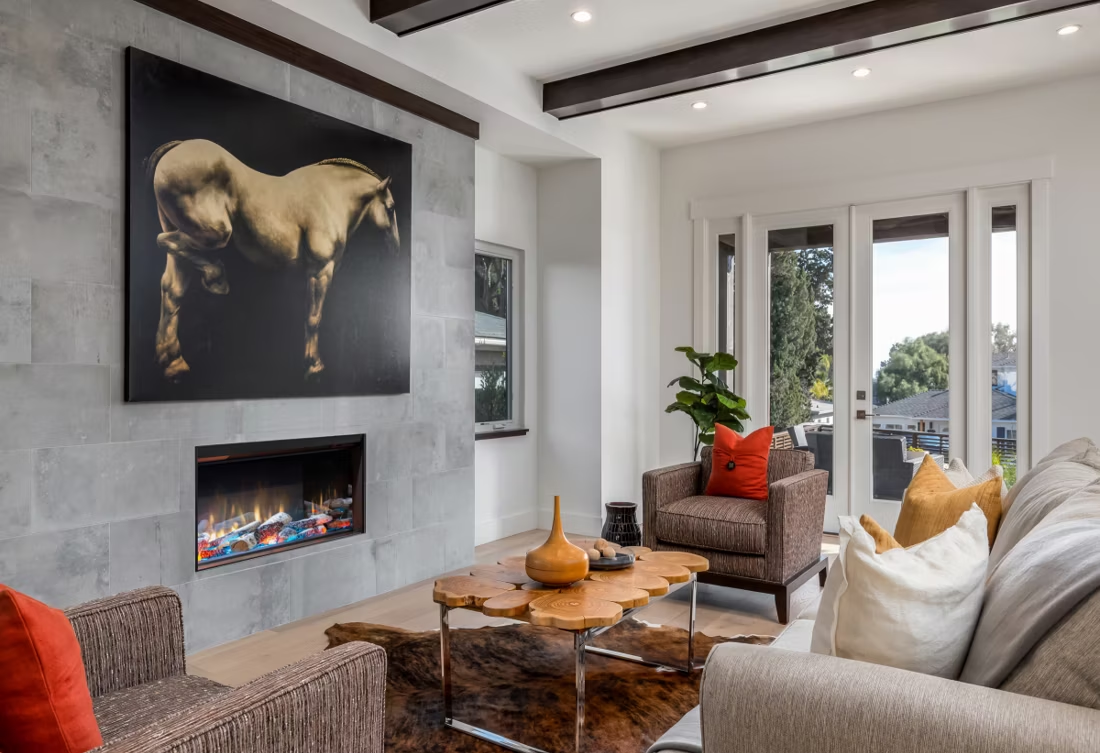
That's where electric fireplaces make sense. No venting, no gas line, and no permit hassle for most plug-in or wall-mount units—just ambiance and real supplemental heat on the nights temperatures actually drop toward the 30s. Selma's electric service is split among cooperatives depending on where in the city you sit—Karnes Electric Cooperative, Guadalupe Valley Electric Cooperative, and Bandera Electric Cooperative all serve parts of the area—with residential rates running roughly 9.9 to 12.5 cents per kWh, cheap enough that a 1,500-watt unit running a few hours a night barely moves the bill.
Three steps. No salesperson until you're ready.
Tell us about your project
Your zip code, your situation, and the fuel you're leaning toward—or let the answers point you to one.
See what's actually available
The brands dealers within 100 miles genuinely carry—real options, never a catalog mirage.
Get your dealer & Project Guide
A trusted local dealer, plus the free Project Guide & Parts List that names every component of the job.
Frequently Asked Questions
How much does it cost to install an electric fireplace in Selma?
A plug-in or wall-mount electric fireplace typically runs $300 to $1,200 installed in Selma, since there's no venting or chimney work involved—often just mounting hardware and a standard outlet. A built-in electric insert or a unit requiring a dedicated 20-amp circuit runs higher, generally $1,500 to $4,000, with an electrician charging $200 to $500 to run new wiring if your panel doesn't already have capacity nearby. Either way, electric installs land well below the cost of a gas line run or chimney-vented wood install, which is part of why electric is such a common choice in newer Selma subdivisions.
Will an electric fireplace actually keep a room warm during a Selma winter?
For the room it's in, yes. A standard 1,500-watt electric fireplace puts out around 5,100 BTUs, enough to comfortably heat a 400- to 500-square-foot space—plenty for a living room or bedroom on a night when temperatures dip into the 30s. Given Selma's average winter low of 41°F and its short, mild heating season, most homeowners here are looking for supplemental zone heat and ambiance rather than a whole-home heat source, and an electric unit is well matched to that use case. It's not designed to replace your central heat pump on a genuinely cold week.
Which electric utility serves my part of Selma, and how does that affect running costs?
Selma is split among three electric cooperatives depending on your exact address: Karnes Electric Cooperative, Guadalupe Valley Electric Cooperative, and Bandera Electric Cooperative. Rates across the three run from about 9.9 cents to 12.5 cents per kWh. Running a 1,500-watt fireplace for four hours a night costs roughly 6 to 7.5 cents per hour, or around $7 to $9 a month with regular evening use—a small enough number that most homeowners don't factor it heavily into which unit they choose.
Do I need a permit to install an electric fireplace in Selma?
Plug-in and most wall-mount electric fireplaces don't require a permit since they use a standard outlet and involve no gas or venting work. If your chosen unit needs a dedicated circuit—common with larger built-in inserts—that electrical work typically requires a permit through the City of Selma Building Department or Bexar County, depending on your address, and should be pulled by a licensed electrician. A reputable local dealer will flag this during your consultation rather than leaving you to figure it out after the fact.
Electric vs. gas fireplace—which is right for a Selma home?
Gas is a standard, well-supported option in Selma too, and it delivers a real flame and higher heat output—useful if you want a fireplace that can meaningfully supplement your HVAC during a cold snap. But gas requires a gas line and proper venting, which adds cost and installation complexity. Electric skips both: no gas line, no venting, and it works in rooms where running a line isn't practical, like an interior bedroom or a rental unit. Given how mild Selma winters run, many homeowners here choose electric purely for the ambiance and flexibility, saving gas for a kitchen range or water heater instead.
What styles of electric fireplace work best in Selma homes?
Wall-mount linear units are popular in Selma's newer construction near the I-35 corridor, where open floor plans and contemporary finishes suit a low-profile, frameless look. Homes with an existing masonry fireplace shell—more common in Selma's older streets closer to old town—are often better candidates for a built-in electric insert that drops into the existing opening. Freestanding stove-look units are a good fit for renters or anyone who wants a portable option that doesn't require any wall modification at all.
Will my electric fireplace work if the power goes out?
No—electric fireplaces are entirely dependent on grid power, which is worth thinking through given Texas's ERCOT grid history, including the extended outages during Winter Storm Uri in February 2021. If backup heat during an outage matters to you, a gas fireplace with a standing pilot or a battery-backed ignition system is a more resilient choice, since it can run without utility power. Most Selma homeowners treat electric fireplaces as a daily-use ambiance and supplemental-heat feature rather than an emergency heat plan, and pair them with a separate backup strategy for outages.
Where can I see electric fireplace options in person near Selma?
I match Selma homeowners with a trusted local hearth dealer rather than sending you to a big-box aisle guessing at specs. A local dealer can show you units in person, walk you through wall-mount versus built-in insert options, and confirm what your electrical panel can support before you buy anything. That's the difference between an online photo and a unit that actually fits your wall, your circuit, and your budget.
Why don't more Selma homes use wood or pellet stoves?
It comes down to climate. With winter lows averaging 41°F and only a short, mild heating season each year, Selma simply doesn't get the sustained cold that makes a wood or pellet stove worth the chimney, fuel storage, and upkeep. Local oak, pecan, and mesquite are plentiful, but around here they're far more likely to end up in a smoker than a stove. A handful of rural properties on larger lots do run wood stoves for ambiance or as a backup during rare freezes, but for the vast majority of Selma homeowners, electric or gas covers the need with a lot less hassle.
Can I put a TV above my fireplace?
Yes—with an asterisk. Fireplaces are hot and TVs don't like heat. Either put a mantel between them to deflect rising warmth, or choose a fireplace with heat-management technology that creates a cool zone on the wall above—the wall stays around 125 degrees, barely warm, while the room still gets full heat. If you like clean lines and don't want a mantel, heat management is the answer.
Do electric fireplaces actually produce heat?
Yes—most put out around 4,800–5,000 BTUs from a standard outlet, which comfortably warms a bedroom, office, or den as a comfort-zone heater. What they won't do is carry a whole house the way wood, gas, or pellet can. Think of electric as ambiance-first with honest supplemental heat: flames on with no heat in July, flames plus warmth in January.
Can I install a fireplace myself?
If you're putting a fire in your house on purpose, it's best to work with an expert. Unless you're genuinely experienced in framing, gas line, vent pipe, and the national code on clearances to combustibles, have a professional do it—and ideally the same company that sells you the fireplace, so warranty, service, and liability all live under one roof.
Does a fireplace add value to my home?
On average, a fireplace adds back to the home about the same amount you spent installing it. Add the monthly savings from heating the rooms you actually use instead of the whole house—often hundreds of dollars a year—and the value case is strong before you even count what a fire does for how your family uses the room.
Nearby Dealers
Hearth shops serving Selma and the surrounding area. Every listing shows whether it is a WhyFire partner, a dealer we have verified as authorized for the brands we recommend, or a local business carrying hearth products. No manufacturer pays for placement. How we verify dealers →
Home & Patio
Parrish & Company Inc - San Antonio
Area – San Antonio, Tx
Bbq Outfitters
Orange County Bldg Materl
Installed Building Products, LLC
Pico Propane Operating
Electric Service in Selma
An electric fireplace's heater draws about 1,500 watts—pennies per hour at local rates.
Karnes Electric Coop Inc
Guadalupe Valley Elec Coop Inc
Bandera Electric Coop, Inc
Find your electric fireplace in Selma.
Tell us a bit about your home and we'll match you with a trusted local dealer and send over a free Project Guide & Parts List—the exact unit, circuit requirements, and installation plan for your Selma home.
Find Your Fireplace →