
Add Warmth and Ambiance Without the Chimney.
With winter lows that rarely dip below the 40s, Castle Hills homes don't need a wood-burning heat source—they need clean, flexible ambiance. Find the right electric unit and connect with a trusted local dealer.
Every Project Starts From One of These Five Situations
Mild winters, maximum flexibility.
Castle Hills is a small enclave city of under 4,000 residents tucked inside northwest San Antonio, sitting at 835 feet in climate zone 2A. Winter lows average 41°F and the city logs roughly 1,438 heating degree days a year—a fraction of what a cold-climate city like Fargo, ND or Duluth, MN racks up in a single hard winter. Oak, pecan, and mesquite are the go-to species for backyard fire pits and smokers around Bexar County, but indoor wood-burning appliances rarely pencil out here, which is why wood and pellet fireplace relevance both rate as not-applicable for this market. There's simply not enough sustained cold to justify a stove sized for daily heating load.
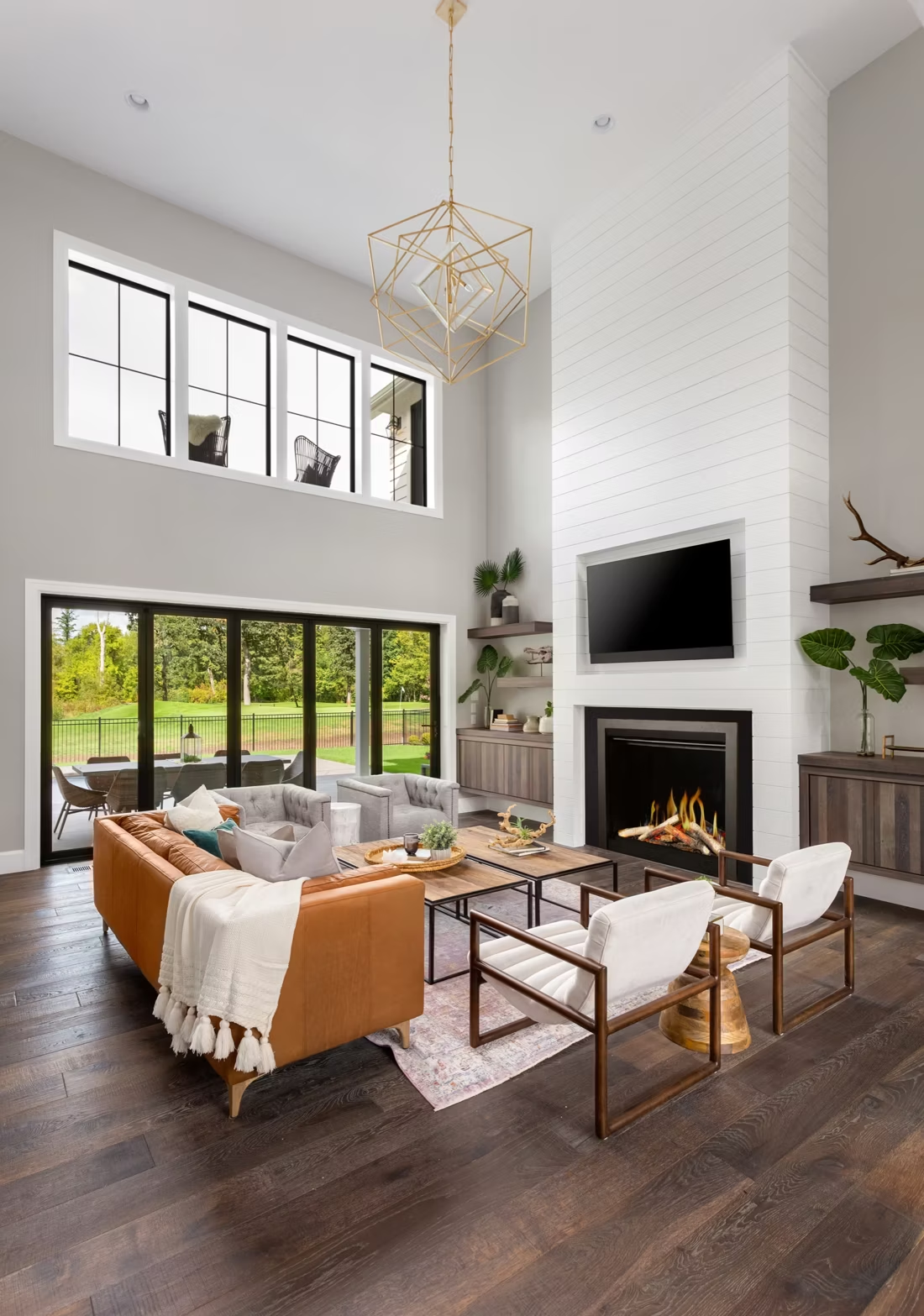
Electric fireplaces fit the reality of Castle Hills living: zero-clearance installation, no chimney, no gas line, and no venting to plan around. That makes them a natural fit for the city's mid-century ranch homes, patio homes, and condo-style builds where cutting a hole for venting isn't practical. Electric service in the area comes through a mix of cooperatives—Karnes Electric Cooperative, Guadalupe Valley Electric Cooperative, and Bandera Electric Cooperative—with residential rates running roughly $0.099 to $0.125 per kWh, which keeps the cost of running a supplemental electric unit low even if you use it most evenings from November through February.
Three steps. No salesperson until you're ready.
Tell us about your project
Your zip code, your situation, and the fuel you're leaning toward—or let the answers point you to one.
See what's actually available
The brands dealers within 100 miles genuinely carry—real options, never a catalog mirage.
Get your dealer & Project Guide
A trusted local dealer, plus the free Project Guide & Parts List that names every component of the job.
Frequently Asked Questions
How much does an electric fireplace installation cost in Castle Hills?
A plug-in freestanding or wall-mounted electric fireplace typically runs $300 to $1,200 for the unit, with no professional installation required beyond plugging into an existing outlet. A built-in electric insert or linear unit set into a wall or existing mantel opening—the more common choice for Castle Hills' ranch-style homes—usually runs $1,500 to $4,000 once you include the unit, any framing or trim work, and an electrician's time if a dedicated circuit is needed. Because there's no chimney, gas line, or exterior venting involved, electric installations are consistently the least expensive fireplace project a local dealer will quote.
Do I need a permit to install an electric fireplace in Castle Hills?
In most cases, no—a plug-in unit that uses an existing standard outlet doesn't require a permit. If your installer needs to add a dedicated 20-amp circuit for a larger built-in unit, that electrical work falls under the City of Castle Hills' building and permitting process and should be pulled by a licensed electrician. There's no venting, gas, or structural permit involved the way there would be with a wood or gas installation, which is one of the reasons electric projects move faster from quote to install.
Will an electric fireplace actually heat my Castle Hills home?
Most electric fireplaces are designed as supplemental or zone heaters rather than whole-home heat sources, and that's exactly the role they play well here. With Castle Hills averaging only about 1,438 heating degree days a year and winter lows rarely dropping below the low 40s, a 1,500-watt electric insert is generally enough to take the chill off a living room or bedroom on the coldest nights without ever needing to compete with your central HVAC. Homeowners looking for a true primary heat source for a whole house should look at gas instead, but for the occasional cold snap, electric covers it.
What's the difference between an electric insert, a mantel package, and a wall-mount unit?
An electric insert is built to slide into an existing fireplace opening or a custom-framed wall cavity, giving you a flush, built-in look. A mantel package pairs a freestanding electric firebox with a surrounding cabinet or mantel shelf, requiring no wall modification at all—a popular option for renters or homeowners not ready for construction. A wall-mount unit hangs directly on the wall like a flat-screen TV, with a slim profile and minimal footprint. For Castle Hills' smaller lots and patio homes, mantel packages and wall-mounts are especially popular since they don't require any changes to the home's structure.
How much does it cost to run an electric fireplace in Castle Hills?
At local cooperative rates of roughly $0.099 to $0.125 per kWh, a typical 1,500-watt electric fireplace costs somewhere between 15 and 19 cents per hour to run on full heat, or a fraction of that with the flame-only, no-heat ambiance setting most units offer. Running one for three or four hours a night through a mild Castle Hills winter adds up to only a few dollars a month—far less than the swing in your bill you'd see running central heat harder, and nowhere near the fuel cost of wood or propane.
What's the best electric fireplace for a Castle Hills home?
For most homes in Castle Hills, a linear built-in insert with a realistic LED flame effect is the popular choice—it reads as a genuine architectural feature rather than a space heater, and works well in the open-concept living areas common in the area's ranch and patio homes. Homeowners in condos or homes where they don't own the walls tend to prefer a mantel package, since it's fully freestanding and moves with you. Talk to a local dealer about your room's layout and whether you want supplemental heat output or purely a flame-effect focal point—the electronics inside vary quite a bit between models marketed as 'ambiance only' and those built for real heat.
Electric vs. gas—which is right for my Castle Hills home?
Gas fireplaces are also a solid option in Castle Hills and deliver more genuine heat output plus the look of a real flame, but they require a gas line, venting, and a higher install cost. Electric fireplaces skip all of that—no venting, no gas line, no combustion byproducts—in exchange for a flame effect that's convincing but not a literal fire, and heat output that's better suited to supplemental warmth than a primary heat source. Given how mild Castle Hills winters run, plenty of homeowners choose electric purely for the ambiance and flexibility, reserving gas for homes that want a stronger visual centerpiece or slightly more heat on the rare cold night.
Can I install an electric fireplace in a rented or older Castle Hills home?
Yes—that's one of electric's biggest advantages in a city like Castle Hills, where many homes are older mid-century ranches and smaller patio-style properties. A plug-in or mantel-package electric fireplace needs nothing more than a nearby outlet, so it works in rentals, condos, or homes where you don't want to alter walls or add venting. Even a built-in insert can typically go into an existing fireplace opening without structural changes, which makes electric a common retrofit choice for older Castle Hills homes that never had a working chimney to begin with.
Are electric fireplaces safe for smaller homes and rooms?
Yes—electric fireplaces run cool to the touch on the exterior housing, produce no smoke, ash, or combustion gases, and carry no carbon monoxide risk, which makes them a common choice for smaller Castle Hills homes, bedrooms, and rooms where a family with kids or pets wants the look of a fire without the safety concerns of an open flame. Most models include auto shut-off timers and overheat protection as standard features. Because there's no real combustion involved, there's also no local air-quality concern to weigh, unlike wood-burning appliances in areas with inversion or non-attainment issues.
Can I put a TV above my fireplace?
Yes—with an asterisk. Fireplaces are hot and TVs don't like heat. Either put a mantel between them to deflect rising warmth, or choose a fireplace with heat-management technology that creates a cool zone on the wall above—the wall stays around 125 degrees, barely warm, while the room still gets full heat. If you like clean lines and don't want a mantel, heat management is the answer.
Does an electric fireplace need a vent or chimney?
No—that's its superpower. An electric fireplace needs a wall and an outlet, period. No vent pipe, no gas line, no clearances to design around, which is why it works in bedrooms, offices, apartments, and walls where venting a gas or wood unit would be impractical or impossible. Installation is typically the simplest and least expensive of any fireplace type.
Can I install a fireplace myself?
If you're putting a fire in your house on purpose, it's best to work with an expert. Unless you're genuinely experienced in framing, gas line, vent pipe, and the national code on clearances to combustibles, have a professional do it—and ideally the same company that sells you the fireplace, so warranty, service, and liability all live under one roof.
How much should I budget for a fireplace?
For an average home—covering the fireplace, the vent pipe, and basic installation—a budget between $3,900 and $5,500 gives you a lot of options across wood, gas, and pellet. By the time you add finish work, gas line, and electrical, the average complete installation lands between $5,000 and $12,000 all-in. In a remodel or new build, a good rule is to put about 2.5% of the total project cost toward the fireplace.
Nearby Dealers
Hearth shops serving Castle Hills and the surrounding area. Every listing shows whether it is a WhyFire partner, a dealer we have verified as authorized for the brands we recommend, or a local business carrying hearth products. No manufacturer pays for placement. How we verify dealers →
Home & Patio
Bbq Outfitters
Area – San Antonio, Tx
Orange County Bldg Materl
Installed Building Products, LLC
Parrish & Company Inc - San Antonio
Pico Propane Operating
Electric Service in Castle Hills
An electric fireplace's heater draws about 1,500 watts—pennies per hour at local rates.
Karnes Electric Coop Inc
Guadalupe Valley Elec Coop Inc
Bandera Electric Coop, Inc
Find your electric fireplace in Castle Hills.
Tell us a bit about your home and we'll match you with the right electric fireplace or insert—and connect you with a trusted local dealer who can size and install it correctly.
Find Your Fireplace →