
Warmth on demand for Converse's mild Texas winters.
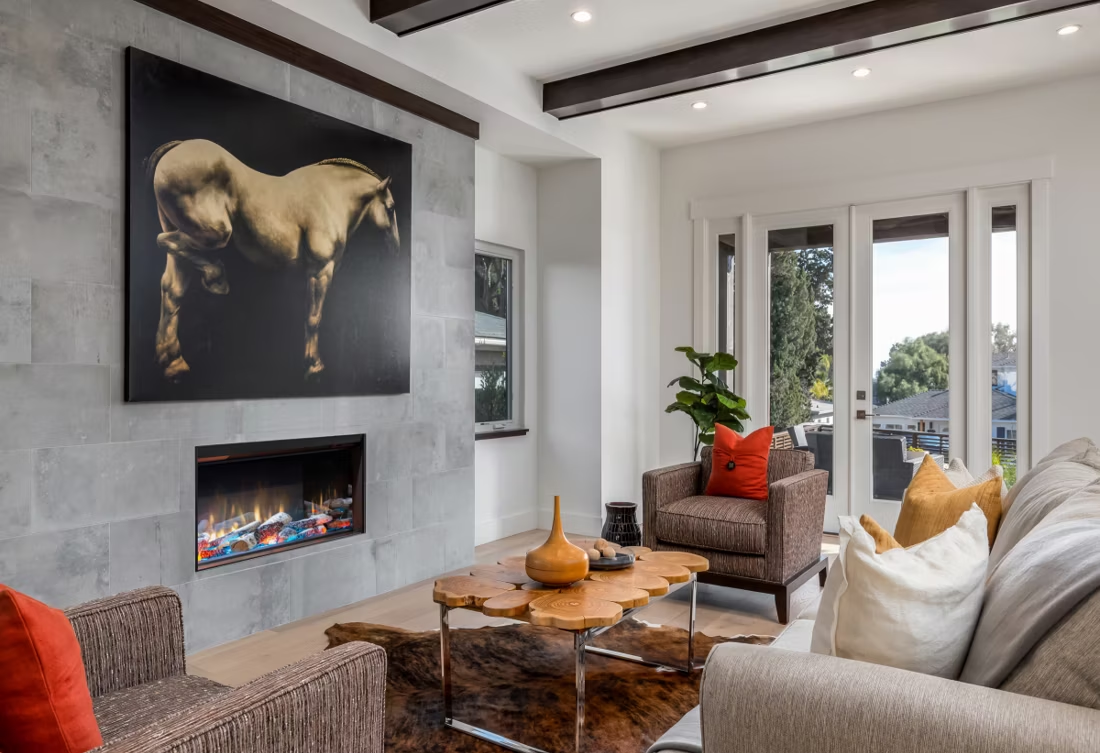
No chimney, no gas line, no venting—just a real focal point and genuine supplemental heat for the handful of cold nights Converse actually gets. Find the right unit and connect with a trusted local dealer.
Every Project Starts From One of These Five Situations
Electric heat fits how Converse actually lives.
Converse sits just northeast of San Antonio in Bexar County, at 678 feet elevation in climate zone 2A—one of the mildest heating climates in the country. Winter lows average 41°F, and the city logs only about 1,366 heating degree days a year. Compare that to Duluth, Minnesota, which racks up close to 9,000 HDD, and it's clear why nobody in Converse is planning their winter around a woodpile. Most homeowners here want a fireplace for the glow, the mantel, and the occasional genuinely cold snap—not a primary heat source to survive a five-month freeze.
With heating load this light, wood and pellet setups don't make much sense for most Converse households, which is part of why they're rare here. Electric fireplaces fill the gap well: they plug into an existing outlet or a simple new circuit, skip the chimney and venting entirely, and layer nicely on top of the central HVAC most homes in this part of Bexar County already run. Electric service in the Converse area comes through Guadalupe Valley Electric Cooperative, Karnes Electric Cooperative, or Bandera Electric Cooperative depending on exactly where you sit in the service territory, with residential rates running roughly 9.9¢ to 12.49¢ per kWh—cheap enough that running a heater element a few evenings a week barely moves the bill.
Three steps. No salesperson until you're ready.
Tell us about your project
Your zip code, your situation, and the fuel you're leaning toward—or let the answers point you to one.
See what's actually available
The brands dealers within 100 miles genuinely carry—real options, never a catalog mirage.
Get your dealer & Project Guide
A trusted local dealer, plus the free Project Guide & Parts List that names every component of the job.
Frequently Asked Questions
How much does it cost to install an electric fireplace in Converse?
It depends heavily on the type. A basic plug-in insert or freestanding unit runs $200 to $800 and needs nothing more than a standard outlet—no installation labor required. A wall-mounted unit typically runs $600 to $2,000 once you factor in mounting hardware and, in some cases, an electrician adding a dedicated outlet behind the mount. A true built-in unit set into a wall or framed into a custom mantel surround runs $1,500 to $4,000 or more, including carpentry and often a new 20-amp circuit. Because there's no chimney, gas line, or venting involved, electric installs are consistently the least expensive fireplace project in Converse.
Do electric fireplaces need venting or a chimney?
No. Electric fireplaces produce heat from a resistance heating element and flame effect from LEDs, so there's no combustion, no exhaust gas, and no need for a flue or outside air intake. That means they can go on any interior wall, in a bedroom, a converted garage, or an apartment—locations where running gas line or building a chimney chase would be impractical or against a lease. It's one of the main reasons they're popular in newer Converse subdivisions where homes weren't built with a masonry fireplace to begin with.
Can an electric fireplace actually heat a room, or is it just for looks?
Both, within reason. Most electric fireplaces have a built-in heater rated around 1,500 watts, roughly 5,100 BTU, which is enough to comfortably warm a single room—a living room, bedroom, or converted sunroom. Given that Converse's average winter low is a mild 41°F, that's genuinely enough supplemental heat for the vast majority of nights. On the rarer occasions when a cold front pushes lows into the 20s, you'll still want central HVAC as your primary system, but the electric fireplace will noticeably cut how often the furnace kicks on in whatever room it's in.
What will it cost to run an electric fireplace in Converse?
A typical 1,500-watt heater draws 1.5 kWh per hour of use. At Guadalupe Valley Electric Cooperative's rate of around 12.49¢ per kWh, that's roughly 19 cents an hour; at Karnes Electric Cooperative's lower rate near 9.9¢, it's closer to 15 cents an hour. Running the heater a few hours most evenings through a mild Converse winter typically adds somewhere between $10 and $25 a month to your electric bill—and you can run the flame effect alone, with the heater off, for essentially nothing.
What's the difference between an electric insert, a wall-mount, and a built-in unit?
An electric insert is designed to slide into an existing fireplace opening—useful if you have an old, unused masonry fireplace and want to retire the wood-burning aspect while keeping the look. A wall-mount unit hangs on the wall like a flat-screen TV and needs no surrounding structure, which is popular in newer Converse homes with open floor plans. A built-in unit is framed into a wall or custom cabinetry during a remodel for a more finished, seamless look, similar to a traditional fireplace but without any venting requirements. Which one makes sense usually comes down to whether you're retrofitting an existing space or building new.
Will my electric fireplace work during a power outage?
No—electric fireplaces require power to run both the heater and the flame effect, so they go dark along with everything else when the grid drops. Converse's outages tend to come from summer thunderstorms and occasional hurricane remnants rather than winter cold, so this is less of a concern here than in a harsher climate. Still, if backup heat during a winter outage genuinely matters to your household, a vented gas fireplace with battery-backup ignition is worth considering alongside—or instead of—an electric unit.
Are electric fireplaces a good option for rentals or apartments near JBSA-Randolph?
Yes, and it's one of the more common uses in Converse given how much of the housing stock near Randolph Air Force Base turns over with military relocations. A plug-in or freestanding electric fireplace requires no permanent alteration to the property—no chimney, no gas line, no wiring changes—which makes it landlord-friendly and easy to take with you at PCS time. Even a wall-mounted unit can usually be removed and the mounting holes patched without much trouble.
Electric vs. gas—which is right for my Converse home?
Gas fireplaces put out considerably more heat (typically 20,000+ BTU versus an electric unit's roughly 5,000 BTU) and give you a real flame, which matters if you want a fireplace that can genuinely offset the furnace on a cold night. Electric fireplaces cost less to buy and install, need no gas line or venting, and cost pennies an hour to run given Converse's relatively low residential electric rates. For most Converse homes, where winter heating demand is light to begin with, electric covers the ambiance-and-supplemental-warmth use case well; gas makes more sense if you want a fireplace that can carry real heating load or you already have gas service run to the house.
Do I need a permit to install an electric fireplace in Converse?
A plug-in or freestanding unit that uses an existing outlet needs no permit at all. If your installation requires a new dedicated circuit or outlet—common for wall-mount and built-in units—your electrician will typically pull an electrical permit through the City of Converse as part of the job. There's no building permit trigger the way there is for a wood-burning appliance, since there's no chimney or structural venting involved.
Can I put a TV above my fireplace?
Yes—with an asterisk. Fireplaces are hot and TVs don't like heat. Either put a mantel between them to deflect rising warmth, or choose a fireplace with heat-management technology that creates a cool zone on the wall above—the wall stays around 125 degrees, barely warm, while the room still gets full heat. If you like clean lines and don't want a mantel, heat management is the answer.
Do electric fireplaces actually produce heat?
Yes—most put out around 4,800–5,000 BTUs from a standard outlet, which comfortably warms a bedroom, office, or den as a comfort-zone heater. What they won't do is carry a whole house the way wood, gas, or pellet can. Think of electric as ambiance-first with honest supplemental heat: flames on with no heat in July, flames plus warmth in January.
Can a fireplace actually lower my heating bill?
Yes—by creating a comfort zone. A furnace heats every square foot of the house just to warm the one room you're in; a gas fireplace on low burns roughly a sixth of the gas a typical furnace does. Set the furnace around 55–60 degrees as a baseline, then heat the rooms your family actually uses. Families who heat this way commonly save $20–$60 a month.
How much should I budget for a fireplace?
For an average home—covering the fireplace, the vent pipe, and basic installation—a budget between $3,900 and $5,500 gives you a lot of options across wood, gas, and pellet. By the time you add finish work, gas line, and electrical, the average complete installation lands between $5,000 and $12,000 all-in. In a remodel or new build, a good rule is to put about 2.5% of the total project cost toward the fireplace.
Nearby Dealers
Hearth shops serving Converse and the surrounding area.
Electric Service in Converse
An electric fireplace's heater draws about 1,500 watts—pennies per hour at local rates.
Karnes Electric Coop Inc
Guadalupe Valley Elec Coop Inc
Bandera Electric Coop, Inc
Find your electric fireplace in Converse.
Tell us a bit about your home and we'll put together a free Project Guide & Parts List—the right electric fireplace or insert for your space, plus a trusted local Converse dealer who can install it.
Find Your Fireplace →