
Steady, automated heat for Grant County's coldest nights.
With 8,452 heating degree days a year and winter lows averaging around 4°F, Grant County heats through a season as long and hard as Fargo's. Pellet stoves deliver thermostat-controlled warmth without the daily wood-splitting—find the right unit and connect with a trusted local dealer.
Every Project Starts From One of These Five Situations
Automated heat for one of South Dakota's coldest counties.
Grant County sits on the open prairie of northeastern South Dakota, near Milbank and Big Stone City, in climate zone 6A with 8,452 heating degree days a year—a heating load in the same range as Fargo, ND, just across the state line. Winter lows average around 4°F, and with almost no windbreak across the flat farmland, wind chill makes the cold feel worse than the thermometer suggests. Wood heat has deep roots here—local supply runs to ponderosa pine, oak, and cottonwood off shelterbelts and farm ground—but for many households, especially those managing livestock, grain bins, or a full farmstead through a Dakota winter, tending a wood stove every few hours isn't realistic.
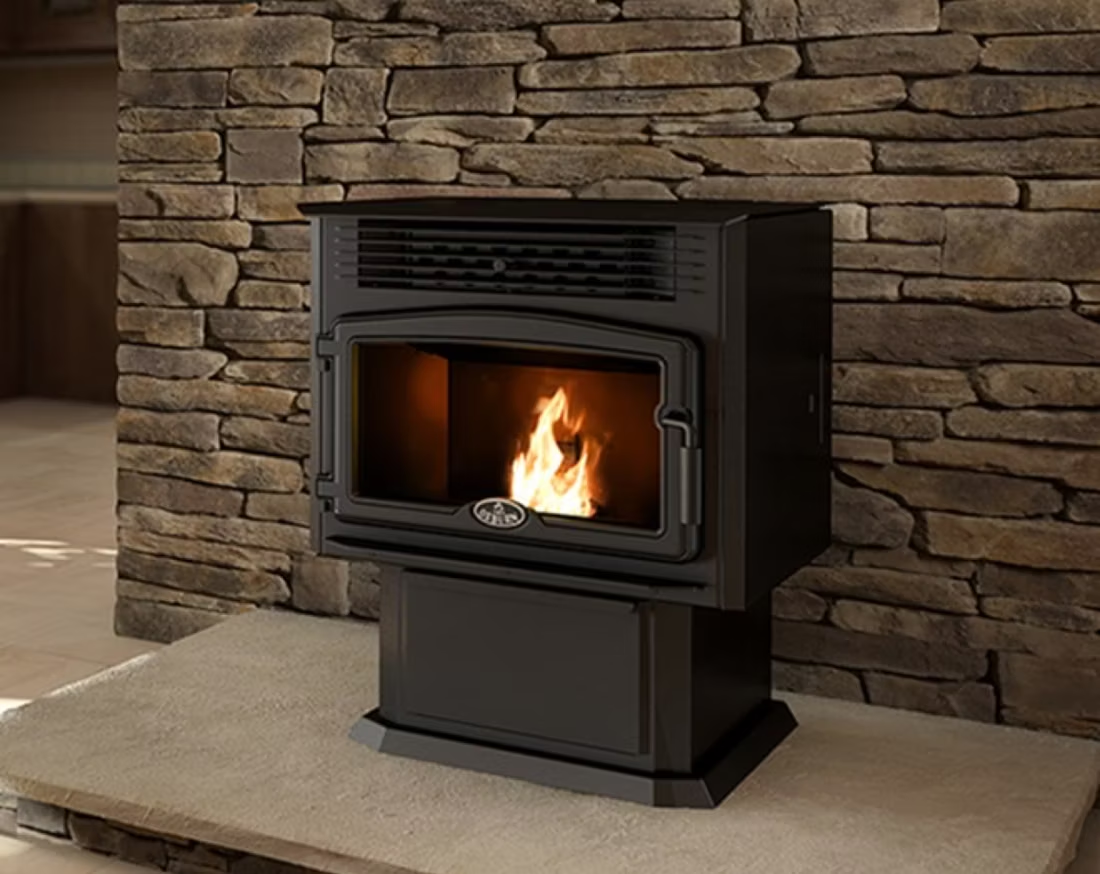
That's where pellet appliances fit in. A hopper-fed pellet stove or insert loads once a day (sometimes less, depending on hopper size and burn rate), runs on a thermostat, and holds a consistent output through a long, cold night without anyone getting up to reload it. Bagged pellets from producers like Lignetics and Indeck Energy Services are sold through farm stores and hearth dealers across the region, and with no air quality restrictions flagged for Grant County, there's no burn-ban complexity to navigate—just permitting for the hearth pad, clearances, and venting through the county's building permit process. For rural properties where reliable, low-maintenance heat matters as much as ambiance, pellet is often the practical answer.
Three steps. No salesperson until you're ready.
Tell us about your project
Your zip code, your situation, and the fuel you're leaning toward—or let the answers point you to one.
See what's actually available
The brands dealers within 100 miles genuinely carry—real options, never a catalog mirage.
Get your dealer & Project Guide
A trusted local dealer, plus the free Project Guide & Parts List that names every component of the job.
Frequently Asked Questions
How much does a pellet stove installation cost in Grant County?
Across the Upper Midwest, a typical freestanding pellet stove installation—unit, vent kit through an exterior wall, and hearth pad—commonly runs in the $3,500 to $6,500 range, with pellet inserts into an existing masonry fireplace running somewhat higher due to liner work. Farmstead installations in Grant County sometimes add a modest travel charge if the dealer is based out of Watertown or Sioux Falls rather than Milbank. Your local dealer will size the vent run and hopper to your specific home and give you a firm number after an in-home look.
What size pellet stove do I need for a Grant County home?
With 8,452 heating degree days and average winter lows near 4°F, Grant County sits at the harder end of pellet-stove sizing charts. A small unit (under 1,000 sq ft) suits a single room, shop, or hunting cabin; a medium stove (1,000–1,800 sq ft) covers most farmhouse living areas; larger stoves or two-unit setups are common for older, less-insulated farmhouses trying to offset a propane furnace on the coldest stretches. Older farmhouses with drafty additions and high ceilings typically need to size up a step from what a square-footage chart alone would suggest—a local dealer factoring in your actual insulation and layout will get this right.
Where can I buy pellet fuel in Grant County?
Bagged pellets from Lignetics and Indeck Energy Services are the most commonly stocked brands in the region, typically sold through farm supply stores and hearth dealers in and around Milbank and Big Stone City, with some suppliers offering pallet delivery for households burning through several tons a winter. Bulk regional pellet pricing generally runs in the $250-$300 per ton range, though it's worth calling ahead each fall—supply and pricing can shift with mill output and demand across the Dakotas and Minnesota. Stocking up early in the season, before the coldest stretch hits, is standard practice out here.
Do I need a permit to install a pellet stove in Grant County?
Yes—a building permit is required for a new pellet stove or insert installation, covering the hearth pad, wall or ceiling clearances, and the vent penetration through the wall or roof. Most local dealers handle the permit paperwork as part of the installation, so it's rarely something the homeowner has to manage directly. Grant County has no air quality non-attainment designation and no wood-burning curtailment periods, so unlike some western states, there's no burn-ban compliance layer to worry about once the unit is installed and permitted—just standard code compliance.
What's the best pellet stove for Grant County's climate?
For a heating load this size, look for a stove with a larger hopper capacity (40+ lbs) and a higher maximum burn rate so it can keep pace through single-digit nights without needing a middle-of-the-night reload. Brands like Harman, Lopi, and Quadra-Fire are commonly stocked by regional dealers and build models rated for higher BTU output suited to cold-climate zones like 6A. Because pellet stoves depend on electricity to run the auger and combustion blower, it's also worth asking your dealer about models with battery-backup or low-power-draw options—useful given how ice and wind can knock out rural power lines in this part of the state.
Pellet stove vs. wood stove—which makes more sense in Grant County?
Wood stoves burn free or low-cost cordwood—ponderosa pine, oak, and cottonwood are all common locally—and keep working through a power outage, which matters on farmland where lines can go down in an ice storm. Pellet stoves trade that off-grid resilience for convenience: no splitting, less ash, a thermostat that holds a steady temperature overnight, and cleaner glass. For a working farm where someone is already managing chores and equipment, the lower daily labor of a pellet stove is often the deciding factor; for a hunting cabin or a home where backup heat during outages is the priority, wood stays the safer bet. Some Grant County households run both—pellet for the main living space, wood as insurance.
How often does a pellet stove need cleaning and service?
Pellet stoves need lighter but more frequent attention than a wood stove: ash pan emptying every few days during heavy winter use, a burn-pot cleaning weekly, and a full professional inspection and cleaning of the venting and combustion blower once a year, ideally before the heating season starts in early fall. Given how many hours a pellet stove logs through a Grant County winter—running close to around the clock for months when it's the primary or major supplemental heat source—skipping the annual service is a common cause of igniter and auger problems mid-winter, right when you need the stove most.
What happens to my pellet stove during a power outage?
Standard pellet stoves won't run without electricity—the auger, igniter, and combustion blower are all electric, so a straightforward power loss shuts the unit down. In a county this rural, where ice storms and high wind can take out farmstead power for hours or longer, that's a real consideration. Some models offer a battery-backup option that keeps the stove running for a limited time on stored charge, and a small inverter or generator can extend that further. If your home doesn't already have backup power planned for a furnace or well pump, it's worth discussing with your dealer whether a battery-backup pellet unit or a wood-burning backup makes more sense for your situation.
What's the difference between a pellet stove and a pellet insert?
A pellet stove is a freestanding unit that sits on a hearth pad and vents through a nearby wall or the roof—it can go almost anywhere in a room with the right clearances, which makes it a common choice for farmhouses adding heat to a specific living area. A pellet insert is built to slide into an existing masonry fireplace opening, using a liner run up the existing chimney, and is the better fit for a Grant County home with an old, rarely-used wood fireplace that could use a real heat upgrade without changing the room's layout. Either option burns the same bagged pellets and uses the same auger-and-hopper mechanics—the choice mostly comes down to what opening you're working with.
Why is a fireplace insert so efficient?
An insert does two things: it seals the chimney completely, so you stop losing air you already paid to heat, and it radiates warmth into the room through the firebox and glass. Most add a heat-exchange fan that pulls cool room air underneath, wraps it around the hot firebox, and pushes it back out warm. Your home is more efficient before you've even lit the first fire.
How often does a pellet stove need cleaning?
A clean pellet stove is a happy pellet stove. Plan on cleaning the burn pot about once a week when you're burning regularly—ash and clinkers gum up the air holes just like a pellet barbecue. Most pellet stove problems trace back to skipped cleaning that nobody explained up front. Some designs make it easy with a trapdoor burn pot: pull a lever and the gunk drops into the ash pan.
How much should I budget for a fireplace?
For an average home—covering the fireplace, the vent pipe, and basic installation—a budget between $3,900 and $5,500 gives you a lot of options across wood, gas, and pellet. By the time you add finish work, gas line, and electrical, the average complete installation lands between $5,000 and $12,000 all-in. In a remodel or new build, a good rule is to put about 2.5% of the total project cost toward the fireplace.
Does a fireplace add value to my home?
On average, a fireplace adds back to the home about the same amount you spent installing it. Add the monthly savings from heating the rooms you actually use instead of the whole house—often hundreds of dollars a year—and the value case is strong before you even count what a fire does for how your family uses the room.
Stove and Fireplace Dealers in Grant County
Listings include WhyFire partner dealers, dealers we have verified as authorized for the brands we recommend, and established local businesses that carry hearth products. Every listing shows which one it is. The ones marked Preferred run on WhyFire's software, so they can show you real pricing and book your appointment right here. No manufacturer pays for placement. How we verify dealers →
Larry's Lumber
Andor Inc.
Hometown Building Center
Pellet Brands Stocked Around Grant County
Manufacturers will point you to the nearest stocking dealer.
Find your pellet stove in Grant County.
Tell us about your home and heating goals, and we'll match you with a trusted local dealer and send over a free Project Guide & Parts List—a plan for your pellet project in Grant County with the exact parts, including the vent kit, and our recommended installer.
Find Your Fireplace →