
Warm Grant County homes without the wood pile.
Instant, reliable heat for the long, cold winters of northeastern South Dakota—from Milbank to the farms along the Whetstone River. Find the right gas fireplace or insert, and connect with a trusted local dealer.
Every Project Starts From One of These Five Situations
Reliable heat for the coldest nights in Grant County.
Grant County sits in the far northeast corner of South Dakota, tucked against the Minnesota border along the Whetstone River and Big Stone Lake. With roughly 8,450 heating degree days a year and average winter lows near 4°F, the climate here runs closer to Fargo, ND than to the rest of South Dakota. In a county of under 5,000 people spread across mostly farmland, a lot of homes are older farmhouses with plenty of square footage and drafty corners, and towns are miles apart—which makes a heat source that works the moment you flip a switch, storm or no storm, worth something real.
Plenty of Grant County farms already keep a propane tank on the property for grain drying or farm equipment, so adding a propane-fired fireplace or insert is often just an extension of infrastructure that's already there. In Milbank itself, some homes have access to piped natural gas, while the surrounding townships—Stockholm, Albee, Strandburg, and the open country between them—run almost entirely on propane delivered by regional suppliers like CHS and Cenex-affiliated co-ops. Either way, a direct-vent gas fireplace gives you instant heat, no wood to split or haul, and with the right ignition system, it keeps running when an Otter Fail Power outage hits during a January blizzard.
Three steps. No salesperson until you're ready.
Tell us about your project
Your zip code, your situation, and the fuel you're leaning toward—or let the answers point you to one.
See what's actually available
The brands dealers within 100 miles genuinely carry—real options, never a catalog mirage.
Get your dealer & Project Guide
A trusted local dealer, plus the free Project Guide & Parts List that names every component of the job.
Frequently Asked Questions
How much does a gas fireplace installation cost in Grant County?
A gas fireplace or insert installation in Grant County typically runs $3,500 to $9,500. Inserts going into an existing masonry fireplace with a propane line already run to the house sit on the lower end. New freestanding units, longer gas line runs across an older farmhouse, or a first-time propane tank installation push toward the higher end. Because most of the county is on propane rather than piped natural gas, expect your installer to factor in tank placement and line distance from the house—that's often the biggest cost variable outside Milbank.
Can I use propane if I don't have natural gas service?
Yes, and for most of Grant County it's the default rather than the exception. Piped natural gas reaches parts of Milbank, but the townships and rural sections of the county run on propane, typically delivered and serviced by CHS or Cenex-affiliated cooperatives. Nearly every gas fireplace, insert, or stove sold today can be configured for propane—your installer sets the correct orifice and regulator for the fuel you have. If you already run a propane tank for a furnace, water heater, or grain dryer, adding a fireplace usually just means a new line tap rather than a whole new tank.
Can I convert my existing wood-burning fireplace to gas?
Yes—it's a common project for older Grant County farmhouses that were built with a masonry fireplace burning local oak or cottonwood. A gas insert slides into the existing firebox, uses a stainless liner run up the current chimney, and typically costs $4,000 to $8,500 depending on the insert and whether new propane line work is needed. The conversion keeps the look of the original hearth while giving you heat on demand instead of a fire that needs tending through a cold night.
Will my gas fireplace work if the power goes out?
Most modern gas fireplaces will, as long as they have IPI (intermittent pilot ignition) with battery backup—standard AA or C batteries inside the unit keep the igniter working when the grid drops. That matters in Grant County, where winter outages tied to ice and wind can stretch on for a while before crews reach rural lines. Valor fireplaces take a different route worth asking about: their pilot assembly generates its own electricity through a thermocouple, so there's no battery to remember to replace. Ask your local dealer which ignition system is on any unit you're considering before you buy.
What's the difference between a gas fireplace, gas insert, and gas stove?
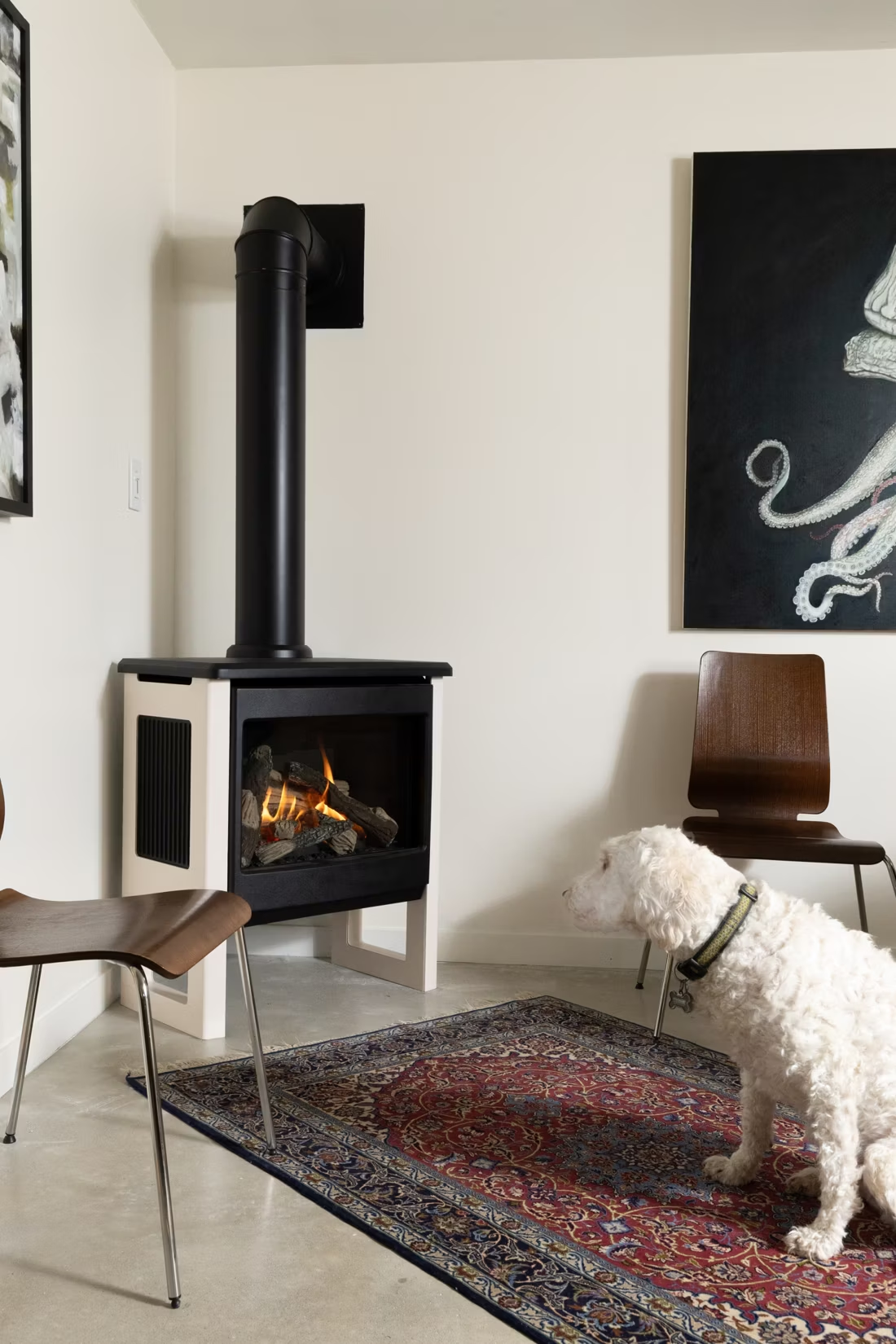
A gas fireplace is a fully built-in unit framed into a wall—the right choice for new construction or a remodel. A gas insert is built to slide into an existing masonry firebox, using your current chimney as the vent path with a liner added. A gas stove is a freestanding cabinet unit that sits on the floor, similar in footprint to a wood stove but running on gas. For the many older farmhouses in Grant County with an existing wood fireplace, an insert is usually the simplest and most cost-effective upgrade.
Do I need a permit to install a gas fireplace in Grant County?
Generally yes—a building permit and a gas line permit are required for new gas fireplace or insert installations, handled through the Grant County Building & Zoning office in Milbank. Propane line work specifically needs to be done by a licensed installer, which is one reason to route the whole project through a hearth dealer rather than piecing it together yourself: they coordinate the propane hookup, venting, and any inspection sign-off as one job.
Should I get a vented or vent-free gas fireplace?
Vented (direct-vent) units draw combustion air from outside and exhaust it back outside through sealed venting—the safest option and the one recommended for nearly every home. Vent-free units burn fuel directly into the room without external venting; they're legal in South Dakota but come with strict room-sizing rules and require an oxygen depletion sensor. In a climate zone 6A county where farmhouses are often tightened up against 4°F average winter lows, a sealed direct-vent unit is almost always the better call—it won't compete with the house for combustion air or add moisture to a tight, well-insulated space.
How often does a gas fireplace need to be serviced?
Plan on an annual inspection, ideally in late summer or early fall before harvest and heating season both hit at once. A technician checks the burner, pilot assembly, propane connections, and venting, and cleans the glass and interior—usually a $150 to $250 visit. Skipping this is the most common reason a gas fireplace stops lighting reliably right when the first hard cold snap of the season arrives.
Gas vs. wood—which makes more sense for a Grant County home?
Wood has deep roots in this part of the county—plenty of homesteads have shelterbelts and river-bottom stands of cottonwood and oak, and a wood stove keeps burning with no electricity needed during an outage. Gas trades that self-sufficiency for convenience: instant heat with no splitting, hauling, or ash cleanup, and more even output for heating a large old farmhouse through an 8,450-heating-degree-day winter. With no local air quality restrictions on burning, the choice in Grant County usually comes down to lifestyle rather than regulation—plenty of homes run both, wood for backup and ambiance, gas for the daily heat load.
Why is a fireplace insert so efficient?
An insert does two things: it seals the chimney completely, so you stop losing air you already paid to heat, and it radiates warmth into the room through the firebox and glass. Most add a heat-exchange fan that pulls cool room air underneath, wraps it around the hot firebox, and pushes it back out warm. Your home is more efficient before you've even lit the first fire.
Why is my open fireplace making my house colder?
Open fireplaces suck—literally. As the fire burns, it consumes air your furnace already paid to heat and pulls it out through the chimney, so the house is actually colder after the fire goes out than before you lit it. An insert fixes this: it seals the chimney, puts fixed glass across the front, and turns that hole in your house into a real heat source.
Can I install a fireplace myself?
If you're putting a fire in your house on purpose, it's best to work with an expert. Unless you're genuinely experienced in framing, gas line, vent pipe, and the national code on clearances to combustibles, have a professional do it—and ideally the same company that sells you the fireplace, so warranty, service, and liability all live under one roof.
What is an in-home preview and do I need one?
It's a visit where a hearth professional measures your space, confirms the model you picked actually works in your home, and walks the specs—framing, gas line, venting, finish work—before anything is ordered. Some details you just can't know until you see the house. Never make a down payment without one; it's the single most-skipped step that burns buyers.
Stove and Fireplace Dealers in Grant County
Listings include WhyFire partner dealers, dealers we have verified as authorized for the brands we recommend, and established local businesses that carry hearth products. Every listing shows which one it is. The ones marked Preferred run on WhyFire's software, so they can show you real pricing and book your appointment right here. No manufacturer pays for placement. How we verify dealers →
Larry's Lumber
Andor Inc.
Hometown Building Center
Find your gas fireplace in Grant County.
Tell us about your home and heating goals, and we'll match you with the right gas fireplace, insert, or stove—plus a free Project Guide & Parts List and a trusted local dealer to install it.
Find Your Fireplace →