
Instant heat, no chimney, for Grant County's coldest nights.
With winter lows averaging 4°F and a long, demanding heating season each year, Grant County homes need every heat source they can get. An electric fireplace won't replace your furnace, but it adds instant, no-venting warmth to a living room, basement, or add-on—and a local dealer can size it right.
Every Project Starts From One of These Five Situations
Supplemental warmth for a genuinely cold county.
Grant County sits in the northeast corner of South Dakota along the Minnesota border, near Big Stone Lake, with a population of roughly 4,600 spread across Milbank, Big Stone City, Marvin, Stockholm, LaBolt, and the surrounding farmland. Winters here are severe—the county sits in climate zone 6A with a long, demanding heating season, a workload closer to Fargo, ND than to most of the Midwest. Average winter lows sit around 4°F, and stretches well below zero aren't unusual once an arctic front pushes down out of Canada.
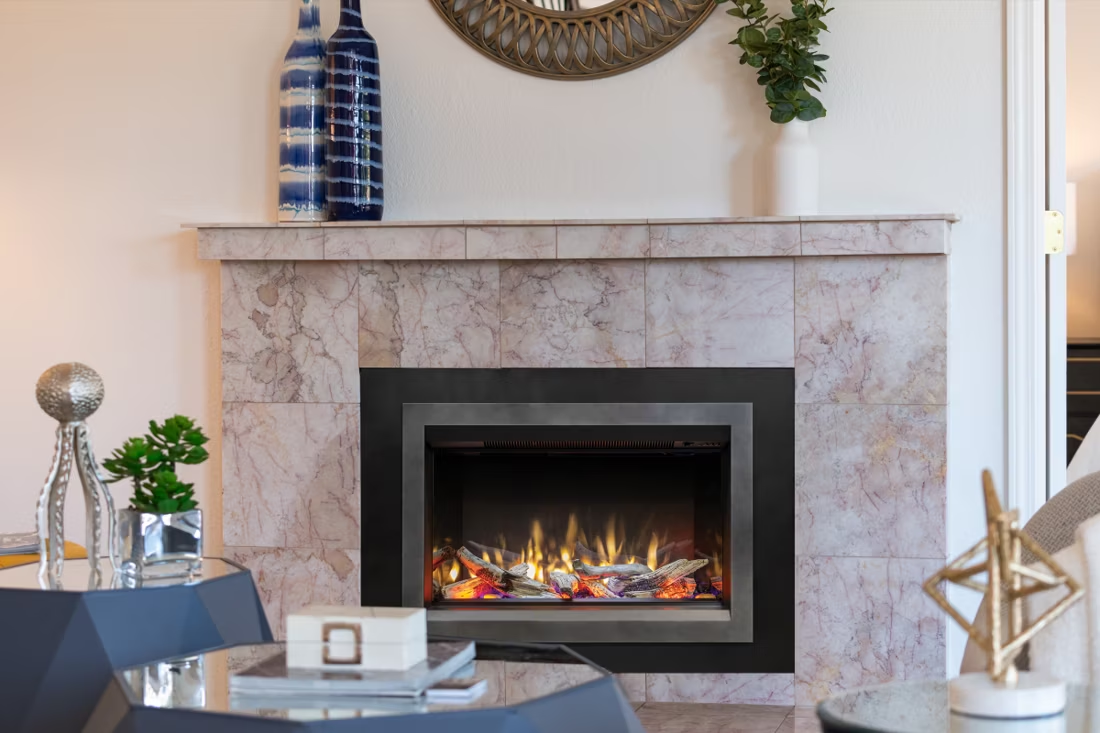
In a county this cold, no electric fireplace is going to carry the whole heating load—most Grant County homes run on an LP furnace or, in some cases, wood heat using local ponderosa pine, oak, or cottonwood, with the local rural electric cooperative supplying power for everything else. What an electric fireplace does well here is zone heat and ambiance: no chimney, no venting, and no combustion byproducts, which makes it a practical add for a finished basement, a sunroom addition, or a mobile or manufactured home where running a flue isn't realistic. Because there's no combustion involved, air quality isn't a concern the way it can be with wood smoke, and most units go in with nothing more than an outlet or a straightforward circuit run.
Three steps. No salesperson until you're ready.
Tell us about your project
Your zip code, your situation, and the fuel you're leaning toward—or let the answers point you to one.
See what's actually available
The brands dealers within 100 miles genuinely carry—real options, never a catalog mirage.
Get your dealer & Project Guide
A trusted local dealer, plus the free Project Guide & Parts List that names every component of the job.
Frequently Asked Questions
How much does an electric fireplace installation cost in Grant County?
A simple plug-in electric insert or freestanding electric stove that uses an existing 120V outlet typically runs $300 to $900 installed, including the unit and basic setup. A built-in electric fireplace or a wall-mount unit that needs a dedicated 20-amp circuit run by an electrician usually lands between $900 and $2,000, depending on how far the wiring has to travel and whether drywall or trim work is involved. Because Grant County has relatively few in-county hearth retailers given its size, expect installers based out of Watertown or the Milbank area to factor a short travel charge into rural quotes.
Will an electric fireplace heat my whole Grant County home?
Not reliably, and any honest local dealer will tell you the same. With a long, demanding heating season and winter lows that regularly sit near or below zero, Grant County homes need a real furnace—usually LP, and in some older or rural homes, wood—as the primary heat source. Most electric fireplaces max out around 1,500 watts, which is enough to noticeably warm a single room but not an entire farmhouse or a home with an open floor plan. Think of it as zone heat for the room you live in most, or as backup ambiance, not as a furnace replacement.
Do I need a permit to install an electric fireplace in Grant County?
In most cases, no—a plug-in unit that uses an existing outlet doesn't trigger a permit. If your installation requires new wiring or a dedicated circuit, that electrical work typically needs to be pulled through the county's building and zoning office, and it should be done by a licensed electrician regardless of permit requirements. Since there's no venting, chimney, or combustion involved, you also skip the emissions and clearance rules that apply to wood and gas installs in Grant County—one of the real advantages of going electric here.
What's the difference between an electric fireplace, insert, and stove?
An electric fireplace is typically a built-in unit designed to sit in a wall opening or entertainment center, often mimicking the look of a traditional firebox with a realistic flame effect. An electric insert is sized to slide into an existing masonry or wood-burning fireplace opening, letting you keep the mantel and surround you already have while swapping in electric heat and no more ash or creosote. An electric stove is a freestanding cabinet-style unit that can go almost anywhere there's an outlet or nearby circuit—a common choice for Grant County basements, additions, or older farmhouses without a spare fireplace opening to convert.
Does an electric fireplace need special wiring?
Most smaller electric fireplaces and stoves run on a standard 120V household circuit and plug into a regular outlet—no electrician required. Larger built-in units, especially ones rated above 1,500 watts or installed with additional lighting and features, often call for a dedicated 20-amp circuit to avoid tripping breakers, particularly in older Grant County farmhouses that may already have limited electrical capacity. A local dealer or electrician can check your panel and tell you in five minutes whether your existing wiring will handle the unit you want.
What's the best electric fireplace for Grant County's climate?
Look for a unit with a built-in thermostat and at least 1,500 watts of heat output if you want genuine supplemental warmth rather than just the flame effect—brands like Dimplex and Napoleon build electric inserts and stoves that hold a set room temperature reliably, which matters when you're trying to take pressure off the furnace during a cold stretch. For a finished basement or an add-on room, a stove-style unit with adjustable heat settings gives the most flexibility. For an existing fireplace opening you want to convert without construction, an insert that matches your firebox dimensions is the simplest path—ask a local retailer to measure before you buy.
How much does it cost to run an electric fireplace in Grant County?
Running a 1,500-watt electric fireplace on high for an evening—say four hours—costs roughly 60 to 90 cents at typical rural electric cooperative rates in this part of South Dakota, though your exact rate depends on your provider and whether you're on a residential or all-electric rate schedule. Used for occasional supplemental heat rather than around-the-clock operation, most Grant County households find the electric fireplace adds only a modest amount to a monthly bill compared to the propane or wood already carrying the main heating load.
Electric fireplace vs. wood stove—which makes sense for my Grant County home?
Wood heat has real staying power in Grant County—local ponderosa pine, oak, and cottonwood are all commonly burned, and a wood stove keeps working during a power outage, which matters when an ice storm or blizzard takes down lines in a rural county like this. An electric fireplace can't function without power, so it's not a storm-heat solution. What it offers instead is zero maintenance, no chimney to sweep, no ash to haul, and instant on-off operation—a good fit for a room where you want clean, simple warmth without taking on a wood-burning setup. Many households here end up with both: wood as backup and primary heat, electric for convenience in a secondary room.
Where can I buy an electric fireplace near Grant County?
With a population under 5,000 spread across small towns like Milbank, Big Stone City, and Marvin, Grant County doesn't have a large hearth retail presence of its own—most residents end up working with a dealer based in Watertown or another regional hub who can deliver and install locally. That's exactly the gap we're built to close: rather than guessing which big-box unit will actually work in your space, we match you with a trusted dealer who knows rural South Dakota wiring, delivery logistics, and what's realistically available for a county this size.
Can I put a TV above my fireplace?
Yes—with an asterisk. Fireplaces are hot and TVs don't like heat. Either put a mantel between them to deflect rising warmth, or choose a fireplace with heat-management technology that creates a cool zone on the wall above—the wall stays around 125 degrees, barely warm, while the room still gets full heat. If you like clean lines and don't want a mantel, heat management is the answer.
What fireplace styles should I know before shopping?
Four cover most of the market: screen-front traditional (mesh front, open feel, fits craftsman homes), traditional door set (the classic look you grew up with), modern linear (wide, low, the statement piece for entertaining), and clean face contemporary (no trim—your tile or stone runs right to the fire's edge). Walk in knowing those four terms and you're ahead of most buyers.
Does a fireplace add value to my home?
On average, a fireplace adds back to the home about the same amount you spent installing it. Add the monthly savings from heating the rooms you actually use instead of the whole house—often hundreds of dollars a year—and the value case is strong before you even count what a fire does for how your family uses the room.
How much should I budget for a fireplace?
For an average home—covering the fireplace, the vent pipe, and basic installation—a budget between $3,900 and $5,500 gives you a lot of options across wood, gas, and pellet. By the time you add finish work, gas line, and electrical, the average complete installation lands between $5,000 and $12,000 all-in. In a remodel or new build, a good rule is to put about 2.5% of the total project cost toward the fireplace.
Stove and Fireplace Dealers in Grant County
Listings include WhyFire partner dealers, dealers we have verified as authorized for the brands we recommend, and established local businesses that carry hearth products. Every listing shows which one it is. The ones marked Preferred run on WhyFire's software, so they can show you real pricing and book your appointment right here. No manufacturer pays for placement. How we verify dealers →
Larry's Lumber
Andor Inc.
Hometown Building Center
Find your electric fireplace in Grant County.
Tell us a bit about your home and heating goals, and we'll match you with a trusted local dealer and send over a free Project Guide & Parts List—the exact unit, wiring needs, and installer recommended for your Grant County home.
Find Your Fireplace →