
Steady heat for Aurora County's long open-prairie winters.
From Plankinton out to the farmsteads and section-line roads of Aurora County, pellet stoves offer thermostat-controlled warmth without a wood pile or a propane tank refill schedule. Find the right unit and connect with a trusted local dealer.
Every Project Starts From One of These Five Situations
Consistent warmth without the wood pile.
Aurora County is small—about 1,294 people spread across farm ground in eastern South Dakota, with Plankinton as the county seat and long stretches between neighbors. It sits in climate zone 6A, which puts it in the same cold-winter bracket as places like Fargo, ND: hard freezes, wind-driven snow across open fields, and heating seasons that start well before Halloween and run past tax day. Many rural homes here rely on propane for primary heat, with wood as a traditional supplement—ponderosa pine, oak, and cottonwood are the species most commonly burned locally.
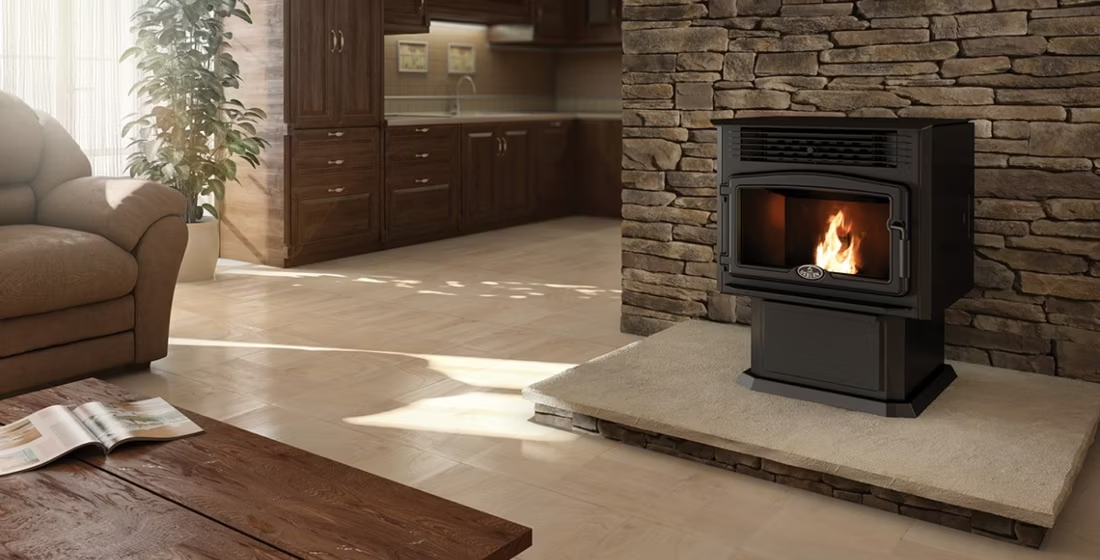
A pellet stove fits that setup well. Unlike a wood stove, it doesn't require a chimney, cutting permits, or a standing woodpile—it runs on bagged fuel, sets to a thermostat, and holds a steady temperature through a multi-day cold snap without tending. Lignetics and Indeck Energy Services both supply this region, and bulk pellet purchases ahead of winter are common practice for farm households that already stock up on propane and fuel oil the same way. For homes without an existing masonry fireplace—common on farmsteads and in newer manufactured housing around the county—a freestanding pellet stove is often simpler to install than a wood-burning alternative.
Three steps. No salesperson until you're ready.
Tell us about your project
Your zip code, your situation, and the fuel you're leaning toward—or let the answers point you to one.
See what's actually available
The brands dealers within 100 miles genuinely carry—real options, never a catalog mirage.
Get your dealer & Project Guide
A trusted local dealer, plus the free Project Guide & Parts List that names every component of the job.
Frequently Asked Questions
How much does a pellet stove installation cost in Aurora County?
Most pellet stove installations run in the $3,000 to $6,000 range nationally, and Aurora County installs tend to land in that band since pellet units vent through a simple wall or roof pipe rather than requiring masonry chimney work. Because Aurora County has under 1,300 residents and no large hearth retailer based locally, expect your installer to be traveling from Mitchell (about 25 miles east) or possibly Sioux Falls—a modest trip charge is common and worth asking about upfront. Homes needing a new 120V electrical circuit for the stove's auger and blower will add a bit to the total.
What size pellet stove do I need for a farmhouse in Aurora County?
Sizing depends on square footage, insulation, and how exposed the home is to prairie wind—a factor that matters more here than in a sheltered subdivision. Small pellet stoves (up to 1,000 sq ft) suit a single zone or an older farmhouse's main living area; medium units (1,000–2,000 sq ft) cover most full homes; large units (2,000+ sq ft) are appropriate for well-insulated whole-house heating. Older farmhouses with single-pane windows and less insulation often need to size up compared to the square-footage chart alone. A local dealer can walk your home and size it properly rather than guessing off a spec sheet.
Where can I find a pellet stove dealer near Aurora County?
Given the county's small population, there isn't a full-service hearth showroom in Plankinton itself—most Aurora County homeowners work with dealers based in Mitchell or Sioux Falls who service this part of eastern South Dakota. Ask any installer about their service radius and whether a farm-supply co-op locally stocks pellets for restocking between dealer visits. Working with a dealer who installs pellet equipment regularly matters here—proper venting and electrical setup are straightforward but still code-relevant work, not a DIY project.
Where do I buy pellets in Aurora County?
Lignetics and Indeck Energy Services both distribute pellets into this part of South Dakota, and many rural households buy in bulk—a pallet or more at a time—the same way they'd stock propane before winter, rather than making repeat trips for single bags. Farm and ranch supply stores in the Mitchell area frequently carry pellets seasonally; checking with your installer about which brand and hardness (density) works best in your specific stove model is worth doing before you buy a season's supply.
Do I need a permit to install a pellet stove in Aurora County?
Most rural counties in South Dakota, including Aurora County, require a building permit for new solid-fuel appliance installations, handled through the county courthouse in Plankinton. Requirements are generally lighter than for wood stoves since pellet venting is simpler, but the appliance still needs to meet manufacturer clearance specs and, where applicable, EPA certification. Most installers handle the permit paperwork as part of the job, so it's rarely something the homeowner has to manage directly.
What's the best pellet stove for Aurora County's climate?
In a 6A climate zone with hard, wind-driven cold, look for a pellet stove with a larger hopper capacity—40+ pounds—so it can run through an overnight cold snap without a refill, and a solid thermostat or room-sensing control for even heat during multi-day stretches below zero. Because pellet stoves need electricity to run the auger, igniter, and blower, and rural power interruptions do happen during prairie ice storms, a battery backup or small generator plan is worth discussing with your dealer if you're relying on the stove as anything more than supplemental heat.
How much maintenance does a pellet stove need?
Pellet stoves need the ash pan emptied every few days during heavy use and the burn pot cleaned weekly to keep combustion efficient—considerably less work than tending a wood stove, but not zero-maintenance. Plan on a full professional service once a year, ideally before the heating season starts, to check the auger motor, exhaust blower, and gaskets. Rural Aurora County homeowners running a pellet stove as a primary heat source through the full winter should expect to handle ash and hopper refills daily during the coldest stretches.
Pellet stove vs. wood stove—which fits better in Aurora County?
Wood stoves burn ponderosa pine, oak, or cottonwood—species common to this part of South Dakota—and keep working without electricity, which matters if a winter storm knocks out rural power lines. Pellet stoves trade that off-grid resilience for convenience: no splitting or stacking, more even heat output, and cleaner operation, but they require power to run. For a primary farmhouse heat source where self-sufficiency during outages matters, wood still has an edge. For a secondary heat zone or a household that wants set-and-forget convenience without a woodpile taking up yard space, pellet is usually the easier daily-use choice.
Pellet stove vs. propane heat—which makes more sense here?
Propane is the default heating fuel for most rural homes in Aurora County, and a pellet stove doesn't need to replace it—it typically supplements it. Running a pellet stove in the main living area during the coldest months can meaningfully cut propane consumption and tank refills, since propane prices can spike in a hard winter. The tradeoff is that pellets require a delivery or storage plan of their own (bagged fuel, kept dry, restocked seasonally) rather than a single annual tank fill. Many Aurora County households end up running both—propane as the whole-house backbone, pellet stove for the room where the family actually lives.
Why is a fireplace insert so efficient?
An insert does two things: it seals the chimney completely, so you stop losing air you already paid to heat, and it radiates warmth into the room through the firebox and glass. Most add a heat-exchange fan that pulls cool room air underneath, wraps it around the hot firebox, and pushes it back out warm. Your home is more efficient before you've even lit the first fire.
What's the difference between an insert and a zero-clearance fireplace?
An insert is a fireplace that slides into a pre-existing wood-burning fireplace—if you don't have one, there's nothing to insert it into. A zero-clearance fireplace is built into a framed wall, which makes it the answer for remodels and new construction. Simple test: existing masonry fireplace means insert; blank or framed wall means zero-clearance.
How much should I budget for a fireplace?
For an average home—covering the fireplace, the vent pipe, and basic installation—a budget between $3,900 and $5,500 gives you a lot of options across wood, gas, and pellet. By the time you add finish work, gas line, and electrical, the average complete installation lands between $5,000 and $12,000 all-in. In a remodel or new build, a good rule is to put about 2.5% of the total project cost toward the fireplace.
Does a fireplace add value to my home?
On average, a fireplace adds back to the home about the same amount you spent installing it. Add the monthly savings from heating the rooms you actually use instead of the whole house—often hundreds of dollars a year—and the value case is strong before you even count what a fire does for how your family uses the room.
Stove and Fireplace Dealers in Aurora County
Listings include WhyFire partner dealers, dealers we have verified as authorized for the brands we recommend, and established local businesses that carry hearth products. Every listing shows which one it is. The ones marked Preferred run on WhyFire's software, so they can show you real pricing and book your appointment right here. No manufacturer pays for placement. How we verify dealers →
Builders FirstSource Huron
Builders Solutions
Pellet Brands Stocked Around Aurora County
Manufacturers will point you to the nearest stocking dealer.
Find your pellet stove in Aurora County.
Tell us a bit about your home and we'll match you with the right pellet stove or insert for Aurora County's winters—plus a free Project Guide & Parts List with the exact vent kit and parts your local dealer will need for the install.
Find Your Fireplace →