
Find the right electric fireplace for your Aurora County home.
No chimney, no venting, no gas line—just plug-in or hardwired warmth for farmhouses and additions from Plankinton to White Lake. Find the right unit and connect with a trusted local dealer.
Every Project Starts From One of These Five Situations
Simple, safe zone heat for a small, spread-out county.
Aurora County is home to just under 1,300 people spread across Plankinton, White Lake, Stickney, and the farmland in between along the I-90 corridor. It's a Zone 6A climate—winters here run harsh, with roughly 7,800 heating degree days a year and stretches of single-digit or below-zero nights that aren't unusual. Most homes rely on propane furnaces or forced-air systems as primary heat, with electric provided locally through Central Electric Cooperative out of Mitchell.
That's exactly the setup where an electric fireplace earns its place: it's not going to replace the furnace on a January night in Stickney, but it adds real, controllable zone heat to a living room, farmhouse addition, or finished basement without a chimney, gas line, or masonry work. For older Aurora County homes and mobile homes where venting a wood or gas unit is impractical, a wall-mounted or built-in electric insert is often the most realistic upgrade—plug it in, mount it, and you have supplemental heat and a real-looking flame the same afternoon.
Three steps. No salesperson until you're ready.
Tell us about your project
Your zip code, your situation, and the fuel you're leaning toward—or let the answers point you to one.
See what's actually available
The brands dealers within 100 miles genuinely carry—real options, never a catalog mirage.
Get your dealer & Project Guide
A trusted local dealer, plus the free Project Guide & Parts List that names every component of the job.
Frequently Asked Questions
How much does an electric fireplace installation cost in Aurora County?
Most electric fireplace installs in Aurora County run $400 to $1,200. A plug-in wall-mount or freestanding unit sits at the low end since there's no wiring work involved—you're paying mostly for the unit and mounting. A built-in electric insert with a dedicated 240V circuit, or one set into an existing fireplace opening with surround work, lands closer to the top of that range once a licensed electrician is involved. Local dealers around Plankinton and White Lake can walk you through both options during an in-home visit.
Do I need an electrician, or can I just plug it in?
It depends on the unit. Most electric fireplace inserts and stoves under a certain wattage run on a standard 120V outlet—no electrician needed, just a dedicated circuit is recommended to avoid tripping breakers on an older Aurora County farmhouse panel. Larger built-in units, especially ones marketed for whole-room heat, often require a 240V hardwired connection, which does need a licensed electrician and, in some cases, a county electrical permit. Ask your dealer which category the unit you're considering falls into before you buy.
Do I need a permit to install an electric fireplace in Aurora County?
A simple plug-in electric fireplace generally doesn't require a permit through the Aurora County building office, since there's no gas line, venting, or structural work involved. If you're having a unit hardwired on a new 240V circuit, that electrical work typically does require a permit and inspection, even for a small addition. Most licensed electricians working in Plankinton or Stickney will pull that permit as part of the job, so it's worth confirming when you get a quote.
Will an electric fireplace actually heat a room in a South Dakota winter?
A quality electric fireplace or insert can meaningfully heat a single room—most units are rated for 400 to 1,500 square feet depending on insulation and ceiling height. In an Aurora County winter with regular single-digit nights, that's realistic as supplemental or zone heat for a living room, den, or addition, but it's not a substitute for your furnace or primary heat source in a 6A climate. The honest way to think about it: it lets you turn down the thermostat and heat the room you're actually sitting in, rather than heating the whole house to stay warm in one spot.
What happens to my electric fireplace during a power outage?
It won't run—that's the tradeoff. Unlike a wood stove or a battery-backup gas fireplace, an electric unit needs grid power to operate the heating element, blower, and flame effect. Aurora County's rural stretches served by Central Electric Cooperative can see outage duration climb during winter ice storms, so if backup heat during an outage matters to you, a wood or gas option paired with your electric fireplace for daily convenience is worth discussing with a local dealer.
Electric fireplace insert vs. freestanding electric stove—which is better for my home?
An electric insert is built to slide into an existing fireplace opening or a framed wall cavity, giving you a flush, built-in look—a good fit if you have an old masonry fireplace in a Plankinton farmhouse that you want to convert without touching the chimney. A freestanding electric stove sits on the floor like a wood stove and can go anywhere there's an outlet, which makes it a better option for additions, garages, or homes with no existing fireplace at all. Both plug into standard household power in most sizes.
How much does it cost to run an electric fireplace day to day?
Running cost depends on your electric rate through Central Electric Cooperative and how much you use the heating element versus just the flame effect. Most electric fireplaces draw around 1,500 watts on the heat setting, which at typical rural South Dakota electric rates works out to roughly 15-20 cents an hour of heater use—noticeably cheaper per hour than running a whole-house furnace to warm one room. Running just the flame visual without heat costs only a few cents an hour.
Can an electric fireplace go anywhere in my house?
Pretty much, which is the main advantage over wood or gas. Since there's no venting, chimney, or gas line requirement, an electric fireplace can go in a finished basement, a bedroom, a bathroom-adjacent space, or an addition that would never pass code for a wood or gas unit. The only real constraints are having an appropriate outlet or circuit nearby and following the manufacturer's clearance guidelines around combustible materials like curtains or furniture.
Electric vs. wood or pellet—which makes sense for Aurora County?
Wood heat still makes sense for a lot of Aurora County households—ponderosa pine, oak, and cottonwood are all burned locally, and a wood stove keeps working when the power doesn't. Pellet stoves burning regional brands like Lignetics are cleaner-burning but, like electric, need power to run the auger and blower. Electric fireplaces win on simplicity and upfront cost when you just want zone heat or ambiance in one room and you already have reliable primary heat elsewhere—they're the easiest and cheapest of the three to install, just not the one to count on if the lines go down in a January storm.
Can I put a TV above my fireplace?
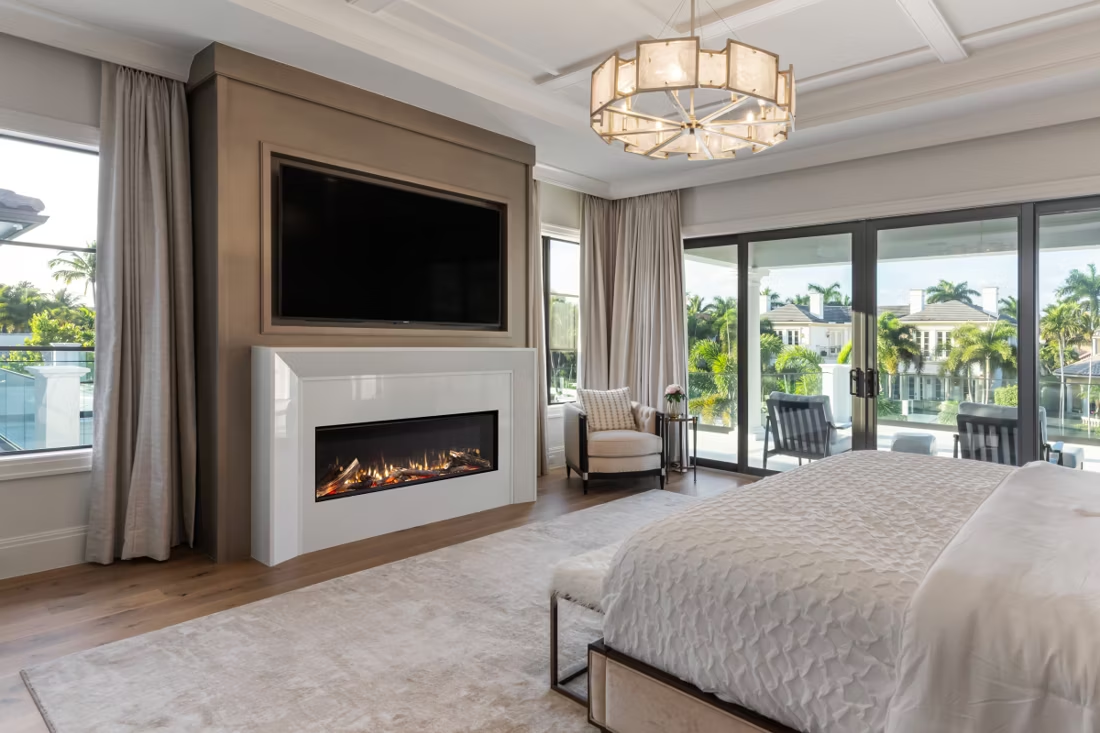
Yes—with an asterisk. Fireplaces are hot and TVs don't like heat. Either put a mantel between them to deflect rising warmth, or choose a fireplace with heat-management technology that creates a cool zone on the wall above—the wall stays around 125 degrees, barely warm, while the room still gets full heat. If you like clean lines and don't want a mantel, heat management is the answer.
What fireplace styles should I know before shopping?
Four cover most of the market: screen-front traditional (mesh front, open feel, fits craftsman homes), traditional door set (the classic look you grew up with), modern linear (wide, low, the statement piece for entertaining), and clean face contemporary (no trim—your tile or stone runs right to the fire's edge). Walk in knowing those four terms and you're ahead of most buyers.
How much should I budget for a fireplace?
For an average home—covering the fireplace, the vent pipe, and basic installation—a budget between $3,900 and $5,500 gives you a lot of options across wood, gas, and pellet. By the time you add finish work, gas line, and electrical, the average complete installation lands between $5,000 and $12,000 all-in. In a remodel or new build, a good rule is to put about 2.5% of the total project cost toward the fireplace.
Should the dealer who sells my fireplace also install it?
Ideally, yes. A fireplace project involves vent pipe, gas line, electrical, and often tile or stone. Hire three or four separate trades and you own the liability and the game of telephone between them. One company selling and installing means one accountable party, start to finish—ask about factory training, on-time completion records, and what happens if an inspection fails.
Stove and Fireplace Dealers in Aurora County
Listings include WhyFire partner dealers, dealers we have verified as authorized for the brands we recommend, and established local businesses that carry hearth products. Every listing shows which one it is. The ones marked Preferred run on WhyFire's software, so they can show you real pricing and book your appointment right here. No manufacturer pays for placement. How we verify dealers →
Builders FirstSource Huron
Builders Solutions
Find your electric fireplace in Aurora County.
Tell us a bit about your home and we'll put together a free Project Guide & Parts List for your Aurora County electric fireplace project, and match you with a trusted local dealer to install it.
Find Your Fireplace →