
Find the Right Heat for Aurora County Winters.
Wood, gas, pellet, and electric fireplace resources for Plankinton, White Lake, Stickney, Ethan, and every farm and townsite across Aurora County. Find the right unit and connect with a trusted local hearth retailer.
Every Project Starts From One of These Five Situations
Prairie heating for a small, close-knit South Dakota county.
Aurora County sits in Climate Zone 6A, with winters that run long and cold—the kind of season that looks more like Bismarck, North Dakota than anywhere south of I-90. With only about 1,300 residents spread across roughly 715 square miles, this is farm and ranch country, and the wood people burn reflects it: cottonwood cut along the James River bottoms, oak from shelterbelt rows planted decades ago to break the wind, and the occasional ponderosa pine grove set out as a windbreak rather than a native forest stand. There's no formal air quality restriction on wood burning here—no inversion advisories, no non-attainment designation—which is typical of sparsely populated Great Plains counties like this one.
What you'll find on this hub: hearth retailers, service technicians, and fuel suppliers reaching every community in Aurora County—Plankinton (the county seat), White Lake, Stickney, Ethan, Carpenter, and Fedora. Given the county's small population, some of the businesses serving these towns are based just outside the county line in Mitchell or Huron and travel in for installs and service calls; we've noted that where it applies. Pick your fuel below to see local dealers, installation costs, and the resources that fit a county this size and this cold.
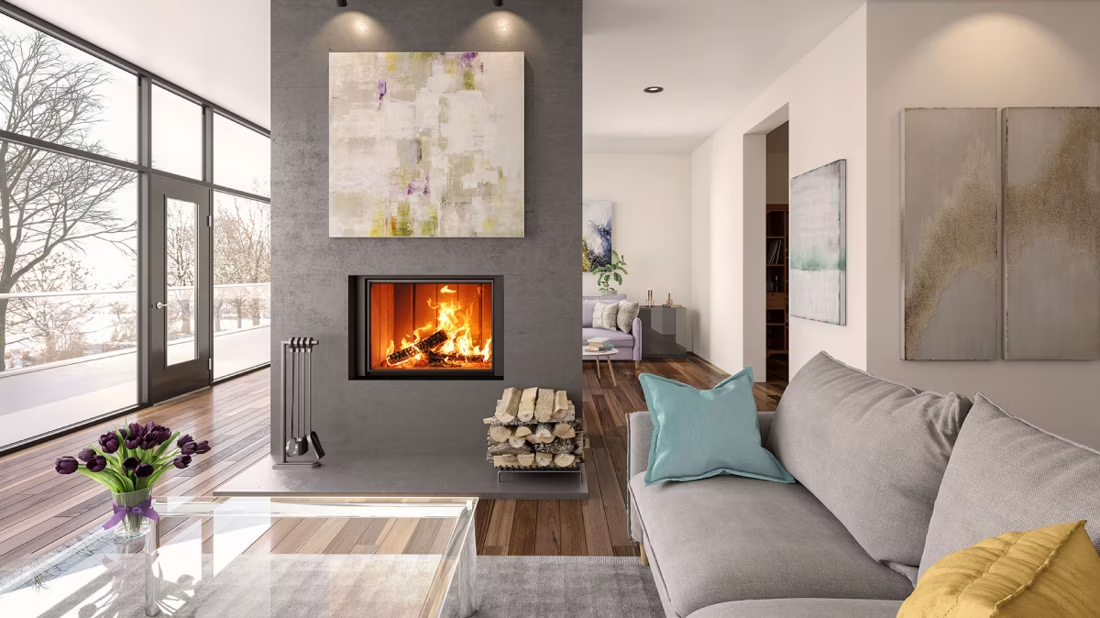
Four fuels. One honest answer for Aurora County.
Three steps. No salesperson until you're ready.
Tell us about your project
Your zip code, your situation, and the fuel you're leaning toward—or let the answers point you to one.
See what's actually available
The brands dealers within 100 miles genuinely carry—real options, never a catalog mirage.
Get your dealer & Project Guide
A trusted local dealer, plus the free Project Guide & Parts List that names every component of the job.
Frequently Asked Questions
Which fuel works best in Aurora County?
It depends on the home and how remote it sits. Wood remains a practical primary or backup heat source here—cottonwood from the James River bottoms and oak from old shelterbelt rows are the most commonly burned species, and a wood stove keeps working through the ice storms and power outages that hit this part of South Dakota most winters. Gas, almost always propane rather than piped natural gas given the county's rural character, is the convenience choice for instant heat without hauling wood. Pellet stoves are a solid middle option—Lignetics and Indeck Energy Services bags are both available regionally, and a pellet stove burns cleaner and needs less daily attention than a wood stove, provided you have reliable power. Electric fireplaces work well as supplemental heat in a single room or as ambiance in a farmhouse living room, but in a 6A climate they're not going to replace a primary heat source. Many Aurora County households layer two fuels—wood or propane as primary, with a pellet or electric unit in a secondary space.
Do I need a permit to install a fireplace in Aurora County?
Yes for most new installs, though the process is lighter-touch than in larger jurisdictions. Aurora County does not maintain a large dedicated building department the way urban counties do, so permitting for wood stoves, inserts, gas appliances, and pellet stoves is typically handled through the county courthouse in Plankinton, with gas line work requiring a licensed propane installer regardless of permit status. Electric fireplaces generally don't require a permit unless the install involves new wiring or a dedicated circuit. If you're working with a local retailer out of Mitchell or Huron, they'll usually walk you through what paperwork, if any, applies to your specific project.
Are there air quality restrictions on wood burning in Aurora County?
No. Aurora County has no winter inversion advisories, no non-attainment designation, and no curtailment periods—the kind of restrictions you'd see in a basin or valley community like Klamath Falls, Oregon simply don't apply here. The open, flat prairie terrain doesn't trap smoke the way a mountain valley does. That said, if you're installing a new wood stove, going with a current EPA-certified unit still makes sense for efficiency and lower fuel consumption, even without a regulatory requirement pushing you there.
Can one local hearth retailer handle all four fuel types?
Given how small Aurora County's population is, there isn't a dedicated four-fuel showroom inside the county itself—most residents work with multi-fuel dealers based in Mitchell, about 30 minutes from Plankinton, who carry wood, gas, pellet, and electric lines and are used to servicing rural addresses across Aurora, Davison, and surrounding counties. If you're comparing fuels side by side, a Mitchell-based dealer with a working showroom floor is generally your best bet for seeing more than one option in person before committing.
How does service work in rural areas of Aurora County?
Nearly all of Aurora County qualifies as a rural service call, since the whole county has under 1,300 residents spread across farm and ranch land. Technicians covering the area are typically based out of Mitchell or Huron and build routes that cover multiple counties in a single trip, so scheduling around a technician's regional route—rather than calling for a one-off emergency visit—usually gets you faster, cheaper service. Booking chimney sweeps and pellet stove cleanings in late summer or early fall, before the rush, is the easiest way to avoid a midwinter wait when a technician's route may not swing back through Plankinton or White Lake for weeks.
What's the typical cost range for fireplace installation across all fuel types in Aurora County?
Wood stove or insert installation: roughly $4,000–$8,500 for a typical install, more if a full chimney chase needs to be built into an older farmhouse. Gas or propane fireplace, insert, or stove: roughly $4,000–$10,000, with propane tank setup and line runs adding cost on rural properties without existing service. Pellet stove or insert: roughly $4,000–$7,000 for a standard install. Electric fireplace: $200–$3,000 for the unit itself, plus $400–$1,200 in labor if it's more than a plug-and-play unit. Because most installers serving Aurora County travel in from Mitchell or Huron, expect a modest trip charge factored into the quote for rural addresses.
Can a fireplace actually lower my heating bill?
Yes—by creating a comfort zone. A furnace heats every square foot of the house just to warm the one room you're in; a gas fireplace on low burns roughly a sixth of the gas a typical furnace does. Set the furnace around 55–60 degrees as a baseline, then heat the rooms your family actually uses. Families who heat this way commonly save $20–$60 a month.
What is an in-home preview and do I need one?
It's a visit where a hearth professional measures your space, confirms the model you picked actually works in your home, and walks the specs—framing, gas line, venting, finish work—before anything is ordered. Some details you just can't know until you see the house. Never make a down payment without one; it's the single most-skipped step that burns buyers.
Can I install a fireplace myself?
If you're putting a fire in your house on purpose, it's best to work with an expert. Unless you're genuinely experienced in framing, gas line, vent pipe, and the national code on clearances to combustibles, have a professional do it—and ideally the same company that sells you the fireplace, so warranty, service, and liability all live under one roof.
I know I want a fireplace—where do I actually start?
Do two things today: snap a photo of the wall or fireplace you want to transform, and take a tape measure to the space—width, height, depth. Those two artifacts answer most of a hearth professional's first questions. Then settle fuel (wood, gas, pellet, or electric) and set a realistic budget: $3,900–$5,500 covers fireplace, vent, and basic install for most homes.
Stove and Fireplace Dealers in Aurora County
Listings include WhyFire partner dealers, dealers we have verified as authorized for the brands we recommend, and established local businesses that carry hearth products. Every listing shows which one it is. The ones marked Preferred run on WhyFire's software, so they can show you real pricing and book your appointment right here. No manufacturer pays for placement. How we verify dealers →
Builders FirstSource Huron
Builders Solutions
Get matched with a hearth dealer for your Aurora County project.
Tell us your fuel and your town—Plankinton, White Lake, Stickney, Ethan, or elsewhere in the county—and we'll match you with a trusted local dealer and send a free Project Guide & Parts List with the exact parts, vent kit included, for your specific install.
Find Your Fireplace →