
Pellet Heat in Whitney: A Realistic Look for a Mild Climate.
Whitney's winters rarely demand the kind of sustained heat pellet stoves are built for. Here's an honest read on whether one still fits your home—and how to find a local dealer if it does.
Every Project Starts From One of These Five Situations
Whitney's mild winters mean pellet stoves are the exception, not the rule.
Whitney sits in climate zone 3A at 767 feet, with an average winter low of 32°F and a winter heating season that's roughly half the load of a place like Bozeman, MT or Madison, WI. That's a mild enough season that most Spartanburg County homeowners handle winter heat with a furnace, a gas log set, or an electric insert rather than a dedicated wood-pellet appliance. Pellet stoves exist and get installed occasionally here, but they're a niche choice rather than a common one.
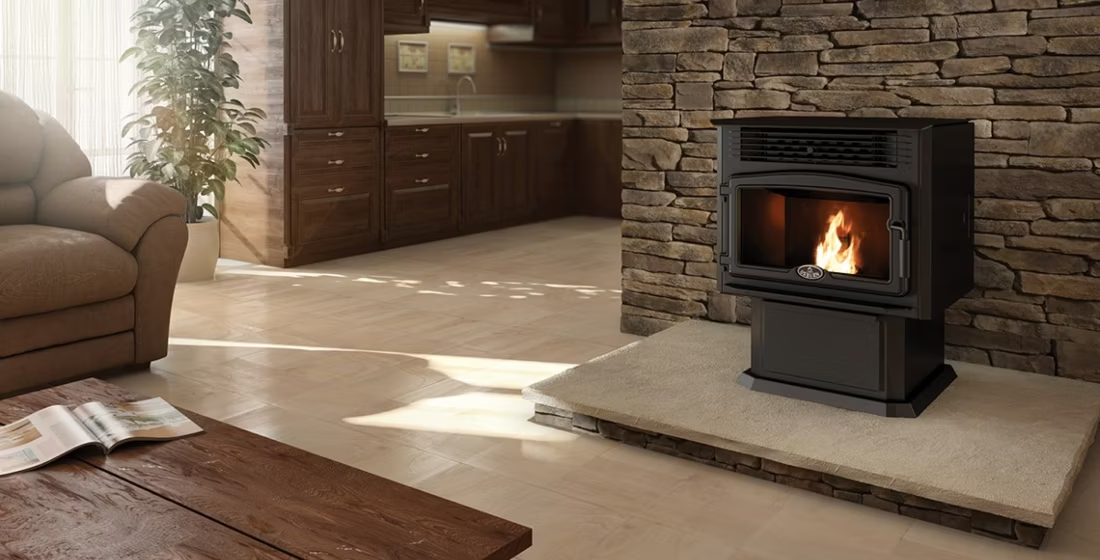
Where a pellet stove does make sense in Whitney is usually a specific situation: a detached workshop or garage without central HVAC, a mountain or lake getaway elsewhere in the Carolinas that the homeowner wants to match to their primary residence, or someone who simply likes the ambiance and steady, thermostat-controlled heat pellet appliances produce. Duke Energy Carolinas serves the area at roughly $0.1394 per kWh, and since pellet stoves run on electricity to feed the auger and blower, that's worth factoring in alongside the pellets themselves. If you're one of the homeowners for whom a pellet stove genuinely fits, a trusted local dealer can tell you quickly whether it's a good match for your space—and if it's not, whether gas or electric heat is the better call for Whitney's climate.
Three steps. No salesperson until you're ready.
Tell us about your project
Your zip code, your situation, and the fuel you're leaning toward—or let the answers point you to one.
See what's actually available
The brands dealers within 100 miles genuinely carry—real options, never a catalog mirage.
Get your dealer & Project Guide
A trusted local dealer, plus the free Project Guide & Parts List that names every component of the job.
Frequently Asked Questions
How much does a pellet stove installation cost in Whitney?
Pellet stove and insert installations typically run in the $3,000 to $6,500 range nationally, depending on whether it's a freestanding stove or an insert into an existing fireplace, and whether new electrical or venting work is needed. Because pellet appliances are installed infrequently in Whitney's mild climate, expect fewer local installers to specialize in them compared to gas or electric options—a dealer who regularly works with Lignetics or Hamer Pellet Fuel appliances in the Upstate region is worth seeking out specifically, rather than defaulting to whoever installs the most gas logs.
Is a pellet stove actually worth it in Whitney's climate?
For most Whitney homes, no—not as a primary heat source. With a fairly mild winter season and winter lows averaging 32°F, the sustained, high-output heat a pellet stove is designed for goes largely unused most seasons. Where it does make sense: a detached shop, a sunroom or addition without ductwork, or a homeowner who wants the ambiance and set-it-and-forget-it convenience over an open gas flame. If your goal is straightforward supplemental heat for the main living space, gas or an electric insert is usually the more practical and less maintenance-heavy choice here.
Where can I buy wood pellets near Whitney?
Regional pellet brands available in the Upstate SC market include Lignetics, Hamer Pellet Fuel, and Greenway Renewable Energy, typically sold through hardware stores, farm supply retailers, and some hearth dealers in the Spartanburg area. Because pellet appliances are uncommon locally, don't assume every big-box store stocks pellets year-round—call ahead in early fall before cold snaps, when supply can tighten even in a mild-winter market like this one.
Will a pellet stove work if the power goes out?
No—pellet stoves rely on electricity to run the auger that feeds fuel and the blower that distributes heat, so they shut down during a power outage without a battery backup or generator. Duke Energy Carolinas serves Whitney with generally reliable service, but outages do happen during ice storms and severe weather. If backup heat during an outage is a priority, a gas fireplace with battery-backed ignition or a wood-burning option is more dependable than pellet—worth discussing with a local dealer if that's a real concern for your household.
Do I need a permit to install a pellet stove in Whitney?
Yes—new pellet stove and insert installations generally require a building permit through the Spartanburg County Building Codes Department, covering venting and any electrical work for the unit. Because pellet installations are less common here than gas or electric, it's worth confirming with the permitting office directly rather than assuming your installer's standard paperwork covers every detail; a dealer experienced with pellet-specific venting through-wall or through-roof will already know the local requirements.
Should I get a pellet stove or a gas fireplace instead?
For Whitney's climate, gas is the more common and often more practical choice. Gas fireplaces and inserts light instantly, don't require hauling or storing pellet bags, and are widely serviced by local hearth dealers who work in this market regularly. Pellet stoves offer a more wood-fire-like flame and don't need a gas line, but they need routine hopper refilling and ash removal, plus the electricity dependency noted above. Given how mild Whitney's winters run, most homeowners here get more day-to-day satisfaction out of gas—pellet tends to appeal to a smaller group who specifically want the pellet-fire look and are comfortable with the maintenance.
What's the best use case for a pellet stove in a place like Whitney?
The strongest fit locally is a detached workshop, garage, or bonus room without existing HVAC, where a thermostat-controlled pellet stove can heat the space efficiently without running ductwork. It also suits homeowners who split time between Whitney and a colder second property—say, a mountain cabin in western NC—and want consistent appliance experience across both. As a whole-home primary heat source in Whitney's zone 3A climate, it's overbuilt for the job most winters.
How much maintenance does a pellet stove require?
More than gas, less than wood. Expect to empty the ash pan every few days of use, clean the burn pot and glass weekly during heavy use, and have the unit professionally serviced annually—typically $150 to $250—to check the auger motor, blower, and venting. Given how few days a year Whitney's climate actually calls for supplemental heat, that maintenance overhead is one of the bigger practical reasons pellet stoves remain uncommon here compared to gas or electric alternatives.
Pellet stove vs. electric fireplace—which makes more sense in Whitney?
For most Whitney homes, an electric fireplace or insert is the simpler answer. Electric units plug into a standard outlet, need zero fuel storage, and run on Duke Energy Carolinas power at about $0.1394 per kWh with no venting or annual chimney-style service required. A pellet stove burns real fuel and produces genuine radiant heat and flame, which some homeowners strongly prefer, but it comes with pellet storage, ash cleanup, and its own electrical dependency for the auger and blower—without the heat-output advantage that would justify it in a mild-winter climate like this one. If ambiance is the goal and heat output isn't critical, electric is the lower-maintenance path; pellet is for those specifically drawn to a real wood-pellet fire.
How often does a pellet stove need cleaning?
A clean pellet stove is a happy pellet stove. Plan on cleaning the burn pot about once a week when you're burning regularly—ash and clinkers gum up the air holes just like a pellet barbecue. Most pellet stove problems trace back to skipped cleaning that nobody explained up front. Some designs make it easy with a trapdoor burn pot: pull a lever and the gunk drops into the ash pan.
Why is a fireplace insert so efficient?
An insert does two things: it seals the chimney completely, so you stop losing air you already paid to heat, and it radiates warmth into the room through the firebox and glass. Most add a heat-exchange fan that pulls cool room air underneath, wraps it around the hot firebox, and pushes it back out warm. Your home is more efficient before you've even lit the first fire.
How much should I budget for a fireplace?
For an average home—covering the fireplace, the vent pipe, and basic installation—a budget between $3,900 and $5,500 gives you a lot of options across wood, gas, and pellet. By the time you add finish work, gas line, and electrical, the average complete installation lands between $5,000 and $12,000 all-in. In a remodel or new build, a good rule is to put about 2.5% of the total project cost toward the fireplace.
What is an in-home preview and do I need one?
It's a visit where a hearth professional measures your space, confirms the model you picked actually works in your home, and walks the specs—framing, gas line, venting, finish work—before anything is ordered. Some details you just can't know until you see the house. Never make a down payment without one; it's the single most-skipped step that burns buyers.
Nearby Dealers
Hearth shops serving Whitney and the surrounding area. Every listing shows whether it is a WhyFire partner, a dealer we have verified as authorized for the brands we recommend, or a local business carrying hearth products. No manufacturer pays for placement. How we verify dealers →
Western Carolina Stone
Superior Plus Propane D/b/a Freeman Gas - Spartanburg
Carolina Hearth & Patio
Phillips-Lawing Fuel, Inc.
Prince Propane Gas
Phillips- Lawing Fuel, Inc- Mooresboro
Chim Cheree Chimney Sweep
Craft Stove Store And Patio
Diamond B Energies
Forest City Mower
Viridien Patio + Fireplace
Pellet Brands Stocked Around Whitney
Manufacturers will point you to the nearest stocking dealer.
Get a straight answer on pellet heat in Whitney.
Tell us about your home and goals, and we'll match you with a trusted local dealer and send over a free Project Guide & Parts List—the exact parts, vent kit, and recommended dealer for your project, whether that ends up being pellet, gas, or electric.
Find Your Fireplace →