
Steady pellet heat for Spartanburg County's mild winters.
Thermostat-controlled warmth for Upstate South Carolina homes, from downtown Spartanburg to Chesnee and Woodruff. Find the right stove or insert and connect with a trusted local dealer.
Every Project Starts From One of These Five Situations
A moderate climate that favors convenience over survival heat.
Spartanburg County sits in the Piedmont foothills of Upstate South Carolina, and its climate—zone 3A, winter lows averaging 32 degrees, a fairly short, mild heating season—is mild compared to the northern climates where wood and pellet heat are a matter of survival. Duluth MN faces a winter heating load more than twice Spartanburg's in a typical year. That means pellet stoves here are chosen for a different reason than in the upper Midwest: clean, even, thermostat-set heat for a den or open living area, lower fuel handling than cordwood, and a hedge against rising electric bills during the county's coldest stretches in January.
Spartanburg County sits within reach of several Southeastern pellet producers, including Lignetics, Hamer Pellet Fuel, and Greenway Renewable Energy, all of which supply the oak, pine, and hickory-based pellets that stock local hearth shops and hardware stores. There's no non-attainment designation or winter inversion issue in the county, so there are no seasonal burn curtailments to plan around—unlike the wood-smoke advisories common in basin climates out West. That leaves homeowners free to run a pellet stove daily through the heating season without checking an air quality bulletin first.
Three steps. No salesperson until you're ready.
Tell us about your project
Your zip code, your situation, and the fuel you're leaning toward—or let the answers point you to one.
See what's actually available
The brands dealers within 100 miles genuinely carry—real options, never a catalog mirage.
Get your dealer & Project Guide
A trusted local dealer, plus the free Project Guide & Parts List that names every component of the job.
Frequently Asked Questions
How much does a pellet stove installation cost in Spartanburg County?
A freestanding pellet stove installation in Spartanburg County typically runs $3,000 to $6,000, covering the unit, a hearth pad, a wall thimble, and the horizontal or vertical vent kit pellet stoves require. A pellet insert into an existing masonry fireplace—common in the older brick homes found throughout the county—lands in a similar range once a vent liner and surround panel are added. Because most Spartanburg homes use a pellet stove as supplemental heat for a den, bonus room, or open living area rather than as the whole-home heat source, jobs here tend to run toward the lower end of that range compared to colder-climate installs. A local dealer will give you a firm number after seeing the room and the venting path.
What size pellet stove do I need for my Spartanburg County home?
With winter lows averaging 32 degrees and a fairly short, mild heating season, most Spartanburg County homes don't need the largest pellet stoves on the market. A small to mid-size unit rated around 40,000 to 50,000 BTU comfortably heats an open living area, sunroom, or den in most county homes, including newer construction near Boiling Springs and Duncan. Larger, older farmhouses in the rural stretches around Chesnee or Landrum, or homes with vaulted ceilings and open floor plans, may want a larger unit or a second stove for a detached space. A local dealer can size the unit to your square footage and insulation level during an in-home visit.
Where do pellets come from and what will a ton cost?
Spartanburg County sits within delivery range of several Southeastern pellet producers, including Lignetics, Hamer Pellet Fuel, and Greenway Renewable Energy, all of which mill pellets from the region's abundant pine, oak, and hickory. Bagged pellets are typically sold in 40-pound bags at hardware stores, farm supply stores, and hearth retailers throughout the county, and a ton (fifty 40-pound bags) generally runs in the $220 to $260 range in the Upstate SC market, though pricing shifts with demand each fall. Buying a season's supply early—before the first cold snap in November—usually locks in the better price.
Do I need a permit to install a pellet stove in Spartanburg County?
Yes—a building permit is required for the vent penetration through the wall or roof and for the hearth pad clearance work, and most local installers handle that paperwork with the county as part of the job. Unlike wood-burning installs, there's no separate cutting permit to worry about since pellets are purchased, not harvested—the nearby Nantahala-Pisgah National Forests cutting permit ($20 per cord, May through October season) only applies if you're gathering your own cordwood for a wood stove, not for a pellet appliance. Ask your installer to confirm permit handling before work begins.
What's the difference between a pellet stove and a pellet insert?
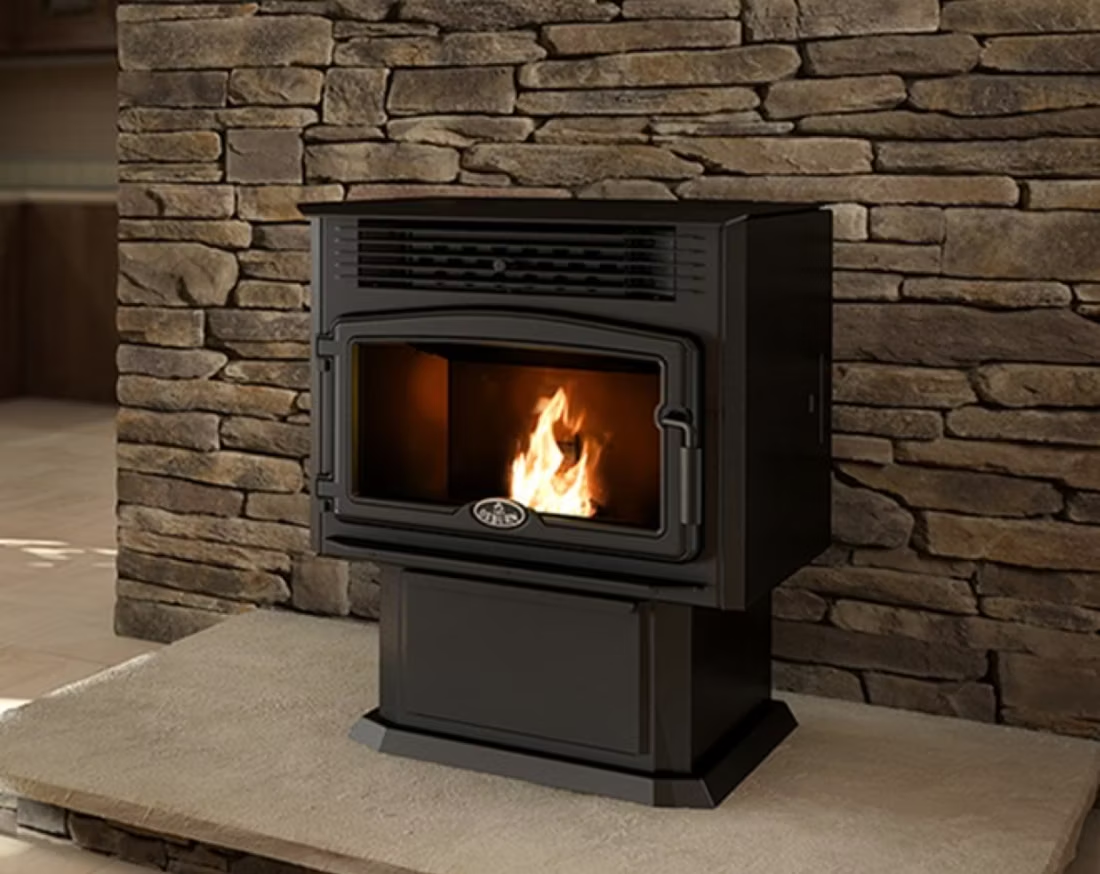
A pellet stove is a freestanding unit that sits on a hearth pad and vents through a wall or the roof—it can go almost anywhere in a room with the right clearances, which makes it a good fit for newer Spartanburg County homes without an existing fireplace. A pellet insert is built to slide into an existing masonry fireplace opening, which is common in older brick homes around downtown Spartanburg and in established neighborhoods county-wide. The insert uses your existing chimney chase for the vent liner and converts a rarely-used open fireplace into an efficient, thermostat-controlled heat source. For homes with a fireplace already in place, the insert is usually the simpler and less invasive project.
Will my pellet stove work if the power goes out?
No—pellet stoves rely on an electric auger to feed fuel and a blower to move heat, so a power outage shuts the unit down unless you have a backup power source. Spartanburg County sees occasional winter ice storms and remnant tropical systems that knock out Duke Energy service for a day or more, so homeowners who want heat during an outage typically pair their pellet stove with a small battery backup unit or a portable generator sized for the stove's draw. If uninterrupted backup heat during outages matters more to you than pellet convenience, a wood stove—which needs no electricity to run—is worth comparing before you decide.
What pellet stove features matter most for Spartanburg County's climate?
Because Spartanburg's winters are mild by national standards—32-degree average lows and a fairly short, mild heating season—raw heat output matters less here than it does in a colder climate, and features like a quiet blower, an easy-clean burn pot, and a hopper large enough to run overnight without a refill tend to matter more day to day. A mid-output unit in the 40,000 to 50,000 BTU range covers the vast majority of county homes without running the stove at a low, inefficient setting most of the season. Local dealers can walk you through models with the ash-management and auto-ignition features that make daily use easier.
How often does a pellet stove need to be cleaned and serviced?
The hopper and burn pot should be cleaned every few days to weekly during regular use, since ash buildup in the burn pot is the most common cause of poor combustion and error codes. The venting system and internal components should get a full professional cleaning and inspection once a year, ideally in late summer or early fall before Spartanburg County's heating season picks up in November and December. Skipping the annual service is the most common reason pellet stoves start smoking back into the room or shutting down mid-cycle.
Pellet stove vs. wood stove—which makes more sense in Spartanburg County?
Wood stoves burn the oak, pine, and hickory that's abundant across the Upstate, and with no non-attainment or inversion restrictions in the county, there's no seasonal burn advisory to plan around—though anyone wanting to cut their own firewood will need to travel to a national forest like Nantahala-Pisgah for a cutting permit, since Spartanburg County itself has no public timber land. Pellet stoves trade that self-sufficiency for convenience: bagged fuel from Lignetics, Hamer Pellet Fuel, or Greenway Renewable Energy is sold locally, the burn is cleaner and more consistent, and there's no splitting or stacking. Given Spartanburg's mild winters, most homeowners here choose based on lifestyle rather than necessity—pellet for hands-off daily heat, wood for the lower running cost and a stove that works without power.
What's the difference between an insert and a zero-clearance fireplace?
An insert is a fireplace that slides into a pre-existing wood-burning fireplace—if you don't have one, there's nothing to insert it into. A zero-clearance fireplace is built into a framed wall, which makes it the answer for remodels and new construction. Simple test: existing masonry fireplace means insert; blank or framed wall means zero-clearance.
Why is my open fireplace making my house colder?
Open fireplaces suck—literally. As the fire burns, it consumes air your furnace already paid to heat and pulls it out through the chimney, so the house is actually colder after the fire goes out than before you lit it. An insert fixes this: it seals the chimney, puts fixed glass across the front, and turns that hole in your house into a real heat source.
How much should I budget for a fireplace?
For an average home—covering the fireplace, the vent pipe, and basic installation—a budget between $3,900 and $5,500 gives you a lot of options across wood, gas, and pellet. By the time you add finish work, gas line, and electrical, the average complete installation lands between $5,000 and $12,000 all-in. In a remodel or new build, a good rule is to put about 2.5% of the total project cost toward the fireplace.
Can a fireplace actually lower my heating bill?
Yes—by creating a comfort zone. A furnace heats every square foot of the house just to warm the one room you're in; a gas fireplace on low burns roughly a sixth of the gas a typical furnace does. Set the furnace around 55–60 degrees as a baseline, then heat the rooms your family actually uses. Families who heat this way commonly save $20–$60 a month.
Stove and Fireplace Dealers in Spartanburg County
Listings include WhyFire partner dealers, dealers we have verified as authorized for the brands we recommend, and established local businesses that carry hearth products. Every listing shows which one it is. The ones marked Preferred run on WhyFire's software, so they can show you real pricing and book your appointment right here. No manufacturer pays for placement. How we verify dealers →
Superior Plus Propane D/b/a Freeman Gas - Spartanburg
Western Carolina Stone
Carolina Hearth & Patio
Phillips-Lawing Fuel, Inc.
Chim Cheree Chimney Sweep
Prince Propane Gas
Craft Stove Store And Patio
Viridien Patio + Fireplace
Diamond B Energies
Phillips- Lawing Fuel, Inc- Mooresboro
Pellet Brands Stocked Around Spartanburg County
Manufacturers will point you to the nearest stocking dealer.
Find your pellet stove in Spartanburg County.
Tell us a bit about your home and we'll match you with the right pellet stove or insert, plus a free Project Guide & Parts List—the exact parts, including the vent kit, and a trusted local dealer to install them.
Find Your Fireplace →