
Keep Your Family Warm and Safe—No Matter What
With winter lows averaging 35°F along the Horry County coast, a wood-burning appliance isn't a necessity here—but it can still earn its keep for ambiance, hurricane-season power outages, or a real fire on the handful of genuinely cold nights each winter.
Every Project Starts From One of These Five Situations
Red Hill's mild winters don't demand wood heat.
Red Hill sits just inland from Myrtle Beach in Horry County, at 41 feet of elevation in climate zone 3A. Winters here average a low of 35°F, and the area logs a mild winter heating load—a fraction of what a place like Duluth, Minnesota logs before Thanksgiving most years. Most homes here are built and heated around that reality: heat pumps and central HVAC handle the occasional cold snap, and a dedicated wood-burning stove simply isn't load-bearing infrastructure the way it is in the mountains or the upper Midwest.
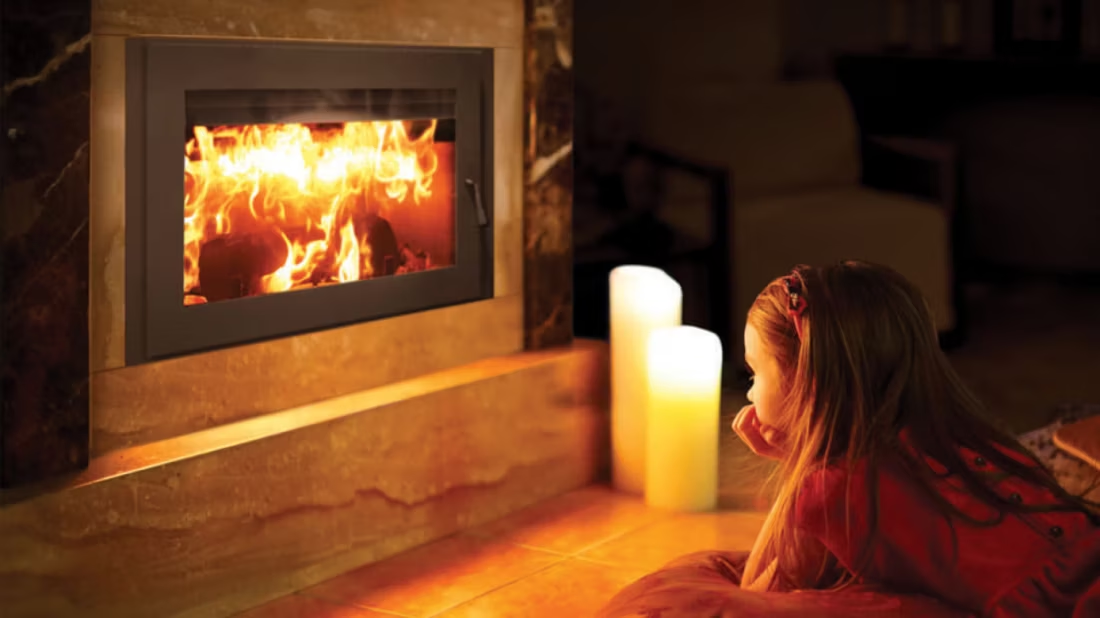
That said, a modest number of Red Hill homeowners still install wood stoves or wood-burning fireplaces—for the ambiance of a real fire, as backup heat when hurricane-season outages knock out power for days, or because they grew up with one and want that in their new home. Local oak, pine, and hickory are all available regionally as split firewood, and a properly vented, EPA-certified unit can be a genuinely nice supplemental feature even in a climate that doesn't strictly require it.
Three steps. No salesperson until you're ready.
Tell us about your project
Your zip code, your situation, and the fuel you're leaning toward—or let the answers point you to one.
See what's actually available
The brands dealers within 100 miles genuinely carry—real options, never a catalog mirage.
Get your dealer & Project Guide
A trusted local dealer, plus the free Project Guide & Parts List that names every component of the job.
Frequently Asked Questions
Are wood stoves common in Red Hill, SC?
Not especially—and it's worth being upfront about that. With only a mild winter heating load and winter lows that rarely stay below freezing for long, most Red Hill homes rely on heat pumps and central air for their day-to-day heating. Wood stoves and wood-burning fireplaces show up here as a smaller, deliberate choice: homeowners who want backup heat for hurricane-season outages, the ambiance of a real fire, or a stove they specifically requested during a remodel or new build. It's a real niche, just not the mainstream heating solution it is farther inland or up north.
How much does a wood stove installation cost in Red Hill?
Because Red Hill homes don't typically need the oversized units or extensive Class A chimney runs that cold-climate markets require, installations here tend to run on the moderate end—often in the neighborhood of $3,000 to $6,000 for a stove or insert with straightforward venting through an existing masonry chimney or a new through-wall run. Costs climb if a home has no existing chimney and needs a full new venting system installed from scratch. Because so few local retailers stock wood units compared to gas or electric, get a firm quote from a dealer who actually installs them regularly in this market rather than assuming a big-box estimate applies.
Do I need a permit to install a wood stove in Horry County?
Yes—new wood-burning installations require a building permit through Horry County (or the applicable municipal building department if Red Hill's address falls within city limits), and the stove itself needs to meet current EPA 2020 NSPS emissions standards. Unlike some Western states, South Carolina's coastal region has no non-attainment zones or winter burn curtailment periods here, so there's no seasonal restriction on when you can use the stove once it's installed and permitted. Most local hearth dealers handle the permit paperwork as part of the installation.
What size wood stove makes sense for a Red Hill home?
Given how mild the winters are here, most Red Hill installations are sized for supplemental heat or ambiance rather than whole-home heating—think a small to mid-size stove rated for 1,000 to 1,500 square feet, even in a larger home, since it's rarely being asked to carry the full heat load. Oversizing is the most common mistake in a market like this: a stove sized for a Minnesota winter will run too hot and smolder inefficiently on a mild 40°F Red Hill evening. A local dealer can size the unit correctly based on how you actually plan to use it.
Where can I get firewood in Red Hill, and what species are available?
Oak, pine, and hickory are the common regional species, with oak and hickory generally preferred for a hotter, longer burn and pine more often used as kindling or supplemental fuel. Since most land around Red Hill is privately held rather than national forest, there isn't a Forest Service cutting-permit system like you'd find out West—firewood here is typically purchased by the cord from local suppliers or delivered by seasonal vendors, generally running somewhere in the $180 to $250 per cord range for split, seasoned hardwood.
Should I choose wood, gas, or electric for my Red Hill home?
For most Red Hill homeowners, gas or electric is the more practical everyday choice—both are considered standard options here, with natural gas or propane fireplaces offering instant, thermostat-controlled heat and electric units offering simple, no-venting installs. Wood makes the most sense as a deliberate, secondary choice: something installed specifically for hurricane-season backup heat (no electricity required to run it) or for the atmosphere of a real fire, rather than as your home's primary heat source.
Can a wood stove serve as backup heat during hurricane season?
Yes, and it's one of the more practical reasons Red Hill homeowners choose one. Hurricane-season outages along the Horry County coast can knock out power for days, and unlike gas fireplaces with electronic ignition or any electric unit, a wood stove needs no power at all to produce heat—just a supply of dry, seasoned firewood on hand. If backup resilience is your main reason for considering wood, mention that specifically to your local dealer, since it affects which stove size and venting setup makes the most sense for occasional, non-primary use.
How often should a wood stove chimney be inspected in a coastal climate like Red Hill's?
An annual inspection is still recommended even for light, occasional use, and coastal humidity actually adds a wrinkle: moisture in the air can accelerate corrosion on metal chimney caps and flashing, and creosote can behave differently in humid conditions than in a dry mountain climate. For a stove used mainly for ambiance or occasional backup heat, a once-a-year inspection before winter (and a check after hurricane season, when debris and storm damage can affect the flue) covers most of what you need.
What's a good wood stove option for occasional, light use in a mild climate?
Since Red Hill installations are rarely asked to carry a full heating load, a smaller EPA-certified non-catalytic stove is usually the right fit—you don't need the 20-hour catalytic burn times that matter in a place with hard subzero nights. Compact, straightforward models from brands like Englander or Vermont Castings cover the ambiance-and-backup use case well, while a step up to Jøtul or Pacific Energy adds design polish for a stove that's meant to be a visual centerpiece as much as a heat source. A local dealer can walk through options based on whether you want traditional cast iron styling or a more contemporary look.
Why is my open fireplace making my house colder?
Open fireplaces suck—literally. As the fire burns, it consumes air your furnace already paid to heat and pulls it out through the chimney, so the house is actually colder after the fire goes out than before you lit it. An insert fixes this: it seals the chimney, puts fixed glass across the front, and turns that hole in your house into a real heat source.
Why is a fireplace insert so efficient?
An insert does two things: it seals the chimney completely, so you stop losing air you already paid to heat, and it radiates warmth into the room through the firebox and glass. Most add a heat-exchange fan that pulls cool room air underneath, wraps it around the hot firebox, and pushes it back out warm. Your home is more efficient before you've even lit the first fire.
What is an in-home preview and do I need one?
It's a visit where a hearth professional measures your space, confirms the model you picked actually works in your home, and walks the specs—framing, gas line, venting, finish work—before anything is ordered. Some details you just can't know until you see the house. Never make a down payment without one; it's the single most-skipped step that burns buyers.
Does a fireplace add value to my home?
On average, a fireplace adds back to the home about the same amount you spent installing it. Add the monthly savings from heating the rooms you actually use instead of the whole house—often hundreds of dollars a year—and the value case is strong before you even count what a fire does for how your family uses the room.
Nearby Dealers
Hearth shops serving Red Hill and the surrounding area. Every listing shows whether it is a WhyFire partner, a dealer we have verified as authorized for the brands we recommend, or a local business carrying hearth products. No manufacturer pays for placement. How we verify dealers →
Palmetto Patio & Hearth
Paramount Contractors
Coastal Energy Inc.
Find your wood fireplace in Red Hill.
Tell us a bit about your home and how you plan to use a wood stove—ambiance, hurricane backup, or both—and we'll match you with a trusted local dealer and send over a free Project Guide & Parts List with the exact parts, vent kit, and recommended installer for your Red Hill project.
Find Your Fireplace →