
Warmth and ambiance for Red Hill's mild coastal winters.
With winter lows averaging 35°F and just 2,288 heating degree days a year, Red Hill doesn't need a furnace-grade fireplace—it needs a clean, no-venting option that adds real ambiance and takes the edge off a rare cold snap. I'll match you with a trusted local dealer who knows what actually fits your space.
Every Project Starts From One of These Five Situations
Ambiance first, backup warmth second.
Red Hill sits at just 41 feet elevation in coastal Horry County near Myrtle Beach, in climate zone 3A—a humid subtropical zone where the heating season is short and mild by any national standard. With around 2,288 heating degree days a year, Red Hill's heating load is a small fraction of what a home in Fargo ND or Burlington VT carries through a single winter, and lows average only around 35°F. Local oak, pine, and hickory keep some traditional wood-burning fireplaces going for atmosphere, but wood stoves and pellet stoves as genuine heating equipment just aren't part of the local market—heat pumps handle daily heating duty, and homeowners here mostly want a fireplace for the look and feel of a fire, with a light assist on the occasional 20-degree morning.
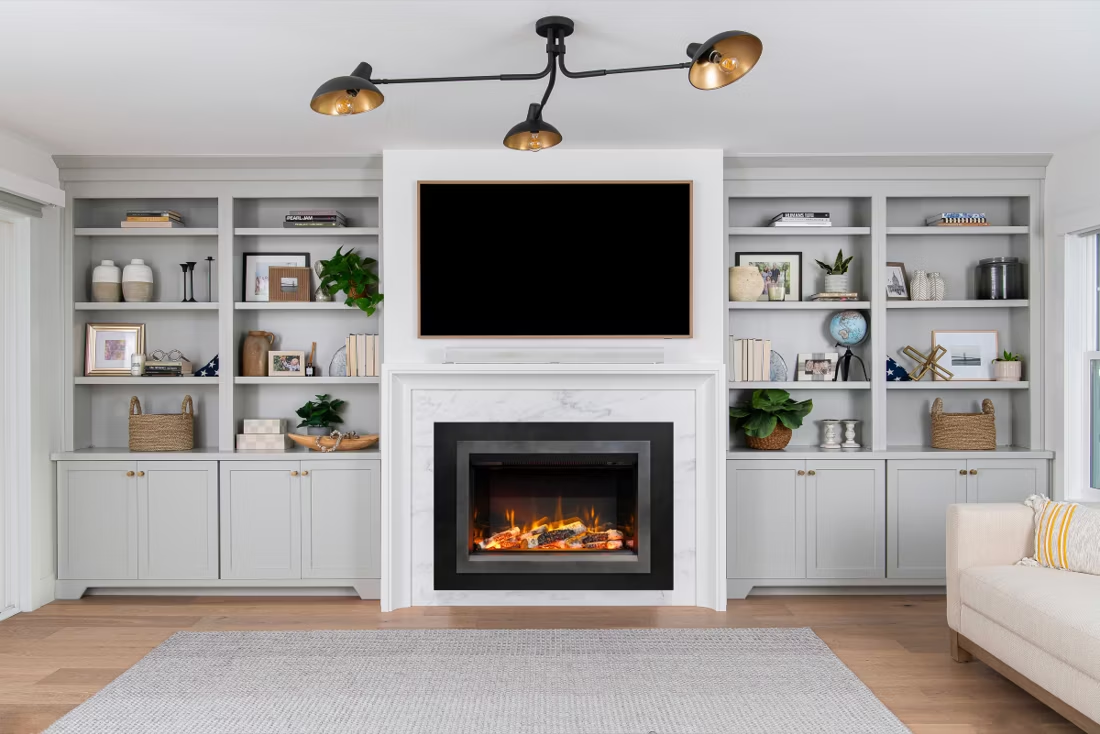
That's exactly the niche electric fireplaces fill. No chimney, no gas line, no combustion permit—just a unit that plugs into or wires into your existing electrical service, courtesy of Duke Energy Progress or the South Carolina Public Service Authority (Santee Cooper), the two utilities serving Red Hill addresses at meaningfully different rates—about 15.5 cents per kWh versus roughly 11.4 cents. That makes an electric insert or wall-mount an easy retrofit into a den, bedroom, or Carolina room without touching your home's structure or venting.
Three steps. No salesperson until you're ready.
Tell us about your project
Your zip code, your situation, and the fuel you're leaning toward—or let the answers point you to one.
See what's actually available
The brands dealers within 100 miles genuinely carry—real options, never a catalog mirage.
Get your dealer & Project Guide
A trusted local dealer, plus the free Project Guide & Parts List that names every component of the job.
Frequently Asked Questions
How much does an electric fireplace installation cost in Red Hill?
Because electric units don't need venting or a chimney, installation runs well below gas or wood—typically $400 to $1,500 for a wall-mounted unit or a built-in insert, with most of that cost being labor for framing, a surround, and possibly a dedicated circuit. A freestanding plug-in electric stove needs no professional install at all beyond a standard outlet. Full built-ins with a custom mantel in a den or Carolina room push toward the top of that range.
Do I need a permit to install an electric fireplace in Horry County?
In most cases, no. Without a gas line, a flue, or any combustion byproducts, electric fireplaces are treated as an appliance rather than hearth equipment requiring inspection. If your installer needs to run a new dedicated 120V or 240V circuit for a larger built-in unit, an electrician may pull a standard electrical permit through your local Horry County or municipal permitting office—a much smaller step than the gas-line and venting permits a gas insert would require.
Which electric utility serves my home in Red Hill, and does it change my costs?
Red Hill sits in a service area split between Duke Energy Progress and the South Carolina Public Service Authority (Santee Cooper), and the two carry meaningfully different residential rates—Duke Energy Progress runs around 15.5 cents per kWh, while Santee Cooper customers pay closer to 11.4 cents. Since an electric fireplace's running cost is just wattage times your rate, a Santee Cooper household running a 1,500-watt unit for a few hours a night pays noticeably less over a season than the same unit on Duke Energy Progress. Check a recent bill to confirm which utility actually serves your address before estimating operating costs.
What kind of electric fireplace makes the most sense for a Red Hill home?
With winter lows averaging around 35°F and a heating season a fraction the length of what homes in the Upper Midwest deal with, most Red Hill buyers choose an electric fireplace for ambiance and occasional supplemental warmth rather than as a primary heat source—a wall-mounted linear unit or an insert retrofitted into an existing masonry opening are both common. Since electric units need zero clearance to combustibles and no venting, they also work well tucked into sunrooms and Carolina rooms that see heavy use in the mild shoulder seasons here.
Electric vs. gas—which is better for a Red Hill fireplace?
Both are standard, common choices here. Gas delivers real supplemental heat output and, with the right ignition system, can keep running during a power outage—worth weighing given Horry County's hurricane exposure. Electric costs less upfront, skips the gas line and venting entirely, and is usually the simpler retrofit, but it depends completely on grid power, so it goes dark the moment the electricity does. Plenty of Red Hill homeowners run electric in a bedroom or den for everyday ambiance and lean on gas, or a generator plan, for heat that survives a storm-related outage.
Why don't more Red Hill homes have wood or pellet stoves?
With only about 2,288 heating degree days a year and winter lows rarely dropping below the mid-30s, Red Hill's heating season is mild and short compared to nearly anywhere in the northern half of the country—nothing close to what a place like Duluth MN or Burlington VT sees over a single winter. Local oak, pine, and hickory are plentiful and plenty of homes still keep a wood-burning fireplace for atmosphere, but wood and pellet stoves as an actual heating strategy just aren't a real local market; heat pumps carry the daily load, and electric or gas fireplaces cover the ambiance and the rare cold snap.
What size electric fireplace do I need in Red Hill?
Given the mild coastal climate, sizing here is driven more by room aesthetics than by surviving a hard freeze. A standard 1,500-watt unit—the typical output for most linear and insert models—comfortably takes the chill off a mid-size den or Carolina room on the rare nights lows drop into the 20s. Larger open-concept living areas may call for two smaller units or a wider linear model, but you won't need the oversized heat-output math that a colder climate zone would require.
How much maintenance does an electric fireplace need?
Very little, which is part of the appeal along the Horry County coast. There's no chimney to sweep, no gas line to inspect, and no combustion byproducts to manage. Occasional dusting of the heating element and vents, plus checking the LED or flame-effect bulbs periodically, covers most of it. One local note: coastal humidity means it's worth avoiding installation in unconditioned porches or sunrooms where sustained moisture can shorten the life of the electronics.
Will my electric fireplace work during a hurricane power outage?
No—and that's worth planning around given Red Hill's position well within the seasonal hurricane and tropical storm track. An electric fireplace goes dark the instant the grid does, whether you're served by Duke Energy Progress or Santee Cooper. If you want heat and ambiance that can survive an extended outage, a vented gas fireplace with a battery-backed or self-powered ignition system is the better complement to an electric unit here—not a replacement for it.
Does an electric fireplace need a vent or chimney?
No—that's its superpower. An electric fireplace needs a wall and an outlet, period. No vent pipe, no gas line, no clearances to design around, which is why it works in bedrooms, offices, apartments, and walls where venting a gas or wood unit would be impractical or impossible. Installation is typically the simplest and least expensive of any fireplace type.
Can I put a TV above my fireplace?
Yes—with an asterisk. Fireplaces are hot and TVs don't like heat. Either put a mantel between them to deflect rising warmth, or choose a fireplace with heat-management technology that creates a cool zone on the wall above—the wall stays around 125 degrees, barely warm, while the room still gets full heat. If you like clean lines and don't want a mantel, heat management is the answer.
Does a fireplace add value to my home?
On average, a fireplace adds back to the home about the same amount you spent installing it. Add the monthly savings from heating the rooms you actually use instead of the whole house—often hundreds of dollars a year—and the value case is strong before you even count what a fire does for how your family uses the room.
What is an in-home preview and do I need one?
It's a visit where a hearth professional measures your space, confirms the model you picked actually works in your home, and walks the specs—framing, gas line, venting, finish work—before anything is ordered. Some details you just can't know until you see the house. Never make a down payment without one; it's the single most-skipped step that burns buyers.
Nearby Dealers
Hearth shops serving Red Hill and the surrounding area. Every listing shows whether it is a WhyFire partner, a dealer we have verified as authorized for the brands we recommend, or a local business carrying hearth products. No manufacturer pays for placement. How we verify dealers →
Palmetto Patio & Hearth
Paramount Contractors
Coastal Energy Inc.
Electric Service in Red Hill
An electric fireplace's heater draws about 1,500 watts—pennies per hour at local rates.
Duke Energy Progress - (Nc)
South Carolina Public Service Authority
Get your free Project Guide & Parts List for an electric fireplace in Red Hill.
Tell me about your home and which utility serves you—Duke Energy Progress or Santee Cooper—and I'll match you with a trusted local dealer and send a free Project Guide & Parts List sized right for your space.
Find Your Fireplace →