
Instant heat for Red Hill's mild coastal winters.
Clean, on-demand gas heat for Horry County homes—built for cool snaps, storm-season outages, and everyday ambiance. Find the right unit and connect with a trusted local dealer.
Every Project Starts From One of These Five Situations
Gas heat built for Red Hill's short, mild winters.
Red Hill sits in coastal Horry County at just 41 feet of elevation, with a climate zone (3A) and heating degree day count (2,288) that make it one of the mildest heating markets on the East Coast—a fraction of what a place like Duluth, MN sees in a single winter. Winter lows average around 35°F, and a hard freeze is the exception, not the rule. That's exactly why wood and pellet heat never took hold here the way they have in colder regions, but gas fireplaces have: homeowners want real flame and instant warmth on the occasional cold snap without committing to a full heating system or firewood storage.
Our data doesn't show a mapped natural gas utility serving the Red Hill zip codes (29588, 29526), which is typical for unincorporated pockets of Horry County—propane is the standard fuel here, delivered and stored in an on-site tank by a regional supplier. Electric service comes from Duke Energy Progress or the South Carolina Public Service Authority (Santee Cooper), with residential rates around 15.5¢ and 11.4¢ per kWh respectively. A propane-fed gas fireplace or insert gives Red Hill homeowners real heat during hurricane-season power outages, a lower install cost than a whole-home generator, and the kind of instant, no-maintenance warmth that fits a climate where you might only run the appliance a few dozen nights a year.
Three steps. No salesperson until you're ready.
Tell us about your project
Your zip code, your situation, and the fuel you're leaning toward—or let the answers point you to one.
See what's actually available
The brands dealers within 100 miles genuinely carry—real options, never a catalog mirage.
Get your dealer & Project Guide
A trusted local dealer, plus the free Project Guide & Parts List that names every component of the job.
Frequently Asked Questions
How much does a gas fireplace installation cost in Red Hill?
Most gas fireplace and insert installations in the Red Hill area run roughly $3,500 to $9,000. A direct-vent insert going into an existing masonry fireplace with a propane line already run to the hearth sits toward the lower end. A new built-in gas fireplace for a remodel or new-construction room—including framing, venting, and a fresh propane line from the tank—lands in the middle to upper range. If you don't already have a propane tank on the property, adding one plus the delivery line can push the project higher. A local dealer will give you a firm number after seeing your home.
Is natural gas available in Red Hill, or do I need propane?
For most of Red Hill and the surrounding 29588 and 29526 zip codes, propane is the practical answer rather than piped natural gas—this part of unincorporated Horry County isn't served by a mapped natural gas utility. That's not a downside for a fireplace: propane fireplaces perform identically to natural gas units, just draw from an above- or below-ground tank instead of a street main. A regional propane supplier can set you up with a tank sized for a single fireplace (often a smaller 100–120 gallon tank) or a larger tank if you're planning to add a range or water heater later.
Will my gas fireplace still work if the power goes out?
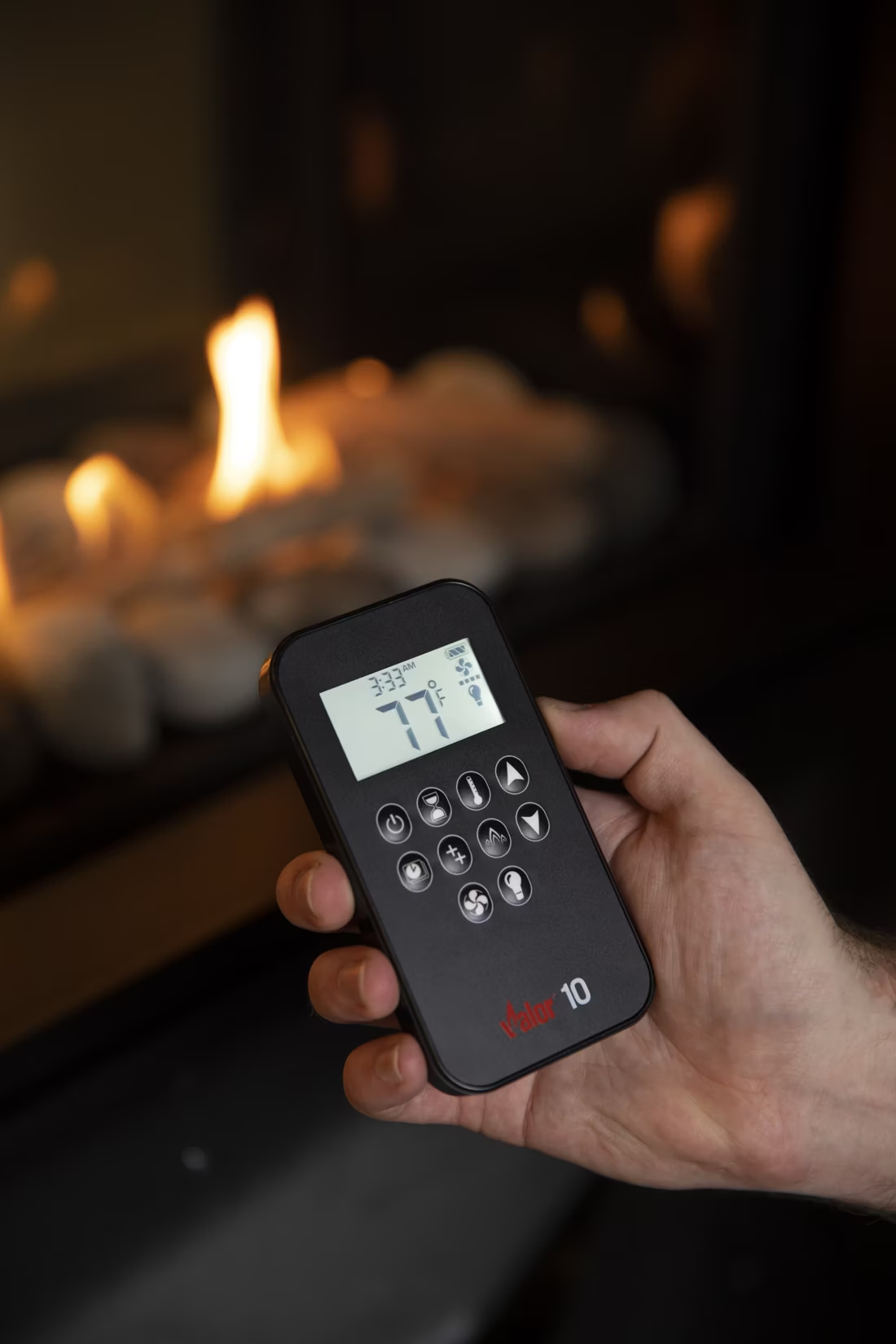
Yes, and this matters more in Red Hill than in most inland markets—Horry County sits squarely in the hurricane and tropical storm path, and multi-day outages aren't rare during peak season. Most modern gas fireplaces with intermittent pilot ignition (IPI) run on a small battery backup that keeps the igniter working when the grid drops, so the fireplace lights on demand just like normal. Valor's lineup goes a step further: their pilot assembly generates its own electricity through the thermocouple, so there's no battery to remember to replace. For a coastal Horry County home, that's a real advantage when a storm knocks out Duke Energy Progress or Santee Cooper service for days at a time.
What's the difference between a gas fireplace, insert, and stove?
A gas fireplace is a fully built-in unit, framed into a wall—the right choice for new construction or a remodel, which is common in Red Hill's newer subdivisions. A gas insert drops into an existing wood-burning masonry fireplace, sealing it up and venting through the original chimney with a liner—a good fit for older homes near the Highway 707 corridor that still have a traditional hearth. A gas stove is a freestanding cabinet-style unit that sits on the floor and doesn't require an existing fireplace opening at all. Local dealers can walk you through which format matches your existing structure.
Do I need a permit to install a gas fireplace in Red Hill?
Yes—gas appliance installations in unincorporated Horry County go through the county's building codes department, and propane line work requires a licensed gas-fitter. If a new propane tank is being installed, the tank placement also has to meet setback distances from your home, property line, and any ignition sources under South Carolina fire code. Most established hearth dealers coordinate the permit, the gas-fitter, and the tank supplier as one package, so you're not left managing three separate trades yourself.
Are vent-free gas fireplaces legal in South Carolina?
Yes, vent-free (unvented) gas fireplaces are permitted in South Carolina, and they show up fairly often in Red Hill because they don't require any chimney or exterior venting—appealing for interior rooms or additions without an existing flue. That said, vent-free units release combustion byproducts into the living space and come with strict room-size and ventilation requirements, plus an oxygen depletion sensor as a safety cutoff. Direct-vent units, which pull outside air in and push exhaust outside through a sealed pipe, remain the more commonly recommended option for full-time or bedroom-adjacent use. A local dealer can walk you through both for your specific room.
How often does a gas fireplace need to be serviced?
Plan on an annual inspection, ideally in early fall before the handful of cold nights Red Hill actually gets. A technician checks the burner, pilot assembly, gas connections, and venting, and cleans the glass and interior—this runs about $150 to $250 locally. Because Red Hill fireplaces often see light seasonal use rather than daily winter operation, a yearly check is usually sufficient, but coastal humidity and salt air can still affect components faster than in a drier inland climate, so don't skip it even in a mild-use year.
Gas vs. electric fireplace—which makes more sense for a Horry County home?
With Red Hill's low heating demand (2,288 heating degree days is a fraction of a colder market's total), electric fireplaces are a genuinely competitive option here, not just a fallback. Electric inserts cost far less to install—often $400 to $1,500 with no venting or gas line required—and run off standard household current from Duke Energy Progress or Santee Cooper at roughly 11–15.5 cents per kWh. Gas costs more upfront but delivers real flame, higher heat output, and—critically for this area—the ability to run during a hurricane-season power outage if the propane and ignition system don't depend on grid electricity. Many Red Hill homeowners choose electric for a den or bonus room and gas for the main living space where storm-readiness matters.
What's driving demand for gas fireplaces in Red Hill specifically, since wood and pellet heat aren't common here?
Red Hill's climate simply doesn't generate the heating load that makes wood or pellet stoves practical—with winter lows averaging 35°F and mild degree-day totals, a wood-burning setup built for a Northern climate would be overkill for a few cool nights a year, and it's part of why our data shows wood and pellet fuel as not applicable to this market. Gas fills the gap perfectly: it delivers real ambiance and supplemental warmth on demand, requires no fuel storage or stacked cordwood in a yard, and—with the right ignition system—keeps working through the power outages that come with Horry County's hurricane season. That combination of low-maintenance comfort and storm resilience is why gas, rather than wood or pellet, is the dominant hearth fuel choice in Red Hill.
Can I put a TV above my fireplace?
Yes—with an asterisk. Fireplaces are hot and TVs don't like heat. Either put a mantel between them to deflect rising warmth, or choose a fireplace with heat-management technology that creates a cool zone on the wall above—the wall stays around 125 degrees, barely warm, while the room still gets full heat. If you like clean lines and don't want a mantel, heat management is the answer.
What's the difference between an insert and a zero-clearance fireplace?
An insert is a fireplace that slides into a pre-existing wood-burning fireplace—if you don't have one, there's nothing to insert it into. A zero-clearance fireplace is built into a framed wall, which makes it the answer for remodels and new construction. Simple test: existing masonry fireplace means insert; blank or framed wall means zero-clearance.
Does a fireplace add value to my home?
On average, a fireplace adds back to the home about the same amount you spent installing it. Add the monthly savings from heating the rooms you actually use instead of the whole house—often hundreds of dollars a year—and the value case is strong before you even count what a fire does for how your family uses the room.
How much should I budget for a fireplace?
For an average home—covering the fireplace, the vent pipe, and basic installation—a budget between $3,900 and $5,500 gives you a lot of options across wood, gas, and pellet. By the time you add finish work, gas line, and electrical, the average complete installation lands between $5,000 and $12,000 all-in. In a remodel or new build, a good rule is to put about 2.5% of the total project cost toward the fireplace.
Nearby Dealers
Hearth shops serving Red Hill and the surrounding area. Every listing shows whether it is a WhyFire partner, a dealer we have verified as authorized for the brands we recommend, or a local business carrying hearth products. No manufacturer pays for placement. How we verify dealers →
Palmetto Patio & Hearth
Paramount Contractors
Coastal Energy Inc.
Find your gas fireplace in Red Hill.
Tell us a bit about your home and we'll match you with the right gas fireplace, insert, or stove—plus a free Project Guide & Parts List and a trusted local dealer to install it.
Find Your Fireplace →