
Keep Your Family Warm and Safe—No Matter What
With such a mild winter heating season and an average winter low of 39°F, North Charleston rarely needs wood heat to survive winter. But between hurricane-season power outages and homeowners who just want a real fire, there's still a real (smaller) market here—and I can match you with a local dealer who'll tell you straight whether it fits your home.
Every Project Starts From One of These Five Situations
Mild winters mean wood isn't essential—but it still has a role.
North Charleston sits at just 40 feet of elevation in climate zone 3A, and the numbers explain why wood stoves never became a default here the way they are in a place like Duluth, Minnesota, which has a winter heating load nearly five times as heavy. With such a mild heating season and a winter low averaging 39°F, most North Charleston homes get through the season fine on a heat pump or gas furnace, with maybe a handful of nights that dip near freezing. That's the honest starting point: wood is not a standard fuel choice for this metro area, and a dealer sizing a whole-house solution around it would be recommending the wrong tool for the climate.
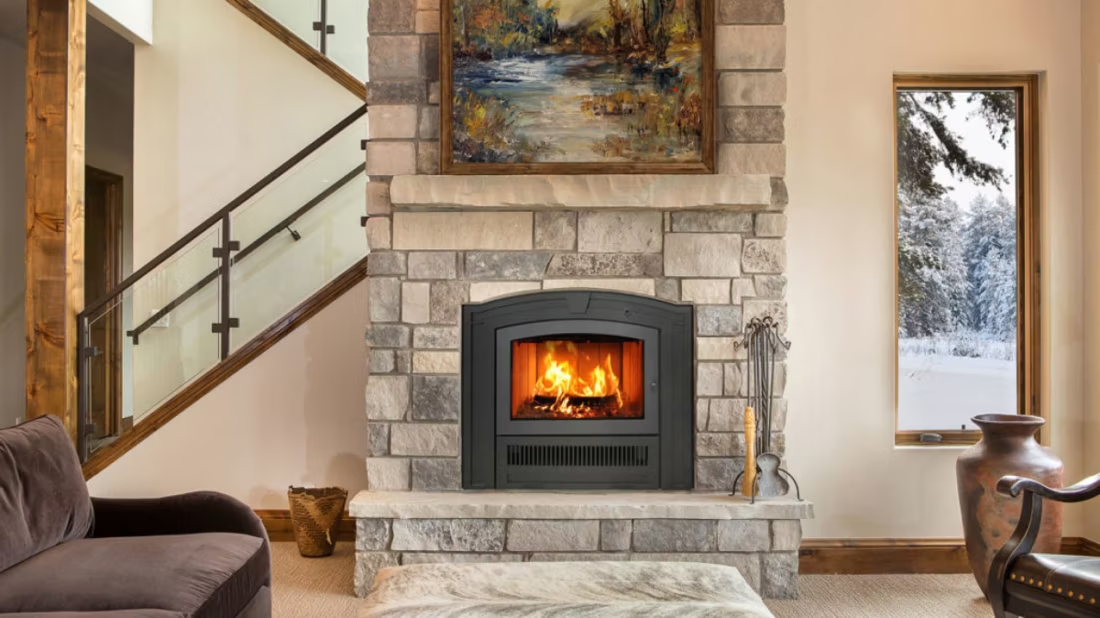
Where wood heat does show up locally, it's usually for one of two reasons. The first is ambiance—older homes around North Charleston with an existing masonry fireplace, often burning oak, pine, or hickory sourced from Lowcountry sawmills and firewood suppliers, keep it lit on the rare cold snap or just for the evening fire. The second is resilience: coastal South Carolina sees real hurricane-season power outages from June through November, and a wood-burning insert or stove is one of the only heat and cooking sources that keeps working when Dominion Energy South Carolina's lines are down for days. With no local air quality non-attainment issues to navigate, the barrier here isn't regulation—it's simply that most homeowners don't need it, and the ones who want it are buying for a specific reason rather than as their main heat plan.
Three steps. No salesperson until you're ready.
Tell us about your project
Your zip code, your situation, and the fuel you're leaning toward—or let the answers point you to one.
See what's actually available
The brands dealers within 100 miles genuinely carry—real options, never a catalog mirage.
Get your dealer & Project Guide
A trusted local dealer, plus the free Project Guide & Parts List that names every component of the job.
Frequently Asked Questions
How much does it cost to install a wood stove in North Charleston?
Because wood heat is a smaller niche here than in colder climates, there isn't a deep well of local pricing data the way there is in, say, Bozeman or Burlington. As a general ballpark, a freestanding wood stove with new Class A chimney typically runs $4,000 to $8,000 installed, while dropping a wood insert into an existing masonry fireplace—common in older North Charleston neighborhoods—usually costs less, often $3,000 to $6,000, since the chimney structure is already in place. A local dealer can give you a firm number once they've seen your existing hearth and roofline.
Do I need a permit to install a wood stove in North Charleston?
Yes. Depending on your address, you'll pull a building permit through the City of North Charleston's Building Safety and Codes Enforcement division or Charleston County Building Services if you're outside city limits, and the stove needs to meet current EPA emissions standards regardless of jurisdiction. Because wood installs are less common here than gas or electric, it's worth confirming your installer has actually pulled a wood-burning permit in your specific zip code before, so there are no surprises at inspection.
Is wood heat even practical in a place as mild as North Charleston?
For most homes, no—not as a primary heat source. With winter lows averaging 39°F and such a mild, short heating season overall, a heat pump or gas system handles the vast majority of North Charleston's heating load without breaking a sweat. Where a wood stove or insert earns its keep is as a secondary feature: an occasional-use fireplace for the few genuinely cold nights, or a backup heat and cooking source during a hurricane-season outage. If you're weighing wood purely as a whole-house heating strategy, a local dealer will likely steer you toward gas or electric instead and reserve wood for ambiance or resilience.
Does a wood stove make sense as hurricane backup heat?
It's one of the more practical reasons homeowners in North Charleston ask about wood heat at all. Coastal Charleston County sees multi-day power outages during hurricane season, and a wood stove or insert keeps producing heat and a cooking surface with zero dependence on the grid—something a gas fireplace with electronic ignition or an electric unit can't guarantee once Dominion Energy South Carolina's lines go down. If backup resilience is your main driver rather than daily heating, tell your dealer that upfront; it changes which stove size and venting setup makes sense for occasional, storm-driven use versus regular winter burning.
What firewood is available locally, and does Lowcountry humidity change anything?
Oak, pine, and hickory are the woods most readily available around North Charleston, typically through Lowcountry firewood suppliers and sawmills rather than public land permits, since South Carolina doesn't have the national forest cutting-permit culture you'd find out West. The one real local wrinkle is humidity: wood takes noticeably longer to season properly here than in a drier climate, so firewood that looks dry after a few months may still be too wet to burn clean. Buying wood a full season ahead, or confirming moisture content with a meter before burning, matters more in coastal South Carolina than it would in a place like Fargo.
How often does a wood-burning fireplace need to be swept in North Charleston?
An annual inspection is still the right baseline even with light seasonal use, and in this climate it's worth taking seriously—Lowcountry humidity encourages both creosote buildup from underseasoned wood and moisture-related issues like mold or rust in a flue that sits unused most of the year. If your fireplace only gets lit a handful of nights each winter plus the occasional storm outage, schedule the sweep before hurricane season starts in June so the flue is ready when you actually need it, rather than waiting for the first cold snap in December.
Should I get a gas fireplace instead of wood in North Charleston?
For most homeowners here, yes—gas is the more common and more practical choice given the mild climate, and it's why gas fireplace demand is standard across the metro while wood remains a niche pick. Gas gives you instant, thermostat-controlled heat without firewood storage or chimney maintenance, which suits a climate that only needs supplemental heat a few weeks a year. Wood still wins for buyers specifically prioritizing off-grid resilience during hurricane-season outages or the atmosphere of a real fire in an existing masonry fireplace—it's a deliberate choice here, not a default one.
Will my HOA allow a wood stove or exterior wood storage?
Check your covenants before you buy. A number of North Charleston's newer subdivisions have HOA rules restricting visible firewood stacks, exterior venting placement, or exterior modifications to accommodate a new chimney chase. Older, established neighborhoods with existing masonry fireplaces generally have more flexibility since you're working within a structure that's already there. Either way, a local installer who's worked in your specific subdivision will usually know the HOA's typical stance before you're deep into planning.
What about pellet stoves—are they a better fit than wood here?
Not really, and for the same underlying reason wood is a niche pick: North Charleston's mild winters don't generate enough heating demand for either fuel to be a mainstream choice. Regional pellet brands like Lignetics, Hamer Pellet Fuel, and Greenway Renewable Energy do sell into South Carolina, but pellet stoves need electricity to run the auger and blower—which defeats the main advantage wood has here, working through a hurricane-season power outage. If backup heat during a storm is your priority, wood beats pellet; if it's just ambiance and you have grid power, either can work, but neither is solving a heating problem this climate actually has.
Why won't my new wood stove get going like my old one?
New wood stoves are 70%+ efficient, so far less heat goes up the flue—which also means less draft to get a fire established. The rule: build a genuinely hot fire for about 45 minutes before you choke it down. Skip that and you get smoke in the room, creosote in the chimney, and a fire that never takes off. Most performance complaints trace straight back to this.
Why is my open fireplace making my house colder?
Open fireplaces suck—literally. As the fire burns, it consumes air your furnace already paid to heat and pulls it out through the chimney, so the house is actually colder after the fire goes out than before you lit it. An insert fixes this: it seals the chimney, puts fixed glass across the front, and turns that hole in your house into a real heat source.
Does a fireplace add value to my home?
On average, a fireplace adds back to the home about the same amount you spent installing it. Add the monthly savings from heating the rooms you actually use instead of the whole house—often hundreds of dollars a year—and the value case is strong before you even count what a fire does for how your family uses the room.
What is an in-home preview and do I need one?
It's a visit where a hearth professional measures your space, confirms the model you picked actually works in your home, and walks the specs—framing, gas line, venting, finish work—before anything is ordered. Some details you just can't know until you see the house. Never make a down payment without one; it's the single most-skipped step that burns buyers.
Preferred Dealer in North Charleston
Get matched with a North Charleston wood stove dealer who can tell you if it's right for your home.
Tell me about your home, your existing fireplace or chimney, and whether you're after storm backup or just ambiance—I'll match you with a trusted local dealer and send a free Project Guide & Parts List with the vent kit and parts your specific setup needs.
Find Your Fireplace →