
Find the right fireplace for Charleston County's mild winters.
Fireplace resources for every corner of Charleston County—the historic peninsula, Mount Pleasant, North Charleston, Summerville, and the barrier islands from Folly Beach to Isle of Palms. Get matched with a trusted local hearth retailer who knows what actually works here.
Every Project Starts From One of These Five Situations
Low country living, short heating season, in Charleston County, South Carolina.
Charleston County stretches from the historic downtown peninsula across the harbor to Mount Pleasant, down through the barrier islands—Folly Beach, Sullivan's Island, Isle of Palms, Kiawah—and inland through North Charleston, Summerville, and Johns Island. It's a Climate Zone 3A county with an average winter low around 44°F and a very light heating season overall—a fraction of what a single January month brings in Burlington, VT or Duluth, MN. That mild math shapes the local hearth market: this is fireplace-as-ambiance country, not fireplace-as-furnace country.
Plenty of Charleston County's historic homes—especially on the peninsula and in older Mount Pleasant neighborhoods—still have original masonry fireboxes built for oak, pine, or hickory, and some homeowners keep those working for atmosphere on the rare cold night. But new wood stove and insert installs are uncommon here; the heating load simply doesn't call for it, and many historic districts restrict new venting anyway. What dominates the county instead is gas—much of it served by Dominion Energy South Carolina's natural gas network—and electric, which fits condos, rentals, and HOA-restricted properties where venting isn't an option. Pick your fuel below to see local dealers, typical costs, and the units that actually fit a Lowcountry home.
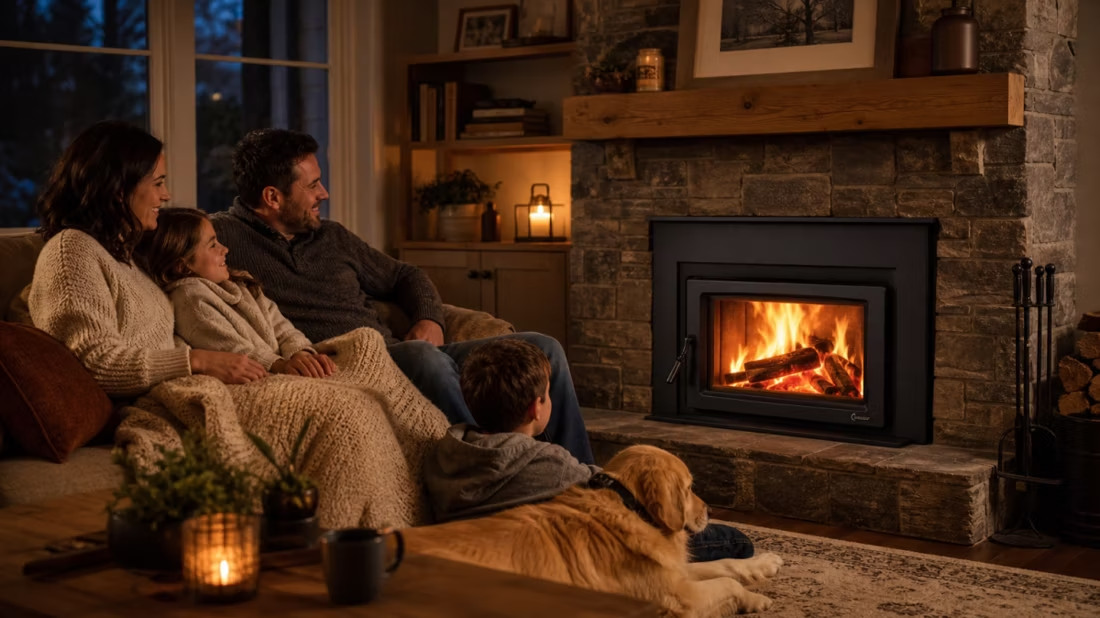
Four fuels. One honest answer for Charleston County.
Three steps. No salesperson until you're ready.
Tell us about your project
Your zip code, your situation, and the fuel you're leaning toward—or let the answers point you to one.
See what's actually available
The brands dealers within 100 miles genuinely carry—real options, never a catalog mirage.
Get your dealer & Project Guide
A trusted local dealer, plus the free Project Guide & Parts List that names every component of the job.
Frequently Asked Questions
Which fuel works best in Charleston County?
Gas is the dominant choice across most of Charleston County—Dominion Energy South Carolina's natural gas network covers the peninsula, Mount Pleasant, North Charleston, and Summerville, and gas fireplaces give instant ambiance without any woodpile or ash cleanup. Electric fills in everywhere gas isn't an option—condos, rentals, HOA-restricted properties, and historic homes where new venting isn't permitted. Wood is mostly legacy here: plenty of downtown Charleston and older Mount Pleasant homes have original masonry fireboxes people keep lit on the rare 30-degree night, but with such a short, mild winter and lows averaging 44°F, there's little heating case for a new wood stove or insert. Pellet stoves are essentially absent—regional suppliers like Lignetics, Hamer Pellet Fuel, and Greenway Renewable Energy mostly move pellets for grills and smokers, not home heat.
Do I need a permit to install a fireplace in Charleston County?
Usually, yes. Gas fireplace, insert, and stove installations require a building permit and a separate gas line permit, plus a licensed gas-fitter for the connection work—whether you're inside the City of Charleston, Mount Pleasant, North Charleston, or unincorporated Charleston County, permits route through that jurisdiction's building department. If your home sits within a historic district on the peninsula or in older Mount Pleasant, expect an additional review from the local Board of Architectural Review before any new venting goes on an exterior wall. Electric fireplaces generally skip the permit process unless you're hardwiring a built-in unit, which typically needs an electrical permit. Most local retailers handle the paperwork as part of the installation quote.
Are there air quality restrictions on burning in Charleston County?
No—Charleston County has no wood-burning non-attainment designation, no inversion advisories, and no seasonal burn curtailment like you'd find in western mountain valleys. The bigger practical issue is simply that most homes here don't have an active wood-burning setup to restrict. If you do use an original masonry firebox in a historic peninsula or Mount Pleasant home, an annual chimney sweep is worth doing for safety, since many of those flues are original brick that's decades old and rarely used regularly.
Can one local hearth retailer handle both gas and electric?
Yes—most Charleston County retailers carry both gas and electric lines, since those are the two fuels that actually fit the local climate and housing stock. A handful also stock a small wood-burning selection for historic-home clients who want to restore or reline an existing masonry fireplace, but that's a specialty request rather than a stocked category. If you're comparing gas versus electric for a specific room—say a Mount Pleasant living room versus a downtown condo—a multi-fuel dealer can walk you through both working displays and the venting or electrical requirements for each.
How does service work on the barrier islands and outlying areas of Charleston County?
Technicians based in North Charleston and Mount Pleasant regularly travel out to Folly Beach, Isle of Palms, Sullivan's Island, Johns Island, and Edisto for both installs and service—expect a modest travel fee on top of standard rates for the outer islands. Because those areas can lose power during hurricane season and tropical storms, gas fireplaces with a standing pilot or battery-backup ignition are worth considering as a functional heat and light source when the grid goes down, whereas most electric units simply won't run without utility power. On islands without natural gas service, propane tanks fill that role instead.
What's the typical cost range for fireplace installation in Charleston County?
Gas fireplace, insert, or stove: roughly $4,000–$9,500 depending on whether an existing gas line is already in place or new line work is needed. Electric fireplace: $200–$2,800 for the unit itself, plus $300–$1,000 in labor for anything beyond a simple plug-and-play placement, such as a wall-mount or built-in with a dedicated circuit. Wood-burning restoration work on an existing historic firebox—reline, cap, damper repair—tends to run higher per job than a comparable new install elsewhere, simply because it's specialty work with fewer local contractors doing it regularly. Pellet stove installs are rare enough in Charleston County that pricing isn't really standardized locally.
Wood, gas, pellet, or electric—how do I choose?
Match the fuel to your life, not the other way around. Wood: lowest fuel cost and total power-outage independence, but you're hauling and stacking. Gas: press a button, set a thermostat, no maintenance to speak of. Pellet: wood economics with automatic feeding, in exchange for weekly cleaning and a need for electricity. Electric: plugs in anywhere with honest supplemental heat. Nobody regrets the fuel that fits how they actually live.
Can a fireplace actually lower my heating bill?
Yes—by creating a comfort zone. A furnace heats every square foot of the house just to warm the one room you're in; a gas fireplace on low burns roughly a sixth of the gas a typical furnace does. Set the furnace around 55–60 degrees as a baseline, then heat the rooms your family actually uses. Families who heat this way commonly save $20–$60 a month.
Can I install a fireplace myself?
If you're putting a fire in your house on purpose, it's best to work with an expert. Unless you're genuinely experienced in framing, gas line, vent pipe, and the national code on clearances to combustibles, have a professional do it—and ideally the same company that sells you the fireplace, so warranty, service, and liability all live under one roof.
What is an in-home preview and do I need one?
It's a visit where a hearth professional measures your space, confirms the model you picked actually works in your home, and walks the specs—framing, gas line, venting, finish work—before anything is ordered. Some details you just can't know until you see the house. Never make a down payment without one; it's the single most-skipped step that burns buyers.
Stove and Fireplace Dealers in Charleston County
Listings include WhyFire partner dealers, dealers we have verified as authorized for the brands we recommend, and established local businesses that carry hearth products. Every listing shows which one it is. The ones marked Preferred run on WhyFire's software, so they can show you real pricing and book your appointment right here. No manufacturer pays for placement. How we verify dealers →
WilliamSmith Fireplaces & Home Accents
Four Corners Building Supply
Fireplaces Plus
Palmetto Outdoor Kitchens
Find your fireplace in Charleston County.
Pick gas or electric below to see local dealers and typical costs, then get matched with a trusted retailer near you. You'll receive a free Project Guide & Parts List—a plan for your Charleston County fireplace project with the exact parts, including the vent kit, and your recommended local dealer.
Find Your Fireplace →