
Keep Your Family Warm and Safe—No Matter What
With winter lows averaging 44°F and barely 1,600 heating degree days a year, full-time wood heat doesn't make sense for most Lowcountry homes. But from historic Charleston single houses with existing masonry chimneys to rural pockets around Awendaw and McClellanville, some homeowners still want a real fire. We'll help you find the right unit and a local dealer who actually installs them.
Every Project Starts From One of These Five Situations
A mild coastal climate that rarely calls for it.
Charleston County sits in climate zone 3A, with a winter low average of 44°F and only about 1,623 heating degree days per year—a fraction of what a place like Burlington, VT or Duluth, MN sees. Most of the county's nearly 950,000 residents heat with electric heat pumps or gas furnaces, and that's the right call: a wood stove sized for cold-climate heating would be badly oversized for a Lowcountry winter, running smoky and inefficient on the mild nights that make up most of the season here.
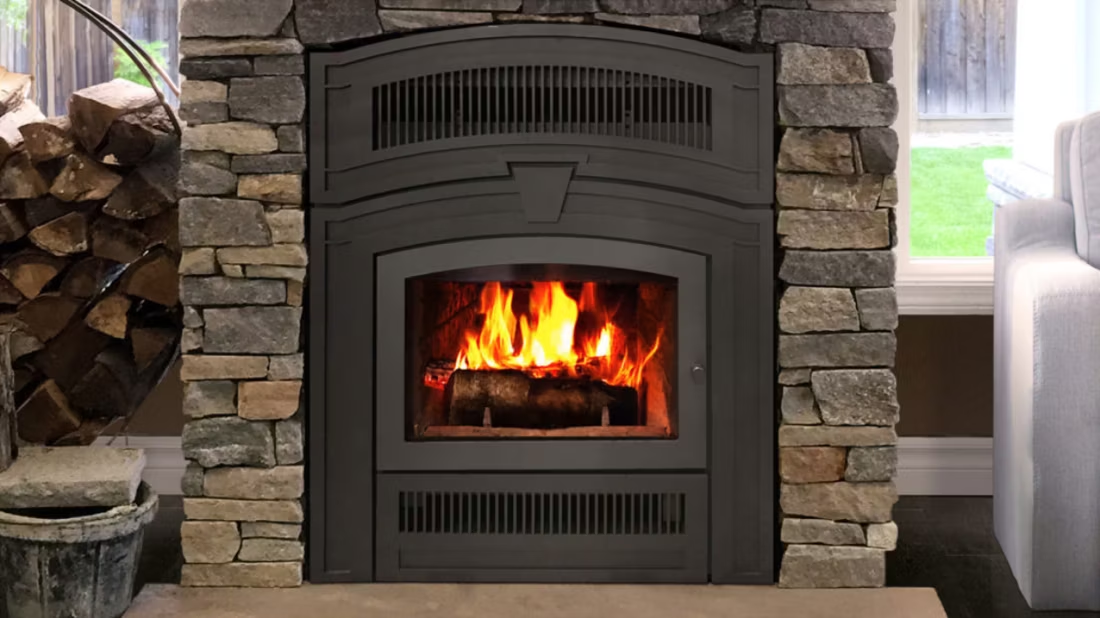
That said, wood isn't entirely absent from the county. Historic Charleston single houses on the peninsula and in neighborhoods like Wagener Terrace often have existing masonry fireplaces that homeowners want to keep functional or upgrade with an insert, mostly for ambiance and the occasional hard freeze—the kind South Carolina saw in the January 2018 deep freeze. In the more rural stretches of the county—Awendaw, McClellanville, Johns Island—some homeowners with land and hurricane-felled oak or pine take advantage of free firewood and run a stove as genuine supplemental heat. It's a niche use case, but a real one, and it deserves a dealer who won't oversell you a unit built for a much colder climate than this one.
Three steps. No salesperson until you're ready.
Tell us about your project
Your zip code, your situation, and the fuel you're leaning toward—or let the answers point you to one.
See what's actually available
The brands dealers within 100 miles genuinely carry—real options, never a catalog mirage.
Get your dealer & Project Guide
A trusted local dealer, plus the free Project Guide & Parts List that names every component of the job.
Frequently Asked Questions
How much does a wood stove or insert installation cost in Charleston County?
Because wood-burning installs are uncommon here, pricing varies more than it would in a cold-climate market with dozens of installers competing for the work. Expect somewhere in the $3,500 to $7,500 range for a standard wood stove or insert installation, depending on whether you're venting into an existing masonry chimney (common in older Charleston peninsula homes) or building new Class A chimney venting from scratch, which pushes costs toward the higher end. Get quotes from a couple of local dealers rather than assuming one number applies—the pool of installers who regularly do this work in Charleston County is small enough that pricing isn't as standardized as it is for gas or electric.
What size wood stove do I actually need in a climate this mild?
Smaller than you'd think. With only about 1,623 heating degree days a year and winter lows averaging 44°F, almost no Charleston County home needs a wood stove sized for primary heat. Most homeowners here are better served by a small to mid-size stove intended for supplemental warmth on the coldest nights and for ambiance the rest of the season—not a large-capacity unit built to hold a 20-hour overnight burn like you'd want in Fargo or Bozeman. A local dealer sizing your space should ask how you actually plan to use it (occasional fire vs. genuine backup heat for a rural property) before recommending anything.
Where can I find installers who actually work on wood stoves near Charleston?
Fewer hearth dealers in Charleston County specialize in wood-burning installs compared to gas or electric—most local shops have shifted their inventory and staffing toward the fuels that dominate demand here. Look for a dealer with NFI (National Fireplace Institute) wood-burning certification specifically, not just a general hearth retailer, since correct clearances and Class A chimney venting matter just as much in a mild climate as a cold one. Expect a smaller number of qualified options than you'd find for a gas fireplace install, and possibly a longer lead time for scheduling.
Should I get a wood stove or a wood insert for my Charleston home?
If you own one of the many historic Charleston single houses, James Island cottages, or older Mount Pleasant homes with an existing masonry fireplace, an insert is almost always the better move—it uses the chimney you already have and turns a decorative, drafty firebox into something that actually throws heat. A freestanding stove makes more sense for newer construction without an existing chimney, or for rural properties in areas like Awendaw or Ravenel where a garage, workshop, or standalone structure needs its own heat source with new venting run from the ground up.
Do I need a permit to install a wood stove in Charleston County?
Yes—new wood-burning installations require a building permit, either through the City of Charleston's building department if you're inside city limits, or through Charleston County Building Services in unincorporated areas. The stove itself needs to meet current EPA emissions standards. The good news is that Charleston County has no air quality non-attainment issues, winter inversions, or wildfire smoke concerns like inland Western counties do, so there are no seasonal burn curtailment periods to worry about—once it's installed and permitted, you can use it whenever you like.
What's the best wood stove for occasional use in a mild climate?
Skip the large catalytic stoves built for holding a fire through sub-zero overnight lows—that capacity is wasted in a climate where winter lows average 44°F. A mid-size, non-catalytic EPA-certified stove from a brand like Pacific Energy or Lopi is a better fit for Charleston County: easier to start for occasional use, less prone to smoldering on the mild nights that make up most of the burning season here, and simpler to maintain if you're only running it a few dozen times a winter rather than daily.
How often should my chimney be inspected in a humid coastal climate?
Annually, same as anywhere—but coastal humidity adds a wrinkle. Charleston County's damp air can accelerate mortar deterioration and creosote moisture absorption in masonry chimneys, especially in older peninsula homes with chimneys that have stood for a century or more. If you're using an insert in an existing fireplace, have a CSIA-certified sweep check the chimney liner condition along with the usual creosote sweep—humidity-related masonry issues show up here that a dry-climate inspector might not think to look for.
Where can I source firewood in Charleston County?
Oak, pine, and hickory are the common local species, and a fair amount of firewood in the county comes from storm cleanup—hurricane season regularly drops mature live oaks and pines that end up split and sold by local tree services and firewood suppliers. One thing to watch for in this climate: humidity slows seasoning considerably compared to drier regions, so freshly cut wood here often needs 12 months or more to season properly rather than the 6-8 months you'd see in a drier climate. Buying wood that's already been seasoned a full year, or seasoning it yourself well ahead of the season, matters more here than in most markets.
Wood stove vs. gas fireplace—which makes more sense in Charleston County?
For the vast majority of Charleston County homes, gas wins on practicality: instant on-off heat, no wood storage or ash cleanup, and a straightforward install for homes already served by natural gas or propane. Wood makes sense in narrower cases—if you already have a functioning masonry fireplace you want to keep authentic, if you're on rural acreage with access to free storm-felled hardwood, or if the ritual and ambiance of a real fire matters more to you than convenience. Most Charleston County homeowners who ask about wood are looking for the second fireplace in the house, not the primary heat source—and that's a fine reason to install one, as long as you go in with realistic expectations about how often you'll actually use it.
Why is a fireplace insert so efficient?
An insert does two things: it seals the chimney completely, so you stop losing air you already paid to heat, and it radiates warmth into the room through the firebox and glass. Most add a heat-exchange fan that pulls cool room air underneath, wraps it around the hot firebox, and pushes it back out warm. Your home is more efficient before you've even lit the first fire.
Why is my open fireplace making my house colder?
Open fireplaces suck—literally. As the fire burns, it consumes air your furnace already paid to heat and pulls it out through the chimney, so the house is actually colder after the fire goes out than before you lit it. An insert fixes this: it seals the chimney, puts fixed glass across the front, and turns that hole in your house into a real heat source.
Can I install a fireplace myself?
If you're putting a fire in your house on purpose, it's best to work with an expert. Unless you're genuinely experienced in framing, gas line, vent pipe, and the national code on clearances to combustibles, have a professional do it—and ideally the same company that sells you the fireplace, so warranty, service, and liability all live under one roof.
How much should I budget for a fireplace?
For an average home—covering the fireplace, the vent pipe, and basic installation—a budget between $3,900 and $5,500 gives you a lot of options across wood, gas, and pellet. By the time you add finish work, gas line, and electrical, the average complete installation lands between $5,000 and $12,000 all-in. In a remodel or new build, a good rule is to put about 2.5% of the total project cost toward the fireplace.
Stove and Fireplace Dealers in Charleston County
Listings include WhyFire partner dealers, dealers we have verified as authorized for the brands we recommend, and established local businesses that carry hearth products. Every listing shows which one it is. The ones marked Preferred run on WhyFire's software, so they can show you real pricing and book your appointment right here. No manufacturer pays for placement. How we verify dealers →
WilliamSmith Fireplaces & Home Accents
Four Corners Building Supply
Fireplaces Plus
Palmetto Outdoor Kitchens
Find your wood stove or insert in Charleston County.
Wood heat is a smaller niche here than in colder climates, which makes picking the right dealer even more important. Tell us about your home and how you plan to use it, and we'll match you with a trusted local installer and send over a free Project Guide & Parts List—the exact parts, including the vent kit, for your specific project in Charleston County.
Find Your Fireplace →