
Keep Your Family Warm and Safe—No Matter What
Wood heat isn't the default here—Lyman's mild Piedmont winters run mostly on gas and electric. But for ice-storm backup heat or a fireplace you actually want to light, we'll connect you with a local dealer who does it right.
Every Project Starts From One of These Five Situations
In Lyman, wood heat is the exception, not the rule.
Lyman sits in the Piedmont foothills of Spartanburg County at under 900 feet, where winter lows average around 32°F and the heating season is fairly short and mild—closer to Atlanta's climate than to Appalachia's. Compare that to a place like Duluth, Minnesota, which regularly logs more than double the winter heating load, and it's easy to see why wood was never the backbone of home heating here. Central heat pumps and gas fireplaces do most of the work in Lyman homes.
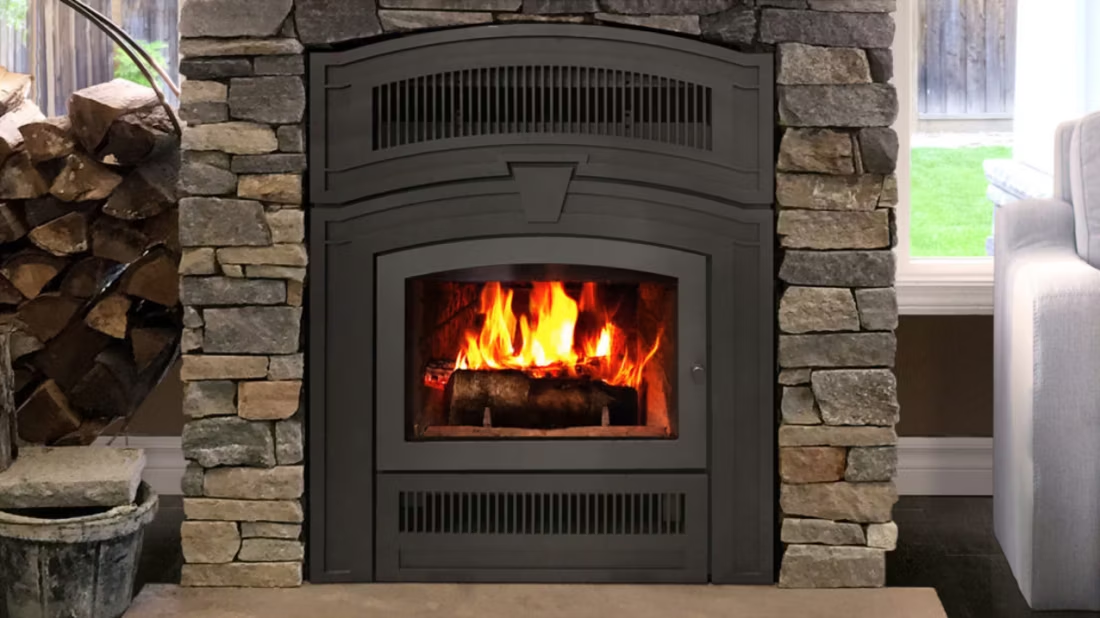
Still, wood has a place. Winter ice storms periodically knock out Duke Energy Carolinas power across Spartanburg County for a day or more, and a wood stove is the one heat source that keeps working when the grid doesn't. Add in the fact that oak, hickory, and pine are all abundant and cheap locally, and it's clear why a smaller number of Lyman homeowners still install a stove or insert—for backup heat, a cabin or hunting property, or simply because they like a real fire on the coldest nights of the year. It's a more deliberate, smaller-scale project here than in colder states, but local dealer options do exist.
Firewood Cutting Permits Near Lyman
Three steps. No salesperson until you're ready.
Tell us about your project
Your zip code, your situation, and the fuel you're leaning toward—or let the answers point you to one.
See what's actually available
The brands dealers within 100 miles genuinely carry—real options, never a catalog mirage.
Get your dealer & Project Guide
A trusted local dealer, plus the free Project Guide & Parts List that names every component of the job.
Frequently Asked Questions
Is a wood stove or fireplace practical for a home in Lyman?
For most Lyman houses, not as primary heat. Winter lows average around 32°F and the heating season is short, so gas and electric heat pumps handle nearly all day-to-day heating needs here. Where wood still makes sense is as backup heat during ice storms, which periodically take down Duke Energy Carolinas lines across Spartanburg County, or as a supplemental fire in a den, cabin, or hunting property on the region's occasional cold nights. If that's your use case, a wood stove works fine—just expect a smaller, more occasional-use appliance than what a household in the mountains or upper Midwest would install.
What does a wood stove installation cost in Lyman?
Because wood heat is a niche request in Lyman rather than a routine one, pricing varies more by dealer than by a tight local range. Plan on roughly $3,500 to $7,500 for a freestanding stove or insert with chimney or through-wall venting—lower if you already have a masonry fireplace to insert into, higher if new chimney chase work is required. There are fewer wood-focused installers in the Spartanburg area than gas or HVAC contractors, so it's worth getting more than one quote.
Do I need a permit to install a wood stove in Lyman?
Yes. Lyman falls under Spartanburg County's building code jurisdiction for most residential permitting, and a new wood-burning appliance install typically needs a permit covering the stove, hearth clearances, and the chimney or wall penetration. Any installer experienced with wood stoves in the Upstate should handle pulling this permit as part of the job—it's just a less frequent request here than a gas or electric one.
Where can I get firewood in Lyman?
Oak, hickory, and pine are the common local species, and several small firewood suppliers around Spartanburg County sell split, seasoned cords—typically $200 to $275 delivered, on the lower end nationally since hardwood is plentiful in the Piedmont. If you want to cut your own, the nearest national forest offering permits is Nantahala-Pisgah, about two hours west in the North Carolina mountains, where cutting permits run about $20 per cord during the May-to-October season. That's a bit of a drive for most Lyman residents, so buying local split wood is usually the more practical route.
Are there air quality or burn restrictions in Lyman?
No—Spartanburg County has no non-attainment designation or seasonal burn-ban program, so there's nothing to plan a fire around like homeowners in smoggier Western cities deal with. Any new stove sold and installed today still needs to meet current EPA emissions standards, but that's a manufacturing requirement your dealer handles, not a local restriction on when you can burn.
Wood stove or gas fireplace—which fits a Lyman home better?
For most homes in Lyman, gas is the more practical everyday choice—instant heat, no wood storage, and a good match for the region's short, mild heating season. Wood earns its place mainly as emergency backup for ice-storm outages or as a deliberate choice for a den, cabin, or hunting property. If you're weighing the two for a primary living space, most local dealers will point you toward gas first and reserve wood recommendations for households that specifically want off-grid capability or already burn firewood for other reasons.
Can I cut my own firewood near Lyman?
Technically, though not conveniently. The closest public land offering cutting permits is Nantahala-Pisgah National Forest in western North Carolina, roughly two hours from Lyman, with permits running about $20 per cord during the May-through-October season. For most Spartanburg County households, buying seasoned oak or hickory from a local supplier beats making that drive—part of why wood heat here tends to stay an occasional-use choice rather than the self-sufficiency project it is in forest-adjacent Western towns.
How often should a wood stove chimney be inspected in a mild climate like Lyman's?
Even with light seasonal use, the CSIA recommends an annual inspection before burning season starts. Lyman households typically burn far less wood per winter than a colder-climate home—often just a handful of cold nights or an outage or two—so creosote buildup tends to be minimal. That said, skipping the inspection is still the leading cause of chimney fires nationally, so it's not a step to put off just because the stove sees light use.
What kind of wood stove makes sense for occasional use in Lyman?
Skip the large, overnight-burn catalytic stoves built for sub-zero Northern winters—they're oversized for a climate that averages 32°F lows and a fairly short, mild winter heating season. A small to mid-size non-catalytic stove, or a wood insert sized for occasional or backup use, is a better match for most Lyman homes and will burn cleanly without smoldering on the region's milder cold nights.
Why is my open fireplace making my house colder?
Open fireplaces suck—literally. As the fire burns, it consumes air your furnace already paid to heat and pulls it out through the chimney, so the house is actually colder after the fire goes out than before you lit it. An insert fixes this: it seals the chimney, puts fixed glass across the front, and turns that hole in your house into a real heat source.
Why won't my new wood stove get going like my old one?
New wood stoves are 70%+ efficient, so far less heat goes up the flue—which also means less draft to get a fire established. The rule: build a genuinely hot fire for about 45 minutes before you choke it down. Skip that and you get smoke in the room, creosote in the chimney, and a fire that never takes off. Most performance complaints trace straight back to this.
What is an in-home preview and do I need one?
It's a visit where a hearth professional measures your space, confirms the model you picked actually works in your home, and walks the specs—framing, gas line, venting, finish work—before anything is ordered. Some details you just can't know until you see the house. Never make a down payment without one; it's the single most-skipped step that burns buyers.
Can a fireplace actually lower my heating bill?
Yes—by creating a comfort zone. A furnace heats every square foot of the house just to warm the one room you're in; a gas fireplace on low burns roughly a sixth of the gas a typical furnace does. Set the furnace around 55–60 degrees as a baseline, then heat the rooms your family actually uses. Families who heat this way commonly save $20–$60 a month.
Nearby Dealers
Hearth shops serving Lyman and the surrounding area. Every listing shows whether it is a WhyFire partner, a dealer we have verified as authorized for the brands we recommend, or a local business carrying hearth products. No manufacturer pays for placement. How we verify dealers →
Chim Cheree Chimney Sweep
Carolina Hearth & Patio
Superior Plus Propane D/b/a Freeman Gas - Spartanburg
Western Carolina Stone
Craft Stove Store And Patio
Viridien Patio + Fireplace
Prince Propane Gas
Buchanan Fire And Outdoor
Diamond B Energies
Phillips-Lawing Fuel, Inc.
Foothills Propane
Find your wood stove in Lyman.
Tell us about your home and how you'd actually use a wood stove—backup heat, ambiance, or a cabin project—and we'll match you with a local dealer and send over a free Project Guide & Parts List for your Lyman install.
Find Your Fireplace →