
Warm, Instant Heat for Mild Carolina Winters.
Lyman winters rarely demand a furnace running all night—a gas fireplace gives you instant, controllable warmth for the cool mornings that do show up. Find the right unit and connect with a trusted local dealer.
Every Project Starts From One of These Five Situations
Comfort heat for a climate that rarely demands more.
Lyman sits at just under 900 feet in the Piedmont foothills of Spartanburg County, with a climate zone (3A) and heating load (roughly a mild winter heating season) that's a fraction of what a place like Burlington, VT or Duluth, MN sees. Winter lows average around 32°F, and hard freezes are the exception, not the rule. That's a very different heating equation than the wood-and-pellet-heavy climates further north—in Lyman, a gas fireplace is rarely someone's only source of heat. It's zone heat and ambiance: something that takes the chill off a 38-degree morning in the den without firing up the whole HVAC system.
Most Lyman homes lean on a heat pump for day-to-day heating, which is efficient in this climate but produces air that can feel a little cool at the vents. A direct-vent gas fireplace or insert fills that gap with real, radiant warmth on demand. Natural gas service reaches parts of Lyman and the surrounding Spartanburg County area, while many homes on larger lots or outside town limits run on propane instead—either fuel works fine with the right fireplace or insert, and a local installer will confirm what's already run to your house before recommending a unit.
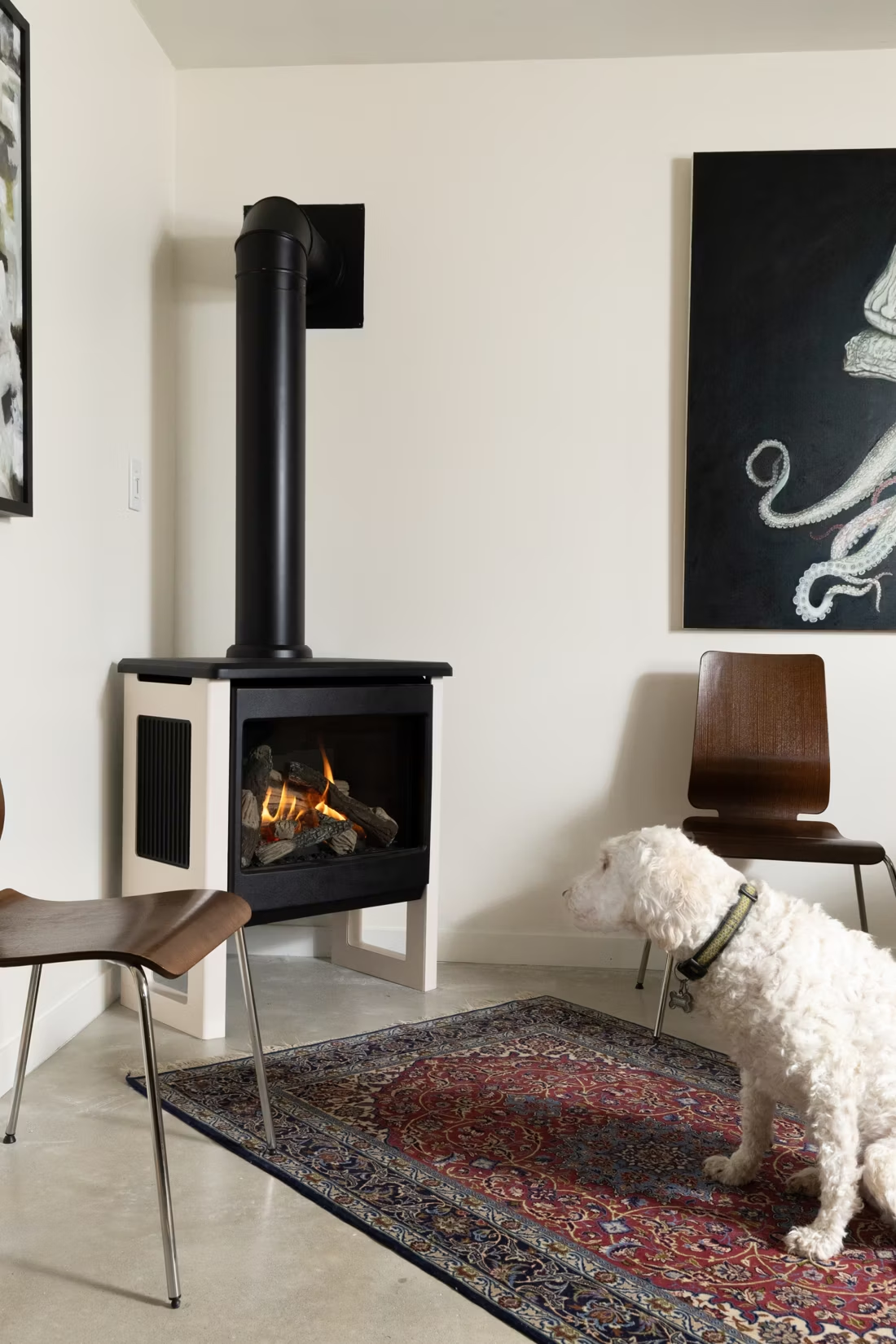
Three steps. No salesperson until you're ready.
Tell us about your project
Your zip code, your situation, and the fuel you're leaning toward—or let the answers point you to one.
See what's actually available
The brands dealers within 100 miles genuinely carry—real options, never a catalog mirage.
Get your dealer & Project Guide
A trusted local dealer, plus the free Project Guide & Parts List that names every component of the job.
Frequently Asked Questions
How much does a gas fireplace installation cost in Lyman?
Most gas fireplace and insert installations in the Lyman area run between roughly $3,500 and $9,000, depending on the unit, whether you're using an existing masonry fireplace or building new, and whether a gas line needs to be run or extended. A direct-vent insert into an existing chimney with gas already nearby sits toward the lower end. A new built-in fireplace during a remodel—with framing, venting, and a fresh gas or propane line—lands in the middle to upper range. If your property is outside the natural gas footprint and needs a new propane tank set, factor in that additional cost separately from the fireplace install itself.
Can I convert an existing wood-burning fireplace to gas?
Yes, and it's a common request from owners of the older brick ranch homes scattered around Lyman and unincorporated Spartanburg County. A gas insert typically drops into your existing masonry firebox, using a stainless liner run through the current chimney for venting. Expect somewhere in the $4,000 to $8,000 range depending on whether you're on natural gas or need to tie into a propane tank, plus any masonry repair the old firebox needs before the insert goes in. The conversion keeps your existing mantel and brickwork while eliminating the ash, smoke, and creosote maintenance that wood requires.
Is natural gas available in Lyman, or do most homes use propane?
It depends on where you are in town. Natural gas service reaches a portion of Lyman, but a meaningful share of homes—especially newer subdivisions and properties on the outskirts of Spartanburg County—run on propane with a tank on the property. Duke Energy Carolinas serves electricity here but doesn't supply gas, so it's worth confirming with your installer which fuel your street actually has access to before picking a fireplace. Nearly every gas fireplace and insert on the market can be configured for either natural gas or propane; it's a matter of the correct orifice and regulator setup at install.
Will a gas fireplace still work if the power goes out?
Most will, with the right ignition system. Units with a standing pilot or IPI (intermittent pilot ignition) typically include a small battery backup that keeps the fireplace operable even when the grid is down—which matters in this part of upstate South Carolina given how ice storms and thunderstorm outages can knock out power for a day or more. Some brands, including Valor, go a step further and generate their own electricity through the pilot flame itself, so there's no battery to remember. If storm-driven outages are a real concern for your household, ask your local dealer specifically about the ignition and backup system on any model you're considering.
What's the difference between a gas fireplace, gas insert, and gas stove?
A gas fireplace is a fully built-in unit framed into a wall—the right choice for new construction or a den remodel without an existing hearth. A gas insert slides into an existing masonry fireplace opening and uses your current chimney as the vent path, which fits a lot of the older homes around downtown Lyman and Reidville Road. A gas stove is a freestanding cast-iron or steel unit that sits on a hearth pad, useful in a room without any existing fireplace footprint. For most Lyman homeowners with a fireplace already in place, an insert is the straightforward upgrade; new rooms or additions usually call for a built-in unit instead.
Do I need a permit to install a gas fireplace in Lyman?
Yes. Gas fireplace installations require both a building permit and a gas line permit, handled through Spartanburg County Building Codes & Inspections for most properties in and around Lyman (the town itself doesn't run a separate building department). A licensed gas-fitter has to sign off on any new or extended gas line, which is one of the main reasons to go through an established hearth dealer rather than a general handyman—they coordinate the gas work, venting, and inspection sign-off as one job instead of leaving you to juggle separate trades.
What's the difference between vented and vent-free gas fireplaces?
Vented (direct-vent) fireplaces pull combustion air from outside and exhaust the byproducts back outside through a sealed pipe—they're the cleaner, more universally recommended option and produce real, substantial heat. Vent-free gas fireplaces burn without any exterior venting at all, releasing water vapor and small amounts of combustion byproducts into the room, which means they come with strict room-size and ventilation requirements. South Carolina permits vent-free units, and they show up in some Lyman-area homes as a lower-cost option for a room without existing venting access, but direct-vent remains the better choice for anywhere you want strong, reliable heat output. Ask a local dealer to walk you through both if you're deciding between them.
How often does a gas fireplace need to be serviced?
Plan on an annual inspection, ideally before the first cool snap of the fall. A technician checks the burner, pilot assembly, gas connections, and venting, and cleans the glass and interior—a much smaller job than chimney sweeping for wood but still important, since a dirty pilot or degraded seal is a common cause of gas appliance service calls. Local hearth and HVAC service companies in the Spartanburg-Lyman area typically charge somewhere in the $125 to $225 range for a standard annual checkup.
Gas fireplace vs. electric fireplace—which makes more sense in Lyman?
Electric fireplaces cost far less to install—typically $400 to $1,200 versus $3,500 to $9,000 for gas—since there's no venting or gas line involved, just an outlet. On Duke Energy Carolinas' residential rate (around $0.14 per kWh), they're inexpensive to run for ambiance but produce far less actual heat than a gas unit, and most people use them for the flame effect rather than real warmth. Gas fireplaces cost more upfront but deliver genuine radiant heat that can meaningfully take the edge off a cold morning—worthwhile in Lyman's climate if you want a room that actually warms up, not just glows. Homes wanting supplemental heat lean gas; homes wanting a low-cost ambiance upgrade in a bedroom or basement often go electric.
Can I put a TV above my fireplace?
Yes—with an asterisk. Fireplaces are hot and TVs don't like heat. Either put a mantel between them to deflect rising warmth, or choose a fireplace with heat-management technology that creates a cool zone on the wall above—the wall stays around 125 degrees, barely warm, while the room still gets full heat. If you like clean lines and don't want a mantel, heat management is the answer.
Why is my open fireplace making my house colder?
Open fireplaces suck—literally. As the fire burns, it consumes air your furnace already paid to heat and pulls it out through the chimney, so the house is actually colder after the fire goes out than before you lit it. An insert fixes this: it seals the chimney, puts fixed glass across the front, and turns that hole in your house into a real heat source.
Does a fireplace add value to my home?
On average, a fireplace adds back to the home about the same amount you spent installing it. Add the monthly savings from heating the rooms you actually use instead of the whole house—often hundreds of dollars a year—and the value case is strong before you even count what a fire does for how your family uses the room.
Can a fireplace actually lower my heating bill?
Yes—by creating a comfort zone. A furnace heats every square foot of the house just to warm the one room you're in; a gas fireplace on low burns roughly a sixth of the gas a typical furnace does. Set the furnace around 55–60 degrees as a baseline, then heat the rooms your family actually uses. Families who heat this way commonly save $20–$60 a month.
Nearby Dealers
Hearth shops serving Lyman and the surrounding area. Every listing shows whether it is a WhyFire partner, a dealer we have verified as authorized for the brands we recommend, or a local business carrying hearth products. No manufacturer pays for placement. How we verify dealers →
Chim Cheree Chimney Sweep
Carolina Hearth & Patio
Superior Plus Propane D/b/a Freeman Gas - Spartanburg
Western Carolina Stone
Craft Stove Store And Patio
Viridien Patio + Fireplace
Prince Propane Gas
Buchanan Fire And Outdoor
Diamond B Energies
Phillips-Lawing Fuel, Inc.
Foothills Propane
Find your gas fireplace in Lyman.
Tell us a bit about your home and heating setup, and we'll match you with a trusted local dealer and a free Project Guide & Parts List—the exact fireplace or insert, vent kit, and installer recommendation for your Lyman project.
Find Your Fireplace →