
Real fireplace warmth, no venting required, in Providence County.
From Providence's converted mill lofts to Pawtucket triple-deckers and Woonsocket rowhouses, electric fireplaces bring real heat and ambiance without a chimney, gas line, or masonry work. Find the right unit and connect with a trusted local dealer.
Every Project Starts From One of These Five Situations
Electric fireplaces fit where wood and gas can't.
Providence County is Rhode Island's most populous county—1.6 million people packed into a dense urban core of 19th-century triple-deckers, brick rowhouses near Federal Hill, and mill buildings converted to condos along the Blackstone River in Pawtucket and Woonsocket. Winters average 22°F lows with 5,478 heating degree days a season—cooler than coastal Boston but far milder than inland New England (Burlington, VT runs closer to 7,400 HDD). Much of the county's oldest housing stock was never built with a flue sized for a modern wood or gas insert, and historic districts around College Hill in Providence and Woonsocket's mill villages make masonry alterations slow and expensive to approve.
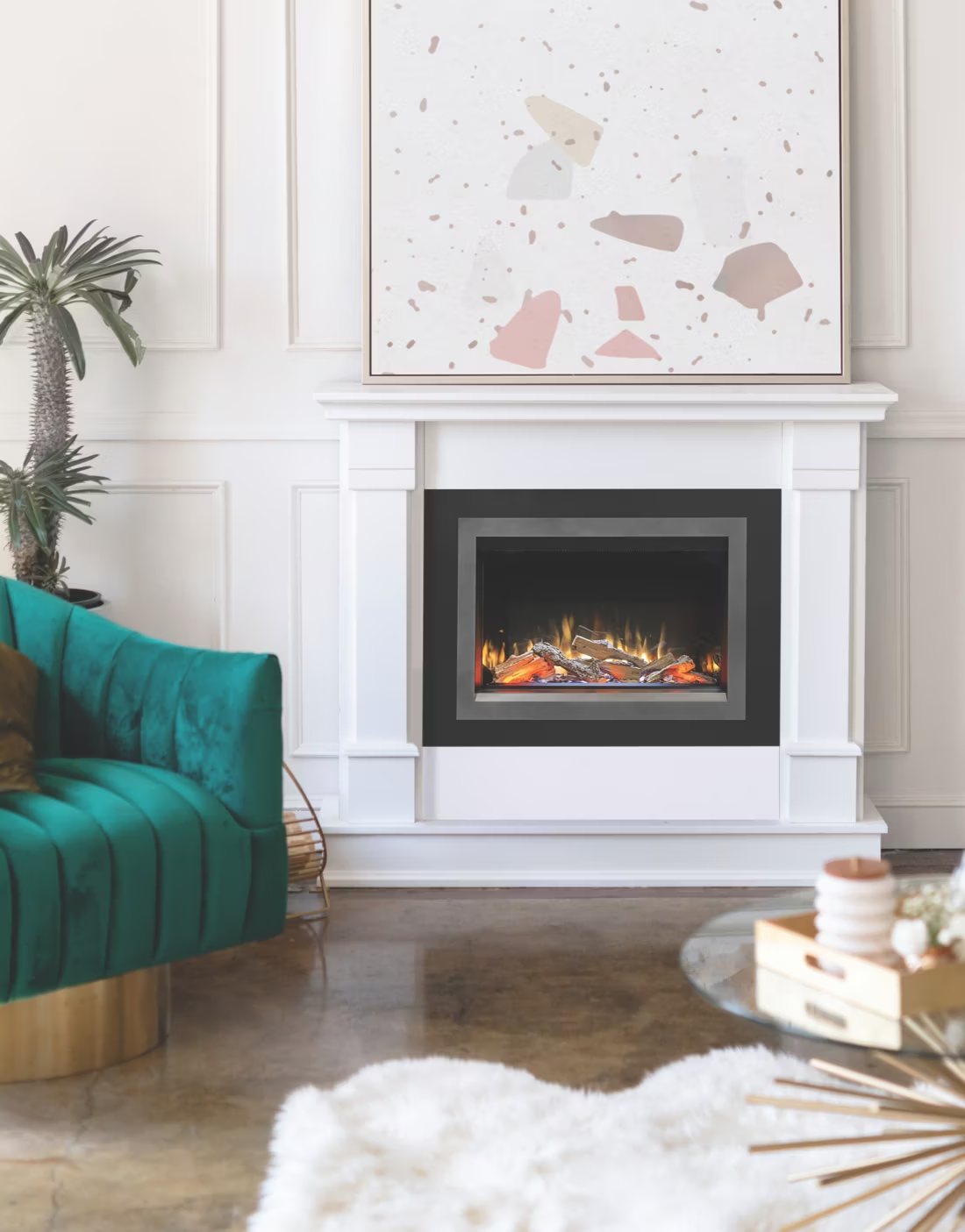
That's exactly where electric fireplaces earn their place. A plug-in or built-in unit needs no chimney, no gas line, and produces no combustion byproducts—which means no venting review, no flue liner, and in most cases no exterior alteration at all for a historic property. It's also the fastest path to a working fireplace in a rented triple-decker unit or a condo association building where a landlord or board won't approve gas or wood work. Rhode Island Energy is the utility across the county, and most electric fireplaces run comfortably off a standard household circuit as zone heat that supplements the oil or gas heat already installed in the county's older housing stock.
Three steps. No salesperson until you're ready.
Tell us about your project
Your zip code, your situation, and the fuel you're leaning toward—or let the answers point you to one.
See what's actually available
The brands dealers within 100 miles genuinely carry—real options, never a catalog mirage.
Get your dealer & Project Guide
A trusted local dealer, plus the free Project Guide & Parts List that names every component of the job.
Frequently Asked Questions
How much does an electric fireplace installation cost in Providence County?
A plug-in freestanding or mantel-style electric fireplace typically runs $300 to $1,500 for the unit itself, since it plugs into a standard outlet and needs no professional installation. A built-in wall unit or linear insert—the kind of upgrade common in Providence mill-loft renovations and Cranston remodels—usually runs $1,500 to $4,000 or more once you factor in a dedicated 120V or 240V circuit, an electrician's time, and any custom surround or trim kit. Homes in older triple-deckers in Pawtucket or Woonsocket sometimes need panel capacity checked before adding a dedicated circuit, which a local electrician can confirm during a quick site visit.
How much actual heat will an electric fireplace put out?
Most electric fireplaces are rated around 1,500 watts (about 4,600–5,000 BTU), which comfortably zone-heats a single room in the 400 to 1,000 square foot range—a living room, a converted mill-loft bedroom, or a den. It's not designed to replace whole-home heat, especially across a 5,478-HDD winter. Where it works well in Providence County's older housing stock is pairing it with the steam or hot-water radiators already in the house: run the fireplace in the room you're actually using, turn the thermostat down elsewhere, and let the electric unit carry the load in that space.
Do I need a permit for an electric fireplace in Providence County?
A plug-in unit generally needs no permit at all—it just needs a grounded, GFCI-protected outlet. A built-in unit that requires a new dedicated circuit needs an electrical permit pulled by a licensed electrician through the local building department, whether that's Providence, Pawtucket, Woonsocket, Cranston, or another municipality in the county—each issues its own permits. Homeowners in historic districts like College Hill or Woonsocket's Manville village sometimes worry a fireplace project will trigger historic commission review, but because electric units need no venting or exterior work, that review is rarely required—one of the real advantages of going electric in an older or protected home.
What's the difference between a plug-in electric fireplace, an insert, and a built-in unit?
A plug-in freestanding or mantel-style unit is the simplest option—no wiring changes, works in a rental, and can move with you. An electric insert is sized to drop into an existing masonry firebox, which is common in older Providence and North Providence homes where an unused wood fireplace opening sits idle—it reuses the opening without touching the chimney. A built-in or linear wall unit is recessed into new framing or mounted flush against a wall, popular in mill-loft renovations and newer condo builds where a modern, low-profile look is the goal. Most local dealers will size any of the three around your existing opening or wall.
Can I install an electric fireplace in a rental or condo in Providence County?
In most cases, yes, and with far fewer hurdles than gas or wood. A plug-in unit typically doesn't require landlord or condo association approval since there's no venting, gas line, or structural change involved—that's a real advantage in the county's converted mill buildings along the Blackstone River in Pawtucket and Woonsocket, where association rules on gas and wood-burning appliances tend to be strict. A built-in unit requiring new wiring is more likely to need a quick sign-off, but it's a far smaller ask than approving chimney or gas line work.
Electric vs. gas vs. wood—which is right for my Providence County home?
Electric wins on convenience and flexibility: no venting, no gas line, works in rentals and condos, and it's the easiest fit for the county's historic rowhouses and triple-deckers. Gas offers a real flame and higher heat output where natural gas service already reaches the home, which covers much of the urban core. Wood requires an existing or new chimney and is less practical in dense rowhouse and triple-decker construction, though it still has a following in the county's more rural western towns like Foster and Glocester. The honest tradeoff with electric: it needs power to run, so it won't provide heat during an outage the way a wood stove will.
What does it cost to run an electric fireplace in Providence County?
At a typical 1,500-watt setting, an electric fireplace costs roughly $0.20 to $0.40 per hour to run, depending on current Rhode Island Energy electric rates—a fraction of the cost of heating the same space with an oil furnace or baseboard electric heat running continuously. Many models also let you run the flame effect alone, with the heater off, for essentially no operating cost—useful for ambiance during Providence County's milder shoulder-season evenings without touching the heating bill at all.
Will my electric fireplace work during a power outage?
No—and this is worth being upfront about. Because an electric fireplace draws standard household power, it goes dark the moment the power does, which matters in a county that sees regular nor'easter-driven outages in winter. If backup heat during an outage is a real priority for your household, an electric fireplace shouldn't be your only plan; a wood stove or a gas unit with battery-backed ignition is a better fit for that specific need. Electric fireplaces are best understood as a zone-heat and ambiance solution for normal operating conditions, not an emergency heat source.
What features should I look for in an electric fireplace?
Look at flame realism first—brands like Dimplex, Napoleon, Touchstone, and Amantii use LED technology that looks convincingly like a real fire rather than a spinning-light gimmick. Beyond that, check the heater's wattage and whether it has a standalone flame-only mode, thermostat control, and app or remote operation. For a built-in or insert going into an existing masonry opening in an older Providence County home, exact dimensions matter more than brand—a local dealer can measure your opening or wall space and steer you toward a unit that fits cleanly rather than needing a trim kit to hide gaps.
Can I put a TV above my fireplace?
Yes—with an asterisk. Fireplaces are hot and TVs don't like heat. Either put a mantel between them to deflect rising warmth, or choose a fireplace with heat-management technology that creates a cool zone on the wall above—the wall stays around 125 degrees, barely warm, while the room still gets full heat. If you like clean lines and don't want a mantel, heat management is the answer.
Do electric fireplaces actually produce heat?
Yes—most put out around 4,800–5,000 BTUs from a standard outlet, which comfortably warms a bedroom, office, or den as a comfort-zone heater. What they won't do is carry a whole house the way wood, gas, or pellet can. Think of electric as ambiance-first with honest supplemental heat: flames on with no heat in July, flames plus warmth in January.
Can a fireplace actually lower my heating bill?
Yes—by creating a comfort zone. A furnace heats every square foot of the house just to warm the one room you're in; a gas fireplace on low burns roughly a sixth of the gas a typical furnace does. Set the furnace around 55–60 degrees as a baseline, then heat the rooms your family actually uses. Families who heat this way commonly save $20–$60 a month.
Can I install a fireplace myself?
If you're putting a fire in your house on purpose, it's best to work with an expert. Unless you're genuinely experienced in framing, gas line, vent pipe, and the national code on clearances to combustibles, have a professional do it—and ideally the same company that sells you the fireplace, so warranty, service, and liability all live under one roof.
Stove and Fireplace Dealers in Providence County
Listings include WhyFire partner dealers, dealers we have verified as authorized for the brands we recommend, and established local businesses that carry hearth products. Every listing shows which one it is. The ones marked Preferred run on WhyFire's software, so they can show you real pricing and book your appointment right here. No manufacturer pays for placement. How we verify dealers →
Atlas Insulation Co.
Frederickson Farm
Hearthside Fireplace & Patio
Stove King
Robbins Garden Center, Inc.
Find your electric fireplace in Providence County.
Tell us a bit about your home—condo, triple-decker, or historic rowhouse—and we'll match you with the right electric fireplace, insert, or built-in unit, plus a trusted local dealer and a free Project Guide & Parts List.
Find Your Fireplace →